Keys For Dvb T2

Overview
Product sourcing insights & recommendations
The phrase 'keys for dvb t2' primarily refers to two distinct commercial and technical contexts within the digital television market: Conditional Access System (CAS) keys for legitimate pay-TV subscription management and BISS/PowerVU keys used for decrypting restricted broadcast feeds.
1. Product Context & Hardware Trends
In the B2B marketplace, "keys for DVB-T2" is often associated with the procurement of hardware capable of handling decryption. AlibabaAlibaba
* Integrated Decoders: Market-leading set-top boxes (STBs) now prioritize hybrid functionality, combining DVB-T2 (terrestrial) with DVB-S2 (satellite) and IP streaming capabilities. AlibabaIndexbox
* Hardware Security: Traditional physical smart cards are rapidly losing market share (down to 54.9%) to cardless CAS solutions. MordorintelligenceEinpresswire Modern receivers utilize Trusted Execution Environments (TEE) to store decryption keys securely within the chipset rather than on a removable card. ImarcgroupMordorintelligence
* BISS Key Support: There is a significant niche demand for receivers that support manual entry or "auto-roll" updates for BISS and PowerVU keys, which are used to unlock specific sports feeds and international channels. AliexpressAlibaba
2. Market Insights & Growth Drivers (2026)
The digital terrestrial television (DTT) market is projected to reach $31.48 billion in 2026, driven by a 7.7% CAGR. NatlawreviewEinpresswire
* Regional Demand: Southeast Asia and Africa remain high-growth hubs due to government-mandated analog switch-offs. SkyquesttMordorintelligence For example, India's digitization now covers over 130 million households, creating a massive replacement cycle for DVB-T2 STBs. Mordorintelligence
* Monetization Shift: Operators are moving toward Prepaid and Micro-payment models in emerging markets, using cloud-based CAS to allow users to buy decryption "keys" for specific events or short durations via mobile apps. MordorintelligenceEinpresswire
* Hybrid Evolution: The industry is pivoting toward DVB-I and 5G Broadcast, where the same security "keys" manage content delivery across traditional broadcast signals and 5G mobile networks simultaneously. EinpresswireMordorintelligence
3. Sourcing & Supplier Landscape
Suppliers, primarily located in Shenzhen, China, dominate the production of DVB-T2 hardware. AlibabaAlibaba
* Price Points: Entry-level DVB-T2 decoders range from $6.30 to $8.00, while high-end Android-hybrid 4K models cost between $26.00 and $28.50. AlibabaAlibaba
* Key Manufacturers: Companies like *Shenzhen Junuo Electronics* and *Shenzhen Yuxi Technology* are major exporters, offering software customization for regional encryption standards. AlibabaAlibaba
I've analyzed the DVB-T2 market and decryption key trends. Would you like to:
Dvb T2 Decryption Key Software Set Top Box
Products · Top picks & verified manufacturers
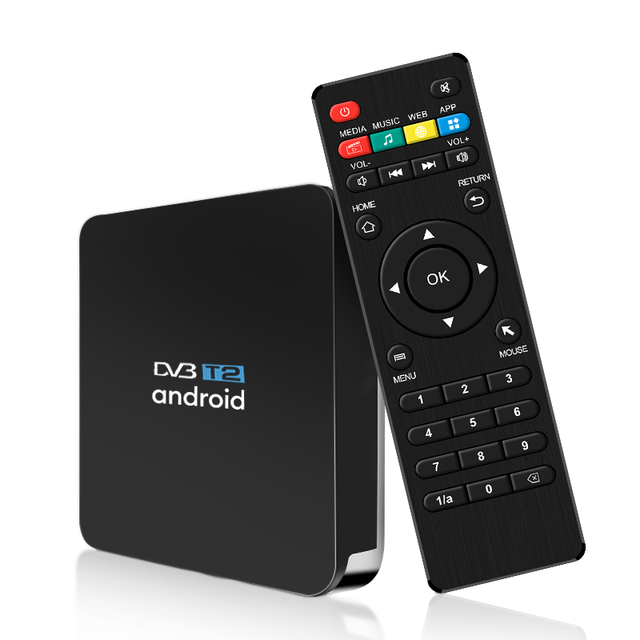
Top-Notch Popular Best OTT DVB-T2 Decoder Digital Android Hybrid TV Box 4K H.265 Converter Box Set Top Box OTT DVB-T2 Receiver
 Shenzhen Junuo Electronics Co., Ltd.verified🇨🇳CN11 yrs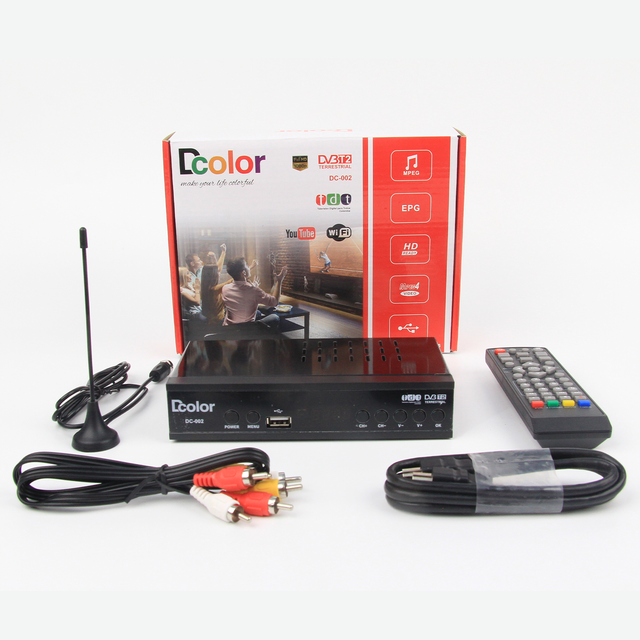
Set Top Box Colombia Panama HD Digital Terrestrial DVB-T2 with Antenna DVB T2 Decodificador TDT Decoder
 Shenzhen Junuo Electronics Co., Ltd.verified🇨🇳CN3 yrs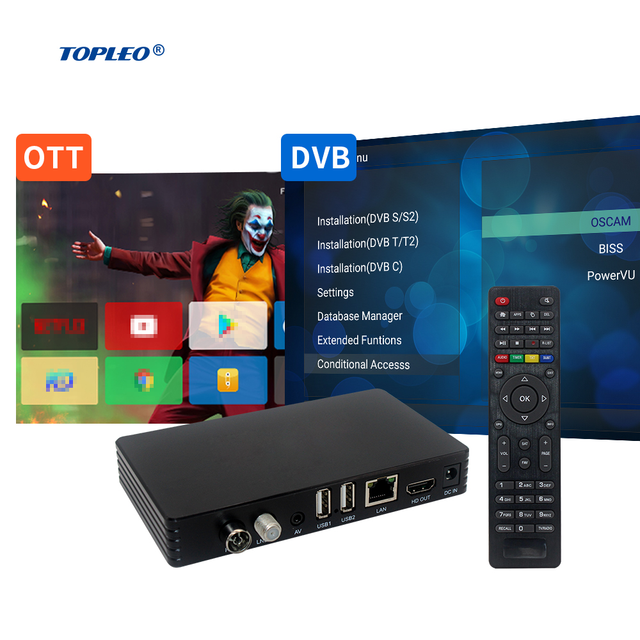
Best Quality Hybrid-H1 Firmware Upgrade Amlogic S905D OTT&DVB-ATSC -S2 1080p Decoder Android Tv Box Dvb T2 Tuner
 Shenzhen Topleo Technology Limitedverified🇨🇳CN10 yrs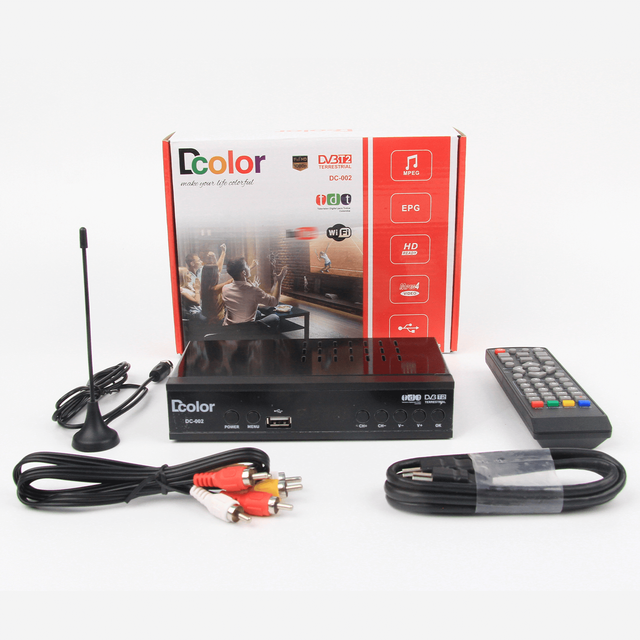
Junuo Factory DVB-T2 TDT Decoder Decodificador TV Digital Tuners Free to Air HD Set Top Box
 Shenzhen Junuo Electronics Co., Ltd.verified🇨🇳CN17 yrs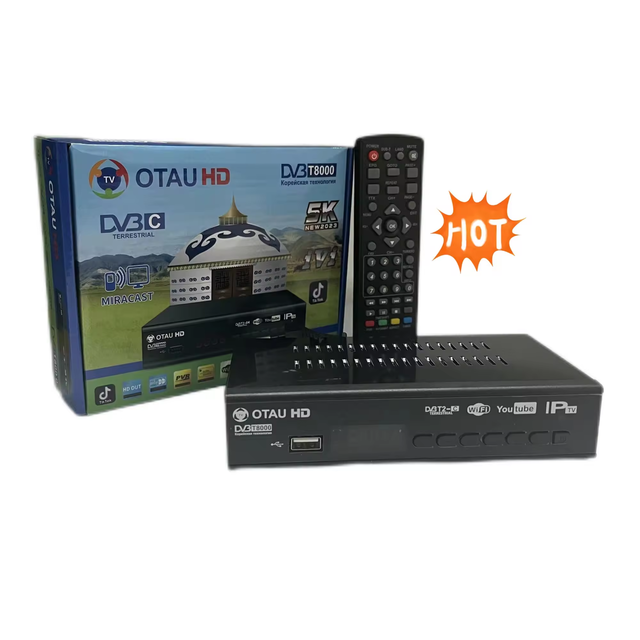
Factory Supplier H.264 DVB T2 TV Set-top Box, Compatible With WiFi and YouTube TV Receiver Decoder
 Shenzhen Yuxi Technology Co., Ltd.🇨🇳CN5 yrs
Factory Supplier H.264 DVB T2 TV Set-top Box, Compatible With WiFi and YouTube TV Receiver Decoder
Related Searches
Explore more sourcing topics & related categories
Sources & References
47 sources cited · Verified industry data & reports
Digital Terrestrial Television Market Size, Share, and Trends ...
www.einpresswire.com
Looking ahead, the digital terrestrial television market is expected to continue this upward trajectory, reaching $42.75 billion by 2030 with an accelerated CAGR of 8.0%. Factors contributing to this forecast include the rising use of internet protocol-connected set-top boxes, increasing popularity of smart TVs and flat-screen displays, growing investments in interactive and personalized content delivery, expansion of advanced TV standards like ATSC 3.0 and DVB-T2, and enhanced deployment of digital rights and content management systems. Key trends anticipated to drive this growth involve broader adoption of DVB-T2 and ATSC 3.0 technologies, proliferation of smart set-top boxes, increased sales of integrated digital televisions (IDTVs), expansion of interactive broadcasting solutions and middleware platforms, and sustained investments in broadcast network services. LONDON, GREATER LONDON, UNITED KINGDOM, March 23, 2026 /EINPresswire.com/ -- "The digital terrestrial television (DTT) market has experienced significant growth over recent years, driven by technological advancements and shifting consumer preferences. As digital broadcasting continues to evolve, the market is set to expand further, supported by innovations and increasing adoption worldwide. Digital Terrestrial Television Market Size and Projected Growth The market for digital terrestrial television has shown strong expansion, increasing from $29.22 billion in 2025 to an anticipated $31.48 billion in 2026, reflecting a compound annual growth rate (CAGR) of 7.7%. This historical growth is largely due to the shift from analog to digital transmission, a surge in demand for high-definition content, the enlargement of pay-TV and subscription models, rising household TV penetration, and heightened investment in broadcast infrastructure.
Digital Terrestrial Television Market Size, Share, and Trends ...
natlawreview.com
Looking ahead, the digital terrestrial television market is expected to continue this upward trajectory, reaching $42.75 billion by 2030 with an accelerated CAGR of 8.0%. Factors contributing to this forecast include the rising use of internet protocol-connected set-top boxes, increasing popularity of smart TVs and flat-screen displays, growing investments in interactive and personalized content delivery, expansion of advanced TV standards like ATSC 3.0 and DVB-T2, and enhanced deployment of digital rights and content management systems. Key trends anticipated to drive this growth involve broader adoption of DVB-T2 and ATSC 3.0 technologies, proliferation of smart set-top boxes, increased sales of integrated digital televisions (IDTVs), expansion of interactive broadcasting solutions and middleware platforms, and sustained investments in broadcast network services. LONDON, GREATER LONDON, UNITED KINGDOM, March 23, 2026 /EINPresswire.com/ -- "The digital terrestrial television (DTT) market has experienced significant growth over recent years, driven by technological advancements and shifting consumer preferences. As digital broadcasting continues to evolve, the market is set to expand further, supported by innovations and increasing adoption worldwide. Digital Terrestrial Television Market Size and Projected Growth The market for digital terrestrial television has shown strong expansion, increasing from $29.22 billion in 2025 to an anticipated $31.48 billion in 2026, reflecting a compound annual growth rate (CAGR) of 7.7%. This historical growth is largely due to the shift from analog to digital transmission, a surge in demand for high-definition content, the enlargement of pay-TV and subscription models, rising household TV penetration, and heightened investment in broadcast infrastructure.
Set Top Box Market in the European Union | Report - IndexBox - ...
www.indexbox.io
The European Union Set Top Box market in 2026 represents a mature but structurally evolving segment within the broader consumer electronics and telecommunications infrastructure supply chain. The installed base across EU households is estimated at 160–180 million units, encompassing operator-provisioned Pay-TV boxes, free-to-air satellite and terrestrial receivers, and retail streaming devices. By platform, the market in 2026 is estimated to comprise: IPTV STBs at 30–35% of unit shipments; hybrid STBs (broadcast plus OTT) at 25–30%; cable DVB-C STBs at 15–18%; satellite DVB-S/S2 receivers at 12–15%; terrestrial DVB-T2 receivers at 5–8%; and retail streaming-only devices at 8–12%. The hybrid and IPTV segments together represent over half of total market value due to their higher BOM cost and software integration complexity. The European Union Set Top Box market is projected to generate between €2.8 billion and €3.2 billion in annual revenue by 2026, with a gradual contraction in unit shipments to approximately 28–32 million units as the installed base matures and cord-cutting accelerates in several Western EU member states. Hybrid STBs combining broadcast (DVB) with OTT IP streaming now account for over 45% of operator-provisioned boxes in the EU, driven by operator strategies to retain subscribers through integrated Netflix, Amazon Prime, and local streaming service access. The European Union Set Top Box market is forecast to undergo a structural transformation between 2026 and 2035, with total unit shipments declining from 28–32 million in 2026 to 18–22 million by 2035, representing a compound annual decline of 3–5%. This contraction is driven by three primary forces: the ongoing cord-cutting trend in Western EU markets, where Pay-TV subscribers are projected to decline from 85–90 million in 2026 to 65–70 million by 2035; the consolidation of operator platforms, reducing the number of boxes per household; and the substitution of dedicated STBs by smart TV operating systems that integrate streaming apps natively, eliminating the need for external boxes on primary TV sets.
Set Top Box Market in the Netherlands | Report - IndexBox - Prices, ...
www.indexbox.io
The Netherlands Set Top Box market operates within a mature, high-density telecommunications environment where over 98% of households have access to broadband speeds exceeding 100 Mbps. This infrastructure has fundamentally shaped the product mix: Dutch consumers and operators have been early adopters of IPTV and hybrid broadcast-broadband solutions, reducing reliance on traditional cable-only or satellite-only STBs. By type, IPTV STBs and hybrid STBs (broadcast plus OTT) together represent approximately 60–65% of new shipments in the Netherlands in 2026, reflecting the dominance of IP-delivered television services from telecom operators and the convergence strategies of cable MSOs. Cable STBs (DVB-C) account for 20–25%, primarily serving the installed base of traditional cable subscribers who have not yet migrated to hybrid or IP-only platforms. The Netherlands Set Top Box market is forecast to grow from approximately €180–€220 million in 2026 to €230–€290 million by 2035 in nominal value terms, representing a compound annual growth rate of 2.5–4.0%. Unit shipments are expected to remain relatively stable at 1.2–1.5 million units annually through the forecast period, with growth driven entirely by value mix improvement rather than volume expansion. The key structural trend is the replacement of HD-only STBs with 4K hybrid models, which will raise average unit prices from approximately €90–€110 in 2026 to €120–€150 by 2035, assuming 2–3% annual price erosion on mature components offset by premium features. Accelerated migration from legacy DVB-C and DVB-T2 boxes to Android TV/Operator Tier hybrid STBs, with hybrid units expected to exceed 55% of new operator deployments by 2028, as Dutch MSOs and IPTV providers converge linear broadcast with OTT streaming in a single device.
DVB T-2 | Devoncroft Partners
devoncroft.com
Posts about DVB T-2 written by Josh Stinehour This is the first of a series of articles that discuss select findings from Devoncroft’s 2021 Big Broadcast Survey (BBS), the largest annual global study of media technology industry trends,... Read More This is the first of a series of articles that discuss select findings from Devoncroft’s 2020 Big Broadcast Survey (BBS), an annual global study of media industry trends, technology purchasing...
Digital Terrestrial Television Market Size, Share, Trends & Forecast ...
www.skyquestt.com
Digital terrestrial television (DTT) continues to gain momentum worldwide as governments push ahead with the “digital switchover,” phasing out analog broadcasting to reclaim spectrum for mobile broadband and public safety networks. These initiatives are forcing broadcasters to adopt more spectrally efficient transmission standards such as DVB-T2 across Europe and many parts of Asia, and ATSC 3.0 in North America. DVB-T2 offers superior spectral efficiency compared to first-generation standards, allowing broadcasters to deliver HD content and more channels within limited spectrum, making it the foundational technology for modern terrestrial networks. According to the global digital terrestrial television market forecast, Europe holds the second-largest market share, driven by a deep commitment to universal access to public service broadcasting. The region has largely completed its transition to DVB-T2, ensuring efficient use of spectrum. According to the digital terrestrial television market outlook, Germany's market is defined by the "Freenet TV" platform, which successfully monetizes HD terrestrial content. The country's advanced DVB-T2 HD network serves as a high-quality alternative to satellite and cable.