Laptop Prototyping

Overview
Product sourcing insights & recommendations
The term 'laptop prototyping' refers to the iterative process of designing, testing, and refining preliminary models of laptop hardware or its digital interfaces before mass production TechniaTwi-Global. In 2026, the market is characterized by a strategic shift toward AI-integrated hardware and highly compressed development cycles enabled by advanced rapid prototyping technologies TechinsightsPrecedenceresearch.
Market Trends & Insights (2026)
* AI-Driven Development: Prototyping is increasingly focused on on-device AI, with developers using hardware sprints to integrate discrete Neural Processing Units (NPUs) TechinsightsMordorintelligence.
* Rapid Prototyping Surge: The global rapid prototyping market is projected to reach $4.83 billion in 2026, with a CAGR of 19.9% Precedenceresearch.
* Architectural Shifts: There is a notable move toward Arm-based and RISC-V architectures in early-stage prototypes as OEMs seek to reduce dependency on traditional x86 systems Mordorintelligence.
* Technological Leaders: 3D Printing holds the largest market share (36.6%), while Digital Light Processing (DLP) is the fastest-growing method due to its precision for intricate laptop components MordorintelligencePrecedenceresearch.
Product & Sourcing Landscape
Sourcing for laptop prototyping typically falls into two categories: specialized development components and custom manufacturing services.
* Custom Enclosures & Machining: For physical chassis design, suppliers provide CNC machining and sheet metal fabrication to create high-precision prototypes from aluminum or stainless steel AlibabaAlibaba.
* Prototyping Tools: Industrial design teams utilize high-end SLA and SLS 3D printers (e.g., Formlabs) to achieve actual colors, materials, and finishes (CMF) for "looks-like" prototypes Formlabs.
* Electronic Kits: Prototyping the internal logic involves microcontroller development boards and learning kits (e.g., ESP32, PIC12F) to verify circuit functionality AlibabaAlibaba.
Detailed lists of relevant physical molds, development boards, and specialized rapid prototyping manufacturers are provided in the attached files.
I can help you narrow down these results further. Would you like to:
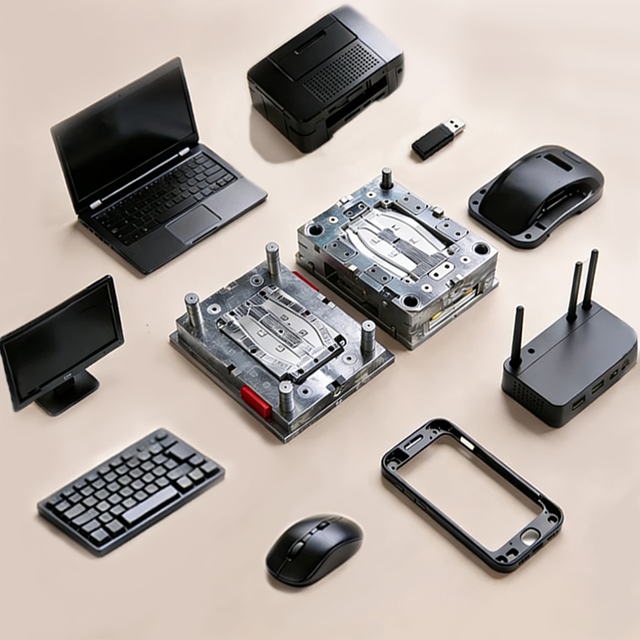
Industrial Design Prototype Laptop Chassis Mold
Products · 2 lists

Related Searches
Explore more sourcing topics & related categories
Sources & References
28 sources cited · Verified industry data & reports
What is Prototyping? | TECHNIA
www.technia.com
These prototypes can range from simple sketches or models to fully functional versions of the product. The process allows designers and engineers to visualize concepts, identify potential issues early on, and refine designs before moving into mass production. By iterating on these early models, teams can ensure that the final product meets user needs and expectations, ultimately reducing time to market and minimizing costs. Prototyping acts as a bridge between conceptual ideas and tangible products, allowing teams to experiment with design alternatives and validate concepts with minimal risk. This iterative process fosters innovation by encouraging creative exploration and rapid feedback integration. As a result, prototyping not only accelerates development timelines but also enhances the final product’s alignment with user expectations. Identify design flaws early, minimizing costly changes later in the production process. Reduce labor costs and material waste using rapid prototyping, making the process more economical compared to traditional methods.
What Is a Prototype?
www.computerhope.com
An early version of a product not yet manufactured or released is called a prototype. Prototypes allow engineers or other testers to verify a product is free of errors before it is released to the public. ... Prototyping is also a verb, meaning to create a prototype.
What is Rapid Prototyping? Methods, Tools and Examples | Formlabs
formlabs.com
Rapid prototyping is the group of techniques used to quickly fabricate a physical part or assembly from a three-dimensional design. With rapid prototyping, engineers and designers can create a better final product, iterating several times between digital designs and physical prototypes with a quick and cost-effective workflow. With rapid prototyping tools such as Formlabs’ 3D printers, anyone can turn ideas into realistic proofs of concept, and advance these concepts to high-fidelity prototypes that actually look and work like final products. Product designers and engineers would create makeshift proof-of-concept models with basic tools, but producing functional prototypes and production-quality parts often required the same processes as finished products. On the other hand, rapid prototyping helps companies quickly turn ideas into realistic proofs of concept, advances these concepts to high-fidelity prototypes that look and work like final products, and guides products through a series of validation stages toward mass production.
What is Prototyping? (A Complete Guide) - TWI
www.twi-global.com
Prototyping is the process of designing a mock-up of a product or process ahead of creating a final design. Prototyping can include various stages or iterations, allowing designers, product owners, and other stakeholders to visualise how a product will look and feel, as well as how users will interact with it.
Prototype - Wikipedia
en.wikipedia.org
Computer modeling is now being extensively used in automotive design, both for form (in the styling and aerodynamics of the vehicle) and in function—especially for improving vehicle crashworthiness and in weight reduction to improve mileage. The most common use of the word prototype is a functional, although experimental, version of a non-military machine (e.g., automobiles, domestic appliances, consumer electronics) whose designers would like to have built by mass production means, as opposed to a mockup, which is an inert representation of a machine's appearance, often made of some non-durable substance. However, more and more often the first functional prototype is built on a "prototype PCB" almost identical to the production PCB, as PCB manufacturing prices fall and as many components are not available in DIP packages, but only available in SMT packages optimized for placing on a PCB. Builders of military machines and aviation prefer the terms "experimental" and "service test". In electronics, prototyping means building an actual circuit to a theoretical design to verify that it works, and to provide a physical platform for debugging it if it does not. A prototype is an early sample, model, or release of a product built to test a concept or process. It is a term used in a variety of contexts, including semantics, design, electronics, and software programming. A prototype is generally used to evaluate a new design to enhance precision by system analysts and users. A working prototype represents all or nearly all of the functionality of the final product. A visual prototype represents the size and appearance, but not the functionality, of the intended design. A functional prototype captures both function and appearance of the intended design, though it may be created with different techniques and even different scale from final design. A paper prototype is a printed or hand-drawn representation of the user interface of a software product.
What is Prototyping? - Fusion Blog
www.autodesk.com
In this article, we’ll learn more about the various aspects of prototyping, including its importance, types, and how Autodesk Fusion makes it easier than ever before. On a high level, prototyping can best be defined as creating a preliminary model or a sample of a product or a system before the completed version. In most cases, its purpose is to provide designers with a tangible, real-world representation of their design, which otherwise would only exist in computer software. Since prototypes are not meant to be sellable, completed versions of a product, they are often manufactured in small quantities with non-production materials. By the same token, prototyping is important because it can reduce the cost of development by identifying and fixing any issues early in the process. Cutting tools for production is often a very expensive endeavor, meaning that designers want to ensure their design is complete before this happens. What is prototyping? It's one of the most important aspects of the product design lifecycle, allowing for early design validation. Prototyping is one of the most important aspects of the product design lifecycle, allowing for early design validation. See how Autodesk Fusion is a leading software that makes digital and functional prototyping easy and accessible.