Lcd For Ebook

Overview
Product sourcing insights & recommendations
The e-book reader market for 2026 is witnessing a strategic convergence between traditional eye-comfort E-ink devices and high-performance LCD tablets. While E-ink maintains a dominant 74% market share due to its paper-like reading experience and week-long battery life Persistencemarketresearch, LCD-based readers are growing at a faster 7.0% CAGR Persistencemarketresearch. This growth is fueled by younger demographics and educational institutions prioritizing color visualization for interactive textbooks MarkwideresearchPcmag.
Core Market Trends & Insights
- Display Shift: The industry is moving from monochrome to "diverse visual experiences." Color E-ink (e.g., E Ink Colorsoft) is emerging as a premium alternative to standard black-and-white AccioGoodereader.
- LCD Niche: High-resolution LCD panels are increasingly favored for multimedia-heavy reading (magazines, comics, and science textbooks) where color fidelity and video playback are essential MarkwideresearchBusinessresearchinsights.
- Consumer Pain Points: "Visual fatigue" and blue light emission remain the primary complaints against LCD readers Iflytek. Consumers continue to trade off LCD’s vibrant colors for E-ink’s superior eye comfort during marathon reading sessions Xp-PenReddit.
- Sustainable Procurement: EU energy-efficiency directives are pushing institutional buyers towards E-ink, although LCD variants still capture the leisure-reading periphery where smartphone substitution is high Markwideresearch.
Product Landscape & Sourcing
Recent sourcing data shows 7-inch Android-based color readers are highly popular in the wholesale market, typically priced between $40 and $150 per piece depending on processor speed and screen resolution.
Affordable Color Lcd Ebook Reader Wholesale
Products · 3 lists

Education Learning Smart Android LCD E Ink Color Ebook Reader Electronic LCD Display E Ink Tablet
 Shenzhen Letine Technology Co., Ltd.verified🇨🇳CN21 yrs
HD E-Ink 7 Inch LCD Ebook Reader with Video Playback Clock Acrylic Digital Foto Frame
 Shenzhen PROS Electronics Co., Ltd.🇨🇳CN17 yrs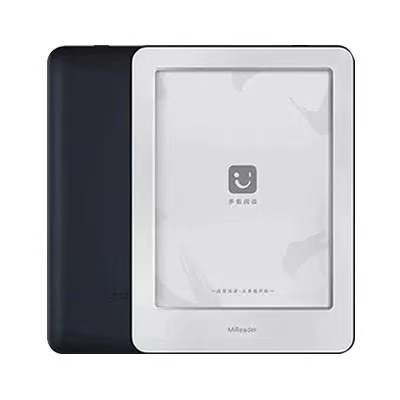
Wholesale E-Reader 6-inch Quad-core CPU for Ink Screen High Quality E-reader
 Shenzhen Chuangxin Reciprocal Electronic Technology Co., Ltd.🇨🇳CN5 yrs
BK570 Children Plastic Reader 5.7 Inch Android Paper Display Lightweight Ebook Device Wifi6 Bt54 Sd Card Support Front Light
 Shenzhen Xingzegao Electronics Ltd.🇨🇳CN9 yrs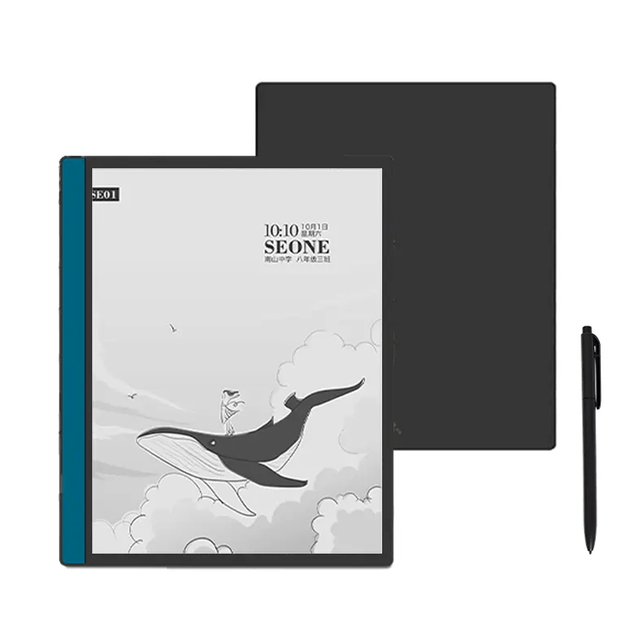
10.3 Inch E Ink Paper Display 1872*1404 Learning Lcd Screen Hd Smart E-Book Reader E-Ink Screen Tablet Reader E-Books Reader
 Shenzhen Tianqiao Science and Technology Co., Ltd.verified🇨🇳CN7 yrs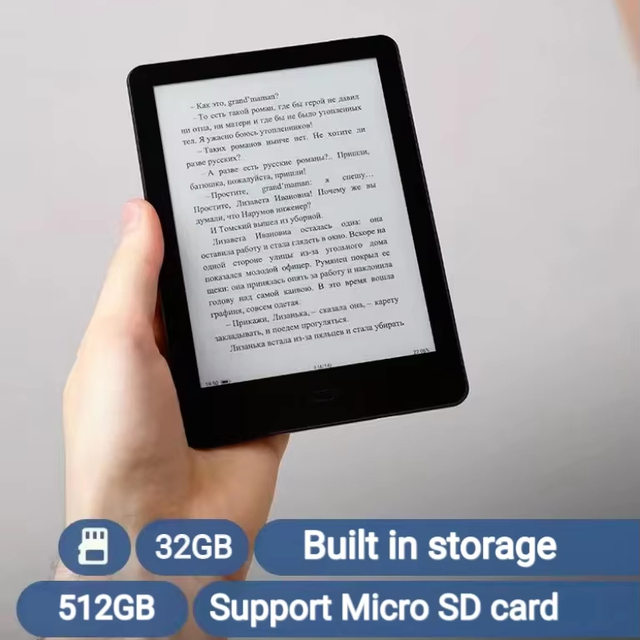
Cheapest Wholesale 6inch Ebook OEM Android8 Reader 212PP| Wifi 1G+32GBlack White Ink Screen Educational Ereader Boox for Kids
 Shenzhen Huanyu Ruisheng Electronic Technology Co., Ltd.verified🇨🇳CN5 yrs
Related Searches
Explore more sourcing topics & related categories
Sources & References
23 sources cited · Verified industry data & reports
The Best Ereaders We've Tested for 2026 | PCMag
www.pcmag.com
Basic ebook readers use monochrome E Ink screens to display text. E Ink, or digital ink (often manufactured by the E Ink company), looks a lot like paper, but it's easier on your eyes to read over long periods than text on a traditional LCD. Most now include adjustable edge lighting. The iPad's color LCD is more suitable for watching movies, playing games, and browsing online than most ebook readers' grayscale E Ink displays. August 18, 2026: With this update, our lineup of recommended ereaders remains unchanged. The existing picks have been vetted for currency and availability. We currently have two ereaders from Boox in PC Labs for evaluation. ... Amazon’s Kindle Paperwhite was last updated in 2024 and remains one of the fastest and most advanced ebook readers available. It's waterproof, the battery lasts for weeks, and the 7-inch 300ppi E Ink display is sharp and easy to read. We've recently seen a breakthrough in color E Ink displays, with several readers implementing the E Ink Kaleido or E Ink Kaleido Plus technologies. We've tested a few, and while they aren't perfect, they show some of the exciting possibilities of color E Ink. If you like reading in the bath, by the pool, or on the beach, consider a waterproof ebook reader.
E-Reader Market Share, Size & Growth Outlook to 2031
www.mordorintelligence.com
Note: Market size and forecast figures in this report are generated using Mordor Intelligence’s proprietary estimation framework, updated with the latest available data and insights as of 2026. ... Expanding online and hybrid programs push universities and K-12 districts to adopt digital textbooks that pair well with dedicated readers. Procurement teams favour large-format models that accept stylus input for annotation and note-taking. Colour e-ink helps science and math teachers retain visual fidelity while lowering eye strain compared with backlit LCD tablets. The E-Reader market size is expected to grow from USD 8.31 billion in 2025 to USD 8.83 billion in 2026 and is forecast to reach USD 11.94 billion by 2031 at 6.24% CAGR over 2026-2031. Advances in colour e-ink, artificial intelligence features, and institutional procurement models underpin this steady growth. The long battery life and eye-comfort advantages of e-ink screens continue to distinguish dedicated readers from tablets and smartphones despite rising multifunction competition.[1]E Ink Holdings, “Digital Paper for Sustainability,” EINK.COM ... By screen size, the 6–8-inch category held 67.10% of the E-Reader market share in 2025. The above 8-inch category is projected to register an 8.18% CAGR between 2026 and 2031. Separately, Bookshop.org confirmed Kobo e-reader support with a rollout discussed for 2026, which creates a route for e-book purchases tied to independent bookstores and can support Kobo adoption in markets where consumers prefer non-Amazon retail options. Hardware and firmware roadmaps are also creating room for AI-assisted reading workflows that work within e-ink constraints, including summarization, translation, and structured note extraction for PDFs and textbooks without shifting users to backlit tablets.
E-Book Reader Market Size, Share, and Industry Trends Forecast ...
markwideresearch.com
The E-Book Reader Market sized at $12.4 Billion in 2026 is forecast to scale to $20.6 Billion by 2035, progressing at a 5.80% CAGR throughout the forecast period. University and K-12 procurement departments are expanding fleet purchases of eye-friendly devices. E-Ink technology advances and EU energy-efficiency directives under the Ecodesign Framework are tightening standby-power rules for consumer electronics. Its primary commercial purpose is to displace paper books in extended reading scenarios while reducing eye strain versus emissive screens. E-Ink technology leads the installed base due to week-long battery endurance and daylight visibility, though LCD and OLED variants occupy premium multi-function niches where color video consumption matters. Multi-Function Devices:Hybrid hardware combining E-Ink with limited app ecosystems targets users seeking annotation without full tablet complexity. Tablets:Full-color LCD or OLED devices with video capability occupy the leisure-reading periphery where smartphone substitution pressure is most acute. E-Ink:Electrophoretic micro-capsule displays with 150-300 ppi resolution dominate institutional procurement due to week-long battery endurance and daylight visibility. E-Ink Holdings controls film manufacturing, creating single-source dependency that shapes vendor sourcing strategies. LCD:Transmissive backlit panels enable color rendering and video playback at the cost of eye strain and compressed battery life.
E-Book Reader Market Size & Competitive Analysis, 2033
www.persistencemarketresearch.com
Global E-Book Reader Market size reaches US$ 10.9357 Billion in 2026, expanding to US$ 16.3268 Billion by 2033 at 5.89% CAGR, reflecting sustained demand growth through digital content proliferation and technological advancement. E Ink screen dominates with 74% market share while LCD experiences 7.0% CAGR growth; Wi-Fi-only devices maintain 62% share while Wi-Fi + 3G grows at 6.8% CAGR. The global E-Book Reader Market size is anticipated to reach US$ 10.9 Billion in 2026 and is projected to expand to US$ 16.3 Billion by 2033, growing at a CAGR of 5.9% between 2026 and 2033. Rising digital literacy rates, technological improvements in E Ink display technology, and expanding e-book distribution channels are catalyzing market expansion. Market leadership is concentrated among Amazon with ecosystem dominance, Kobo across North America and Europe, Barnes & Noble through retail integration, PocketBook International in Europe and emerging markets, Onyx Boox in Asia-Pacific via color E Ink innovation, while Hanvon Technology, Bookeen, and Tolino strengthen regional positions through targeted specialization strategies. ... The global E-Book Reader Market is anticipated at US$ 10.9 Billion in 2026, expanding to US$ 16.3 Billion by 2033. Market growth is driven by rising digital literacy, advancing E Ink display technology, expanding e-commerce channels, education sector adoption, and increasing sustainability preference for energy-efficient reading devices. ... The E-Book Reader Market projects 5.9% CAGR between 2026 and 2033.
Trends of E Ink Tablet in 2026
www.accio.com
E-reader Market Value: The global e-reader market is valued at approximately $480 million annually 3. Screen Shipments: E-ink screen shipments reached 15 million units in 2022 3. Popular Devices: The Kindle Paperwhite remains the best-selling e-reader globally 3. Kobo devices hold 12% of the ebook reader market, primarily in Canada and France 3. Stylus Integration: "E ink tablet with stylus" shows minimal search interest throughout the period, with a slight increase to 14 in April 2026 1. This suggests that while stylus functionality is a feature, it might not be the primary driver for initial searches. Product Development: Manufacturers should prioritize features that enhance note-taking and reading experiences, such as improved stylus accuracy, faster refresh rates, and better display clarity. Marketing Focus: Marketing campaigns should highlight the benefits of E-Ink tablets for note-taking and reading, emphasizing features like eye comfort, long battery life, and paper-like feel. For 2026, the key headwinds include consumers continuing to focus on value for money, combined with market saturation, and the effect of high ...Read more ... Device and Format Trends – Interpretation. Google search trends reveal fluctuating interest in specific E-Ink tablet functionalities, with "e ink tablet for note taking" and "e ink tablet for reading" showing notable peaks in late 2025 and early 2026 1.
E Ink vs. LCD Display: Which is Better for Reading? | XPPen
www.xp-pen.com
Recommended Articles ROUNDUPS Top LCD & E Ink Digital Writing Tablets of 2026 KNOWLEDGE E-Reader vs Tablet in 2026: Which One Should You Buy? Comfort above all things is what we seek when we curl up with a nice book. Especially during marathon reading sessions or when changing between lighting situations, this is where the contrasts between E Ink and LCD become most clear. E Ink screens will appeal to book lovers for their paper-like reading experience that closely resembles physical books. The matte surface minimizes glare; the absence of backlighting makes extended reading sessions more pleasant for the eyes. From books to news stories to scholarly papers to business documents, screens have become our main entrance to the written word. The hitch is, though, not all screens treat our eyes the same. Should you ever find your eyes straining after hours on your phone yet comfortable reading your Kindle, you have experienced the basic distinction between E Ink and LCD technology directly.