Len Adapter Micro M4 3 Mount

Overview
Product sourcing insights & recommendations
The market for Micro Four Thirds (MFT) lens adapters in 2026 is characterized by three distinct segments: professional focal reducers (Speed Boosters), mid-range electronic smart adapters, and budget mechanical mounts for vintage glass.
Product & Market Trends 2026
* Dominance of Focal Reducers: The most significant trend is the rise of focal reducers (e.g., Metabones and Viltrox), which compensate for the MFT sensor's 2x crop factor. These devices effectively reduce the focal length by 0.71x and increase light gathering by one stop, making full-frame lenses much more practical on mirrorless bodies. FfotografoshopHannahdavisphotography
* Cinema-Specific Optimization: High-end brands like Metabones are increasingly offering sensor-specific adapters, such as versions optimized for the Blackmagic Pocket Cinema Camera 4K's unique filter stack, ensuring maximum sharpness and color accuracy. FfotografoshopMetabones
* Electronic Disruption: Viltrox has shifted the market landscape by providing full electronic communication (Autofocus, EXIF data, and Aperture control) at competitive mid-range prices, often 50-70% lower than legacy professional brands. FfotografoshopAlikgriffin
* Vintage Glass Revival: There is sustained growth in the manual adapter segment (e.g., K&F Concept) as photographers seek the "character" and unique aesthetics of vintage lenses like M42 and Minolta MD on modern digital sensors. HannahdavisphotographyMu-43
Market Comparison Overview
| Segment | Key Brands | Typical Pricing | Core Use Case |
|---|---|---|---|
| Premium Speed Boosters | Metabones | $400 - $700+ | Professional cinematography, highest optical clarity |
| Electronic Smart Adapters | Viltrox, Commlite | $80 - $200 | Enthusiasts needing AF for modern Canon/Nikon glass |
| Mechanical Adapters | K&F Concept, Fotodiox | $15 - $40 | Adapting vintage manual lenses with precision fit |
AlikgriffinHannahdavisphotography
Sourcing Insights
Current wholesale data shows that Shenzhen and Guangzhou remain the global hubs for adapter manufacturing. B2B pricing for bulk orders of electronic MFT adapters (Canon EF to MFT) currently ranges from $76 to $113 per unit, while basic mechanical adapters for vintage mounts are available for as low as $3.50 to $7.50 at scale. AlibabaAlibabaAlibaba
Based on these market findings, you may want to proceed with:
Micro Four Thirds Focal Reducer Speed Booster Adapter Nikon F To Mft
Products · 3 lists
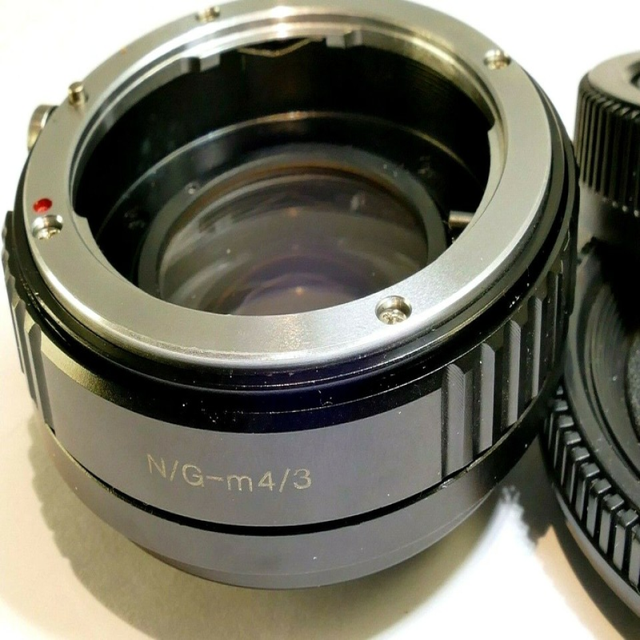
New Original Focal Reducer Lens Booster Adapter Nikon G to M4/3 Cameras GH5 GH4 PLC Controller
 Xiamen KNK Trading Co., Ltd.🇨🇳CN1 yr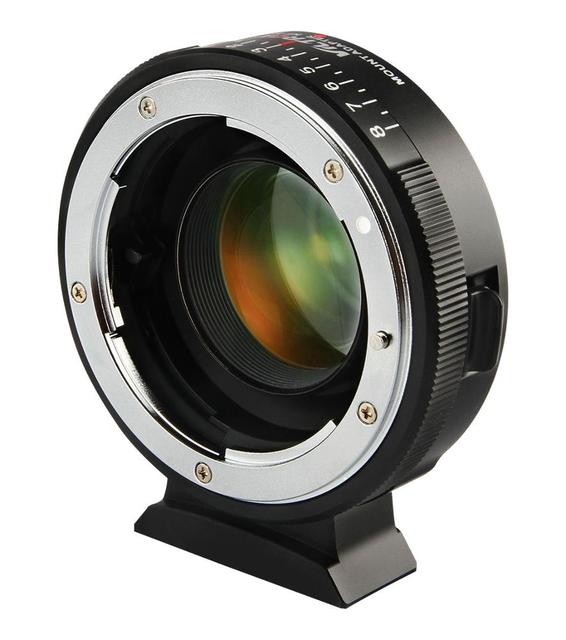
Viltrox Lens Adapter Ring NF-M43X 0.71X for Nikon Cannon to Olympus Micro Four Thirds M43 Focal Reducer Speed Boodter Manual
 Guangzhou Emilyfoto Co., Ltd.verified🇨🇳CN7 yrs
Viltrox EF-M2 II Electronic Adapter F Booster 0.71x for Canon EF to MFT M43 Micro Four Third Cameras GH5 BMPCC4K Focal Reducer
 Shenzhen Lovefoto Technology Co., Ltd.verified🇨🇳CN16 yrs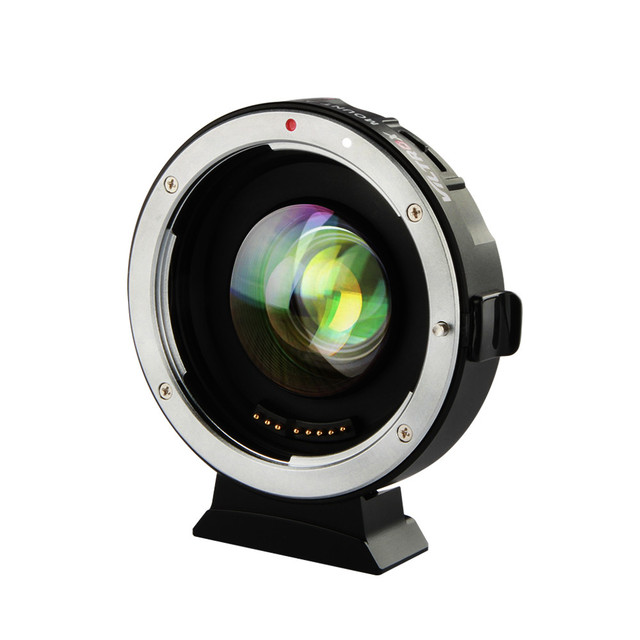
Viltrox Ef-m2 Focal Reducer Booster Adapter Auto-focus 0.71x For Ef Mount Lens To M43 Camera Gh5 Gh4 Gf7gk Gx7 E-m5 Ii M10

Focal Reducer Booster Adapter Auto-focus 0.71x Viltrox EF-M2 Adapter Lens Adapter for Canon EF Mount Lens to M43 Camera Gh5 Gh4

Viltrox EF-M2 II Speedbooster 0.71x Adapter for Canon EF to M43 MFT
 Shenzhen E-Reach Technology Co., Ltd.🇨🇳CN9 yrs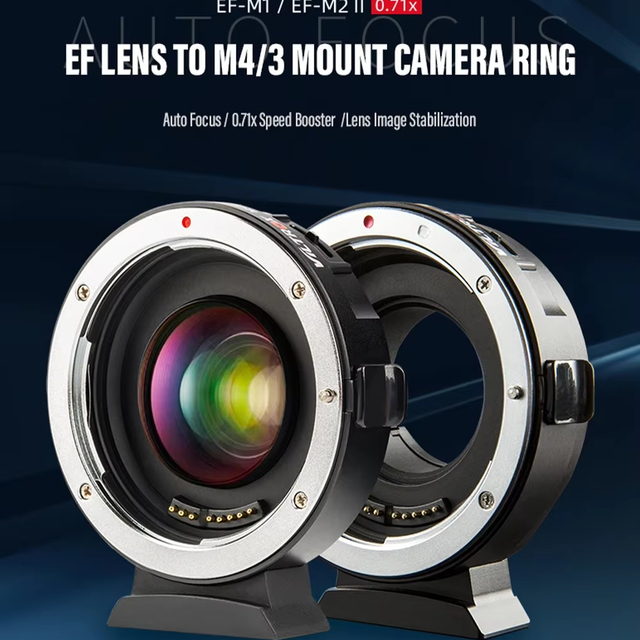
Viltrox EF-M2 II Auto Focus 0.71x Speed Booster Adapter for Canon EF Lens to M43 MTF Camera Panas Onic Olympus GH6 GH5 BMCC 4K

Viltrox NF-E Manual Aperture Lens Adapter Focal Reducer Speed Booster for Nikon F Lens to Sony E Mount A7 A7SII A6600 NEX-7
 Shenzhen New Vision Photography Equipment Co., Ltd.verified🇨🇳CN7 yrs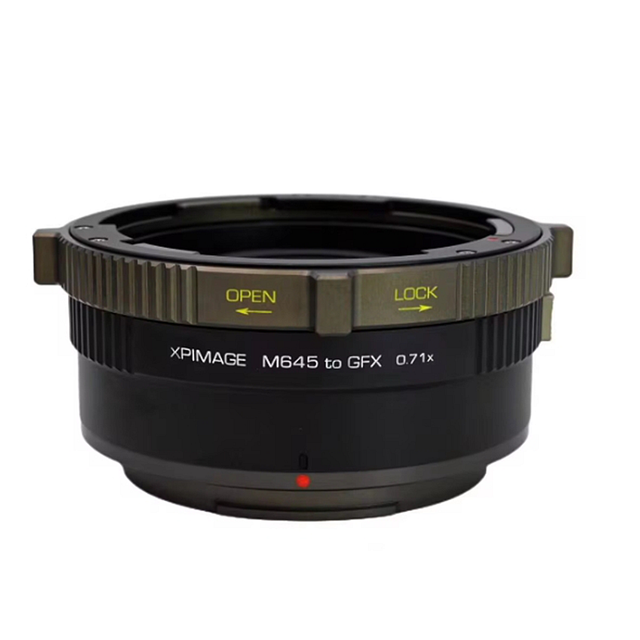
XPimage Speed Booster 0.71x Locking Focal Reducer Optics Adapter for Mamiya 645 Lens to FUJI GFX 100S 50SII 50R
 Shenzhen Huidou Technology Co., Ltd.🇨🇳CN4 yrs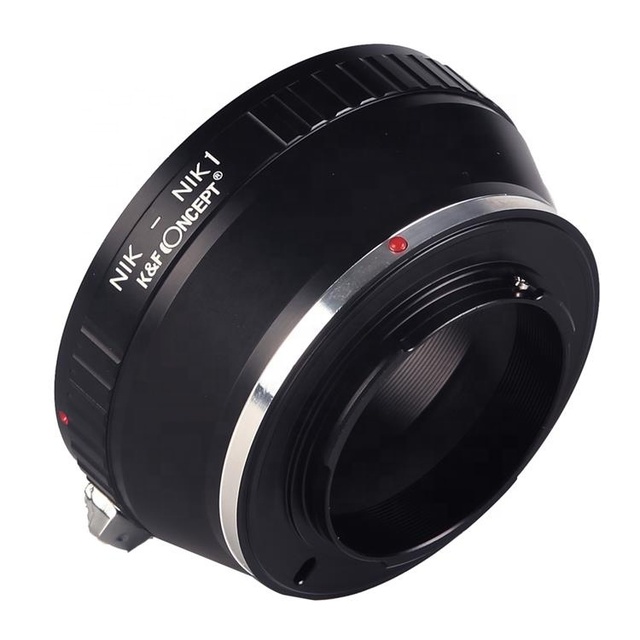
K&F Concept Lens Adapter Focal Reducer Lens Adapter Dslr for Nikon F Lenses to Nikon 1 Mount Camera Adapter
 Shenzhen Zhuo Er Photographic Equipment Co., Ltd.verified🇨🇳CN13 yrs
Lens Adapter EF-M II 0.71x Speed Booster for EF Lens to EF-M Mirrorless Camera M50 AF Auto Focal Reducer
 Shenzhen Hongtu Zhanfei Technology Co., Ltd.🇨🇳CN7 yrs
Related Searches
Explore more sourcing topics & related categories
Sources & References
24 sources cited · Verified industry data & reports
Every Micro Four Thirds Lens in 2026 (Complete MFT List) | Alik ...
alikgriffin.com
Kipon makes various lenses in various mounts. They currently make the Ibelux 40mm specifically for the Micro Four-Thirds mount. You can use their Iberit lenses in a Leica Mount and adapt them to Micro Four Thirds. Kipon also makes some of the best adapters for the price. PerGear has released a few lenses for the Micro Four-Thirds mount. Most of their low-element lenses will deliver a classic rendering with a lot of micro-contrast and flare. The Pergear 35mm f1.6 is very nice, with a great build and image quality. More information coming soon. Sirui is a new anamorphic lens that has hit the market. It is very competitively priced compared to the other anamorphic lenses on the market. The Sirui 50mm f1.8 will produce a squeezed 2.4:1 aspect ratio when shot on a 16:9 sensor. Vazen produces Anamorphic Cinema lenses for the Micro Four Thirds Mount. Anamorphic lenses use a curved front element to compress the image hitting the sensor. In post-production, the image is stretched out for a widescreen view. It can be a little difficult to calculate the 35mm equivalent for an Anamorphic lens because a 28mm lens will have a 56mm equivalent in terms of look and compression. The speed boosters allow you to adapt larger lenses, such as Nikon or Canon, to the MFT format. The advantage is that you gain about a stop of light and maintain a closer field of view of the lens you’re using. Metabones Nikon G to Black Magic Pocket – Amazon ... Metabones Canon EF to MFT XL 0.64x Metabones Canon EF to MFT Ultra 0.71x Metabones Canon EF to MFT Black Magic Pocket 4K 0.71x Viltrox EF-M2 EF to MFT 0.71x Viltrox EF-M 2 II EF to MFT 0.71x Kipon Baveyes Ultra Auto Focus EF to MFT 0.7x Kipon Baveyes EF to MFT 0.7x Kipon Baveyes M42 to MFT II 0.7x Pixco Pro Focusing Infinity EF to MFT 0.7x Pixco Pro Focusing Infinity FD to MFT 0.7x Pixco Pro Focusing Infinity Minolta MD to MFT 0.7x Pixco Pro Focusing Infinity M42 to M43 0.7×2
7 Best Lens Adapters for Micro Four Thirds Cameras (August 2026) ...
ffotografoshop.net
Whether you are mounting a $30 Canon FD 50mm f/1.4 or a $2000 Sigma 35mm f/1.4 Art, the right adapter makes it possible. Pick the one that matches your lens collection, calibrate infinity focus once, and start shooting. 10 Best Tamron Lenses for Wedding Photographers (August 2026) Latest Reviews In this guide, I’ll walk you through the best lens adapters for Micro Four Thirds cameras we’ve personally used for video, portrait, street, and macro work in 2026. Whether you’re chasing the legendary Sigma 18-35mm f/1.8 combo, breathing new life into your grandfather’s Nikon AI primes, or trying to make a vintage Canon FD 50mm f/1.4 sing on a Lumix body, there’s an adapter here that fits. Before we dive into specific products, let me explain what matters: the 2x crop factor, flange distance, and the difference between a passive adapter, an electronic adapter, and a focal reducer (often called a speedbooster). The 0.71x focal reducer delivers the same one-stop light gain and field-of-view improvement as its sibling, which makes adapting full-frame glass much more practical on M4/3. A 24mm lens becomes roughly a 26mm equivalent after the speedbooster and crop factor – much more usable than the 48mm equivalent you would get without a focal reducer. Build quality matches the original EF-M2 II with one useful improvement: the tripod foot is integrated and sturdier, which matters when you mount heavy cinema zooms or large Sigma Art lenses. If you have a drawer full of Nikon F-mount lenses and a Micro Four Thirds body, the Viltrox NF-M43X is the speedbooster I recommend most. It pairs a 0.71x focal reducer with a manual aperture ring that smoothly clicks between f/2 and f/8, giving you real control over depth of field without depending on camera electronics. I tested this adapter on a GH5 with a Nikon 50mm f/1.8 AI-S, a Sigma 35mm f/1.4 DG HSM Art in Nikon F mount, and an old Nikon 28mm f/2.8 AI.
Lens Mount Adapters – tagged "micro 4/3" – Fotodiox, Inc. USA
fotodioxpro.com
Adapters for modern & vintage lenses. Need help finding an adapter? Lens Mount: Lens Mount Alpa Arri Bayonet Arri PL Arri LPL Arri Standard B4 2/3" BNCR Bronica ETR Bronica PG Bronica SQ Bronica S C-mount Canon Canon 7/7s RF Canon EF Canon FD Contarex CRX Contax G Contax N Contax RF Contax/Yashica Contax 645 D-moun Be the first to know when we're running sales or launching new products!
Micro Four Thirds Adapters – Fotodiox, Inc. USA
fotodioxpro.com
Fotodiox Lens Mount Adapter - Sony Alpha A-Mount (and Minolta AF) DSLR Lens to Micro Four Thirds (MFT, M4/3) Mount Mirrorless Camera Body, with Built-In Aperture Control Dial ... Fotodiox Lens Mount Adapter - Arri Standard (Arri-S) Mount SLR Lens to Micro Four Thirds (MFT, M4/3) Mount Mirrorless Camera Body Fotodiox Lens Mount Adapter - C-Mount CCTV / Cine Lens to Micro Four Thirds (MFT, M4/3) Mount Mirrorless Camera Body Fotodiox Lens Mount Adapter - M42 Screw Mount SLR Lens to Micro Four Thirds (MFT, M4/3) Mount Mirrorless Camera Body Fotodiox Lens Mount Adapter - Canon EOS (EF / EF-S) D/SLR Lens to Micro Four Thirds (MFT, M4/3) Mount Mirrorless Camera Body
All Micro 4/3 - MFT lenses in 2026 - Do the right choice!
lesdeuxpiedsdehors.com
Updates – Micro 4/3 lensesLenses for the Micro 4/3 mount · 09/11/2025 : OM System M.Zuiko Digital ED 50-200mm f/2.8 IS PRO ... Without a dedicated adapter, you cannot directly mount lenses made for other systems, such as Canon, Nikon or Sony, on a Micro Four Thirds camera. Following my other articles covering lenses for different brands and mounts, I’m now tackling a much broader subject: lenses for the Micro Four Thirds mount, also known as MFT, M4/3 or μ4/3. Introduced in August 2008, this mount is now mainly used by Panasonic, through its Lumix G range, and Olympus / OM System. Most of the other lenses use manual focus. Unless I am mistaken, Tamron offers only one highly versatile standard zoom for the Micro Four Thirds mount. It can be used for portraits, landscapes, detail shots and many other situations, thanks to its very broad focal range. With the right adapter, some combinations are possible, but autofocus, image stabilisation and electronic controls depend on the lens and adapter being used. A quick reminder about focal length: in the tables below, you will see lenses described as wide-angle, ultra-wide-angle, standard or telephoto. A 100mm lens always remains a 100mm lens, but the sensor size changes the field of view. Because Micro Four Thirds has a 2x crop factor compared with full frame, a 35mm lens on an MFT camera provides the same field of view as a 70mm lens on a full-frame camera, which already places it in short-telephoto territory.
The Best Micro Four Thirds Lenses We've Tested for 2026 | PCMag
www.pcmag.com
I've picked out some of the best performers and values for Micro Four Thirds cameras, so read on if you are trying to figure out what glass to get for the Editors' Choice-winning Panasonic Lumix DC-G9 II, the retro chic OM System OM-3, or any other Micro Four Thirds camera. March 20, 2026: With this update, we added the OM System 50-200mm F2.8 to our list of recommended telephoto lenses for Micro Four Thirds. If you're planning on using lenses originally made for SLRs, it's easy if you're willing to deal with manual focus and aperture control via a simple mechanical adapter. This guide applies to lenses made for M43, but we have a separate guide for photographers who want to use vintage glass with a new digital camera. Lumix Leica 12-60mm F2.8-4.0 / Panasonic G9 II (Credit: Jim Fisher) Olympus (now OM System) and Panasonic started things off, but several others have employed the mount over the years. Cameras in the Blackmagic Pocket Cinema line, DJI drones, and even some smartphones have all joined the platform. Panasonic Lumix G100 with 12-32mm lens (Credit: Jim Fisher) Micro Four Thirds cameras use a different image sensor format than full-frame and APS-C cameras, so you need to do some math to match up focal lengths between the systems. Micro Four Thirds also uses a 4:3 aspect ratio.