Lens Small

Overview
Product sourcing insights & recommendations
The "lens small" market is characterized by two distinct shifts: technological miniaturization in the industrial/camera sectors and aesthetic minimalism in eyewear. By 2026, the industrial lens market is moving toward ultra-compact M7 and M8 formats to support embedded vision in robotics, while the smartphone segment continues to prioritize high-resolution telephoto lenses in small form factors to enhance mobile photography. In fashion, a "quiet luxury" trend is driving demand for slim, geometric, and sculptural small frames over traditional oversized styles.
I have compiled a comprehensive market trend and insight report detailing these developments across industrial, mobile camera, and eyewear categories, including specific product recommendations and manufacturer highlights.
Based on the trends identified, would you like to:
Small Frame Eyeglasses Lenses Slim Geometric Eyewear
Products · 3 lists
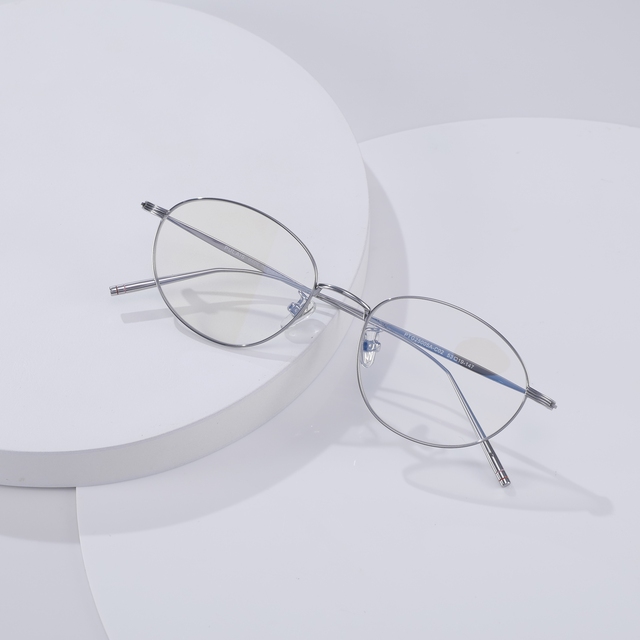
Durable Titanium Optical Eyeglasses Frames Lightweight Full Rim Oval Anti-blue Light Glasses for Men Women Wholesale
 Shenzhen Lesen Glasses Co., Ltd.🇨🇳CN3 yrs
MS 81771 Kids Geometric Frame Blue Light Blocking Glasses, Minimalist Temple Design, Premium Quality Fashion Eyewear
 Yiwu Moshine Glasses Co., Ltd.🇨🇳CN9 yrs
829 Stylish Geometric Women's Frame for Optical Eye Glasses for Eyewear Glasses High Quality Factory Direct Supply Hot Sale
 Danyang Kyen Optical Glasses Limited🇨🇳CN3 yrs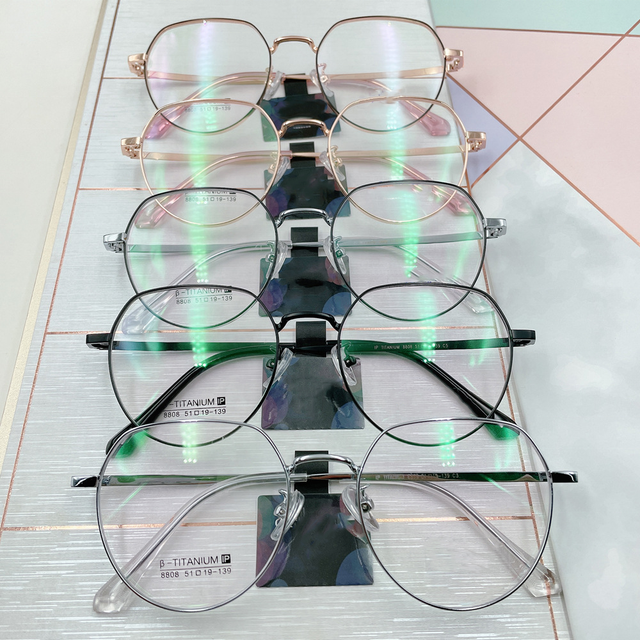
Titanium Geometric Full Frame Funky Retro Eyeglasses ISO9001 Certified Ideal for Workouts Hiking Travel and Daily Commuting
 Wenzhou Lanyi Import & Export Co., Ltd.verified🇨🇳CN1 yr
Wholesale Custom Logo 2025 Trendy Geometric Pattern Full Rim Round Style Frame Optical Eyeglasses Fashion Unisex Stock
 Nanyang Xuhong Trading Co., Ltd.🇨🇳CN4 yrs
High Quality Metal Frame Round Geometric Pattern Blue Light Blocking Glasses Optical Unisex Luxury Trendy Reading
Deep Dive · Full Report
Full Market Report
1 document · Live-fetched from source
Related Searches
Explore more sourcing topics & related categories
Sources & References
24 sources cited · Verified industry data & reports
Lens Trends and Forecast 2026-2034
www.datainsightsmarket.com
The "Others" category within lens types is a burgeoning space, encompassing highly specialized lenses for augmented and virtual reality, automotive systems, and advanced scientific instrumentation, each with unique optical requirements and significant growth potential, with individual product lines expected to contribute hundreds of millions to the market. Supply Chain Disruptions: Global supply chain vulnerabilities can impact the availability of raw materials and components, leading to production delays. Rapid Technological Obsolescence: The fast-paced nature of technology means that lens designs can become outdated quickly, requiring continuous innovation. Stringent Quality and Regulatory Standards: Meeting the rigorous quality and regulatory requirements for medical, automotive, and aerospace lenses can be a significant barrier to entry. The lens market is witnessing several exciting emerging trends: To stay informed about further developments, trends, and reports in the Lens, consider subscribing to industry newsletters, following relevant companies and organizations, or regularly checking reputable industry news sources and publications. Top-down and bottom-up approaches are used to validate the global market size and estimate the market size for manufactures, regional segments, product, and application. The report's deliverables include detailed market size and forecast data in millions, key trends, driving forces, challenges, and a competitive landscape analysis, providing actionable intelligence for stakeholders. Several key factors are propelling the lens industry forward: Technological Advancements: Continuous innovation in optical design, material science, and manufacturing processes allows for smaller, lighter, and more powerful lenses.
Camera Lens Market Size, Share & Forecast, 2026–2035
www.gminsights.com
The global camera lens market was estimated at USD 6.4 billion in 2025. The market is expected to grow from USD 6.8 billion in 2026 to USD 12.8 billion in 2035, at a CAGR of 6.5%, according to latest report published by Global Market Insights Inc. ... Expansion of content creation, vlogging, and social media video production. Which region dominated the Asia Pacific camera lens market in 2025? China dominated the Asia Pacific market, valued at USD 6.9 billion in 2025, and is estimated to grow at a CAGR of 5.3% from 2026 to 2035. What are the key trends in the camera lens industry? Based on type, the market is categorized into built-in lens and interchangeable lens. The interchangeable lens segment accounted for revenue of around USD 4.2 billion in 2025 and is anticipated to grow at a CAGR of 6.6% from 2026 to 2035. Based on distribution channel, camera lens market consists of online and offline. The offline emerged as leader and held 79.4% of the total market share in 2025 and is anticipated to grow at a CAGR of 6.5% from 2026 to 2035. The offline distribution channel holds a strong share in the market due to consumer preference for physically evaluating products before purchase.
Lens Cases Market Future-Proof Strategies: Market Trends 2026-2034
www.datainsightsreports.com
Global Product, Quality & Strategy Executive- Principal Innovator at Donaldson · As requested- presale engagement was good, your perseverance, support and prompt responses were noted. Your follow up with vm’s were much appreciated. Happy with the final report and post sales by your team. ... The global Lens Cases Market is poised for robust growth, projected to reach approximately USD 1.19 billion by 2026, exhibiting a Compound Annual Growth Rate (CAGR) of 4.2% during the forecast period of 2026-2034. Travel Lens Cases: Tailored for individuals on the move, these cases prioritize portability, leak-proof designs, and often incorporate travel-sized solution bottles. They are designed to be compact and convenient, fitting easily into bags and luggage. Others: This category includes niche products such as UV sanitizing cases, cases with automatic cleaning mechanisms, and specialized designs for specific lens types, reflecting innovation and growing consumer demand for advanced features. Because our advisors know this too well, they consider every possible impact on the market in that region, be it political, economic, social, legislative, or any other mix. We go through the latest trends in the product category market about the exact industry that has been booming in that region. Further analysis reveals that the increasing demand for specialized lens cases, such as travel-friendly and aesthetically pleasing options, is shaping market dynamics. Innovations in design, material science, and antimicrobial properties are key trends that manufacturers are capitalizing on to gain a competitive edge. However, the market also faces certain restraints, including the high cost of certain advanced materials and the potential for product commoditization, which can impact profit margins.
Contact Lenses Market Size, Trends & Forecast 2026-2036
www.futuremarketinsights.com
Contact Lenses market revenue is anticipated to ascend from USD 12.1 billion in 2026 to USD 19.9 billion by 2036, registering a CAGR of 5.1%. Retail outlets are expected to hold a dominant 45.8% share, while Soft contact lenses will lead the Product Type category with a 72.45% share. Research focused on vision care products suggests that the convenience of disposable modalities within the soft lens category is a primary driver. Critical role in facilitating sports and active lifestyles further solidifies standing. As supply chains prioritize patient compliance, demand for robust soft lens formats is expected to remain robust. Retail outlets command 45.8% share of sector in 2026, reflecting the continued importance of the "prescribe-and-purchase" model within optical chains. As per FMI's estimates, converters are capitalizing on these trends by introducing contact lens induced infections resistant materials. Integrating moisture-locking technologies is becoming considered standard, ensuring comfort mandates are met for digital device users suffering from dry eye syndrome. The global landscape is intricately segmented to address diverse requirements of corrective, therapeutic, and cosmetic sectors, categorizing the sector by product type, design, and sales channel. As the industry matures, granular segmentation becomes essential for understanding the flow of capital and innovation, ensuring product development aligns perfectly with the lifestyle needs of global consumers. Soft contact lenses account for 72.45% of share in 2026, driven by their immediate comfort and ease of adaptation for new wearers.
Camera Lens Market Size, Share & Trends Forecast to 2034
www.imarcgroup.com
IMARC Group provides an analysis of the key trends in each segment of the global camera lens market report, along with forecasts at the global, regional, and country levels from 2025-2033. Our report has categorized the market based on type, distribution channel, and application. Moreover, the growth of online retail and e-commerce platforms has made it easier for consumers to access a wide variety of camera lenses. These platforms offer extensive product information, customer reviews, and competitive pricing, enabling consumers to make informed purchase decisions conveniently, which is positively influencing the market growth. These countries have a strong presence of camera and lens manufacturers, which contributes to the region's market dominance. Moreover, the rapid urbanization in countries like China and India, coupled with the expanding middle class, has led to increased consumer spending on electronics and gadgets. As people in the region embrace photography as a hobby and pursue high-quality imaging products, the demand for camera lenses has surged. The camera lens market has a dynamic competitive landscape with several key players competing for market share. Presently, various key market players are introducing mirrorless cameras with advanced features to achieve higher product differentiation. They are also developing lenses with a wide aperture for product or portrait photography.
Optical Lens Market Size, Growth & Industry Trends [2034]
www.fortunebusinessinsights.com
They are further categorized into countries. Asia Pacific Optical Lens Market Size, 2025 (USD Billion) To get more information on the regional analysis of this market, Download Free sample · In 2025, Asia Pacific represented USD 8.56 billion, accounting for 40.10% of the worldwide market, and is projected to grow to USD 9.4 billion in 2026, on account of the presence of major players such as Tamron Co., Ltd., Sunny Optical Technology (Group) Company Limited, Canon Inc., FUJIFILM Corporation, SONY ELECTRONICS INC., Nikon Corporation, thereby rising demand for consumer electronics products and increasing automotive production. Moreover, the shortage of raw materials, such as high-quality sand and soda ash, used in glass production is expected to hamper the market growth. Robust Demand from a Wide Range of Industries to Fuel the Demand for Converging Lenses · Based on type, the market is divided into converging and diverging. The converging segment is expected to hold the maximum market with a share of 60.34% in 2026. June 2023: Nikon Corporation, an optical instrument manufacturer company, plans to expand its Japan-based optics factory to increase the production capacity for lenses in cameras, microscopes, and semiconductor exposure equipment. The facility is anticipated to cost approximately USD 224 million, with operation starting in 2026. The Latin America market was valued at USD 2.05 billion in 2025, capturing 9.90% of global revenue, and is estimated to reach USD 2.19 billion in 2026. Key Players Focus on Strengthening their Market Position with Continuous Developments · The global market is consolidated by leading players such as Tamron Co., Ltd., Sunny Optical Technology (Group) Company Limited, Canon Inc., FUJIFILM Corporation, SONY ELECTRONICS INC., and Nikon Corporation. These companies are expanding their operations by adopting strategies such as acquisitions, collaborations, mergers, partnerships, and product launches.