Low Power Flash Memory

Overview
Product sourcing insights & recommendations


The 'low power flash memory' market is currently undergoing a transformative phase driven by the 'AI-Center' shift and the rapid expansion of edge computing. By 2026, a significant supply-demand gap of 4.2% for NAND Flash is expected Ersaelectronics, with data centers projected to consume up to 70% of high-end memory Enkiai.
Market Trends & Insights (2025–2026)
* Global Shortage Forecast: The memory sector is entering a period of scarcity due to AI training demands. NAND Flash prices are expected to rise as enterprise demand for high-speed local storage spikes AmpheoIdc.
* Technological Pivots: The industry is moving beyond standard density toward "Power-First" architectures. Significant breakthroughs include:
* Samsung's 96% Power-Saving FeFET: Utilizing hafnium oxide doped with zirconium (HZO), Samsung has theoretical models for 1,024-layer NAND that reduces read power by 96% by minimizing "pass voltage" Reddit.
* Kioxia/SanDisk 10th Gen 3D Flash: These companies have achieved a 34% reduction in output power and a 4.8 Gb/s interface speed, utilizing CMOS directly Bonded to Array (CBA) technology Kioxia.
* Edge AI Integration: ANAFLASH is advancing Logic-Compatible Embedded Flash (Logic-eFlash™) that integrates directly into standard microcontrollers for "Zero-Standby Power" in IoT and wearables Anaflash.
Product Analysis & Sourcing Insights
Current wholesale availability focuses on two main segments: Ultra-Low Power NOR Flash for IoT sensors and Embedded NAND (eMMC) for industrial consumer electronics.
* NOR Flash for IoT: Products like the MX25R1635F (16Mb, 1.8V) are specifically optimized for low-power battery-operated devices .
* Wholesale Pricing: Small-scale NAND chips (1Gb–4Gb) are highly competitive, with prices ranging from $0.20 to $0.90 per unit at wholesale volumes .
Low Power Flash Memory Module Wholesale
Products · 3 lists
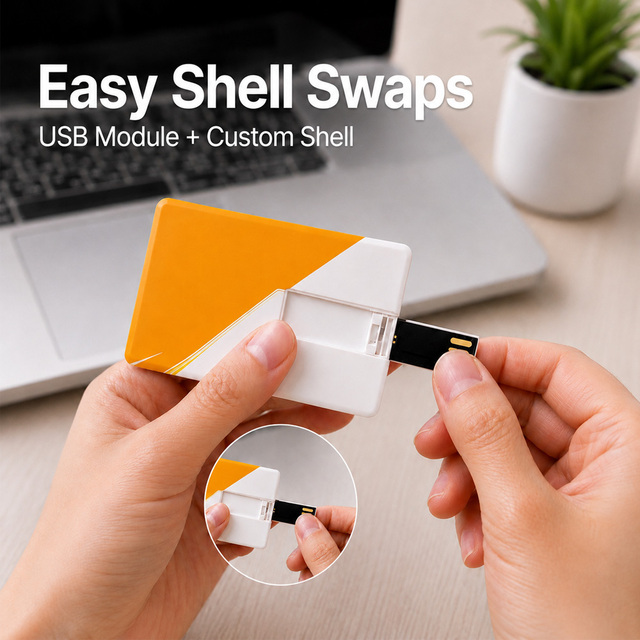
Nandstor Factory UDP Flash Chip USB 2.0 3.0 Bare Memory Module Black Colloid USB Disk Chip MUDP Memory Chip OTG UDP PCB Module
 Shenzhen Novus Technology Co., Ltd.verified🇨🇳CN1 yr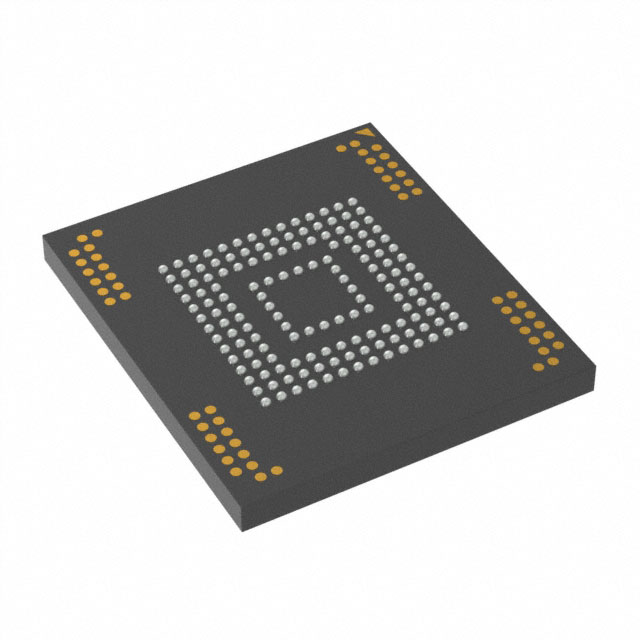
THGBMNG5D1LBAIL 4GB E-MMC 5.0 Flash Memory NAND FBGA-153 SMD Embedded Storage IC for Industrial Consumer Electronics
 Shenzhen Hopestar Sci-Tech Co., Ltd.verified🇨🇳CN19 yrs
Related Searches
Explore more sourcing topics & related categories
Sources & References
24 sources cited · Verified industry data & reports
Global Memory Shortage Crisis: Market Analysis and the ...
IDC | Trusted Tech Intelligence
A global memory shortage is reshaping smartphone and PC markets for 2026. Rising DRAM and NAND costs threaten pricing, specs, and growth ...
Memory Chip Price Increase: 2026 Market Trends ...
Ersa Electronics
Large supply gaps: By 2026, the global supply-demand gaps for DRAM, NAND Flash, and HBM are expected to reach 4.9%, 4.2%, and 5.1%, respectively ...

Global NAND Flash Market Trends & Industry Analysis 2035
Business Research Insights
The NAND Flash Memory Market Size is USD 77.18 billion in 2026 and will reach USD 199.07 billion by 2035, growing at 11% CAGR.

Memory Chip Market Forecast 2026: DRAM, NAND, HBM, ...
Ampheo
NAND Flash is entering 2026 with a strong enterprise bias. AI training and inference clusters need fast local storage for datasets, checkpoints, ...

The State of Industrial Flash Memory in 2026
Delkin Industrial
Flash memory in 2026 is more capable than ever, but also more complex. The tradeoffs between density, performance, and reliability are more pronounced, ...

Flash Memory Market Size, Trends, 2026-2033 Forecast & ...
LinkedIn · MarketZen Analytics Lab
Flash Memory Market size was valued at USD 50 Billion in 2024 and is poised to grow from USD 55 Billion in 2025 to USD 125 Billion by 2033, ...