Lsd Battery

Overview
Product sourcing insights & recommendations
LSD (Low Self-Discharge) batteries represent a high-performance evolution of rechargeable NiMH technology, designed to address the "rechargeable reputation problem" of rapid energy loss during storage. Ecoflow
Product Profile: What is an LSD Battery?
LSD batteries, famously pioneered by Panasonic's Eneloop in 2005, feature structural and chemical enhancements to minimize internal leakage. EcoflowResearchgate
* Key Technical Superiority: While traditional NiMH batteries can lose 20–30% of their charge monthly, LSD variants retain 70–85% of their capacity after one year and approximately 75% after three years. EcoflowQyresearch
* Ready-to-Use Capability: They are sold pre-charged and can be used immediately after purchase, unlike standard rechargeables which often require charging before the first use. EcoflowNbcell
* Optimized Performance: Although they typically offer ~20% lower rated capacity than top standard NiMH cells (e.g., 2000mAh vs 2600mAh), their performance in high-drain devices like camera flashes is nearly identical due to low internal resistance. EcoflowStackexchange
* Operating Resilience: They remain reliable in extreme conditions, often functioning in temperatures as low as –20°C. StackexchangeQyresearch
Market Trends & Insights (2025–2026)
The LSD NiMH market is a specialized but stable segment within the broader battery industry, currently valued at approximately US$ 189 million (2025). Qyresearch
* Steady Global Growth: The market is projected to grow to US$ 198 million by 2032 (CAGR of 0.7%), driven by their role as a mid-tier, eco-friendly alternative to disposable alkaline batteries. Qyresearch
* Smart Home Synergy: The expansion of IoT and smart home devices (remotes, sensors, electronic locks) that sit idle but must work on demand is a primary growth engine. EcoflowQyresearch
* Industrial & Medical Adoption: Beyond consumer electronics, there is increasing demand in emergency lighting, medical equipment, and mining industries where long-term standby reliability is critical. NbcellQyresearch
* Cost Efficiency: With unit prices averaging around $0.72, they are increasingly competitive against both single-use alkalines and more expensive Li-ion rechargeables for household applications. RedditQyresearch
I have identified several high-quality LSD NiMH batteries and verified manufacturers for sourcing. The attached files include detailed specifications, MOQs, and supplier capability tags for these products.
I can help you narrow down the best sourcing options based on these findings. You can continue with:
Lsd Nimh Rechargeable Battery Aa Aaa 1.2v Pre Charged
Products · 2 lists
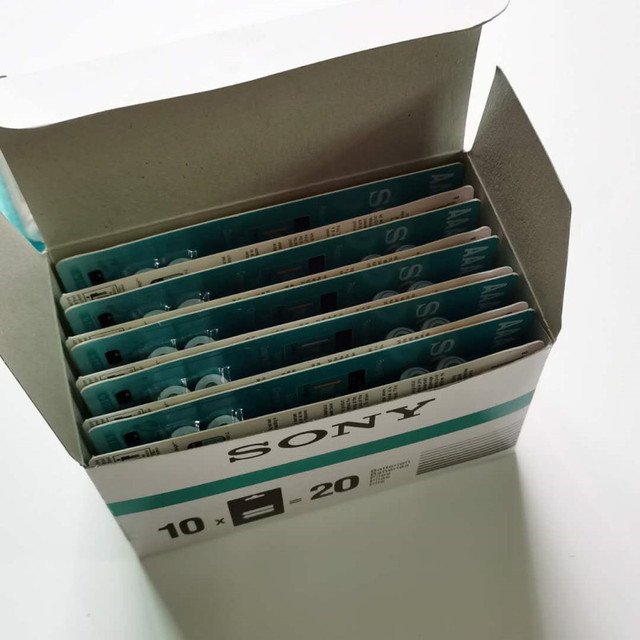
Aax2 Aaax3 DX2 C SC AA Rechargeable Battery 4600Mah 1.2v Ni Low Self-discharge Rechargeable Battery 2 Pieces in a Card
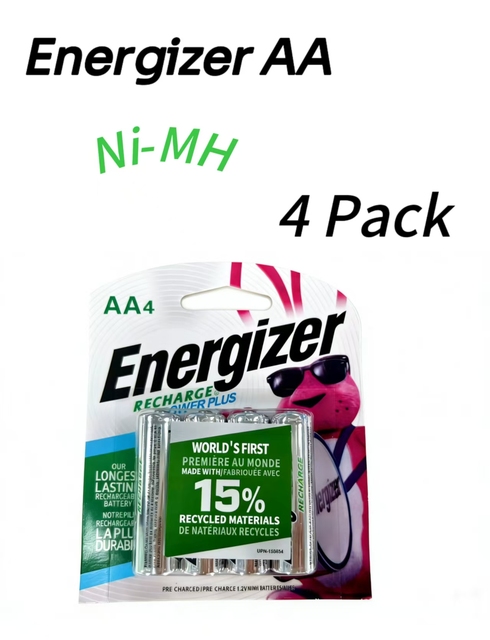
AA/AAA Rechargeable NiMH Batteries High Capacity Blister Pack Pre-Charged 2.76Wh China Toys Microphones Consumer Electronics
 Sino-Shanghai Hangzhou Manufacturing🇨🇳CN5 yrs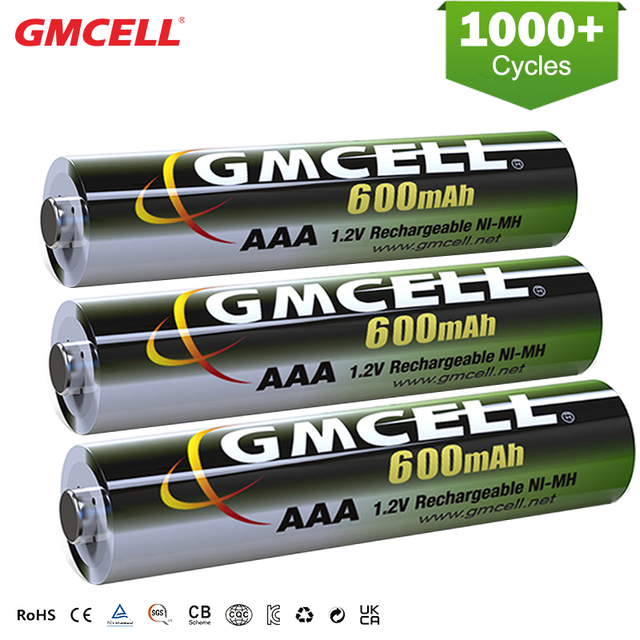
NI-MH Battery Factory wholesale 1.2V NiMH AAA Rechargeable Batteries 600mAh/800mAh/1000mAh for Flashlight
 Shanghai Anxi International Groupverified🇨🇳CN3 yrs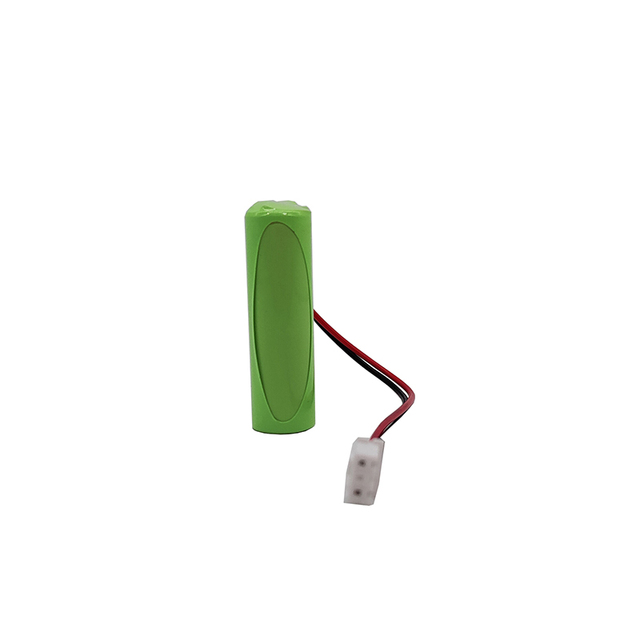
Rechargeable NiMH Battery Packs 1.2V 2.4V 3.6V 4.8V AA Ni-MH 1800mAh 2000mAh 2200mAh 2400mAh Nimh Battery Pack
 Anxi Shanghai Industries Co., Ltd.verified🇨🇳CN17 yrs
1.2V Ni-MH Aa and Aaa Rechargeable Batteries with Charger for Flashlight
 Shanghai Hangzhou International Groupverified🇨🇳CN14 yrs
Lsd Battery Pick #6 (974662)
Related Searches
Explore more sourcing topics & related categories
Sources & References
28 sources cited · Verified industry data & reports
Low Self Discharge NiMH Batteries - NBCELL
nbcell.com
Low self discharge nickel-metal hydride batteries, also known as LSD NiMH batteries, are designed to solve the problem of self-discharge that is common in traditional rechargeable batteries. Our company is a manufacturer of NiMH batteries, and our customers have very good feedback on our LSD NiMH batteries. Today we will learn more about LSD NiMH batteries. Batteries, regardless of their type, naturally lose their charge over time, even when not in use. This phenomenon is known as self-discharge. Self-discharge is due to a number of factors, and the rate of self-discharge varies depending on the battery chemistry and its structure. Traditional rechargeable batteries, such as NiCd (Nickel Cadmium) and older NiMH (Nickel Metal Hydride) batteries, are known to have relatively high self-discharge rates. This means that even if you fully charge these batteries and leave them idle for a period of time, they will gradually lose their charge, leaving you with a depleted battery when you need it most. Compared to these batteries, low self-discharge NiMH batteries have a much lower self-discharge rate. At NBCELL, our low self-discharge NiMH batteries have an ultra-low self-discharge rate. The battery capacity retention rate reaches 85% when placed in normal environment for one year. They are widely used in emergency lights, electronic instruments, medical equipment and mining industry.
Low Self-Discharge Batteries: Why They Matter | EcoFlow US
energy.ecoflow.com
The biggest leap forward in consumer rechargeable technology came with the development of Low Self-Discharge NiMH batteries — most famously, the Panasonic Eneloop line introduced in 2005. Before LSD NiMH existed, rechargeable batteries had a reputation problem: you'd charge them, store them, and find them dead when you actually needed them. LSD NiMH solved that. Classic NiMH vs. Low Self-Discharge NiMH — the Eneloop revolution · Standard NiMH batteries were powerful but notoriously impatient. Left in a drawer, they'd lose most of their charge within weeks. Different battery chemistries offer very different levels of self-discharge, lifespan, safety, and storage performance. Choosing the right type depends on how and where the battery will be used. ... The most widely available rechargeable format for AA and AAA batteries. In their LSD form, NiMH cells are ideal for TV remotes, game controllers, toys, wireless keyboards, digital cameras, smoke detectors, and clocks — any device that sits idle but must work reliably on demand. LSD NiMH batteries do come with one real trade-off: they typically offer around 20% lower rated capacity than the highest-capacity standard NiMH cells. Under low-stress, low-drain conditions — remotes, clocks, smoke detectors — this gap is noticeable on paper but barely felt in practice. Under high-stress, high-drain conditions like camera flash or power tools, the two types perform nearly identically, because peak discharge behavior is governed more by internal resistance than rated capacity.
Discharge characteristics LSD vs. Standard NiMH batteries [64] ...
www.researchgate.net
This electrode is made from a metal hydride usually alloys of Lanthanum and rare earths that serve as a solid source of reduced hydrogen that can be oxidized to form protons. The electrolyte is alkaline potassium hydroxide. Cell voltage is 1.2 Volts. The low self-discharge nickel-metal hydride battery (LSD NiMH) was introduced in November 2005. These batteries were developed by Sanyo, who called them ”eneloop”. Subse- quently, other manufacturers also offered LSD NiMH. Low self-discharge (LSD) NiMH Batteries: This kind of battery reduces self-discharge and, therefore lengthens shelf life compared to normal NiMH batteries. Thick separators take up space and reduce capacity, while providing a low-tech way of reducing self discharge, while thin separators tend to raise the self discharge rate. Some batteries may have overcome this obstacle with more precise manufacturing techniques and by using a more advanced sulfonated polyolefin separator [64]. Specifications for the self discharge rate are not always clear or widely published, and virtually any LSD may claim to maintain some level of charge after 12 months. Download scientific diagram | Discharge characteristics LSD vs. Standard NiMH batteries [64] from publication: Energy Harvesting on Human Bodies | Human body has an interesting potential to provide energy to micro-electronic systems. There are several techniques that can harvest energy from human body and convert it in energy to be used by electronic systems.
24 AAA Low Self-Discharge (LSD) NiMH Rechargeable Batteries, 6 ...
www.translation.equipment
Translation Equipment and Simultaneous Interpretation Systems, to 65% OFF. We are an online Store who provides Solutions for Professional Translation and Interpretation Equipment. In contrast to a disposable battery, the Tenergy Low Self-Discharge Battery can be used over hundreds of times saving the environment and your purse. 16-Bay LCD Fast Battery Charger/ Discharger with USB Output and 52 AAA Ni-MH Low Self Discharge Rechargeable Batteries These quality batteries maintain the charge over the 12-Bay LCD Fast Battery Charger/ Discharger with USB Output and 20 AAA Ni-MH Low Self Discharge Rechargeable Batteries.
LSD (low self discharge) battery question | AnandTech Forums: ...
forums.anandtech.com
LSD makes a HUGE difference - I feel comfortable using these in a flashlight, for TV remotes, - things where previously I would not have considered using rechargeables. However, I've never been able to find details on what they actually do to these batteries that makes them LSD - low self discharge. If anyone knows of a link to information about this, I'd really like to know! (& thanks) Some info about LSD batteries: LSD battery info ... They have a thicker separator in them to slow down self discharge. This takes up a little space so will be a little lower capacity due to that. Most lithium chemistry batteries already have very low discharge. LiFePO4 is a bit higher than some, around 4%/month, but that's still pretty reasonable for the typical devices they're used in, since their primary benefit is # of recharge cycles and if you need something with higher # recharge cycles, odds are it won't be long till they're drained from the load rather than self discharge. The USB recharge port on it broke, which was really annoying as that's also the easiest way to get the pics off, but an aftermarket charger was cheap, and it's not a big deal to take the SD card out, or they now make SD cards with wifi to transfer pics if I wanted to bother getting one but they are also much lower capacity and I like having the higher capacity for videos. ... >>I should have bought the Canon that took 4 x AA instead! Yep, I try to stick with models that take 4 AA batteries, because they seem to last so long.
Talk:Low self-discharge NiMH battery - Wikipedia
en.wikipedia.org
All LSD NiMH batteries are not necessarily the same. Some would claim these are better. We come together here to try to learn the truth of such detailed claims. -69.87.199.6 (talk) 17:54, 25 November 2007 (UTC)[reply] There are no newspaper articles or notable technical articles about Eneloop, and nothing to state why Eneloop is different from other Low-Self-Discharge NiMH batteries. It seems Eneloop is merely a brand-name of Sanyo, and there is nothing notable that sets the technology of Eneloop batteries apart from other LSD-NiMH batteries. --Lester 21:27, 25 November 2007 (UTC)[reply] I agree that this article should be merged into Nickel_metal_hydride_battery#Low_Self_Discharge_Batteries. According to "Charge Retention" paragraph, batteries retain 70% after two years. It should probably be something like 60-70% after two years, but I don't know the accurate numbers.. Mar Garina (talk) 22:07, 28 June 2008 (UTC)[reply] The self discharge of NiMh slows down with time. A LSD type might lose 15% in the first month, but out to two years still have 70% capacity remaining. Sanyo Eneloop AA 2000 mAh LSD batteries have unusually high starting voltage under light load (.5 Amp), 1.48 V (compared to about 1.4 V for most NiMH AA batteries), and unusually high voltage under load, 1.25V at 1A and 1.21V at 2A, mid-discharge. So these would be particularly good for replacing alkaline AA batteries in equipment designed for alkaline: ... The RayOVac Hybrid AA 2100 mAh LSD batteries don't seem to have these unusual high voltages. What about other LSD NiMH batteries? -69.87.199.58 (talk) 16:08, 28 September 2008 (UTC)[reply] In 2007-2008, archae86 tested sets of LSD AA and AAA NiMH, and normal AA NiMH batteries.[4] Self-discharge was measured for up to 3 months. ...the batteries retain 70 to 85% of their capacity after one year when stored at 20 °C (68 °F), while standard NiMH batteries may lose half their charge in this time period. ...Due to the low self-discharge, they (LSD NiMH batteries) are also suitable for long-term intermittent or low-current uses; they might last up to a year between charges, much better than ordinary NiMH batteries.