Media Switches

Overview
Product sourcing insights & recommendations
The phrase "media switches" primarily refers to two distinct categories: Hardware Networking Infrastructure (bridging fiber and copper) and Video Production/Digital Media Platforms (managing live content and VOD).
Recent market trends show a sharp rise in demand for both categories, with Google Trends indicating a peak interest score of 84 in early 2026, driven by high-speed networking and AI-enhanced video production.
1. Hardware Networking: Media Converters & Switches
These devices bridge the gap between different transmission media, typically copper (RJ-45) and fiber optics. Omnitron-SystemsFs
* Product Definition: Media converters are point-to-point "translators," while network switches are multi-port "directors" that manage traffic within a LAN. Omnitron-SystemsAlliedtelesis
* Key Trends:
* Speed Migration: Rapid adoption of 10G, 25G, and 100G speeds to handle data-heavy applications. Omnitron-Systems
* PoE Dominance: Integration of PoE++ (up to 100W) to power high-end outdoor cameras and wireless APs directly. Techtarget
* Industrial Hardening: Growth in IP40-rated switches for Smart City and industrial IoT applications. Omnitron-Systems
2. Digital Media: Production Switchers & OTT Platforms
This category covers tools used to mix live video feeds or manage digital content delivery. RossvideoSwitch
* Product Definition: Video switchers (vision mixers) blend multiple camera sources into a single stream. Software-based OTT platforms (like Switch Media) manage VOD2Live and ad-insertion workflows. RossvideoSwitch
* 2026 Market Insights:
* Fan-Centric Monetization: Fans spend 16% more time and significantly more money ($71 vs $56/month) on media, driving demand for platforms that offer aggregated content experiences. Deloitte
* Gen AI Cocreation: Approximately 24% of fans are interested in using AI to create custom highlights or alternative endings, creating a new niche for AI-integrated media switchers. Deloitte
* VOD2Live: Traditional streamers are using software "switches" to turn static libraries into linear, ad-supported broadcast channels to reduce churn. SwitchDeloitte
Sourcing & Comparison
I have identified several B2B sourcing options for these categories, ranging from low-cost enterprise converters to high-end professional video switchers. Detailed technical specs and supplier locations are available in the files below.
Based on these market trends, you can continue with:
Industrial Ethernet Switch For Smart City Applications
Products · 3 lists
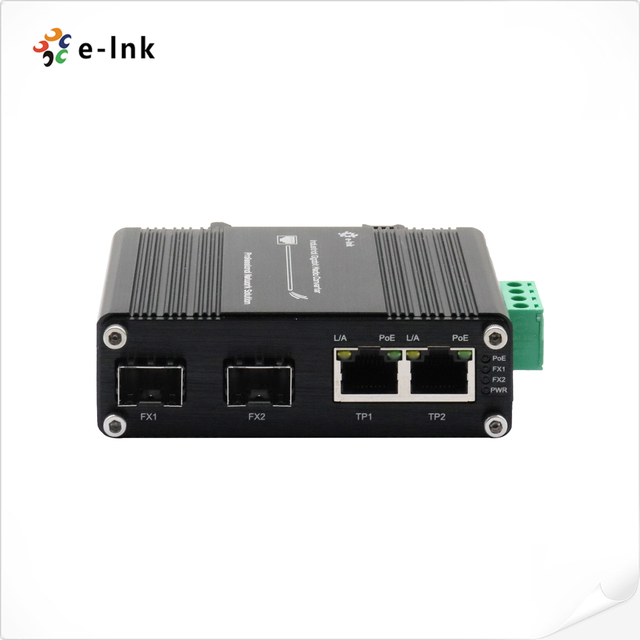
Industrial PoE+ Switch 30W Gigabit Ethernet 12-48VDC Wide Voltage Input Outdoor Networking Smart City Applications 4 Gbps Wall
 Shenzhen E-Linkchina Technology Co., Ltd.verified🇨🇳CN13 yrs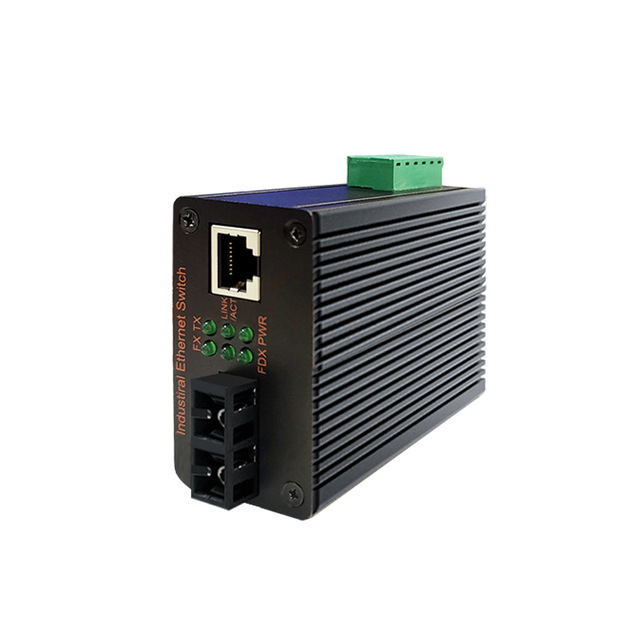
Industrial-grade Ethernet Switch 2G 100M/1G 1 Fiber 1 Copper Single-mode SFP Rail-mounted 12V/24V IP40
 Shenzhen J.D.N Technology Co., ltd.🇨🇳CN2 yrs
Genuine New MDS-G4020 20-Port Full Gigabit Managed Industrial Ethernet Switch For Smart City Industrial Communication System
 SHENGJIN INDUSTRIAL (HK) LIMITED🇭🇰HK1 yr
Industrial Ethernet Switch 8 Port GE + 8 Port SFP Managed L2 Gigabit Fiber Optic Switch 32Gbps DIN Rail Fanless
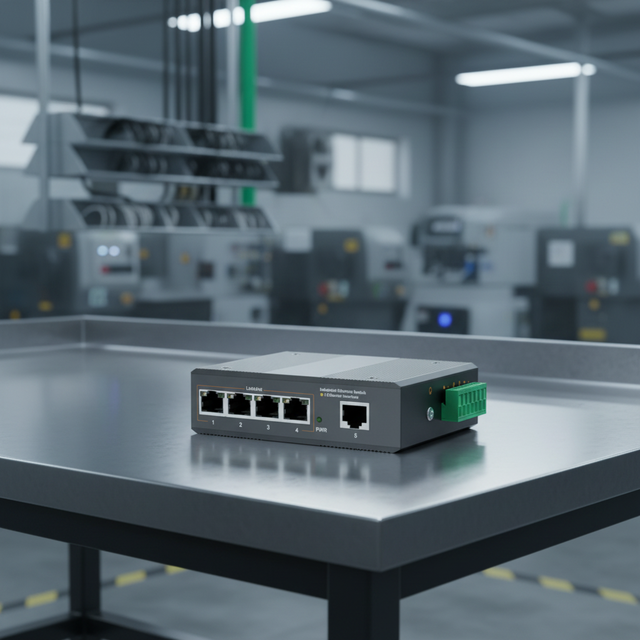
Industrial Ethernet Switch 5 Port 8 Port 10/100/1000Mbps DIN-Rail Managed Switch for Security Networks
 Yunbian Youxuan (Xi'an) Technologies Co., Ltd.🇨🇳CN1 yr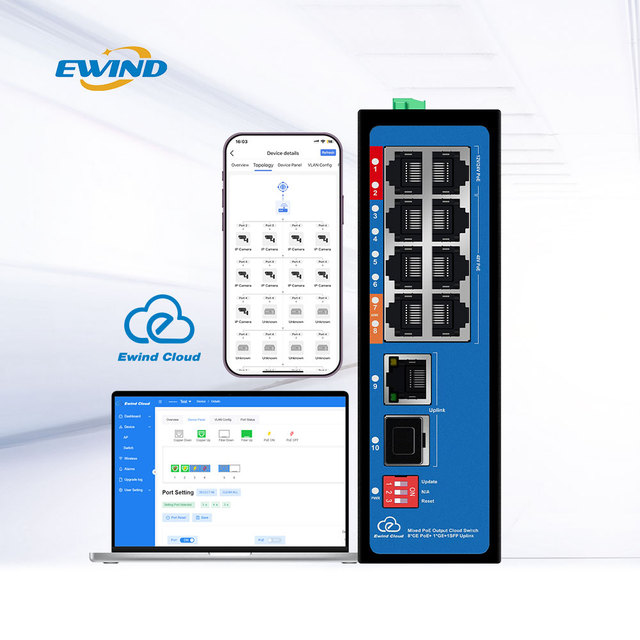
10 Port L2+ Managed Industrial Switch Gigabit Fast Ethernet IP40 4KV Lightning Protection -40~80°C DIN Rail Cloud Network Switch
 Shenzhen Ewind Technology Co., Ltd.verified🇨🇳CN7 yrs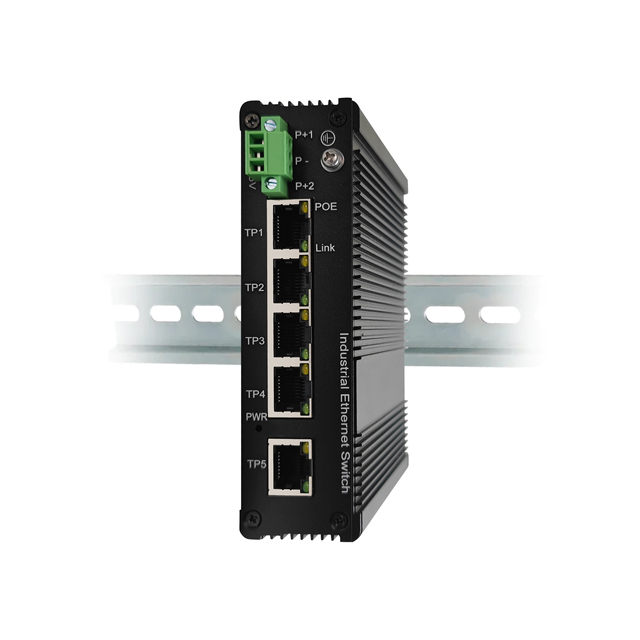
10/100/1000Mbps Manufacture 4 6 8 12 Port PoE Industrial Ethernet Switch with Dual Power Redundancy IP40 Surveillance Use
 Guangzhou Gxcom Technology Co., Ltd.verified🇨🇳CN9 yrs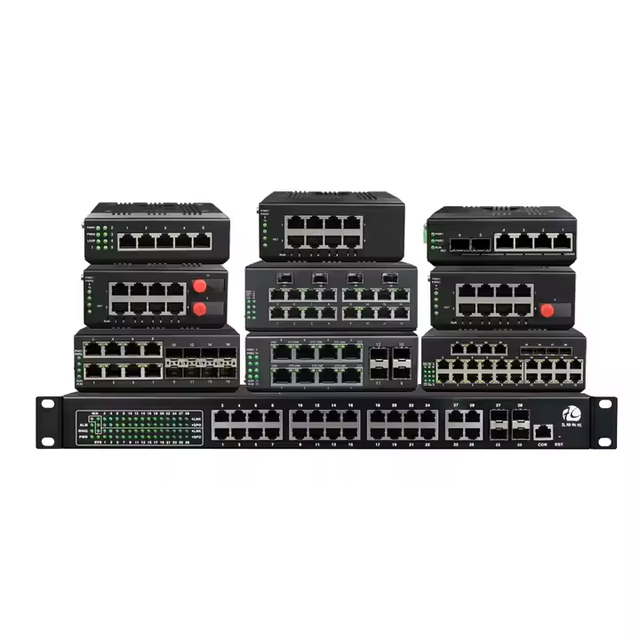
China Manufacturer Industrial Ethernet Switch Managed 4 5 8 16 24 Port Gigabit SFP+ Desktop or Rackmount
 Hang Zhou Fei Chang Technology Co.,Ltdverified🇨🇳CN16 yrs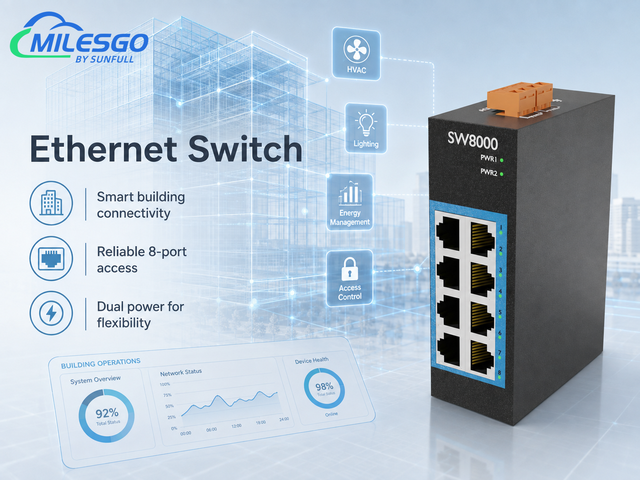
Industrial Ethernet Switch Milesgo SW8000, Ethernet Hub for PLC, SCADA, BMS and Industrial IoT Networking
 Shanghai Sunfull Automation Co., Ltd.🇨🇳CN11 yrs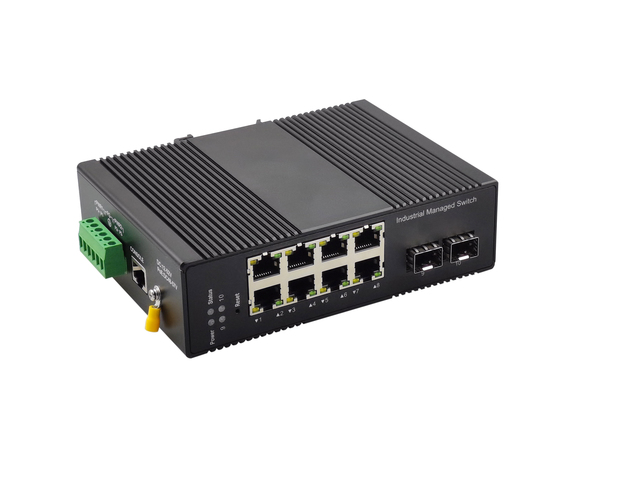
Reliable Industrial Gigabit Ethernet Network Switch for Smart Manufacturing/Mining/Transportation
 Nanjing Yoong Win Situation Awareness Technology Co., Ltd.verified🇨🇳CN3 yrs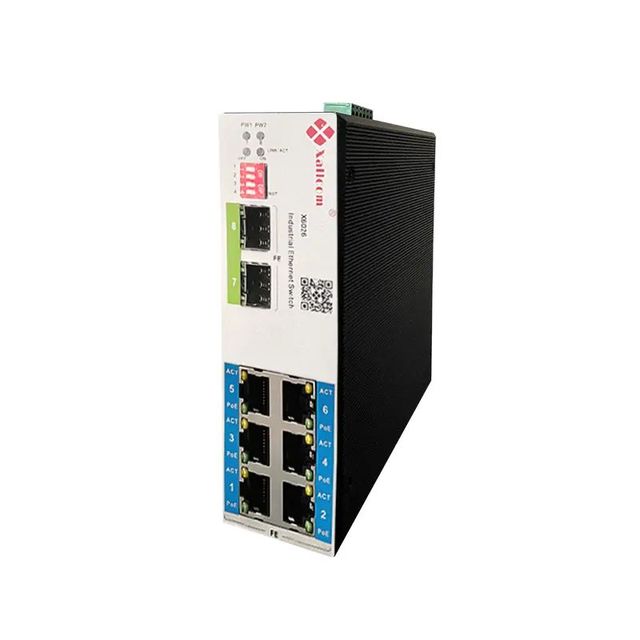
Xallcom 8-Port Unmanaged Industrial Ethernet Switch 100mbps 100m Smart Copper IP40 SFP 6 FE 7.6G Switch Network Equipment
 Shenzhen Xallcom Technology Co., Ltd.🇨🇳CN4 yrs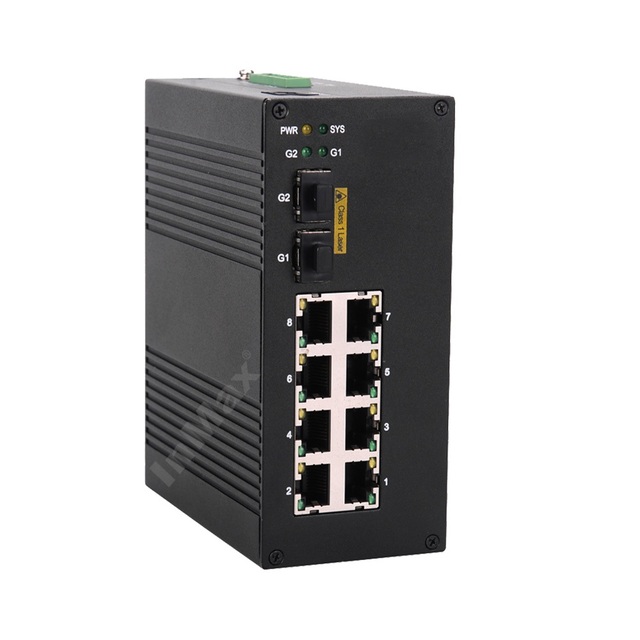
10 Ports 10/100/1000M Outdoor Managed Industrial Ethernet Switch
 Shenzhen Inmax Technologies Co., Ltd.🇨🇳CN12 yrs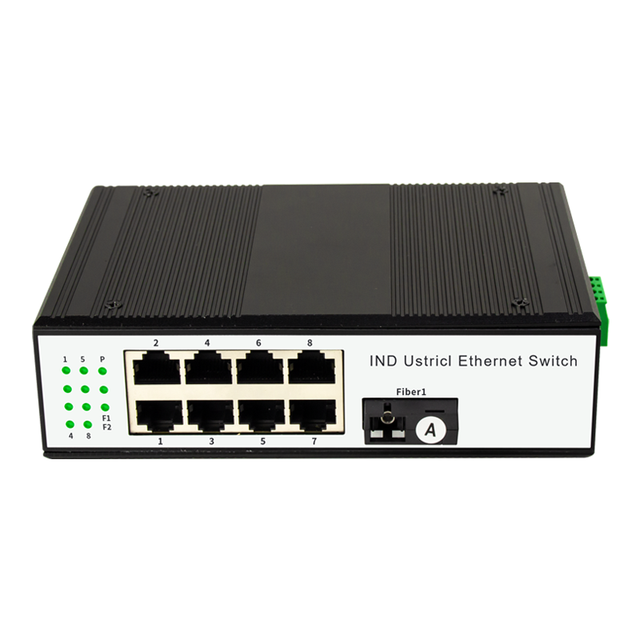
Industrial 100Mbps 8-Port Ethernet POE Switch with 1-Fiber Optical SC Din-Rail Design for Enterprise Applications
 Shenzhen Atongda Technology Co., Ltd.verified🇨🇳CN12 yrs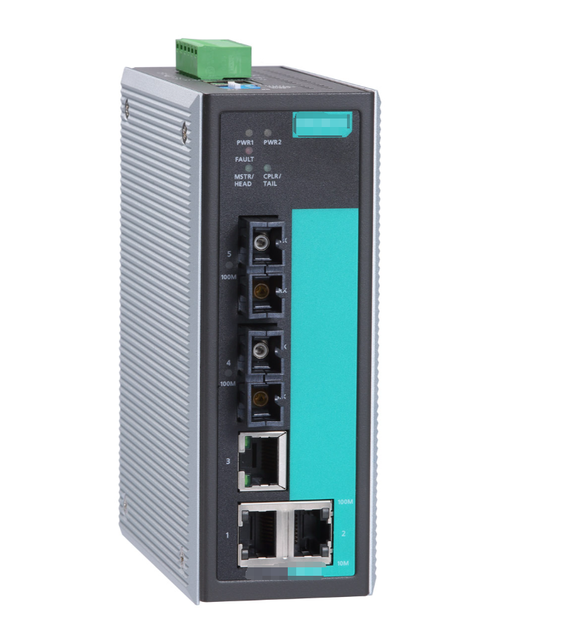
EDS-405A Industrial Ethernet Switch 8-Port Single Mode for Enterprise Use
 Abrizone Electronics Co., Ltd.🇨🇳CN2 yrs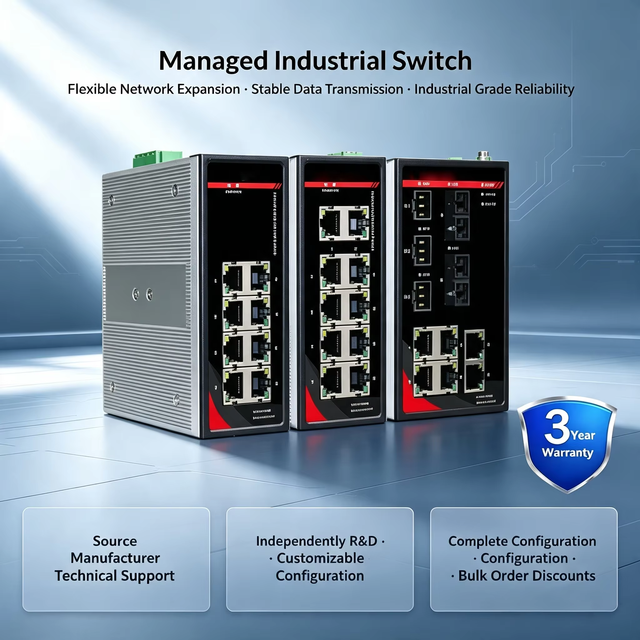
Network Managed Rail Industrial Ethernet Switch with 5 Ports and 8 Ports SNMP CLI Dual Power Supply and Wide Temperature Range
 Sichuan Cloudlink Digital Intelligence Technology Co., Ltd.🇨🇳CN1 yr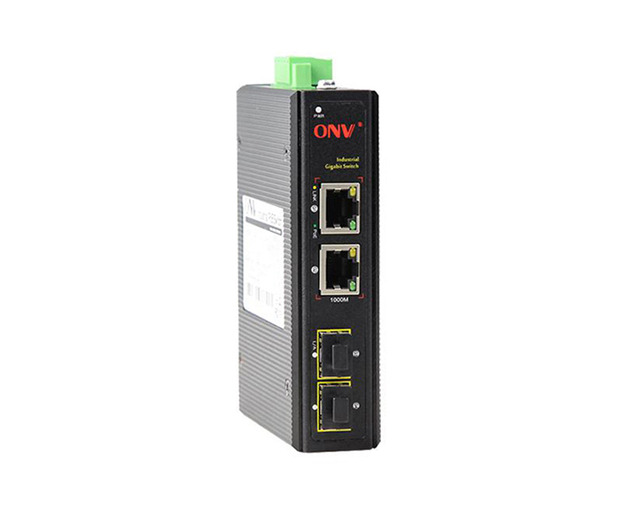
Factory Hot Selling 3-port Gigabit Industrial Ethernet Switch for Intelligent Transportation ONV-IPS3005
 Optical Network Video Technologies (shenzhen) Co., Ltd.verified🇨🇳CN12 yrs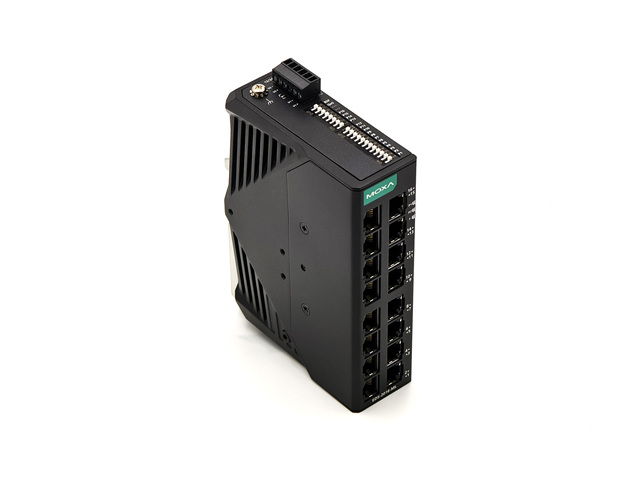
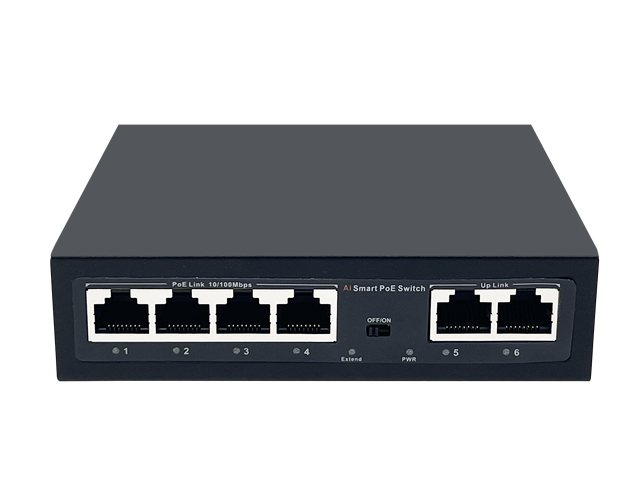
Moxa EDS-2016-ML Eight-port Unmanaged Industrial Ethernet Switch, 10/100Mbps, Metal Housing
Factory Hot Selling 4 AI Port Poe Switch 100M Uplink Watchdog AI Detection Smart OEM Poe Switch Network 1000mbps 12V Poe Switch
 VIET TRUNG INTERNATIONAL SERVICES AND TRADING COMPANY LIMITED🇻🇳VN1 yr
Wellauto Industrial Ethernet Switch 8 Ports 10 100 1000Mbps Managed For Network Applications
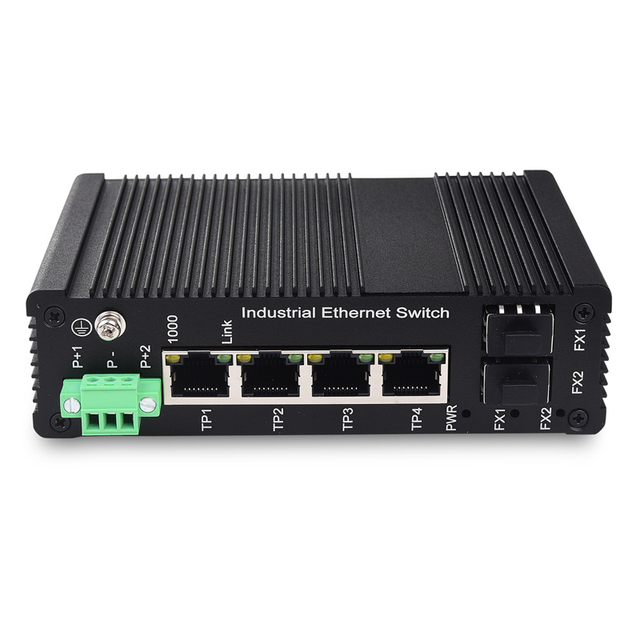
Smart Web Management Switch 4 10/100/1000M LAN Port and 2 1G Fiber Port Network Switch
 Shenzhen JHA Technology Co., Ltd.🇨🇳CN4 yrs
Eds-508a-mm-sc Layer 2 Managed Industrial Ethernet Switch New Original Industrial Automation Programmable Control Plc Systems
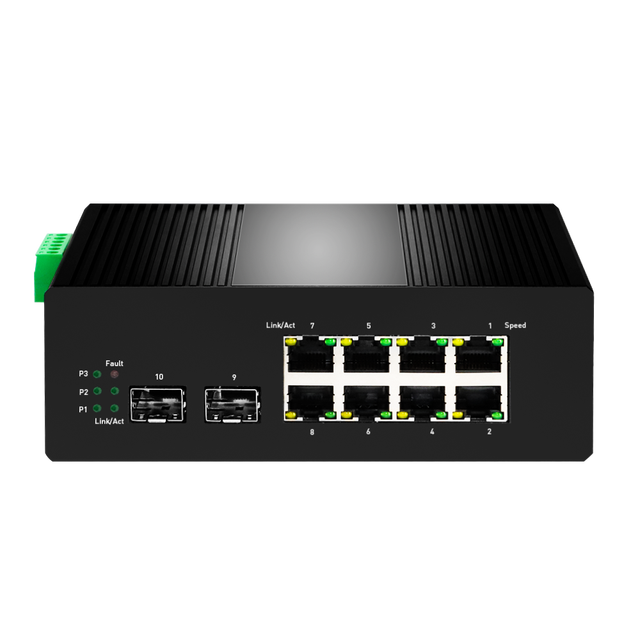
Industrial Web Smart Switch 8 Gigabit RJ45 + 2 SFP Fiber Ports Lite Managed DIN Rail Ethernet Switch
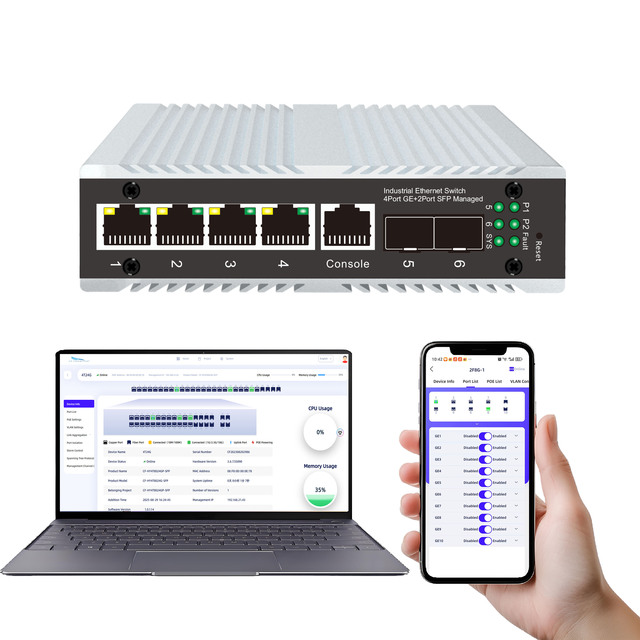
4-port RJ45 Industrial Grade Cloud Management Switch, 2 SFP Mobile Cloud Management, 4KVLAN Static Routing Function
 Huizhou Changfei Photoelectricity Technology Co., Ltd.verified🇨🇳CN4 yrs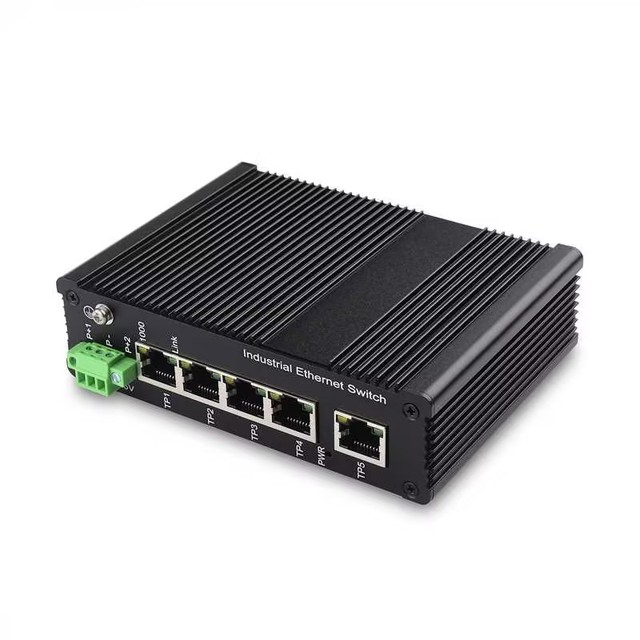
Industrial Network Ethernet Switch 5 Port Unmanaged Plug and Play Gigabit Industrial Network Switch
 Guangzhou Dtech Electronics Technology Co., Ltd.verified🇨🇳CN21 yrs
Linble LBTR12F-SFP Industrial Poe Switch Full Half Duplex Fiber Optic Port Plug Play Power Range DC 12 52V for Enterprise
 Shenzhen Libtor Technology Co., Ltd.🇨🇳CN3 yrs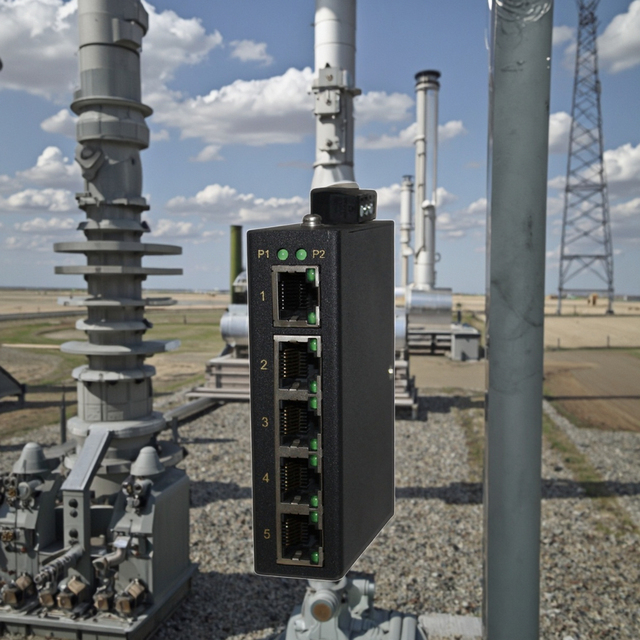
5-Port 10/100m Industrial Grade Ethernet 2G IP40 Protection DIN Rail High Stability Plug Play RJ45 SNMP Unmanaged Metal Housing
 Wuxi Rigosys Information Technology Co., Ltd.verified🇨🇳CN2 yrs
Related Searches
Explore more sourcing topics & related categories
Sources & References
27 sources cited · Verified industry data & reports
Media Converter vs. Network Switch: Which One Should You Choose?
www.omnitron-systems.com
Media converters and network switches are both networking devices, but they serve different purposes and are used in distinct scenarios. Find the right solution with our expert guide. Imagine a scenario where you need to connect fiber-optic cabling to copper-based equipment – this is where a Media Converter comes into play. Network Switches, on the other hand, are the traffic directors of a network, managing data traffic efficiently within a local area network (LAN), and connecting more devices. Media converters and network switches have also evolved to cater to diverse data rate requirements. Network switches are available in various configurations, including 10/100Mbps, 1G, 2.5G, 5G, 10G, 25G, 100G as well as Multi-Gig / Multi-rate. These switches empower network architects and administrators to select the optimal infrastructure for their specific needs, whether building a small-scale office network or a high-capacity data center environment. On the other hand, fiber media converters come with data rates of 10 Mbps, 100 Mbps, 1 Gbps, 10 Gbps and also Multi-Gig / Multi-rate . Among these options, the 10/100 Mbps and 1 Gbps media converters are more commonly deployed and have emerged as the most cost-effective solution.
Media Converter vs Switch
community.fs.com
But they are different in functions and applications. Then, how to choose media converter or switch for the network? What are the differences between these two devices? Media converter vs switch: definitions, transmission rates, installations, functions and selection guides are explained in this article. Media Converter vs Switch: What Are the Differences? Media converter is a very cost-effective and flexible device mainly used to convert the electrical signals in copper Unshielded Twisted Pair (UTP) network cabling into optical signals for fiber optic cabling. It enables you to join different signaling formats onto one well-functioning LAN. While the network switch plays a central role for wired network devices (computers, printers and PCs) on the network to communicate with each other. Network switch is usually wired to the router, allowing you to access the internet through the modem. ... For fiber media converters, there are 100M/1000M/10G media converters currently available on the market. Among which the 100M/1000M media converters are more frequently applied and have become a cost-effective solution for home and SMB networks. Take the large data center networks as an example, 1G/10G/25G switches are mainly applied for the access layer or considered as ToR switches. The 40G/100G/400G switches are used as core or spine switches. ... Media converters are simple network hardware devices, which are equipped with fewer interfaces than network switches, thus the cabling and connectivity are less complex.
Media Converter vs Network Switch
www.10gtek.com
Media converter and network switch are both widely used in today’s high speed network applications. In some scenes, one can used to replace another one. Then, which one should I choose for my network? What is the difference between media converter and network switch? Through information sharing and resource allocation, switches save businesses money and increase employee productivity. And the network switch operates at the data link layer (Layer 2) of the Open Systems Interconnection (OSI) model called layer 2 switch, which operates at the network layer (layer 3) of the OSI model called layer 3 switch. 3.Differences Between Media Converter and Network Switch In fact, both a media converter and a network switch today can act and perform the same functions. And Both of them operate within the OSI model which is hierarchical and structured in the form of layers such as layer 1, layer 2, layer 3 and so on. A clear understanding of what OSI layers do, and what the differences between devices operating at different layers are, will help you learn about the difference between media converter and network switch. Only network switch can operate at Layer 3. Switches operating at Layer 3 are smarter than Layer 2 devices and incorporate routing functions to actively calculate the best way to send a packet to its destination. ... Media converters can be used anywhere in the network to integrate newer technology with existing equipment to support new applications, technologies and future growth.
Interface configuration of Media Converters vs. Switches | Lantronix
www.lantronix.com
The behavior of Media Converters is quite different from the behavior of Switches (also known as “Bridging Media Converters”). These differences in behavior have important implications when one considers MIB variables dealing with physical layer features such as Speed, Auto-negotiation, Duplex, and Pause.A Media Converter is a simple device. The behavior of Media Converters is quite different from the behavior of Switches (also known as “Bridging Media Converters”). These differences in behavior have important implications when one considers MIB variables dealing with physical layer features such as Speed, Auto-negotiation, Duplex, and Pause. A Media Converter is a simple device. It is capable only of attaching two dissimilar physical interfaces to each other. The two interfaces connected by the Media Converter must have characteristics that are otherwise compatible – the Media Converter is not designed to resolve differences aside from the physical media. A Switch (a.k.a. “Bridging Media Converter”) is by comparison an intelligent device, typically capable of resolving a variety of physical layer incompatibilities (e.g. Speed and Duplex differences) between the interfaces being connected. When a port on a Switch is configured, its features are manipulated in a fairly intuitive way: For example, when one enables “Full Duplex” on a Switch port, the Switch port begins supporting and advertising Full Duplex operation between the Switch port and the device to which that port is directly attached. Home » Point System Online Help » Interface configuration of Media Converters vs. Switches
A Quick Guide to Media Converters & Network Extenders | Allied Telesis
www.alliedtelesis.com
Media converters provide flexibility to networking solutions by enabling fiber and copper cables to be easily connected. Switches mostly contain LAN ports, usually copper Ethernet with a few fiber-based uplink ports, often SFP-based. The copper ports connect devices within a short-range (up to 100 meters) while the SFP uplinks can connect devices, like other switches or servers, that are further away. A computer placed in a remote location, an access point in an outdoor area, a video surveillance camera, or an access control system far from the last switch, are all typical examples of this kind of situation. If the requirement is to extend the LAN beyond 100 meters, a network extender is required and a media converter is the perfect solution. From the network point of view, the extended connection is just an Ethernet link like any other, but it has a very long reach that solves the remote device problem without the need to add other switches to the network. The most common type of media converter connects fiber and copper cables, but others can convert Ethernet to VDSL or inject Power over Ethernet (PoE). Media converters are typically small standalone unmanaged devices, but they can also form managed and unmanaged chassis solutions to integrate multiple devices within your network in a 19" standard rack. The most common model of media converter is the copper to fiber with one RJ45 port and one fiber port or SFP bay. The transport protocol is always Ethernet to allow another converter or a switch equipped with the appropriate interface to be connected easily. Sometimes it's not possible to use a fiber link because legacy infrastructure, such as twisted-pair phone cables or co-ax cables, are already in use, and replacing with new fiber is not practical.
Network switch - Wikipedia
en.wikipedia.org
Switches for Ethernet are the most common form of network switch. The first MAC Bridge was invented in 1983 by Mark Kempf, an engineer in the Networking Advanced Development group of Digital Equipment Corporation (DEC). The first two-port bridge product (LANBridge 100) was introduced by that company shortly after. Advances in Local Area Networks. IEEE Press. pp. Chapter 28. ISBN ... 1 2 Robert J. Kohlhepp (2000-10-02). "The 10 Most Important Products of the Decade". Network Computing. Archived from the original on 2010-01-05. Retrieved 2008-02-25. ↑ "Hubs Versus Switches – Understand the Tradeoffs" (PDF). Remote Network Monitoring MIB Extensions for Switched Networks Version 1.0. Network Working Group. doi:10.17487/RFC2613. RFC 2613. Draft Standard. ↑ Remote Network Monitoring Management Information Base Archived 2016-05-24 at the Wayback Machine, RFC 2819, S. Waldbusser, May 2000 · ↑ "How to Build a Miniature Network Monitor Device". 6 October 2016. Archived from the original on 2019-01-09. Retrieved 2019-01-08. Wikimedia Commons has media related to Ethernet switches. ↑ "Understanding IP Broadcast Production Networks: Part 2 - Routers & Switches - the Broadcast Bridge - Connecting IT to Broadcast". 30 May 2023. Archived from the original on 2 March 2024. A network switch is a multiport network bridge that uses MAC addresses to forward data at the data link layer (layer 2) of the OSI model. Some switches can also forward data at the network layer (layer 3) by additionally incorporating routing functionality. Such switches are commonly known as layer-3 switches or multilayer switches.