Micro Sd Memory Card Labels
Overview
Product sourcing insights & recommendations
The market for micro SD memory card labels is evolving from simple identification stickers toward sophisticated organizational systems driven by professional photography, high-end gaming (e.g., Nintendo Switch 2, Steam Deck), and industrial IoT applications. SdcardBusinessresearchinsights
Market Trends & Insights
* Performance-Based Labeling: Technical labeling is shifting to prioritize A2 (Application Performance) and V30/V60/V90 (Video Speed) classes. As of 2026, the A2/V30 combination is the market baseline for 4K video and smartphone storage expansion. AlibabaReddit
* Organizational Demand: There is a growing niche for high-count sticker packs (e.g., 120-count) and color-coded systems. Users increasingly categorize cards by use-case (e.g., photography vs. backup) using visual markers. Amazon
* Consumer Shift to DIY: Due to concerns about thick stickers jamming device slots, "hacks" such as using silver metallic Sharpies, nail polish dots, and index-labeled storage cases are trending in creative communities over traditional adhesive labels.
Product Features & Materials
Custom Printable Micro Sd Card Labels
Products · 3 lists
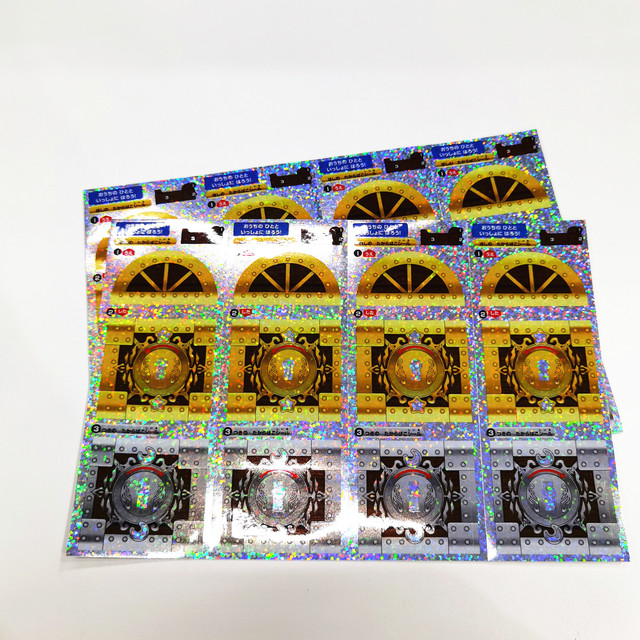
Custom Micro Memory Sd Card Labels Printing
 Shenzhen Hexu Printing Co., Ltd.🇨🇳CN12 yrs
Custom Printed Waterproof Paper Adhesive Stickers for Memory Card and Micro SD
 Shanghai Pure-Easy Label Printing Co., Ltd.🇨🇳CN12 yrs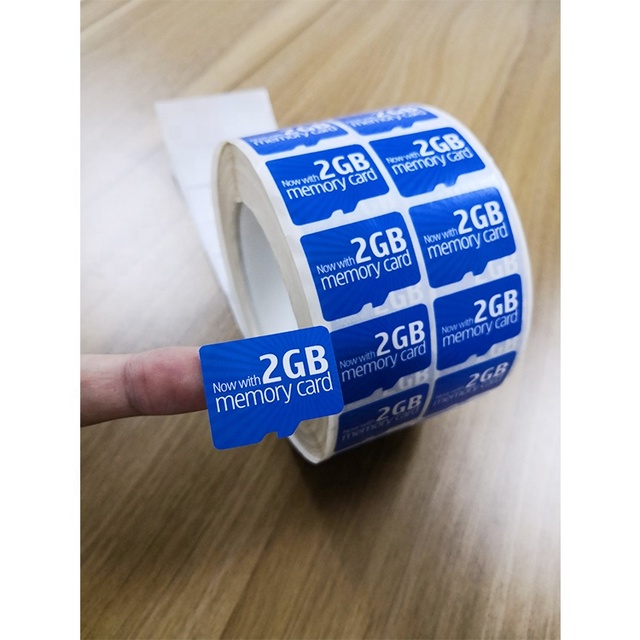
Wholesale Custom Small Size Electronic Label SD Memory Card Packaging Label Sticker for Electronic Product
 Dongguan Fullrich Printing Co., Ltd.🇨🇳CN9 yrs
Related Searches
Explore more sourcing topics & related categories
Sources & References
28 sources cited · Verified industry data & reports
SD Memory Cards Market Outlook 2026-2035
www.businessresearchinsights.com
Market Size and Growth: The global sd memory cards market growth,, starting at USD 19.24 Billion in 2026 and projected to reach USD 27.12 Billion by 2035 with a CAGR of 3.9% from 2026 to 2035. Key Market Driver: Rising demand for high-resolution video and image content driving adoption; around 38 % of SD card sales are 256 GB/512 GB models. Major Market Restraint: Increasing preference for cloud storage and internal device memory reducing dependence on SD cards; cloud service usage grew by 25 % globally. Emerging Trends: High-speed standards such as UHS-II and SD Express expanding rapidly; about 12 % of new SD cards feature ultra-high-speed interfaces. The initial lockdowns and restrictions led to a decline in consumer electronics production and sales, impacting the demand for SD cards. However, as the world adapted to the new normal of remote work and increased digital activities, the market witnessed a resurgence driven by the growing need for digital storage solutions. Adoption of UHS-III Technology to Drive Market Growth · A noteworthy trend in the market is the increasing adoption of Ultra High-Speed (UHS) Class 3 (UHS-III) technology. The global sd memory cards market stood at USD 19.24 Billion in 2026 and maintaining a strong growth trajectory to reach USD 27.12 Billion by 2035 with a CAGR of 3.9% from 2026 to 2035. Market Segmentation: MicroSD cards dominate the market, representing roughly 55–70 % of total unit shipments. Recent Development: Global SD and microSD unit sales surpassed 12 billion, with card speeds improving by about 300 % over earlier generations.
SD Memory Cards Market Size, Share & Forecast Report, 2035
www.marketgrowthreports.com
Market Overview Key Findings Latest Trends Market Dynamics Segmentation Analysis Regional Outlook Top Companies Report Coverage Frequently Asked Questions ... The global sd memory cards market Size Expected to Grow from USD 18494.36 million in 2026 to USD 26102.79 million by 2035, at a CAGR of 3.9% during the forecast period 2026-2035. Get Comprehensive Insights into the Market’s Size and Growth Trends Download FREE Sample · Driver: The proliferation of high-resolution content creation and consumption is a primary driver, with 4K video recording becoming standard in smartphones and cameras. Country/Region: Asia-Pacific leads the market, accounting for approximately 45% of the global share in 2023, driven by strong manufacturing capabilities and high consumer electronics adoption rates. Segment: MicroSD cards dominate the market, holding about 55% of the total market share, owing to their widespread use in mobile phones and tablets. The report includes quantitative data from over 50 countries, covering unit sales, capacity trends, and product adoption across key verticals such as mobile devices, digital cameras, computers, drones, and IoT systems. With over 180 data tables and charts, the report offers segmented analysis by card type (SD, MicroSD, CF, CFast) and application (camera, mobile phone, computer), helping stakeholders understand usage distribution and growth trends. Furthermore, advancements in SD Express technology, offering faster data transfer speeds, are opening new opportunities in high-performance applications. While the market faces challenges, these emerging trends indicate areas of potential growth and adaptation.
State of Memory Technology and Trends to Watch in 2026 - SD ...
www.sdcard.org
SD Express has evolved from innovation to proven, mainstream standard, and the market will continue expanding in 2026 as demand for high-speed removable storage accelerates. Combines PCIe® and NVMe™ interfaces, delivering SSD-class speeds of up to ~1GBs with PCIe 3 x1 (SD7.0) and up to ~4GB/s with PCIe Gen4 x2 interface (SD8.0). The PCIe/NVMe interfaces deliver not only throughput speed but also much faster random access, required for applications running out of the card, as well as more advanced networking capabilities (DMA between PCIe devices, Host Memory Buffer (HMB) and more open new potential use cases for removable media. Additionally, the latest advanced handheld gaming console Nintendo Switch 2 uses the microSD Express as a true memory expansion solution for games storage and execution, along with associated data. Accessories and readers from Delock, Maiwo, Lexar, and Sabrent, along with card’s controllers from Phison and Silicon Motion and PCIe/USB to SD Express bridge solutions from Realtek, Genesys, JMicron, and BayHub , further expand the ecosystem and simplify integration for developers. The SD Express memory card reader market is projected to grow 7.8% from 2025 to 2033, expected to reach $3.07 billion. In 2025, the SDA held a worldwide Student Competition featuring SD Express cards used on NVIDIA’s Jetson Orin Nano Super AI-flexible development board (with an M.2-to-microSD Express adapter). A total of 21 projects were submitted, most of which implemented various AI-at-the-edge solutions. SD Express technology delivers the flexibility developers need to deploy AI confidently at the edge. Trend 6: Durability, Reliability, and Sustainability As demand grows for performance, capacity, and reliability, the SD Association (SDA) continues to lead the development of global standards that ensure interoperability and innovation. In 2026, SD technology will set the foundation for a new era of intelligent, connected, and sustainable data systems. ... SD Express becomes the performance standard of small removable memory cards.
Secure Digital (SD) Memory Card Market Trend Analysis 2026-36
www.pristinemarketinsights.com
With Alternative Storage Options Emerging, Will Faster Data Transfers Be the Only Lifeline for SD Cards Between 2026 and 2036? ... With increasing advancements in technologies, smartphones are becoming more and more advanced with every update. For many people, smartphones are the focal point of the job and the source of entertainment alternatives. Following the COVID-19 pandemic, the rising use of social media necessitated the demand for high storage capacity in smartphones. As a result, recent improvements in microSD technology, such as microSD Express, have opened up a new world of possibilities for mobile devices. MicroSD memory cards are now widely used in electronics since innovations in manufacturing allow them to be compatible with the majority of devices and do not require additional programming. Their compact size and low price have resulted in rapid acceptance by enterprises and consumers, particularly within the broader consumer data storage devices ecosystem, positively influencing the SD memory card market growth trajectory in recent years. The essential features of the KIOXIA 2TB microSDXC UHS-I memory card working prototypes were proven in the maximum density of the microSDXC standard using its revolutionary BiCS FLASHTM 3D flash memory and an in-house created controller. The widespread availability and interoperability of SD cards, as well as their vast storage capacity and rapid data transmission speeds, have created several options for consumers to store and exchange digital information. Increased demand for high-capacity SD cards for 4K video storage. The growing popularity of microSD cards for smartphones and drones.
SD Memory Card Market Analysis 2026, Market Size, Share, Growth, ...
www.cognitivemarketresearch.com
Proprietary Database, Market Surveys, Strategic Consultation & Advisory Services, Industry & Competitive Intelligence. along with Report Access and Athenaeum Dashboard Subscription — Revenue, Volume, Production, Trade Analysis, value chain and supply chain analysis, Market Size, Share, Forecast, Drivers, Trends, Growth Opportunities, ESG and more. This analysis provides a strategic roadmap for the SD Memory Card Market Analysis market by detailing the core forces that shape the consumer goods industry. Proprietary Database, Market Surveys, Strategic Consultation & Advisory Services, Industry & Competitive Intelligence — Revenue, Volume, Production, Trade Analysis, Market Size, Share, Forecast, Drivers, Trends, Growth Opportunities, ESG and more. ... 🔍 Explore SD Memory Card Market Analysis Services: Bespoke Data | Athenaeum AI Dashboard | Market Surveys | Expert-Led Analysis | Market Size | Key Drivers | Emerging Trends 👉 Free Sample | Book Appointment Market Timeline 2021 till 2033, Market Size, Revenue/Volume Share, Forecast and CAGR, Competitor Analysis, Regional Analysis, Country Analysis, Segment Analysis, Market Trends, Drivers, Opportunities, Restraints, ESG Analysis, Porters Analysis, PESTEL Analysis, Market Attractiveness, Patent Analysis, Technological Trend, SWOT Analysis, COVID-19 Analysis, Consumer Behavior Analysis, etc. ... Cognitive Market Research employs "The Full Truth™" methodology — a rigorous triangulation process that combines primary research, secondary validation, and expert calibration. Implemented by Anushka Gore and team for the SD Memory Card Market Analysis Market analysis. Who are the top manufacturers in the SD Memory Card Market Analysis market? Top manufacturers SanDisk Corporation., Transcend Information Inc., ADATA Technologies Co. Ltd., Panasonic Corporation., Kingston Technology Corporation., Micron Technology, Inc., Sony Corporation., Samsung Electronics Co.
SD Memory Cards Market Size, Growth Analysis & Forecast
www.verifiedmarketreports.com
Global SD Memory Cards Market Size By Type (SD, Micro SD), By Application (Camera, Computer), By Distribution Channel (Online, Offline), By End-User (Consumer, Industrial), By Speed Class (Class 2, Class 4), By Geographic Scope And Forecast · Author By: Rutuja Lavhale | Edition : 7th Edition 2026 | Editor : Ethan Miller In industrial IoT, autonomous vehicles, and smart city applications, the ability to store and process data locally is critical for operational efficiency and safety. Manufacturers investing in next-generation microSD cards with enhanced endurance, error correction, and security features can capitalize on this trend. The miniaturization trend in consumer electronics, wearables, and portable devices presents a unique opportunity for SD card manufacturers to innovate with smaller, more integrated storage solutions. MicroSD and embedded SD card formats are increasingly being designed with enhanced form factors that integrate seamlessly into compact devices such as smartwatches, fitness trackers, and AR glasses. Manufacturers are introducing microSD cards with high endurance, optimized for continuous recording, and with advanced error correction to ensure data integrity at high capacities. The trend is reinforced by the proliferation of 5G-enabled devices, which generate and process vast amounts of data locally.