Microphone Adc

Overview
Product sourcing insights & recommendations


The Microphone ADC (Analog-to-Digital Converter) market is undergoing a significant shift driven by AI integration, high-resolution audio standards (24-bit/32-bit), and automotive electrification. Key market insights and product trends for 2026 are summarized below:
Market Trends & Insights
* Resolution Standardization: The industry has moved decisively toward 24-bit (professional standard) and 32-bit (high-end) Sigma-Delta architectures to meet high-fidelity recording and spatial audio requirements. DatainteloPrecisionreports
* AI & On-Chip Processing: Approximately 69% of new audio ICs are integrating hardware-level AI for real-time beamforming, noise cancellation, and voice activity detection (VAD). Precisionreports
* Always-On & Efficiency: There is a surge in demand for ultra-low-power ADCs for wearables, with power targets dropping to sub-1mW in standby/voice-trigger modes. Precisionreports
* Growth Drivers: The market is projected to grow at a 7.4% CAGR through 2035, bolstered by the need for multi-channel arrays (8-24 channels) in electric vehicles for active noise cancellation. Precisionreports
Product Landscapes
* High-End Studio Units: Products like the Lynx Aurora or Lavry Savitr target the professional mastering market, offering unmatched dynamic ranges (110dB+) and multi-channel synchronization, with prices ranging from $3,000 to $8,000+. GoogleGoogle
* B2B/OEM Modules: For product development, 24-bit/192kHz I2S capture modules are now highly accessible, with wholesale pricing between $6.00 and $13.00 per unit. AlibabaAlibaba
* Specialized Voice ICs: Components like the AK5706 represent the modern "intelligent" ADC, featuring integrated Acoustic Echo Cancellation (AEC) for smart devices. Audioxpress
Microphone Adc Module High Performance 24 Bit 192khz
Products · 3 lists
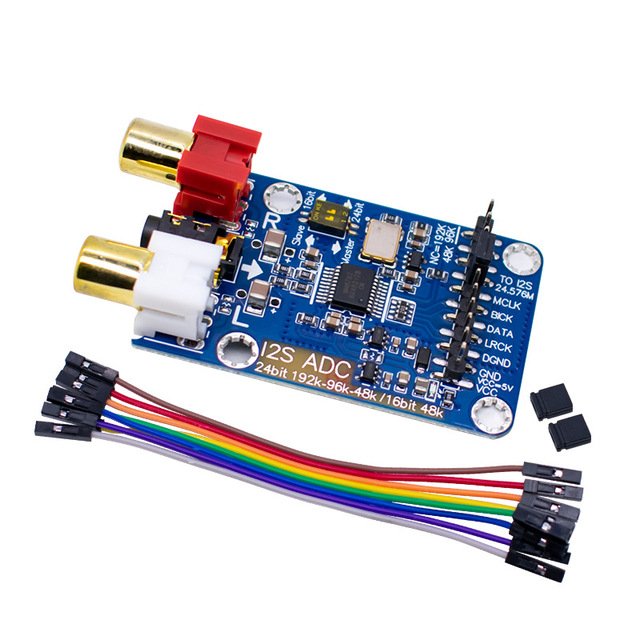
High Resolution I2S ADC Audio Capture Module 24-Bit 192kHz 96kHz Stereo Analog Digital Converter Master/Slave Mode HSC3147 1GB
 Dongguan Huashengchuang Electronic Technology Co., Ltd.🇨🇳CN2 yrs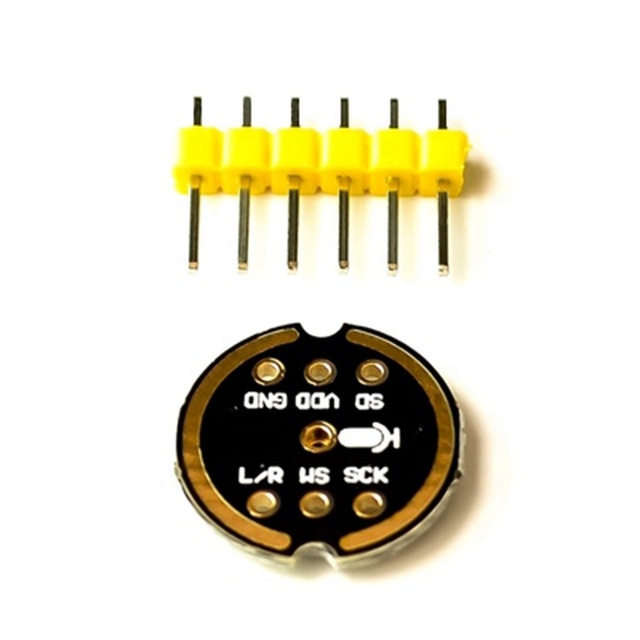
INMP441 omnidirectional MEMS microphone module 24 bit I2S interface output supports ESP32 module
 Shenzhen Alisi Electronic Technology Co., Ltd.🇨🇳CN8 yrs
I2S ADC Audio I2S Capture Card Module Master-Slave Mode Development Board 24BIT 192K 96K 48K
 Shenzhen Tongze Electronic Technology Co., Ltd.🇨🇳CN3 yrs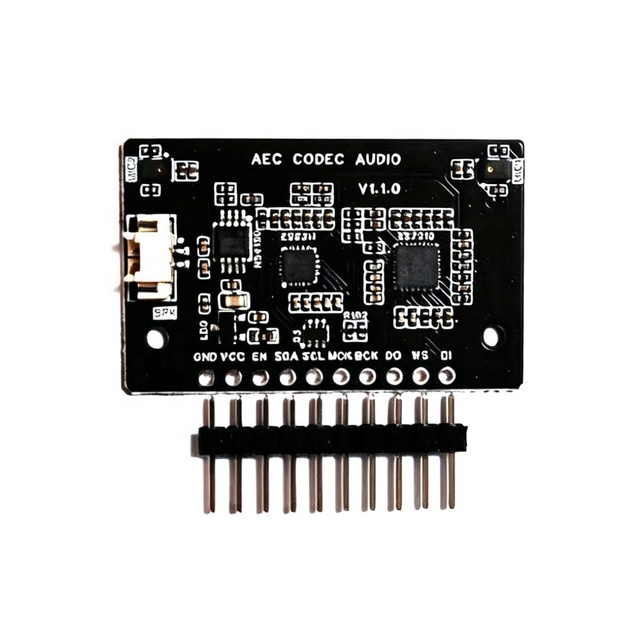
ES7210+ES8311+NS4150B AEC CODEC Audio Module Dual Microphone with Real-Time Voice Barge-In and Real-Time Voice Interruption
 Shenzhen Boyida Electronics Co., Ltd.🇨🇳CN4 yrs
Related Searches
Explore more sourcing topics & related categories
Sources & References
18 sources cited · Verified industry data & reports
Creation of a Material Disposal Device with a Microcontroller
ResearchGate
Thus, a reverse vending machine (RVM) concept is proposed. This machine has an Arduino microcontroller and a number of sensors installed.
Les Réseaux: Édition 2024-2026 | PDF | Computer Network
Scribd
The document lists numerous references and bibliographic sources related to computer networking and telecommunications.

Specification for the book of courses
Елфак
Modern trends in modeling of industrial systems. Modeling of systems using orthogonal functions. Use of genetic algorithms, fuzzy logic and neural networks ...

Conference Proceedings
Asociația “Moldova Apă-Canal”
microphone sensors and standard equipment setup to ensure team-to-team consistency of acoustic noise mapping, and leak noise intensity documentation used in.

NSS Program - PUBDB
desy pubdb
Each channel includes a charge amplifier, a shaper, a peak detector and an 8-bit ADC. low noise performances are achieved: almost all devices available on ...

Government
BSafes
The US CISA warns of cyber attacks targeting Citrix NetScaler Application Delivery Controller (ADC) and Gateway devices.