Microphones Diagram

Overview
Product sourcing insights & recommendations


Research into the term "microphones diagram" reveals a dual focus on technical education and market-driven miniaturization (MEMS technology). The market is currently undergoing a massive shift from traditional electret condenser microphones (ECM) to Micro-Electromechanical Systems (MEMS), which now dominate high-volume consumer electronics like smartphones and TWS earbuds FuturemarketinsightsCoherentmarketinsights.
1. Key Market Trends & Insights
* MEMS Dominance: MEMS microphones are projected to hold 52.4% of the technology segment by 2026, with the total market reaching $4.85 billion by 2036 Futuremarketinsights. This is driven by the demand for smaller, more consistent components in mobile and automotive sectors.
* Multi-Mic Arrays: The trend is moving toward integrating 8 to 16 microphones in modern vehicles and 3 to 4 in smartphones to support beamforming, noise cancellation (ANC), and voice control Futuremarketinsights.
* Performance Metrics: High-performance requirements from tech giants (Apple, Samsung, etc.) are pushing development toward higher Signal-to-Noise Ratios (SNR) and digital AES42 outputs that allow remote parameter control DpamicrophonesFuturemarketinsights.
2. Standard Microphone Diagrams
Technical diagrams for microphones typically fall into two categories:
#### A. Polar Pattern Diagrams (Directionality)
These graphs show the sensitivity of a microphone at various angles. Common types include:
* Cardioid: Heart-shaped; sensitive at the front, rejects sound from the rear. Ideal for live vocals and podcasting SonarworksShure.
* Omnidirectional: 360° pickup; picks up sound equally from all sides, commonly used in lavalier mics Sonarworks.
* Supercardioid/Hypercardioid: Narrower front pickup with a small rear lobe, used to isolate sound on high-gain stages Shure.
* Bidirectional (Figure-8): Sensitive at front and back, rejects sides; used for face-to-face interviews Sonarworks.
#### B. Transducer Internal Structures
These diagrams illustrate how sound is converted to electrical signals:
* Dynamic (Moving Coil): A diaphragm attached to a wire coil in a magnetic field. These are robust and handle high sound pressure levels (SPL) DpamicrophonesShure.
* Condenser (Capacitance): Uses a conductive diaphragm and backplate to form a capacitor. Requires phantom power but offers superior high-frequency response Dpamicrophones.
3. Product Examples & Development Kits
For those researching "microphone diagrams" for educational or development purposes, the following product types are available:
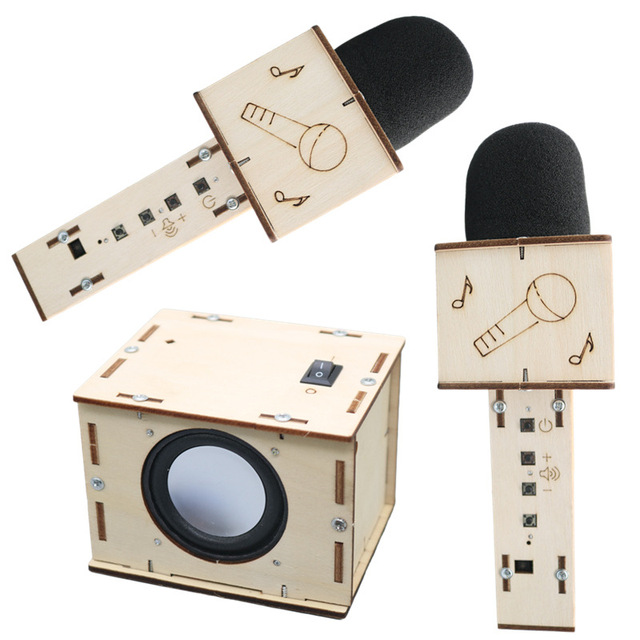
* STEM Educational Kits: DIY wooden kits that demonstrate microphone and speaker principles through visible components Alibaba.
* MEMS Development Modules: Compact modules (e.g., I2S interface) for integrating advanced AI noise cancellation and beamforming into new hardware AlibabaAlibaba.
* Professional Microphones: Industry-standard cardioid dynamic mics used for streaming and studio vocals, often accompanied by detailed technical spec sheets Alibaba.
Based on these insights, you can continue with:
Microphone Internal Structure Model Kit
Products · 3 lists

Deep Dive · Full Report
Full Market Report
1 document · Live-fetched from source
Related Searches
Explore more sourcing topics & related categories
Sources & References
21 sources cited · Verified industry data & reports
Microphone
Amazon.com
Shop professional and portable microphones for every application. Find wireless mics, desktop USB models, and handheld options with excellent audio ...
Microphones
MusiciansBuy.com
Sennheiser e835 Handheld Dynamic Microphone - Professional Vocalist Choice! Sennheiser. $99.95. "Close (esc)". Shure SM57 Cardioid Dynamic Instrument Mic. Quick ...

Microphones
ZOOM Corporation
Microphones ; ZDM-1. Dynamic Microphone ; ZDM-1 Podcast Mic Pack. Podcast Mic Pack ; ZUM-2. ZUM-2 USB Microphone ; ZUM-2 USB Podcast Mic Pack. USB Mic pack ; ZPC-1.

Professional Microphones | Dynamic, Condenser & Wireless
SoundPro
Shop pro microphones at SoundPro: dynamic, condenser, lavalier, headworn & wireless. Authorized for Shure, Sennheiser, DPA & Audio-Technica.

Microphones & Wireless
Sweetwater
With a massive selection of microphones, free shipping, a free 2-year warranty, and 24/7 award-winning support, Sweetwater gives you more than any other mic ...

Microphones and Recording Microphone
Best Buy
Shop Online for Microphones and find a Recording Microphone for you at Best Buy.