Military Drones Guns

Overview
Product sourcing insights & recommendations
The "military drones guns" market is currently undergoing a structural transformation, with global value projected to reach between $22.49 billion and $34.85 billion by 2026. The industry is shifting from manually piloted ISR (Intelligence, Surveillance, Reconnaissance) assets to AI-coordinated, "attritable" (low-cost, expendable) strike swarms. Key technological trends include computer-vision-based fire control that enables precise target "locking" even during flight, and proprietary stabilization systems that manage the recoil of 5.56mm and 7.62mm weapons.
I have synthesized these findings into a comprehensive report below, covering market forecasts, emerging technologies like GPS-independent navigation, and specific benchmark products from global defense manufacturers. The deliverables also include sourcing data for tactical drone platforms and defense equipment suppliers.
I have analyzed the current market and product trends for military-grade drones with gun systems. To move forward, you can:
Military Tactical Drones With Weapon Mount
Products · Top picks & verified manufacturers
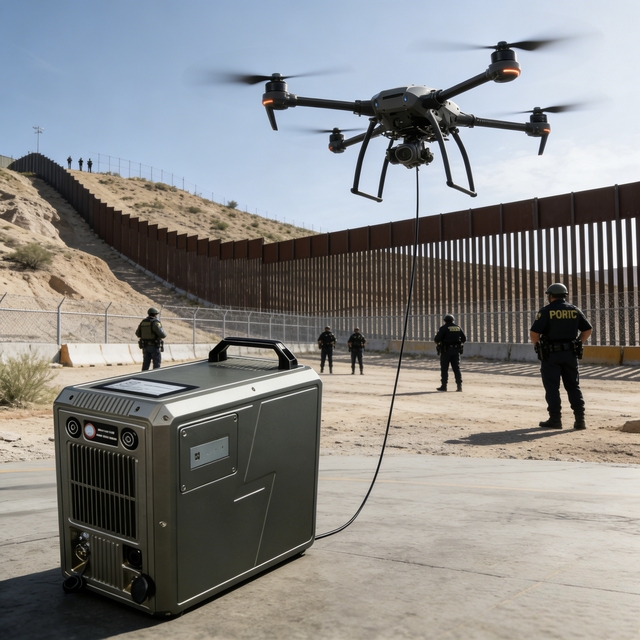
110m 3kw Tethered Drone System with Automatic Winch for Persistent Aerial Monitoring, Border Patrol and Security Monitoring
 Nanjing Rosefinch Technology Co., Ltd.🇨🇳CN3 yrs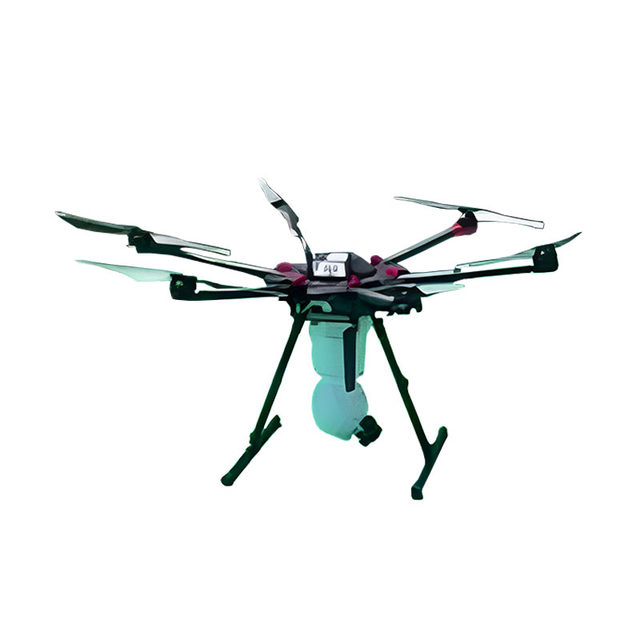
Payload Unmanned Airborne Dual-spectrum High-resolution Polarization Imaging System Monitoring Drone
 Shenzhen Hanghui Technology Development Co., Ltd.🇨🇳CN4 yrs
Deep Dive · Full Report
Full Market Report
1 document · Live-fetched from source
Related Searches
Explore more sourcing topics & related categories
Sources & References
27 sources cited · Verified industry data & reports
Military Drones Market Size, Share, Latest Trends & Growth Analysis, ...
www.marketsandmarkets.com
By launch mode, the catapult launched segment is projected to grow at the highest CAGR of 26.7% from 2026 to 2031. ... By autonomy level, the fully autonomous segment is projected to grow at the fastest rate of 31.7% during the forecast period. ... Northrop Grumman, RTX, General Atomics, Israel Aerospace Industries Ltd., and Teledyne FLIR LLC are recognized as key players in the military drones market. These companies hold strong positions due to their established product portfolios and wide operational presence. According to Marketsandmarkets, the Global Military Drones Market Size was valued at USD 34.85 billion in 2026 and is projected to reach USD 109.22 billion by 2031, growing at a CAGR of 25.7% from 2026-2031. The procurement volume of military drones is projected to grow from 16,157 units in 2026 to 26,544 units by 2031. BAYKAR TECH is an emerging company in the military drones market with a growing portfolio of combat drones and tactical unmanned systems for defense applications. Source: Secondary Research, Interviews with Experts, MarketsandMarkets Analysis ... Israel Aerospace Industries Ltd. (Israel) ... AeroVironment, Inc. (US) ... Textron Inc. (US) ... Elbit Systems Ltd. (Israel) ... Leonardo S.p.A. (Italy) ... 2/1/2026 12:00:00 AM : Northrop Grumman started flight testing activities for its Beacon autonomous drone platform to support artificial intelligence integration in future military aircraft programs. By propulsion, the fuel cell-powered military drone segment is projected to grow at the highest CAGR of 32.5% from 2026 to 2031.
Military Drone Market Trends, Size & Forecast to 2032
www.marknteladvisors.com
The industry is projected to witness steady growth at a CAGR of 6.4% during 2026–2032. The fixed wing drones are expected to dominate the industry by product type, accounting for approximately 67% market share in 2026. As NATO members continue to strengthen their unmanned warfare capabilities, proven loitering munitions such as the FV-014 are expected to accelerate procurement programs, stimulate investments in next-generation combat drones, and expand opportunities for AI-enabled autonomous battlefield systems. In April 2026, Rheinmetall announced that it had secured a major contract from the German Bundeswehr for its FV-014 loitering munition system. The contract supports serial production of the fixed-wing drone, which combines ISR capabilities with precision strike functionality. Large-scale procurement contracts encourage production expansion, technology innovation, and long-term collaboration between defense agencies and drone manufacturers, supporting sustained growth in the global military drone market. During Eurosatory 2026, Rheinmetall officially introduced its Containerized Multiple Launcher (CML) designed for the FV-014 loitering munition family. A. North America presents the strongest growth prospects, leading the Military Drone Market with approximately 33% share in 2026. Q. What are the key trends shaping the growth of the Military Drone Market?
Military Drone Market Size, Share, Trends, Growth Report, 2034
www.fortunebusinessinsights.com
These strategies are helping shift the market from conventional drone procurement toward persistent ISR, precision strike, drone swarming, attritable mass, and manned-unmanned teaming, there by supporting stronger long-term market growth. ... June 2026: French automaker Renault Group and defense contractor Thales signed a strategic partnership to manufacture TOUTATIS, a remotely operated loitering munition. The production is slated for 1,000 units per month. February 2026: Electro Optic Systems (EOS) and ROKETSAN entered a strategic partnership to develop integrated counter-drone laser capabilities. October 2025: Drone manufacturer Vector secured a multi-year capability delivery and integration agreement with US SOCOM for elite operations. May 2025: Qatar finalized a massive USD 1.96 billion contract for purchasing General Atomics’ MQ-9B UAVs. This research offers a detailed analysis of emerging trends and rapidly adopted technologies in the industry across key regions. The global military drone market size was valued at USD 19.83 billion in 2025 and is projected to grow from USD 22.49 billion in 2026 to USD 52.31 billion by 2034, exhibiting a CAGR of 11.1% during the forecast period. Based on North America’s strong contribution and the U.S.’s dominance within the region, the U.S. market can be analytically approximated at around USD 8.29 billion in 2026, growing at roughly 10.6% CAGR during the forecast period. The U.S. remains the global leader in military drone development and deployment, with DoD programs spanning Predator, Reaper, Global Hawk, and next-generation autonomous systems, supported by the world's largest defense R&D budget.
Military Drone Market Share & Opportunities 2026-2033
www.coherentmarketinsights.com
MILITARY DRONE MARKET SIZE AND SHARE ANALYSIS - GROWTH TRENDS AND FORECASTS (2026-2033) The Global Military Drone Market is estimated to be valued at USD 27.20 Bn in 2026 and is expected to reach USD 58.22 Bn by 2033, exhibiting a compound annual growth rate (CAGR) of 11.5% from 2026 to 2033. The strategic drones segment leads the market holding an estimated share of 49.4% in 2026. The fixed-wing segment is projected to dominate with a share of 51.1% in 2026. North America is estimated to lead the market with a share of 41.3% in 2026. Asia Pacific, holding a share of 24.6% in 2026, is projected to be the fastest growing region. The military drone market is experiencing significant growth due to increasing demand for unmanned aerial vehicles (UAVs) in various military applications such as intelligence, surveillance, and reconnaissance (ISR), combat operations, and border patrolling. Strategic drones, also known as High-Altitude Long Endurance (HALE) drones, are the largest segment, holding a share of 49.4% in 2026. Strategic drones provide military forces with real-time intelligence, surveillance, and reconnaissance (ISR) data, enabling them to monitor large areas, track targets, and gather critical information about enemy activities.
Military Drones Report 2026: Key Insights | StartUs Insights
www.startus-insights.com
Interlagos participated in Neros’ USD 75 million to scale its military FPV drone production. This Military Drones market outlook leverages the StartUs Insights Discovery Platform to scan 9M+ companies, 25K+ technologies & trends, and 190M+ patents, alongside current funding signals, procurement narratives, and defense-industrial news. Military drones are shifting from specialized ISR assets to repeat-purchase, attritable systems shaped by autonomy software, EW survivability, and production throughput. This 2026 report maps the market through the full stack - from payloads and datalinks to counter-UAS - and highlights the funding and innovation signals defining scale winners. Its laser-based platforms combine target-tracking radar, video, and infrared sensors, and range-finding beacons to monitor, detect, track, and neutralize hostile drones with high precision. The platforms also engage aerial targets using focused laser energy rather than physical interceptors, reduce collateral risk, and support rapid deployment and multi-target response. Discover the emerging trends in the military drones market along with their firmographic details: The global military drone market size is projected to reach USD 98.24 billion by 2033, growing at a CAGR of 8.9% from 2026 to 2033.
New Drone Technology 2025–2026: Trends, Innovations & Military ...
tech-ai-blog.com
Fully Autonomous Swarms Swarms that coordinate without human intervention across entire mission phases — takeoff, area coverage, threat engagement, and return — will be among the most consequential future drone applications in military contexts. AI coordination systems are rapidly maturing. Counter-UAS Integration New drones will increasingly carry counter-drone payloads — net guns, directed RF emitters, or AI-enabled intercept capability — making the UAV simultaneously an ISR platform and a counter-drone asset. New drone technology in 2025–2026 is not incremental: it represents a fundamental shift in what UAVs can do, how they are controlled, and what role they play in defense, security, and commercial operations. This article maps the most significant technological advances shaping the UAV landscape and examines what they mean for operators, integrators, and procurement teams. Several convergent technology trends are simultaneously reshaping UAV capability. Founded in 2008, the company has spent more than 15 years developing miniature, high-quality, low-power video and AI processing solutions for UAVs — positioning it as one of the most experienced and field-proven providers in the space as these newer trends have matured. Its product architecture reflects the direction that new drone technology is taking across the industry: compact, modular platforms that handle the full video pipeline — capture, encode, analyze, stream, record, and display — within a minimal SWaP envelope. Perhaps the most strategically significant new drone tech trend is the development of robust autonomous navigation that does not depend on GPS. In contested military environments, GPS signals are routinely jammed or spoofed.