Minolta Sony

Overview
Product sourcing insights & recommendations
The phrase "Minolta Sony" represents one of the most significant technology transfers in photographic history. In 2006, Sony acquired the camera assets of Konica Minolta, effectively inheriting decades of optical innovation that laid the foundation for the modern Sony Alpha ecosystem WikipediaLightstalking.
1. Product & Technological Heritage
Sony’s dominance in the digital imaging market today is deeply rooted in Minolta’s pioneering technologies:
* The A-Mount Legacy: Sony’s first DSLR, the Alpha A100 (2006), was built directly on Minolta designs and electronics Lightstalking. The A-mount system, introduced by Minolta in 1985 with the Maxxum 7000, remained the standard for Sony DSLRs and SLT cameras for over a decade FstoppersPetapixel.
* In-Body Image Stabilization (IBIS): Originally branded by Minolta as "Anti-Shake" in the DiMAGE A1 (2003), this sensor-shift technology was acquired by Sony and refined into the sophisticated SteadyShot INSIDE system found in all modern Alpha mirrorless bodies FstoppersThephoblographer.
* Autofocus Innovation: Minolta revolutionized the industry with the first mass-produced integrated autofocus SLR Fstoppers. Many early Sony features, like Eye-Start AF, were direct evolutions of Minolta’s ergonomic designs Lightstalking.
2. Current Market Trends (2026)
The market for "Minolta Sony" products has shifted toward a specialized collector and enthusiast niche:
* The "Affordable Professional" Entry Point: While Sony has moved to the E-mount, legacy A-mount lenses (both Minolta AF and Sony A-series) offer a high-value alternative. Professional-grade glass that once cost thousands now trades for a fraction of that price Alphashooters.
* The Adapter Revolution: The Sony LA-EA5 adapter (approx. $248–$289) has revitalized the market for Minolta lenses by allowing them to utilize advanced phase-detection autofocus on modern mirrorless bodies like the a7R V or a1 BriansmithSony.
* "Minolta Color" Appreciation: A significant subset of photographers specifically seeks out vintage Minolta AF lenses for their unique color rendering and "micro-contrast," which some argue has a more organic feel than modern, clinical Sony G-Master glass AlphashootersThephoblographer.
3. Market Value Insights
Current pricing for popular legacy products shows a stable, high-value-to-performance ratio:
* Minolta AF 50mm f/1.4: A staple prime lens currently valued at $100–$155 pre-owned EbayEarthsunfilm.
* Minolta AF 70-210mm f/4 ("Beercan"): Famed for its build quality and sharp optics, this lens is a bargain at $40–$80 Ebay.
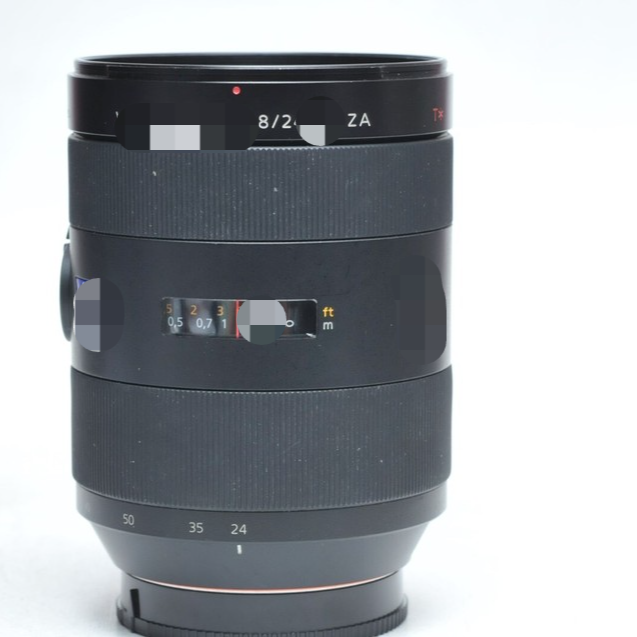
* Sony A-mount G Series: High-end zooms like the 24-70mm f/2.8 ZA can still command $100–$300 depending on condition, offering a professional kit for significantly less than native E-mount counterparts Alibaba.
The synergy between Minolta's optical DNA and Sony's electronic expertise continues to be a defining factor for photographers who value both historical character and modern performance.
Here are the detailed insights on the Minolta-Sony heritage and market. You may also want to:
Sony A Mount Lenses 16 50mm 70 200mm F2.8 G
Products · Top picks & verified manufacturers

Related Searches
Explore more sourcing topics & related categories
Sources & References
51 sources cited · Verified industry data & reports
Minolta - Wikipedia
en.wikipedia.org
Sony continued the manufacture of DSLRs using Minolta technology until 2010 when the company phased out DSLRs for its SLT system but retained the Minolta A-mount. Minolta entered the highly competitive 35mm compact camera market in the 1980s and transitioned from older rangefinder designs to "point-and-shoot" (P&S) electronic autofocus/autowind cameras. Konica Minolta Photo Image, Inc.'s (the camera business portion of Konica Minolta) assets regarding digital camera technology are transferred to Sony for continued development started from the joint venture. ... ↑ "コニカミノルタ|Old and New|ミノルタ". Archived from the original on 2003-12-15. Retrieved 2026-09-04. ... ↑ "Petition for Cancellation:JMM Lee Properties, LLC v Konica Minolta Holdings, Inc and Minolta Co., Ltd". 2005: The company announces joint venture with Sony on CCD and CMOS technologies. 2006: Konica Minolta announces it is discontinuing all film and digital camera production, ending a 78-year history as a camera manufacturer. Final models released were DiMAGE X1 and Z6. On 19 January 2006, Konica Minolta announced that it was leaving the camera and photo business, and that it would sell a portion of its SLR camera business to Sony as part of its move to pull completely out of the business of selling cameras and photographic film. Konica Minolta was the last of the large camera manufacturers to launch a digital SLR camera (Maxxum/Dynax 5D and 7D) using the 35 mm AF mount. During July 2005, KM and Sony negotiated on a joint development of a new line of DSLR cameras, where it was believed that Konica Minolta and Sony would market their DSLR line to the masses (much like the joint marketing and development of Pentax and Samsung K10/GX10 DSLRs).
How The Death Of Minolta Gave Rise To Sony Cameras | Light Stalking
www.lightstalking.com
There are probably a few things we will need to know about the relationship between Sony cameras and Minolta cameras, and it may not be what you would normally expect. Put your virtual hands up if you own a Sony camera. Quite a few of you I'm betting. Now keep those hands up if you remember Minolta cameras. The thing is, that at the beating heart of your amazing Sony Alpha is the DNA of a great camera company, long since past, Minolta. Minolta was never a giant like Nikon and Canon, they would probably be regarded as a level down from the two behemoths yet, significant amounts of the technology, not only in your Sonys but also pretty much any other modern DSLR or mirrorless camera comes from the innovation of Minolta through the 70’s, 80’s and 90’s. They did, however, recognize the wealth of innovation and engineering talent that Konica Minolta still possessed and in 2006 created a new partnership with them. Six months later, Konica took the decision to leave the camera business altogether and sold it to Sony. Sony had been looking to get into the DSLR market and Minolta was a perfect match and in particular Minolta’s technologically advanced Alpha mount. Within a year, Sony had their first DLSR ready for the market, the Alpha A100. It was a 10.2mp camera, very much built around an older Minolta design and featuring many of Minolta’s innovations. These included in-camera stabilization and eye start autofocus. Taking much of Minolta's design and technology, the A100 was Sony's first DLSR.
VMLP 2: Sony–The Revenge of Minolta, the Re-birth of the Cool ...
earthsunfilm.com
Sony could have done what many corporations do when buying up failing companies—keep the useful stuff and sell off the rest. However, Sony kept the “Alpha” marketing name Minolta used for the Japanese market and two years later produced a digital camera that used the film camera mount! The Minolta name was gone, but its technology was front and center. The Maxxum 5D and 7D, while great cameras, were too little done too late. In early 2006, Minolta and Sony signed a technology-sharing pact, that six months later, to everyone’s surprise, became a permanent transfer of camera intellectual property. After 78 years, Minolta, founded in Osaka, Japan in 1928 as Nichi-Doku Shahshinki Shoten (Japanese-German camera shop), stopped making cameras. In 2010, single-lens translucent technology (SLT) introduced a fixed mirror design and brought video, an electronic viewfinder, and phase-detection autofocus to Sony’s DSLR models. Next, Sony, taking a chance in true Minolta fashion, introduced E-mount cameras, and was met promptly with smirking and disdain—the general sentiment being that mirrorless cameras would never be the equal of DSLRs. And if you think Sony has forgotten its Minolta roots, the LA-EA5 Adapter, announced in early September, provides autofocus support for every A-mount lens produced since 1985. For legacy SAM and SSM lenses, it supports advanced focusing features comparable to native E-mount lenses. I think it’s safe to say that the sale of Minolta’s camera IP was as much heart transplant as technology transfer.
Minolta: Tales of a Forgotten Camera Maker | PetaPixel
petapixel.com
Many of Sony’s early digital designs would also be informed by the late ’90s Maxxum bodies and their technology. While the Sony Alpha brand nowadays concentrates mostly on its mirrorless cameras built around the E-mount, the first 10 years of Sony’s meteoric rise to digital camera dominance could have never happened without the A-mount system and its Alpha SLT cameras, all built using Minolta DNA. In that somewhat abstract sense, Minolta should be happy to count itself among one of the very few camera makers in history that managed to excel not only during the film era but also after the switch to digital photography. You might not have heard of Minolta before, especially if you got into the hobby during the digital era, but you will be surprised to know just how intimately their story is intertwined with that of photographic technology and history. Let’s take a look back and explore the annals of a camera brand that never deserved to fade from memory! The prospect of the digital revolution required an RnD investment that the shaky conglomerate could not justify as its existing cameras remained poor sellers, so Konica Minolta decided circa 2005 to sell off its camera business entirely and focus on more lucrative endeavors, like printers and copying machines. The company that ended up buying the remnants of what used to be Minolta was none other than Sony. Having made its name in a wide range of home electronics fields, it was natural for Sony to want to leverage their brand name to try and break into the booming digital camera world. That they did – and not without Minolta’s help, as all of Sony’s early Alpha-series cameras utilized the so-called Minolta-Sony A-mount.
What Really Killed Minolta: The 1992 Lawsuit | Fstoppers
fstoppers.com
Minolta couldn't make those investments. They were still digging out from the financial crater left by the Honeywell settlement. More specifically, they couldn't invest in the single most expensive and critical component of the digital transition: sensor fabrication. Canon was pouring billions into developing its own CMOS sensor technology and building fabrication plants. Sony, not yet a camera manufacturer, was investing similarly massive amounts into CCD and CMOS sensor fabs, positioning itself as a key supplier. Minolta invented autofocus and IBIS but vanished from photography. A devastating 1992 Honeywell lawsuit for $127.5 million crippled R&D during the critical digital transition, not slow adoption. The early Sony Alpha DSLRs were essentially Minolta cameras with Sony branding and electronics. The A-mount lived on. The sensor stabilization technology that Minolta pioneered became a cornerstone of Sony's marketing. And as Sony eventually pivoted to mirrorless and created the revolutionary a7 series, that same Minolta-developed IBIS technology became one of the key features that made Sony's full-frame mirrorless cameras so competitive against Canon and Nikon.
Sony Alpha: Reviving the Minolta Legacy - by ObsoleteSony
obsoletesony.substack.com
But instead of building from scratch, Sony saw a better path: acquiring Minolta’s camera division and building on its optical legacy. Ryoji Chubachi, then President of Sony’s electronics business, was a key force behind the company’s push into high-end photography. Negotiations moved quickly. Sony had the money. Konica Minolta needed a way out. By early 2006, the deal was public. Sony would inherit the A-mount system, a full DSLR development pipeline, anti-shake sensor technology, and most importantly, the engineers behind it. They’re holding the legacy of Minolta, a brand that once defined Japanese photography the way Sony came to define consumer electronics. Its name may have faded, but its spirit still shapes every frame. And the story of how that legacy was nearly lost, only to be reborn inside Sony, remains one of the most overlooked chapters in camera history. Instead, it left the camera division vulnerable. They were brilliant engineers trying to keep a legacy alive with no budget and little support. Their last major DSLR, the Maxxum 7D, was beloved by those who used it, but it came too late and cost too much to save the brand. The Minolta 7000 was recognized as an Essential Historical Material by Japan’s National Museum of Nature and Science. Inside Sony, some believed the moment was ripe. But they’re there in every camera that stabilizes a lens from 1985. In every shot taken with an old Maxxum lens on a modern Alpha body. In the way Sony’s imaging division never discarded the past but built upon it. The rise of Alpha is proof that a great idea, when preserved and nurtured, can outlive the company that created it. Sony didn’t rewrite Minolta’s history.