Mobile All Processor

Overview
Product sourcing insights & recommendations
The phrase "mobile all processor" typically refers to the System on a Chip (SoC), a unified architecture where all essential smartphone components—the CPU, GPU, NPU, ISP, and 5G modem—are integrated onto a single die QualcommWeebly. This "all-in-one" design is the industry standard for achieving high energy efficiency and performance in portable devices GrokipediaCroma.
Market Trends & Insights (2026 Focus)
* From "Smart" to "Intelligent": By 2026, the market will shift toward Agentic AI, where processors enable phones to act as proactive personal assistants that handle multi-step autonomous tasks locally, rather than relying on the cloud Gadgetsalvation.
* NPU as the Core Performance Metric: The Neural Processing Unit (NPU) has surpassed the CPU as the most critical component. Future SoCs (successors to the Snapdragon 8 Elite and Apple A19) will focus on TOPS (Trillions of Operations Per Second) to run Small Language Models (SLMs) locally for zero-latency privacy MediumGadgetsalvation.
* Economic Impact: A projected global memory (DRAM) shortage driven by AI demand is expected to increase smartphone production costs and retail prices through 2026 YoutubeGadgetsalvation.
* Visual-First AI: Upcoming chips will prioritize "multimodal vision," using cameras as the primary input for real-time AR instructions and object recognition Gadgetsalvation.
Product & Sourcing Insights
Sourcing raw SoCs is restricted to licensed OEMs; however, the B2B market offers original smartphone motherboards and custom PCBA processing as viable entry points for specialized manufacturing.
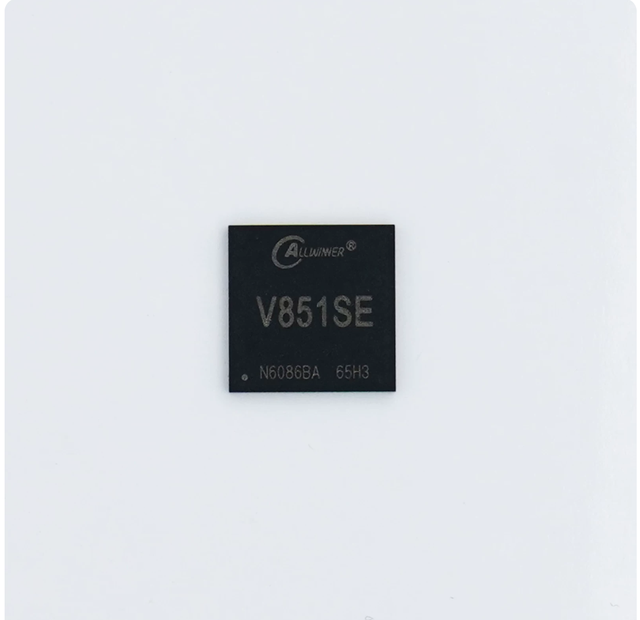
High Npu Performance Ai Mobile Processor Chipset For Smartphones
Products · 3 lists
Related Searches
Explore more sourcing topics & related categories
Sources & References
25 sources cited · Verified industry data & reports
Mobile Processor - an overview | ScienceDirect Topics
www.sciencedirect.com
3 Processor manufacturers have developed both symmetric and asymmetric multicore processors; symmetric designs feature cores with identical capabilities, while asymmetric designs allocate tasks to cores with differing capacities, traditionally enabling energy savings by assigning less demanding tasks to simpler cores. 1 The trend has shifted toward symmetric multicore processors, facilitating the incorporation of parallel and multi-threading applications in mobile platforms. Mobile processors are defined as the central processing units within mobile devices that can vary in design, frequency, and performance capabilities, and may include features such as Dynamic Voltage and Frequency Scaling (DVFS) to optimize energy consumption. AI generated definition based on: Journal of Network and Computer Applications, 2017 A notable feature in new smartphones, tablets, and other mobile devices is the use of multicore processors, including both symmetric and asymmetric multicore designs. 1 Symmetric processors have cores with the same capabilities, while asymmetric processors have cores with differing capabilities, which has traditionally allowed for energy savings by distributing tasks according to processor capabilities. Modern mobile processors employ techniques such as Dynamic Voltage and Frequency Scaling (DVFS), which allows the processor to operate at different frequency levels; running at lower frequencies increases execution time but reduces energy consumption, enabling schedulers to decrease energy use at the cost of performance.
Mobile processor — Grokipedia
grokipedia.com
A mobile processor, also known as a system-on-chip (SoC), is a compact central processing unit (CPU) engineered for integration into portable electronic devices such as smartphones, tablets, and wearable gadgets, prioritizing energy efficiency, thermal management, and high performance within severe power and space constraints.[1] Unlike desktop processors, mobile processors are optimized for battery-powered operation, often employing dynamic voltage and frequency scaling (DVFS) to balance computational demands with minimal energy use, enabling extended device runtime while handling tasks like A notable trend in the 2020s involves the shift toward ARM-based processors in premium portable devices, exemplified by Apple's transition to its M-series chips starting with the 2020 MacBook Air, which enabled slimmer designs weighing around 1.29 kg while delivering all-day battery performance.[82] This architectural change has influenced broader market dynamics, promoting lighter form factors that prioritize mobility in high-end laptops.[80] Key challenges in this domain include balancing high performance for demanding productivity applications—such as multitasking in office suites or ligh SiFive's New High-Performance Processors Offer a Significant ... ... Arm vs x86: Instruction sets, architecture, and all key differences ... Windows ACPI Design Guide for SoC Platforms - Microsoft Learn · 3. ACPI Concepts — ACPI Specification 6.5 documentation ... Review: Intel Lunar Lake CPUs combine good battery life and x86 ... MacBook Air (M1, 2020) - Technical Specifications - Apple Support · Business Laptop vs Mobile Workstation: Complete Guide 2025 - HP Concurrently, AMD introduced its mobile Athlon processors in 2001, targeting performance-oriented laptops with x86-compatible chips that competed directly with Intel's offerings by providing higher clock speeds at lower power draws.[32] The 2010s witnessed the explosive growth of ARM-based architectures in smartphones, driven by Qualcomm's Snapdragon series, which debuted in 2007 with the MSM8650 featuring the industry's first 1 GHz ARM-based CPU, enabling faster mobile internet and multimedia capabilities.[33] Snapdragon's dominance accelerated in the 2010s as it powered a majority of Android
(PDF) Trends in Mobile Phones Processor Architecture
www.academia.edu
Mobile phones, cell phone or hand phone, sometimes shortened to simply mobile, cell or just phone, has become one of the most necessity of our life. This study therefore, investigates the trends in the technology advancements which have resulted in significant changes in the processor architecture causing the transition from analog to digital telephony. Convergence of communication, infotainment, and multimedia applications require paradigm shift in processor development and reuse pattern ... Mobile devices of today have been steadily attracting applications far beyond the realm of voice communication. The market penetration rate of mobile devices has defied all predictions and is projected to remain strong for many years to come (more than 3/4th of the world population still need to be connected). Current and future market trend makes it extremely attractive for complimentary applications and features porting to serve the promising demand (on average mobile users change their mobile device once a year) and huge return on investment (a matter of simple software upgrade). It is intended to widen the technical background on mobile phones within the IT community. ... The previous existing mobile technologies were only limited to voice and short messages, organized between several network operators and service providers. However, recent advancements in technologies, introduction, and development of smartphones added many features such: high-speed processors, huge memory, multitasking, screens with large-resolution, utile communication hardware, and so on. Personal Digital Assistants (PDA) and the ever-growing category of smart phones allow people to access the Internet for e-mail, instant messaging, text messaging and Web browsing, as well as work documents, contact lists and more. This paper presents an overview of mobile devices and also the operating systems used in the devices. ... In this work a new type of device is introduced: a bi-processor SmartPhone equipped with a network interface GSM/GPRS/EDGE/UMTS.
Definition of mobile processor | PCMag
www.pcmag.com
A CPU chip designed for laptops, tablets, smartphones and other portable devices. Mobile processors use lower voltages and are designed to run cooler than the CPUs in desktop computers. Laptops have individual CPUs, whereas smartphones and tablets are controlled by a complete system-on-chip (see SoC). Laptops generally use CISC-based Intel x86 CPUs, whereas smartphones and tablets contain mostly RISC-based ARM chips. See RISC, ARM, Intel Atom, mobile platform.
Mobile Processor Explained: Unlock Faster, Smarter Devices!
mobilephoneguru.com
Looking ahead, here are some additional trends we can expect in mobile processor development: More Integration: Mobile processors will continue to integrate more functions (like AI, 5G modems, and GPUs) into a single chip, reducing the size of smartphones and other devices while increasing their power and efficiency. Advanced Manufacturing: We’ll see processors built with smaller, more efficient transistors, allowing for more power in a smaller package. The future of mobile processors will be closely tied to emerging technologies, including artificial intelligence (AI), 5G, and the Internet of Things (IoT). These advancements will not only change how we use our smartphones but will also open up new possibilities for devices in various industries. Let’s explore how mobile processors will evolve to meet these exciting trends. The GPU is the part of the processor that focuses on graphics and gaming. If you love playing games or watching high-quality videos on your phone, the GPU makes sure everything looks sharp and smooth. It’s responsible for rendering the images, animations, and visuals you see on your screen. ... Handles all visuals, including games, videos, and animations. Makes sure graphics are sharp, smooth, and detailed. Essential for activities like gaming or watching high-definition videos. The CPU is like the “boss” of your mobile processor. It manages the overall performance of your phone. When you open an app, scroll through social media, or switch between tasks, the CPU makes sure everything runs smoothly. If you’ve ever noticed how quickly your phone opens an app or loads a webpage, that’s the CPU at work. ... Handles all basic tasks like opening apps and browsing the web.
What Is Processor in Mobile and What Decides Its Speed? - HONOR SA
www.honor.com
Are you curious to know what makes your mobile device so fast and responsive? Have you ever wondered how a processor works in a phone? We all know that the speed of our phones, tablets, and laptops depends on their processor. But do you understand why certain processors perform better than others? Read on to find out what is a processor in mobile phones and which features decide its speed! A processor in a smartphone, often referred to as the Central Processing Unit (CPU), is the brain of the device. It's a critical component that handles all the instructions and computations needed to operate the phone. This powerful processor ensures that the device delivers lightning-fast responses, enhanced multitasking, and top-notch gaming and multimedia experiences, all while maintaining energy efficiency. For HONOR Magic V2 users, this means a smartphone experience that's not just about seamless operation, but also about pushing the boundaries of what a mobile device can do, powered by one of the most advanced processors in the market. This multi-core setup allows for better multitasking, smoother operation of applications, and improved performance during demanding tasks like gaming or video editing. For instance, while a dual-core processor can handle basic functions with ease, an octa-core processor divides the workload across more cores, leading to faster processing and a more responsive user experience. In conclusion, the processor in a mobile phone is the cornerstone of its functionality, dictating everything from basic operations to advanced computing tasks.