Mobile Phone Brands
Overview
Product sourcing insights & recommendations
The global mobile phone market in 2026 is undergoing a major structural reset. Soaring component costs have driven a 27.6% increase in average selling prices, effectively ending the era of ultra-cheap smartphones. Market share is consolidating around Samsung (22.7%) and Apple (20.2%), while budget-focused brands face steep declines. Innovation is now defined by on-device Generative AI, creaseless foldables, and satellite connectivity.
I have synthesized these findings into a detailed report covering market share data, emerging technologies like 6G-readiness, and shifting consumer affordability trends. You can find the full analysis in the file below.
Based on the 2026 market shift, you might want to:
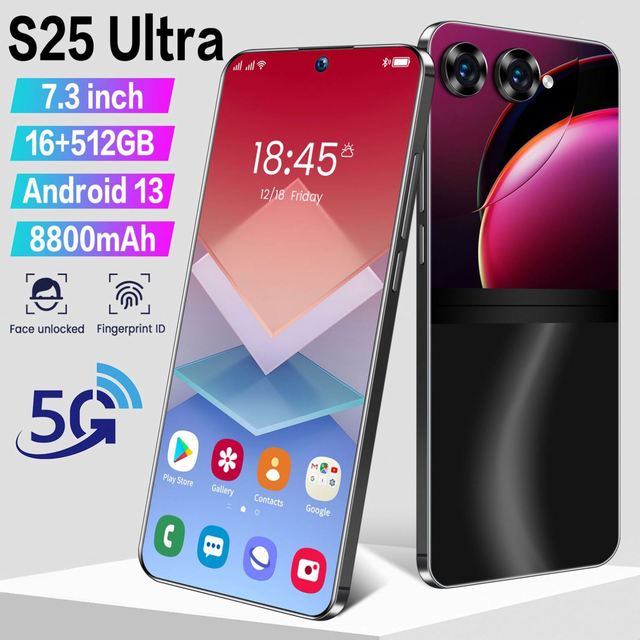
Samsung Galaxy S26 Ultra S26 Series 5g Ai Smartphone
Products · 3 lists
Deep Dive · Full Report
Full Market Report
1 document · Live-fetched from source
Related Searches
Explore more sourcing topics & related categories
Sources & References
27 sources cited · Verified industry data & reports
Global Smartphone Market Share: Quarterly
counterpointresearch.com
vivo smartphone shipments declined 21% YoY in Q2 2026, as pressure on lower price segments outweighed resilience in its mid-to-premium portfolio. Rising component costs and weaker demand across price-sensitive markets continued to weigh on overall shipment performance. ... This report is part of a series of market monitor reports which track the mobile handset market: Smartphone and Feature Phone shipments every quarter for more than 140 brands covering more than 97% of the total device shipments in the industry. Xiaomi recorded the steepest decline among the top five smartphone brands, with shipments falling 26% YoY in Q2 2026. The global smartphone market declined by 7% YoY in Q2 2026 as the memory shortage deepened and memory prices continue to rise. Among the top five brands, Xiaomi recorded the highest 5G growth at 33% YoY, driven by strong demand in China, India and Russia. Low-cost 5G and the diffusion of GenAI in lower price segments are key trends to look out for in 2025.
IDC - Smartphone Market Share
www.idc.com
Company 1Q26 Shipments 1Q26 Market Share 1Q25 Shipments 1Q25 Market Share Year-Over-Year Change Samsung 62.4 21.2% 60.6 20.0% 2.9% Apple 61.8 21.0% 59.1 19.5% 4.4% Xiaomi 33.8 11.5% 41.8 13.8% -19.1% OPPO 30.7 10.5% 34.1 11.3% -9.9% vivo 21.2 7.2% 22.7 7.5% -6.9% Others 84.0 28.6% 84.3 27.8% -0.3% Total 293.8 100.0% 302.6 100.0% -2.9% […] The premiumization trend will continue even as the memory prices are expected to stabilize by the second half of 2027. Top 5 Companies, Worldwide Smartphone Shipments, Market Share, and Year-Over-Year Growth, Q1 2026 (Top 5 Companies, Worldwide Smartphone Shipments, Market Share, and Year-Over-Year Growth, Q1 2026 ) Company shipments are branded device shipments and exclude OEM sales for all vendors. The “Company” represents the current parent company (or holding company) for all brands owned and operated as a subsidiary. Figures represent new shipments only and exclude refurbished units. *IDC declares a statistical tie in the Smartphone market when there is a difference of one-tenth of one percent (0.1%) or less in the shipment shares among two or more companies. Worldwide smartphone shipments are forecast to decline 13.9% year-on-year in 2026 to 1.09 billion units, according to the International Data Corporation (IDC) Worldwide Quarterly Mobile Phone Tracker. “Limited memory availability is forcing shipment reductions, while sharply higher memory prices are pushing up bill‑of‑materials cost and forcing price hikes by many top brands. In several emerging markets, prices have risen by as much as 40–50%, significantly weighing on demand in price‑sensitive regions. OEMs are responding with tighter cost controls, reduced marketing and channel support, and increased use of despecing strategies – but such measures also limit growth. 2026 represents a critical inflection point for vendors to reinvent themselves as rising component, energy, and logistics costs due to the recent war in the Middle East compound downside risks on the market outlook and pressure global smartphone demand.”
IDC - Smartphone Market Insights
www.idc.com
Android bears almost the entire decline, falling 24.3% in 2026 as its most exposed vendors retreat from the entry tiers they can no longer serve profitably. Android share drops seven percentage points in a single year. iOS share does the opposite trend, increasing almost four percentage points from last year to record high 23.6% share as shipments remain relatively resilient, down just 1.3% YoY in 2026. Apple achieved record high Q2 shipments driven by momentum for the iPhone 17 and fear of upcoming price hikes, keeping Apple on track for a record 22% annual share this year. Low-end vendors are doing their best to adjust strategy, cut costs, and shift their portfolios toward higher margin devices; however, the challenge isn’t strategy – it’s creating demand for these traditionally low-end brands at higher price segments. Consumers are increasingly opting for a premium brand when the price gap reduces, and financing is readily available.” · “The second quarter of 2026 brought a widening gap between the top and bottom of the market. Huawei stands apart, posting 19.9% YoY growth by holding prices steady in China as the Android competition raised prices, running targeted promotions, leveraging strong brand loyalty in its domestic market, and widening its lineup to cover more of the price spectrum.” · Top 5 Companies, Worldwide Smartphone Shipments, Market Share, and Year-Over-Year Growth, Q2 2026 (Final Historical results, shipments in millions of units) The average selling price of a smartphone will reach $581 in 2026, up 27.6% in a single year and revised upward from the $550 we projected last quarter. More brands are passing the increased cost to the end consumer, with prices rising faster than we expected.
Mobile Vendor Market Share Worldwide | Statcounter Global Stats
gs.statcounter.com
© StatCounter 1999-2026. All rights reserved. Global Stats RSS · StatCounter on Facebook ·
List of Mobile Phone Brands 2026: How to Choose Wisely
electronics.alibaba.com
Should I buy a new or refurbished flagship in 2026? Refurbished Apple/Samsung flagships (certified, with 2-year warranty) offer 25–30% savings and retain full software support — making them objectively better value than new value-tier models for users planning 3+ year ownership. Top five mobile phone brands by global market share in Q1 2026 — illustrating consolidation around premium players Over the past year, smartphone market dynamics have shifted sharply — not because people bought more phones, but because they paid significantly more for fewer devices. With global shipments down 13.9% 1 and average selling prices hitting $550–$565 2, choosing a mobile phone brand in 2026 is less about specs and more about ecosystem alignment, longevity, and real-world value retention. If you’re a typical user, you don’t need to overthink this: For everyday use (messaging, navigation, video calls), any top-five brand’s 2026 flagship meets all five thresholds. Prioritize support duration and battery metrics first — everything else is situational. Brand choice isn’t universally optimal — it’s contextual: Suitable for: Users who value multi-year ownership, seamless cross-device sync (e.g., Mac ↔ iPhone, Galaxy Tab ↔ S26), or professional-grade camera output. Samsung and Apple excel here. Less suitable for: Budget-first buyers in emerging markets needing sub-$200 devices — that segment shrank 22% in 2025 7. A “list of mobile phone brands” isn’t just a catalog — it’s a map of strategic priorities. In 2026, brand ranking reflects more than sales volume; it signals engineering focus, supply chain resilience, and platform maturity. The top five vendors — Samsung, Apple, Xiaomi, OPPO, and vivo — collectively hold over 70% of global shipments 3.
📱 Top 10 Smartphone Brands by Market Share in 2026 ...
www.facebook.com