Mp3 Cdma Mobile Phone

Overview
Product sourcing insights & recommendations
The phrase "MP3 CDMA mobile phone" refers to a category of mobile devices that utilize Code Division Multiple Access (CDMA) network technology and feature integrated MP3 audio playback capabilities. While this combination was a hallmark of the mid-2000s multimedia phone boom (e.g., Motorola Razr, Samsung Juke), the market in 2026 has transitioned into a specialized niche.
Product Overview
Modern "MP3 CDMA" devices generally fall into three categories:
- 1Industrial/Fixed Wireless Terminals: Specialized devices operating on the CDMA 450MHz band, often used in remote areas where GSM/LTE coverage is sparse. CwelltechAlibabaAlibaba
- 2Retro/Nostalgia Feature Phones: Basic "dumb phones" or flip phones with physical keyboards and dedicated MP3 playback buttons, catering to users seeking a "digital detox" or senior-friendly interfaces. MarketresearchfutureAlibaba
- 3Multi-Mode Smartphones: High-end devices that support legacy CDMA bands alongside 5G for global roaming and backward compatibility in regions that have not yet fully decommissioned 3G CDMA networks. AlibabaMarketresearchfuture
Market Trends & Insights (2026)
* A "Niche" Growth Story: Despite the global shutdown of major CDMA networks (like Verizon and Sprint in the US), the market for CDMA-based devices is projected to grow from $13.15 billion in 2024 to $20.97 billion by 2035 at a CAGR of 4.33%. Marketresearchfuture
* Emerging Market Resilience: Growth is primarily driven by Asia-Pacific (fastest growing) and Africa, where existing CDMA infrastructure remains a cost-effective solution for providing rural connectivity and mobile banking services. MarketresearchfutureLinkedin
* The "Digital Detox" Resurgence: There is a notable trend in developed markets for "simple" CDMA flip phones. These are often marketed as secondary "vacation phones" or for children/seniors, focusing on voice and MP3 music rather than distracting apps. MarketresearchfutureAlibaba
* Decline in Mainstream Interest: Google search trends for "CDMA mobile phone" have hit near-zero in major consumer markets as 5G becomes standard, highlighting that current demand is industrial or regionally specific rather than a mass-market consumer trend.
Sourcing Recommendations
If you are sourcing these products today, current listings on B2B platforms like Alibaba.com show prices ranging from $27 to $60 per unit, with higher-volume industrial models (like 450MHz handsets) requiring higher MOQs (up to 2,000 pieces). AlibabaAlibaba
Would you like to explore specific manufacturers of CDMA-450MHz industrial phones?
2g 3g Cdma Flip Phone With Mp3 Player
Products · 2 lists
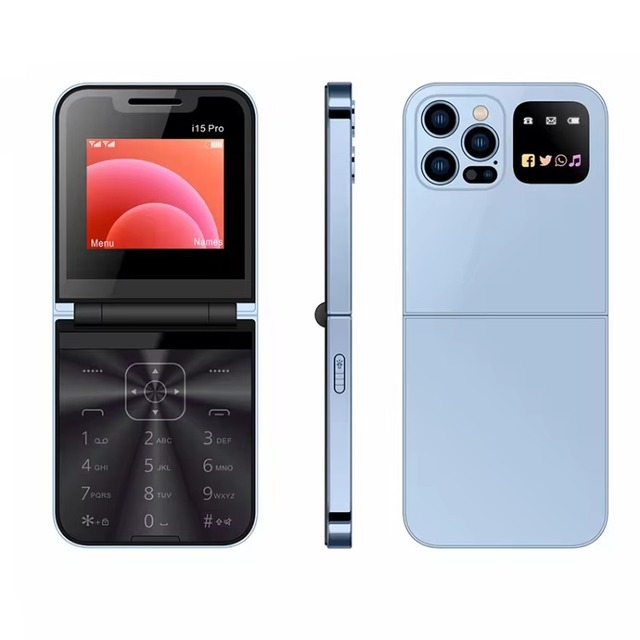
i15 Pro Hot Selling 2.4inch Dual Sim Unlocked 2G GSM Basic Mobile Phone
 Shenzhen Huayi Technology Co., Ltd.🇨🇳CN10 yrs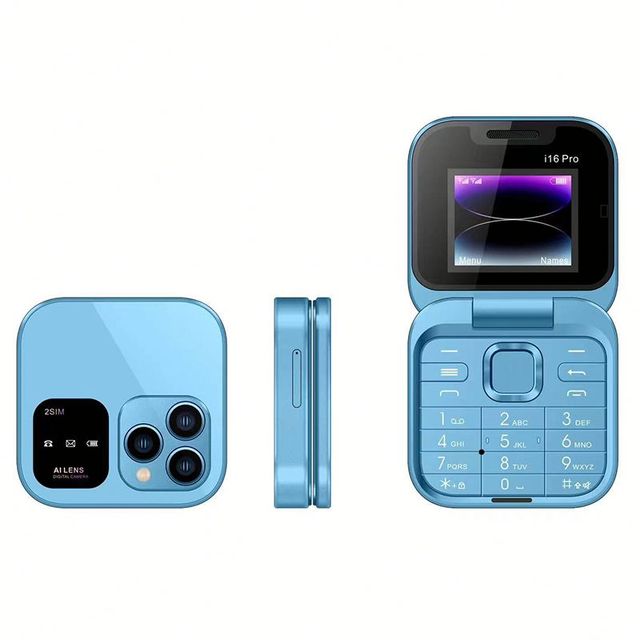
Affordable 2024 New Design i16 Professional 1.77inch Dual SIM Dual Standby Low Price Mini Size Foldable Feature Phone
 Guangzhou Hongliantong E-Commerce Co., Ltd.🇨🇳CN1 yr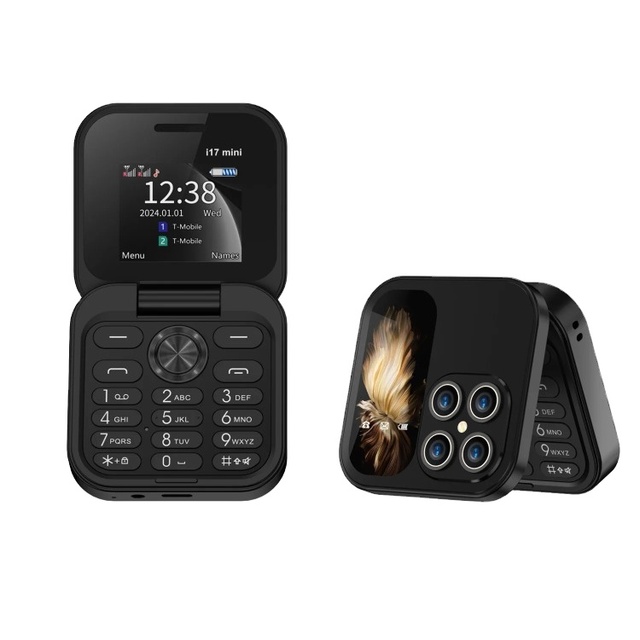
New SERVO i17 Mini 2G Dual SIM Standby Speed Dial FM Radio MP3 Foldable Palm Flip Mobile Phone Small Fashion Shockproof
 Shenzhen Huayi Technology Co., Ltd.🇨🇳CN2 yrs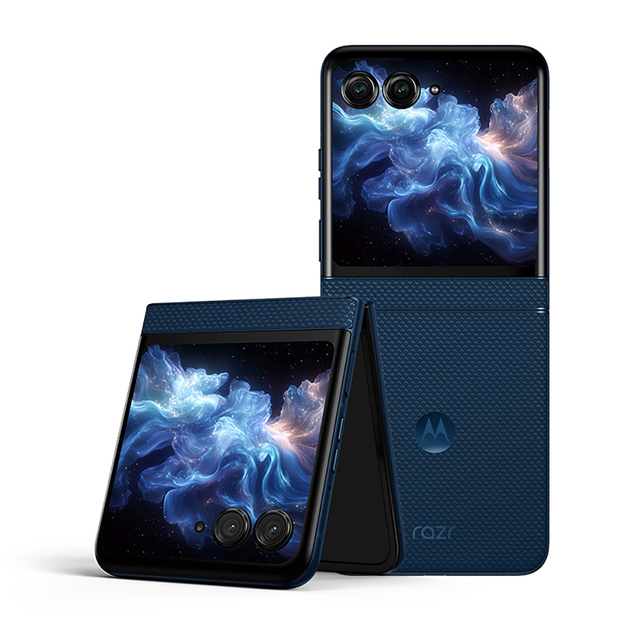
Razr 60 Foldable Smartphone 6.9'' Dimensity 7400X 50MP 4500mAh Android 15 IP48 Flip Smartphone with Global Rom
 Shenzhen Qingyuanda Import & Export Trading Co., Ltd.🇨🇳CN1 yr
Cheap Price Stock SC01 Flip Phone 4G Dual Screen Big Battery Big Button Feature Phone Europe Band China Made
 Linksys Telecom Shenzhen Co., Ltd.🇨🇳CN6 yrs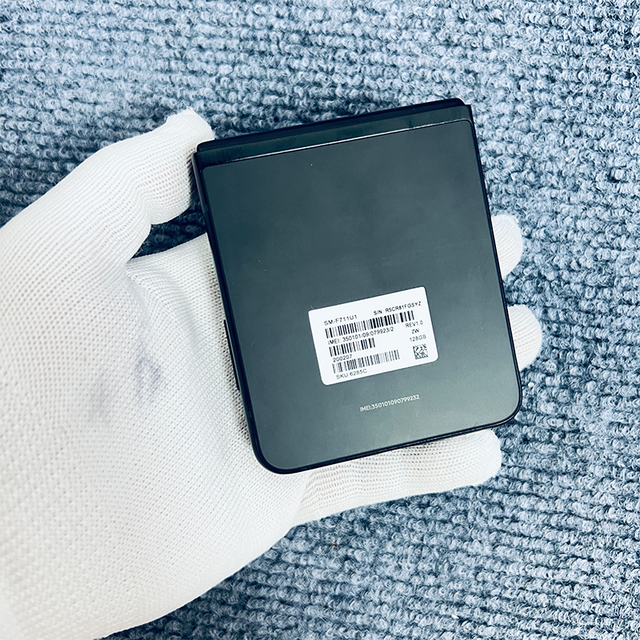
Flawless No Scratch Android Smartphone Unlocked Used Foldable Phone SAM Z Flip3 5G 8+128GB
 Shenzhen Waley Technology Co., Ltd.🇨🇳CN4 yrs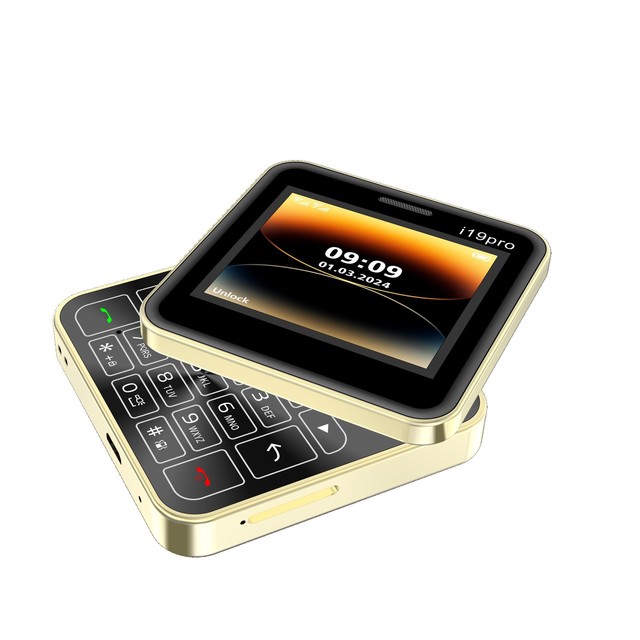
New I19pro Children's Rotating Phone KAI OS System Durable F15mini Mobile Phone 2G Cellular Flip Bar Design Screen Camera FM
 Shenzhen Liantuofa Technology Co., Ltd.🇨🇳CN2 yrs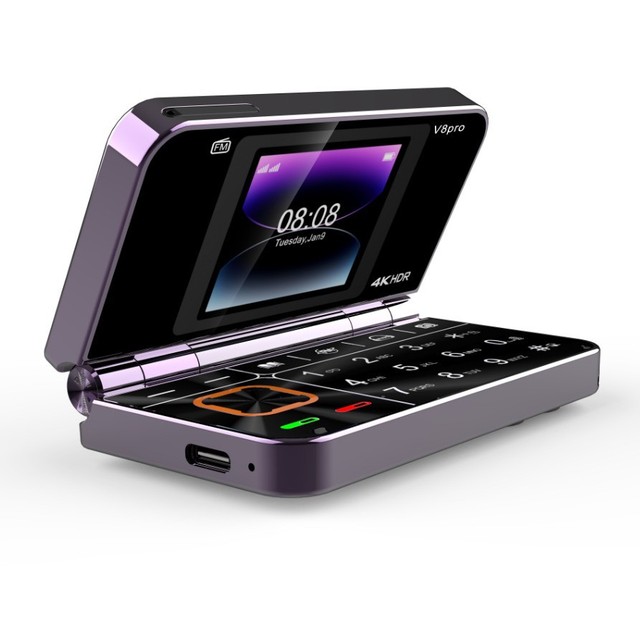
Security New V8 Pro Dual Screen 1.8-inch Folding Flip Function Phone 2G Elderly Foreign Language Large Button
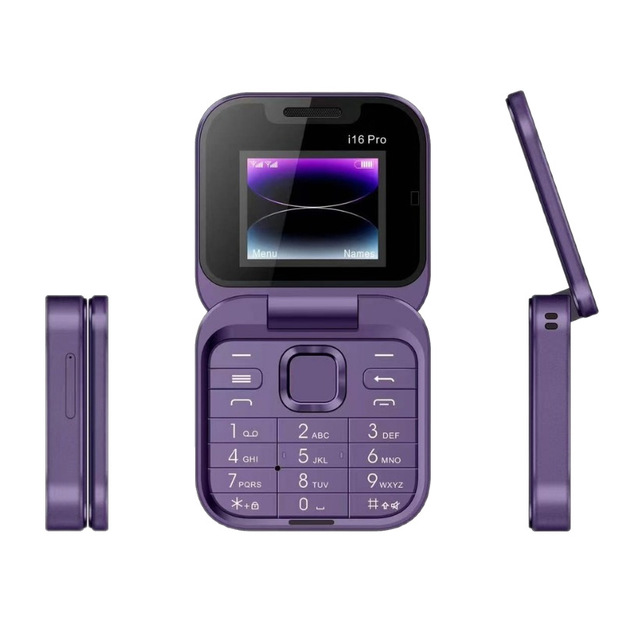
Mini Flip Phone I16 Pro Cross Border Dual Sim 2g Keypad Mobile Small Basic Cell
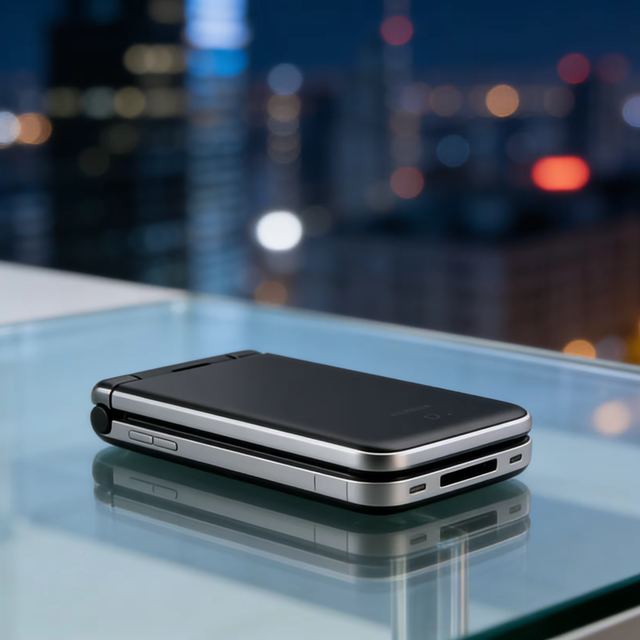
Bulk Order Unlocked Flip Phone Dual SIM 2G/4G Feature Phone for Wholesale Buyers
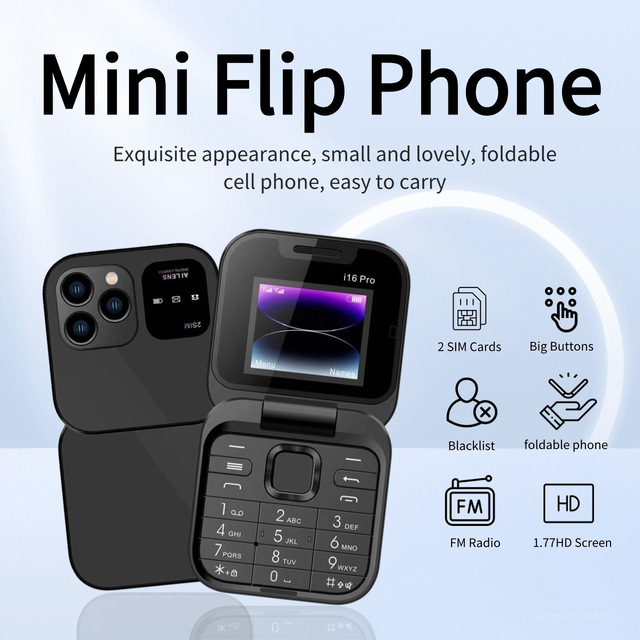
Smart Home Mini Flip I16 Pro Cross Border Dual SIM 2G Mobile Phone with Keychain Body Design for Pocket Backup
 Shenzhen Youtuotong Technology Co., Ltd.🇨🇳CN1 yr
High Quality Luxury Customized Ultra-Thin Flip Phone with Large Keyboard and SOS Boost MTK GSM 2G Network Luxury Mobile Phone
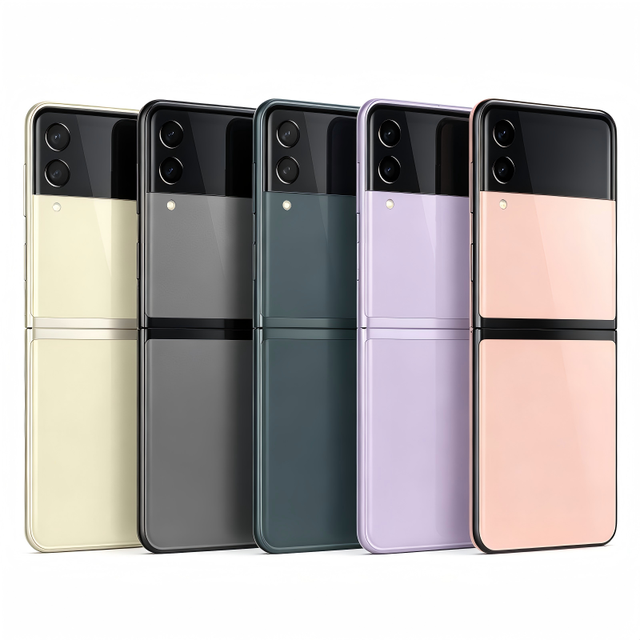
FLIP 3 Unlocked Android Smartphone Dual SIM Global Version with Long Battery Life China Origin for Wholesale
 Shenzhen Century Huitong Technology Co., Ltd.🇨🇳CN8 yrs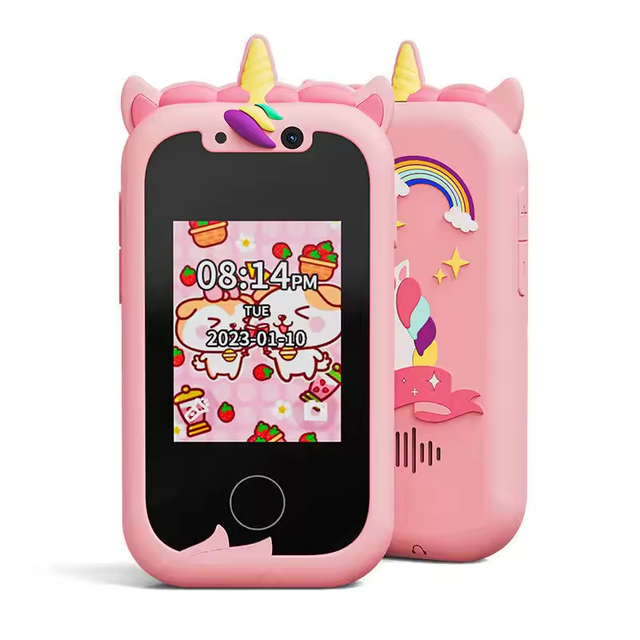
Phone Educational Toys Bedtime Story Music Dual Camera Kids Novelty Phones Smart Phone Kids Smart Mobile
 Shenzhen CPYP Technology Co., Ltd.🇨🇳CN7 yrs
Related Searches
Explore more sourcing topics & related categories
Sources & References
24 sources cited · Verified industry data & reports
CDMA Network Technology: Principles, Evolution, and Analysis | ...
www.tek.com
– cdma2000 1X doubles the voice capacity of cdmaOne networks, delivering peak data rates of 307 Kbps per subscriber in a mobile environment. – cdma2000 1xEV includes two variants, both backward compatible with cdma2000 1X and cdmaOne technologies. – w cdma2000 1xEV-DO (Data Only), capable of delivering data multimedia services such as MP3 transfers and videoconferencing at peak data rates of 2.4 Mbps per subscriber in a mobile environment; Here, a multi-interface call-trace application is especially productive, since it can trace and group all of the procedures related to the activity of each single subscriber in a CDMA network, even as the procedures evolve over multiple interfaces. Figure 2. Setting up a cdma2000 1X mobile data call. Frequently in a cdma2000 network the TCP user-plane packets have a small Window Size. This implies that end-to-end TCP connections are not stable. The more TCP packets lost in the network and not acknowledged, the smaller the Window Size, with the result that more TCP connections are dropped and re-established. The small TCP Window Size is a by-product of the soft-start mechanism built into the TCP protocol. While CDMA laid the foundation for digital wireless networks, the transition to 5G New Radio (NR) introduces unprecedented complexities in signal analysis and system debug. As networks evolve, ensure your testing infrastructure is ready for the next generation of wireless standards. ... Copyright © Tektronix. All rights reserved. Tektronix products are covered by U.S.
Code-division multiple access - Wikipedia
en.wikipedia.org
The key difference here is that the bit error probability for N users talking all of the time is constant, whereas it is a random quantity (with the same mean) for 2N users talking half of the time. In other words, asynchronous CDMA is ideally suited to a mobile network where large numbers of transmitters each generate a relatively small amount of traffic at irregular intervals. Synchronous CDMA exploits mathematical properties of orthogonality between vectors representing the data strings. For example, the binary string 1011 is represented by the vector (1, 0, 1, 1). Vectors can be multiplied by taking their dot product, by summing the products of their respective components (for example, if u = (a, b) and v = (c, d), then their dot product u·v = ac + bd). If the dot product is zero, the two vectors are said to be orthogonal to each other. Some properties of the dot product aid understanding of how W-CDMA works. CDMA optimizes the use of available bandwidth as it transmits over the entire frequency range and does not limit the user's frequency range. It is used as the access method in many mobile phone standards. It was shown that through the use of linear methods, there are three types of signal separation: frequency, time and compensatory. The technology of CDMA was used in 1957, when the young military radio engineer Leonid Kupriyanovich in Moscow made an experimental model of a wearable automatic mobile phone, called LK-1 by him, with a base station.
GSM vs. CDMA: What You Need To Know About Phone Bands | T-Mobile
www.t-mobile.com
If you see both, your device supports both CDMA and GSM. The next question is: how long will your phone continue to work with your current provider? You can check their website for a list of compatible devices, as well as their plans for the future of their networks. Many carriers also notify customers whose devices will no longer be supported well in advance. ... Ookla® Speedtest® awards T-Mobile as the Best Mobile Network in the U.S. ... *Please note that product availability may vary, and some items mentioned may no longer be in stock or available at the time of reading. Though the split between CDMA technology and GSM kept devices siloed through much of the early 2000s, the introduction of LTE (long-term evolution) meant that most carriers prioritized a global 4G standard. These 4G networks made it easier to compress more information, which made it possible to browse the internet, talk, text, and send data from phones at faster speeds. Now, as the industry begins to turn to 5G—GSM and CDMA technology is becoming increasingly obsolete. The successor to 4G networks is 5G, which network providers began rolling out worldwide in 2019. 5G networks offer faster speeds and lower latency, meaning that networks will be able to handle the much higher demands of an increasingly connected world. Though the 2G and 3G networks that support CDMA and GSM devices still exist, they are frequently being phased out. For example, some carriers have shut down their 2G and 3G networks entirely, and phones that ran on these networks no longer work. Other devices may need a replacement SIM to continue working properly. But, even if some carriers continue to support 2G and 3G networks, the level of support is usually lower than it has been in the past. This means older devices that aren’t designed for 4G or 5G will likely experience much worse reception than they have previously.
What are Phone Bands (GSM, CDMA) and Why Do They Matter?
www.verizon.com
If you’re looking to hop from one carrier to another and want to bring your current phone with you, you don’t need to wade through product specs to see if it’s compatible. To see if you can transfer a specific device from another carrier to the Verizon Wireless network, click here. Both CDMA and GSM are multiple-access technologies, meaning they allow multiple calls or data connections on one radio channel. Both CDMA and GSM networks have provided millions of callers with crucial connectivity over a number of years. Watch for these technologies to be gradually phased out and for connectivity to improve. ... Plus get a discount on your home internet plan when you bundle it with your Verizon mobile phone plan. CDMA stands for “Code Division Multiple Access.” GSM stands for “Global System for Mobiles.” They are 2 radio networks used by wireless carriers. Get more out of your Verizon Unlimited plan and save on perks ranging from entertainment, protection & productivity, safety, mobile perks, banking and cards.
CDMA Phone: What is it? - UNIWA - CwellTech
www.cwelltech.com
CDMA phone - what is it? It is a gadget that provides services such as direct landline and mobile numbers, packet data exchange and messaging at speeds up to 2.3 Mbps. a certain spectrum of the information signal. For this, two methods are used: direct sequence and frequency hopping. Despite its promise and safety, this standard is not used very often. And many are asking the following question: "CDMA phone - what is it?" Its history began in the 30s of the last century. Much more is known about the main competitor CDMA. It is he who is actively used in the work of domestic cellular networks. The GSM standard uses TDMA technology and is based on a frequency division multiplexing algorithm. Despite the fact that this technology is united by the principle of operation, it has several directions. Actually, the CDMA system uses certain sets of channels 1.23 MHz wide. In this case, the voice itself is encoded at a speed of 8.55 kbit / s. Sometimes this data stream is truncated to 1.2 kbps.
cdmaOne - Wikipedia
en.wikipedia.org
The IS-95B standards track provided for a merging of the TIA and ANSI standards tracks under the TIA, and was the first document that provided for interoperation of IS-95 mobile handsets in both band classes (dual-band operation). P_REV=4 was by far the most popular variant of IS-95, with P_REV=5 only seeing minimal uptake in South Korea. P_REV=6 and beyond fall under the CDMA2000 umbrella. Very few mobiles or networks ever provided this feature, which could in theory offer 115200 bit/s to a user. After convolution coding and repetition, symbols are sent to a 20 ms block interleaver, which is a 24 by 16 array. IS-95 and its use of CDMA techniques, like any other communications system, have their throughput limited according to Shannon's theorem. cdmaOne used code-division multiple access (CDMA), a multiple access scheme for digital radio, to send voice, data and signaling data (such as a dialed telephone number) between mobile telephones and cell sites. CDMA transmits streams of bits (PN codes). CDMA permits several radios to share the same frequencies. cdmaOne's technical history is reflective of both its birth as a Qualcomm internal project, and the world of then-unproven competing digital cellular standards under which it was developed. In North America, the technology competed with Digital AMPS (IS-136, most often simply called "TDMA"), a TDMA-based standard, as well as with the TDMA-based GSM. It was supplanted by IS-2000 (CDMA2000), a later CDMA-based standard.