Mp3 Modulation

Overview
Product sourcing insights & recommendations
The phrase "mp3 modulation" typically refers to one of two contexts: the technical conversion process (Pulse Code Modulation) or the commercial application of FM modulators/transmitters that allow MP3 playback in legacy car audio systems ScienceinsightsAccio.
Technical Definition & Core Logic
At its foundation, MP3 technology is a compression layer built upon Pulse Code Modulation (PCM) ScienceinsightsOrigin-Ic.
* Source: Analog sound is first converted to digital data via PCM Origin-IcIc-Online.
* Compression: MP3 encoders analyze the PCM stream and discard inaudible frequencies to reduce file size by 75–95% WikipediaIc-Online.
* Output Stage: In modern hardware, decoded MP3 signals are often processed using Pulse Width Modulation (PWM) to drive high-efficiency Class D amplifiers ScienceinsightsMicrochip.
Market Trends & Insights (2025–2026)
The market is shifting from legacy compressed formats (MP3) toward high-fidelity, software-integrated environments AudioxpressMordorintelligence.
* Software-Defined Audio (SDA): By 2026, automotive audio will move toward SDA architectures, allowing for Over-The-Air (OTA) updates to sound profiles and adaptive features AudioxpressAudioxpress.
* Immersive Spatial Audio: There is a surge in demand for Dolby Atmos and spatial audio in mainstream luxury vehicles MordorintelligenceFortunebusinessinsights.
* Sustainability & EVs: New designs prioritize lightweight PWM-based amplification to offset battery weight and take advantage of the quiet cabin environment in electric vehicles BusinessresearchinsightsAccio.
Product Analysis
The current B2B landscape focuses on modular components for automotive integration and DIY audio Alibaba.
* FM Modulators: Popular for adding MP3/Bluetooth capability to older vehicles without replacing the entire head unit Alibaba.
* Decoder Boards: Highly integrated SoCs combining a processor, DAC, and FM transmitter are widely available for under $3 per unit AlibabaAlibaba.
Based on these technical insights, you can proceed with:
Mp3 Fm Modulator Automotive
Products · 3 lists
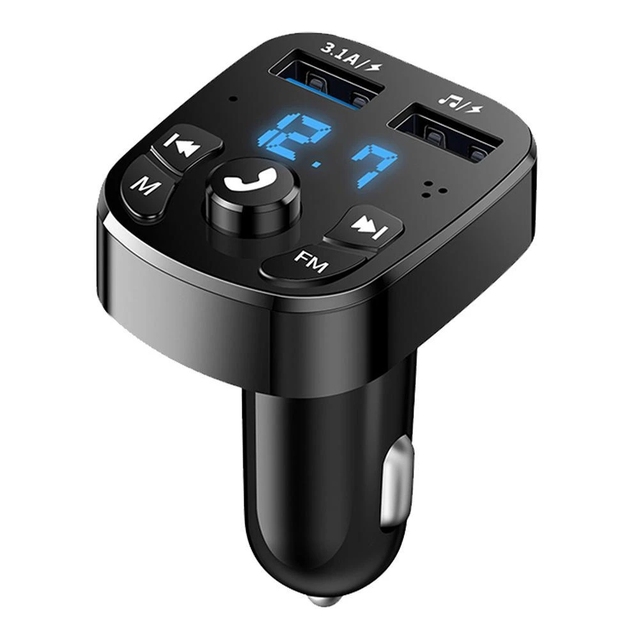
Car Hands-free Blue Tooth Compaitable 5.0 FM Transmitter Kit MP3 Modulator Player Handsfree Audio Receiver 2 USB Fast Charger
 Shanghai Greentea Trade Co., Limited🇨🇳CN2 yrs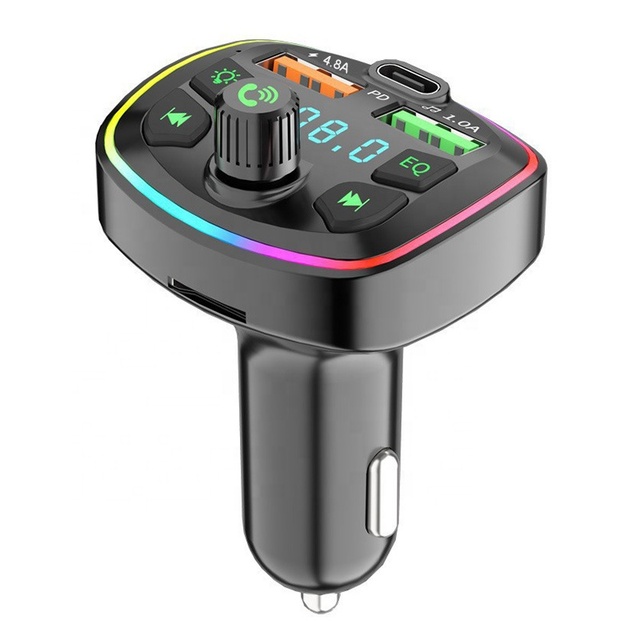
BT5.0 Wireless FM Transmitter Handsfree TF U Disk Car Radio Modulator MP3 Player With Dual USB Type-C Quick Car Charge Adapter
 Shanghai Anxi Import & Export Co., Ltd.🇨🇳CN7 yrs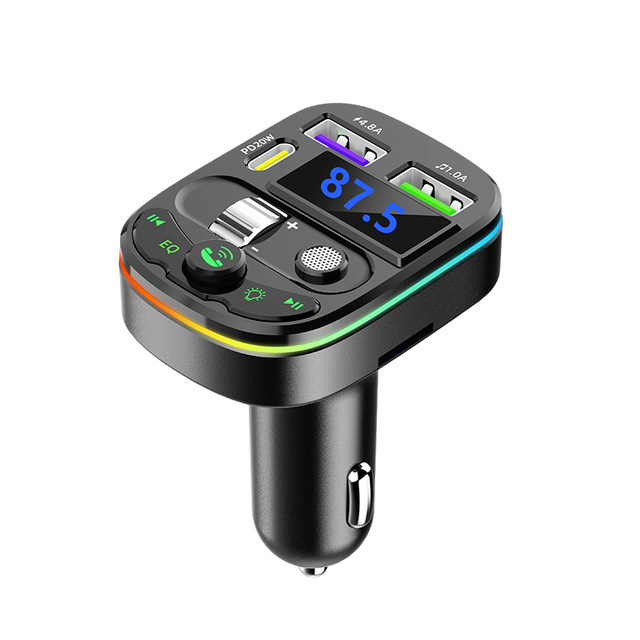
C15 BT Portable Car MP3 Player Wireless Transmitter Handsfree FM Modulator TF Card Dual USB Charger Bluetooth-Enabled Cigarette
 Greentea Shanghai Industries Co., Ltd.🇨🇳CN6 yrs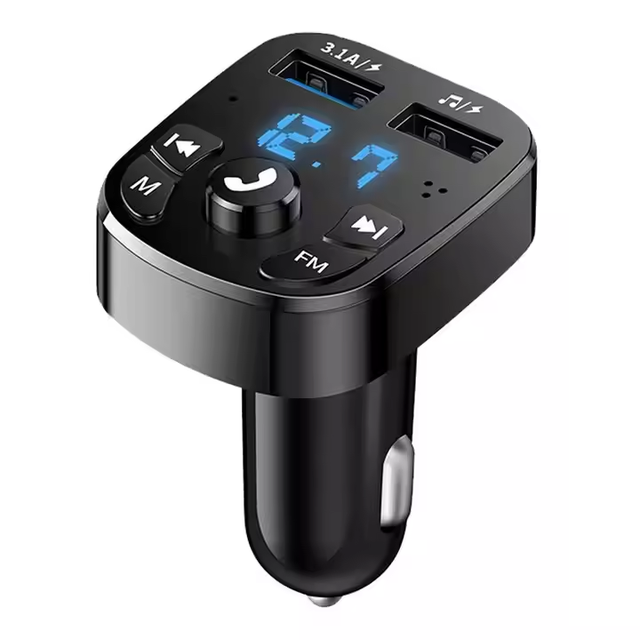
Car Hands-free Blue Tooth Compaitable 5.0 FM Transmitter Kit MP3 Modulator Player Handsfree Audio Receiver 2 USB Fast Charger
 Shanghai Greentea Import & Export Co., Ltd.🇨🇳CN2 yrs
G38 G39 PD QC 3.1A Wireless Handsfree Audio Car Mp3 Player Car Kit Dual USB c Fast Charger Modulator Blue Tooth Fm Transmitter
 Sino-Shanghai Oriental Manufacturing🇨🇳CN4 yrs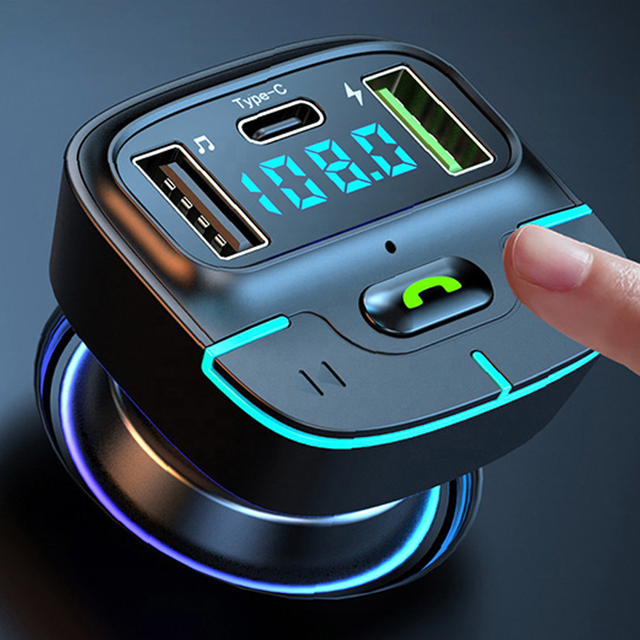
Bluetooth Car MP3 Player Dual USB C Type C Fast Car Charger Audio Handsfree Kit Wireless Fm Transmitter Modulator for Car
 Greentea Shanghai Industries Co., Ltd.🇨🇳CN7 yrs
Related Searches
Explore more sourcing topics & related categories
Sources & References
29 sources cited · Verified industry data & reports
MP3 - Wikipedia
en.wikipedia.org
Bit rate, technically data rate, usually measured in bits per second, is linked, when encoding audio data, to the sample size (the number of bits per audio sample) and sampling rate: CD audio is encoded with simple pulse-code modulation using 16-bit samples, 44100 of them per second, for each of two channels (left and right). So, multiplying 44100 samples per second by 16 bits per sample by 2 channels gives 1411200 bits per second—the data rate of uncompressed CD digital audio. MP3 was designed to encode this 1411 kbit/s raw data at 320 kbit/s or less. In popular usage, MP3 often refers to files of sound or music recordings stored in the MP3 file format (.mp3) on consumer electronic devices. MPEG-1 Audio Layer III was originally defined in 1991 as one of the three possible audio codecs of the MPEG-1 standard (along with MPEG-1 Audio Layer I and MPEG-1 Audio Layer II). All three options were retained and further extended—defining additional bit rates and support for more audio channels (supporting surround sound—in the subsequent MPEG-2 standard). MP3 as a file format commonly designates files containing an elementary stream of MPEG-1 Audio or MPEG-2 Audio encoded data. With the advent of portable media players (including "MP3 players"), a product category also including smartphones, MP3 support became near-universal and it remains a de facto standard for digital audio despite the creation of newer coding formats such as AAC. The Moving Picture Experts Group (MPEG) designed MP3 as part of its MPEG-1, and later MPEG-2, standards. It was primarily designed for Digital Audio Broadcasting (digital radio) and digital TV, and its basic principles were disclosed to the scientific community by CCETT (France) and IRT (Germany) in Atlanta during an IEEE-ICASSP conference in 1991, after having worked on MUSICAM with Matsushita and Philips since 1989. This codec incorporated into a broadcasting system using COFDM modulation was demonstrated on air and in the field with Radio Canada and CRC Canada during the NAB show (Las Vegas) in 1991. While much of MUSICAM technology and ideas were incorporated into the definition of MPEG Audio Layer I and Layer II, the filter bank alone and the data structure based on 1152 samples framing (file format and byte-oriented stream) of MUSICAM remained in the Layer III (MP3) format, as part of the computationally inefficient hybrid filter bank. Under the chairmanship of Professor Musmann of the Leibniz University Hannover, the editing of the standard was delegated to Leon van de Kerkhof (Netherlands), Gerhard Stoll (Germany), and Yves-François Dehery (France), who worked on Layer I and Layer II. ASPEC was the joint proposal of AT&T Bell Laboratories, Thomson Consumer Electronics, Fraunhofer Society, and CNET.
Audient - A Beginners Guide To Modulation
audient.com
Accompanying compression, reverb, delay, filtering and EQ in any producer’s audio processing arsenal, phasing, flanging and chorusing – collectively referred to as ‘modulation effects’ – are powerful tools for sound design and mixing. It’s what happens to these duplicate signals, and their consequent interaction with the original signal, that defines each effect. With chorus and flanging, the duplicate or duplicates are run through a delay, the delay time of which is modulated; while phasing sees the input plumbed through one or more all-pass filters, the frequencies of which are modulated. You can easily experience these two extremes by putting identical audio clips on two tracks in your DAW and playing them together, first as they are, then with one clip phase inverted (using the phase invert switch on its mixer channel, if it has one, or a utility plugin if not). That’s wave interference at its most illustrative, but it’s when we move around (ie, modulate) within the area between being perfectly in and out of phase that we achieve the particular sounds of chorusing, phasing and flanging. This is an oscillator that outputs a sine, triangle or square waveform at sub-audible (ie, low) frequencies, specifically for the purpose of modulation; and in these cases, it’s controlling the amount of time by which the duplicated signal is ‘lagged’, thereby causing the phase relationship between it and the original signal to change constantly.
What Is Pulse Code Modulation and How Does It Work? - ScienceInsights
scienceinsights.org
Pulse-width modulation (PWM) encodes information in the varying width of pulses rather than in binary amplitude values. Compared to both, PCM places its switching noise at much higher frequencies, making it far easier to filter out. In direct comparisons, PCM-based converters have achieved 9-bit effective resolution where equivalent PWM designs reached only 7 bits. Compressed formats like MP3 and AAC start with PCM data and then discard information deemed inaudible to shrink the file. The vacuum-tube electronics of the 1940s couldn’t practically handle the switching speeds PCM demanded. It wasn’t until transistors and integrated circuits matured in the 1960s and 1970s that PCM became economically viable for telephone networks, and then for consumer audio in the 1980s with the arrival of the compact disc. PCM isn’t the only way to digitize sound, but it’s the most direct. Delta modulation, for instance, records only the difference between consecutive samples rather than each sample’s absolute value. Pulse code modulation (PCM) is a method for converting analog signals, like sound waves, into digital data. It works by measuring the amplitude of a signal at regular intervals and expressing each measurement as a binary number. At 16 bits, this noise is already well below what most listeners can detect in a normal environment. At 24 bits, it’s essentially inaudible under any condition, which is why professional studios record at 24 bits: the extra headroom makes mixing and editing forgiving without any risk of audible artifacts in the final product.
Modulation basics for synthesis and sound design - FaderPro Blog
blog.faderpro.com
As you’ll have seen above, the possibilities for modulation to change the nature of a sound are pretty limitless. Mastering the art of modulation is a great skill to add to your music production capability so that you can adjust standard synth presets into something unique to you. In synthesis and sound design, modulation is the idea of changing something over time. You could easily hold a note playing a synth or sampler tone, and move one of the dials (for example the filter cutoff) while it plays, for a more interesting result. Using modulation, we could attach that filter cutoff to move automatically when the note is played, in a certain pattern that we set up. We could also make it move up and down rhythmically, without regard to when a note is pressed or released. Attack – when a note is pressed, the envelope’s Attack setting determines how long it takes for the modulator to reach its full level. This is often set very short when the modulator is connected to the sound’s level, making for a quick transient.
Modulation Music | What Is Modulation | Мusic Gateway
www.musicgateway.com
Heard of modulators and modulation music production, but aren’t sure exactly what they mean? Don’t fret – in this article, we will look at what a modulator is, how it works, LFO modulation, effects, and more. Modulation in music requires a “Source Signal” called a Modulator that controls another signal called the “Carrier Signal”. In the post on LFOs, we looked at how the LFO (a Source Signal) was applied to the Oscillator or the original sound of the Synthesizer. The original sound or tone is known as the “Carrier Signal” This comes from analog and engineering terminology when the synthesizer was first developed. The synthesizer produces an original tone or sound via Oscillators. Incidentally, Oscillators are Modulators because they change the sound of the original tone. Without Oscillators, the sound wouldn’t change or move. Essentially, the important takeaway is that the Synth’s original sound wave is the Carrier Signal, and the Oscillator or LFO are Modulator (Source Signal) of that Carrier Signal.
Modulation | Engineering | Research Starters | EBSCO Research
www.ebsco.com
Modulation is the process of modifying a time-varying signal, enabling it to convey information effectively. This technique is crucial for the transmission of sounds, images, and data over various media, such as radio and television signals, or even through telephone lines for digital data transmission. Additionally, modulation plays a significant role in music production, where musicians manipulate sound characteristics like pitch and volume. The process can also generate new sounds through various electronic means, such as ring modulation and pulse code modulation (PCM), which converts analog signals into digital ones. To provide some indication of what modulation can accomplish, consider these two situations in which the carrier is in the audible range: the artificial production of a bell-like sound and the transmission of computer-generated data over telephone lines. The sound of a bell playing a tone at 440 hertz (the A above middle C) is distinctly different from the sound of an electronic oscillator playing the same note. This is an efficient means of generating a rich spectrum electronically. Controlling the intensity of the modulation with a time-varying envelope allows the production of a rich spectrum of sound that--just like a real bell--has many initial inharmonic partials that taper off.