Network Esim

Overview
Product sourcing insights & recommendations
The "network eSIM" market has reached a watershed moment in 2026, transitioning from a niche travel utility to a mainstream operational standard for both consumers and IoT. Global eSIM connections are projected to hit 1.5 billion by the end of this year, representing a 30% increase from 2025.
Key insights include:
- Technological Shift: The rollout of the SGP.32 standard is revolutionizing IoT by enabling a "push" model for remote device management, while multi-orbit satellite integration is eliminating connectivity dead zones for critical assets.
- Consumer Drivers: International travel remains the primary gateway for adoption, with 51% of users first experiencing the technology through travel data plans.
- Market Dynamics: Smartphone penetration is expected to reach 10% globally by late 2026, doubling in just one year, driven largely by enablement in North American and Chinese markets.
Detailed market statistics, technological updates, and competitive product analysis are available in the report below.
Based on these trends, here are your next steps:
Esim Iot Modules And M2m Solutions Sgp.32
Products · 3 lists
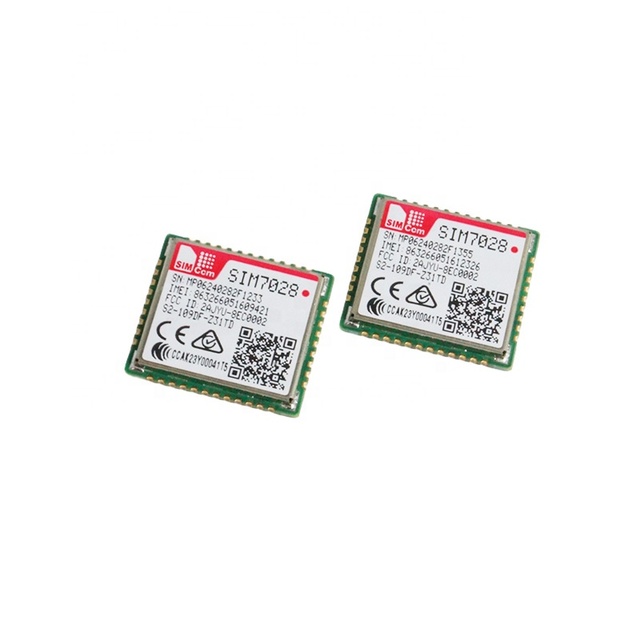
Original SIMCom SIM7028 LPWA Module Cat NB2 ESIM SIM7028 Multi-Band NB-IoT Module Sim7022 Sim7080 Sim7090
 Muz Tech Co., Ltd.verified🇨🇳CN6 yrs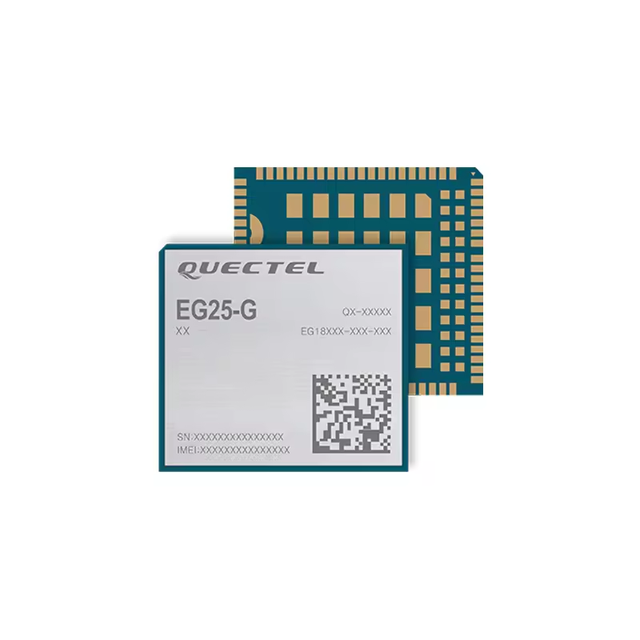
EC25-E 4G Module LTE Cat4 Module for IoT/M2M Application
 Shenzhen Kaisheng Century Electronics Co., Ltd.verified🇨🇳CN3 yrs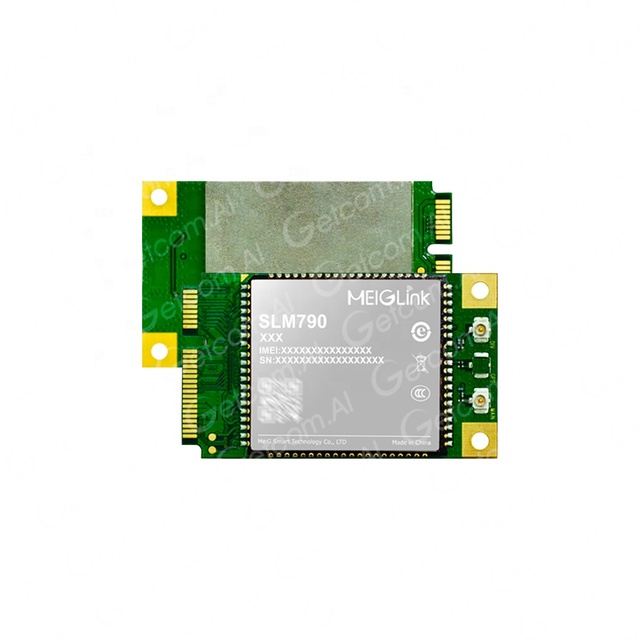
MeiG SLM790 Mini PCIe Module with Built-in ESIM CAT4 4G LTE 150Mbps for OTT Box Smart Router and Remote Management
 Suzhou Story Network Technology Co., Ltd.verified🇨🇳CN8 yrs
Deep Dive · Full Report
Full Market Report
1 document · Live-fetched from source
Related Searches
Explore more sourcing topics & related categories
Sources & References
24 sources cited · Verified industry data & reports
Top 5 eSIM & Connectivity Trends for 2026
www.1global.com
Fully applicable by late 2026/2027, it requires that all "products with digital elements" (aka PDEs) that enter into the EU market meet new and rigorous cybersecurity standards. This definition is broad, and under some interpretations covers anything that runs on electricity and is smarter than a toaster, including hardware, software, cloud services, eSIMs, Through 2026, the eSIM Orchestrator will continue to gain traction, which provides ‘single pane of glass’ profile management of multiple operators through a unified cloud-based portal. One of the most exciting market features of 2026 is set to be the mainstream integration of multi-orbit satellite networks into standard connectivity packages. Historically, these were distinct market segments, with travel eSIMs operated as data-only, app-activated utilities for temporary connectivity, mostly used by savvy business travelers to bypass roaming fees. In contrast, MVNOs focused on domestic, recurring subscriptions. However, market data leading into 2026 indicates that these value propositions have merged to serve the global market overall. Travel eSIM revenue, while high margin, is intermittent, while more traditional MVNO subscriptions offer the stability of regularly recurring revenue. Consequently, businesses positioning themselves for telecom market entry in 2026 are eyeing a best-of-both hybrid model that offers recurring domestic plans to anchor the customer, supplemented by instant high-margin travel eSIM add-ons.
eSIM Market Trends 2026: 75+ Stats & Future Predictions
cellesim.com
The eSIM (embedded SIM) market is experiencing explosive growth in 2026 as more devices, operators, and consumers adopt this technology. Whether you're a journalist, researcher, investor, or simply curious about the state of eSIM, this page compiles the most important statistics from trusted sources in one place. We update this page quarterly with the latest data. All sources are cited — click any source link to verify the original data. ... The global eSIM market was valued at approximately $10.32 billion in 2024 and is projected to reach $17.67 billion by 2033, growing at a CAGR of 5.1%. STMicroelectronics has shipped over 1 billion ST33 eSIM chips and holds a 90% global market share in eSIM semiconductors. ... 80% of new vehicles in North America are expected to incorporate eSIM technology for telematics and connected car services by 2026. The market is projected to grow at a CAGR of 10-20% through 2033, potentially reaching $17-58 billion. What percentage of smartphones support eSIM in 2026? According to GSMA, 51% of eSIM users first used the technology for travel. About 15% of all travel connectivity is now powered by eSIMs, and the travel eSIM market is valued at $1.75 billion in 2026 with 500% growth expected by 2028.
eSIM Market Size, Growth, Trends - Share Analysis 2025 - 2031
www.mordorintelligence.com
By network type, 4G/LTE led with 52.11% of the embedded SIM (eSIM) market share in 2025, while 5G is forecast to advance at a 26.89% CAGR through 2031. By device type, smartphones commanded 60.29% share of the embedded SIM (eSIM) market size in 2025, whereas wearables are projected to post a 26.76% CAGR during 2026-2031. Note: Market size and forecast figures in this report are generated using Mordor Intelligence’s proprietary estimation framework, updated with the latest available data and insights as of January 2026. ... Standalone 5G networks remove latency and throughput constraints that previously limited cellular IoT, enabling devices to switch network slices and roaming partners without physical intervention. China surpassed 1 billion 5G connections in 2024, and carriers there finalized nationwide eSIM enablement by October 2025. India has been tightening M2M/eSIM governance, including the May 2025 Standards, Conformity Assessment and Certification Rules, 2025, and June 2025 Department of Telecommunications instructions on embedded SIM usage for M2M communications that reference GSMA SAS-SM certification expectations for SM-SR sites and interoperability requirements. Singapore moved toward formalizing eUICC requirements via IMDA public consultation on draft technical specifications (Issue 1, 2026), which points to more explicit conformance and security criteria for eSIM components used in public networks. Embedded SIM (eSIM) deployments are anchored in GSMA eUICC and Remote SIM Provisioning standards, with industrial IoT moving toward the SGP.3x family after the June 2024 ratification of SGP.32. GSMA maintained active updates through 2026, including SGP.21 v2.7 (April 2026) and SGP.31/SGP.32 v1.3 updates (May 2026), alongside the GSMA eSIM compliance framework (SAS-SM/SAS-UP) that underpins secure entitlement-server and eUICC operations across markets.
eSIM Connections to Reach 1.5bn Globally in 2026
www.juniperresearch.com
Hampshire, UK – 27th January 2026: A new study by global tech strategists Juniper Research has found that the number of devices using eSIMs will grow by 30% in 2026; rising from 1.2 billion in 2025. Our Chargeback Management research suite provides detailed analysis of this fast-changing market; allowing chargeback management providers to gain an understanding of key payment trends and challenges, potential growth opportunities, and the competitive environment. ... Our Conversational AI Market 2026-2030 research suite provides insightful analysis of a market that will experience significant growth in the next five years. ... Our newest Direct-to-Cell research provides market stakeholders, such as mobile network operators and satellite network operators, with key analysis of the future of this rapidly emerging market. Our complimentary whitepaper, eSIM-only Devices: The Impact on Operators, Consumers, and IoT, explores the challenges and opportunities for the three segments, with a particular focus on eSIM-only smartphones and SGP.42. ... Get our latest updates on technology industry trends and market forecasts before anyone else. Sign Up Now · Get our latest updates on technology industry trends and market forecasts before anyone else. ... Our Radio Access Network (RAN) Vendor Competitor Leaderboard provides insightful analysis of a market that is experiencing significant change currently, and will continue to do so over the next five years. In turn, Juniper Research believes that these industries will benefit the most from the standard in 2026; contributing a combined 75 million new eSIM connections. SGP.32 is the GSMA’s eSIM standard for IoT that enables scalable, server‑driven remote SIM provisioning; offering benefits such as bulk activation, reduced operational costs, and greater flexibility to switch connectivity providers. An extract from the report, eSIMs and iSIMs Market 2025-2030, is available as a free download.
eSIM Market Size, Share, Growth & Forecast Analysis [2034]
www.fortunebusinessinsights.com
The global eSIM market size was valued at USD 1.76 billion in 2025 and is projected to grow from USD 2.12 billion in 2026 to USD 7.62 billion by 2034, exhibiting a CAGR of 17.3% during the forecast (2026-2034). North America accounted for a market value of USD 0.628 million in 2025. Embedded SIM or eSIM technology facilitates remote provisioning, allowing users to switch, download, and delete different operator profiles without requiring a physical SIM. eSIMs save physical space within devices and offer greater flexibility. They are environmentally friendly, which significantly helps to cut down the production of plastic cards. The Japan eSIM market is projected to reach USD 0.049 billion in 2026, driven by rising demand for connected consumer electronics and IoT devices. ... The demand for these chips in the market is increasing, mainly due to technological advancements in manufacturing machinery equipment, Industry 4.0, and other high-tech devices that are increasingly connected and can be monitored remotely. Hence, several OEMs and Mobile Network Operators (MNOs) have been innovating solutions by forming partnerships and collaborations for the eSIM market growth. In 2025, Europe held 30.80% of the global market, reaching a valuation of USD 0.54 billion, and is projected to grow to USD 0.65 billion in 2026. Europe represents a steadily expanding market for eSIM, driven by active participation from major mobile network operators and technology providers in implementing embedded SIM solutions. Europe held 30.80% of global revenue in 2025, valued at USD 0.54 billion, and is projected to reach USD 0.65 billion in 2026. ... The country remains a major contributor to North America’s revenue, supported by strong adoption of eSIM-enabled smartphones, wearables, and connected vehicles.
The State of Consumer eSIM in 2026
www.1global.com
This shift bundles connectivity with content and brand loyalty rewards, entrenching eSIM as a digital lifestyle enabler. For traditional MNOs, 2026 presents what business theorists call the · Innovator's Dilemma. Very simplified, this is the situation where successful companies suddenly fail because they continue to do everything right, such as listening to their best customers and investing in proven products, while ignoring cheaper disruptive tech that one morning turns out to have overtaken the entire market. The friction of store visits, paper contracts and two-day activations has been replaced by the demand for instant, on-demand access to global networks. The trajectory of this growth has been heavily influenced by strategic hardware shifts. Following Apple's decisive move to launch · eSIM-only iPhones in previous years, the global market pivoted. By 2026, eSIM-only design philosophy has permeated European and Asian markets, with major manufacturers adopting similar architectures for mid-tier and flagship ranges. Kaleido Intelligence highlighted that travel eSIM adoption is now a primary driver of retail roaming spend, with users increasingly opting for third-party providers over their home operator's packages if the latter lacks competitiveness. This has encouraged a new breed of digital service provider, and opened a market for Mobile Virtual Network Operators (MVNOs) catering exclusively to global travelers, leveraging wholesale agreements to offer like-local rates worldwide. The market in 2026 also sees a blurring of lines between telecommunications providers and other Powered by sophisticated API-first platform partners like 1GLOBAL, non-telco brands can access global networks without building physical infrastructure. This democratization has exploded the number of distribution channels, contributing significantly to the abovementioned billions of connections. ... analysis shows that North America reliably remains a growth market for eSIMs in 2026, driven by aggressive domestic hardware strategies and consumer enthusiasm.