Non Android Phones

Overview
Product sourcing insights & recommendations
The "non-Android" phone market in 2026 is defined by a sharp divide between the premium dominance of iOS and a cultural shift toward minimalist 'dumbphones'. Apple is projected to reach its highest-ever annual market share of 22% Idc, while feature phones are seeing a resurgence among Gen Z users seeking a "digital detox" from social media saturation CnnAndroidcentral.
Key product niches have emerged for privacy-conscious users, including Linux-based smartphones like the PinePhone and Librem 5, which provide an open-source alternative to the mainstream Google and Apple ecosystems KaashivinfotechCitron. Additionally, HarmonyOS continues to grow as a major third-way contender, particularly in the Chinese domestic market Accio.
The detailed report below synthesizes market share forecasts, consumer psychology behind the feature phone trend, and a comparison of existing hardware alternatives.
Based on these trends, you can continue with:
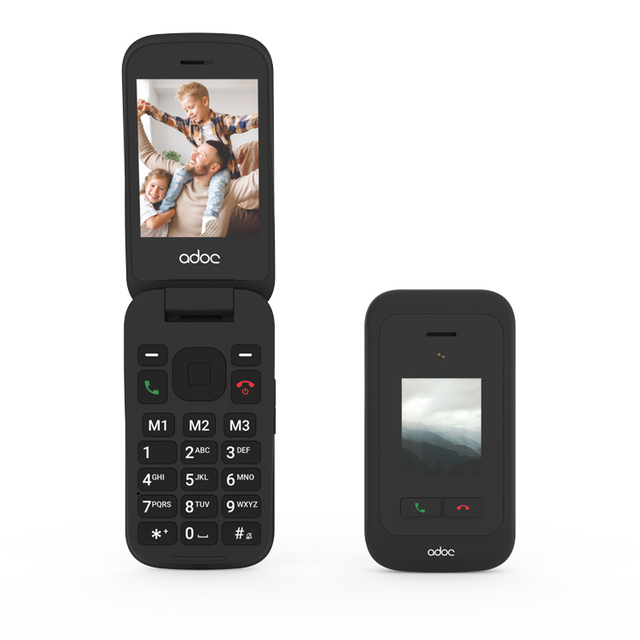
4g Flip Phones For Elderly And Digital Detox
Products · 2 lists

Deep Dive · Full Report
Full Market Report
1 document · Live-fetched from source
Related Searches
Explore more sourcing topics & related categories
Sources & References
28 sources cited · Verified industry data & reports
IDC - Smartphone Market Share
www.idc.com
Company 1Q26 Shipments 1Q26 Market Share 1Q25 Shipments 1Q25 Market Share Year-Over-Year Change Samsung 62.4 21.2% 60.6 20.0% 2.9% Apple 61.8 21.0% 59.1 19.5% 4.4% Xiaomi 33.8 11.5% 41.8 13.8% -19.1% OPPO 30.7 10.5% 34.1 11.3% -9.9% vivo 21.2 7.2% 22.7 7.5% -6.9% Others 84.0 28.6% 84.3 27.8% -0.3% Total 293.8 100.0% 302.6 100.0% -2.9% […] The premiumization trend will continue even as the memory prices are expected to stabilize by the second half of 2027. Top 5 Companies, Worldwide Smartphone Shipments, Market Share, and Year-Over-Year Growth, Q1 2026 (Top 5 Companies, Worldwide Smartphone Shipments, Market Share, and Year-Over-Year Growth, Q1 2026 ) Worldwide smartphone shipments are forecast to decline 13.9% year-on-year in 2026 to 1.09 billion units, according to the International Data Corporation (IDC) Worldwide Quarterly Mobile Phone Tracker. This is a further downward revision from IDC’s previous forecast of a 12.9% decline issued in February, and would mark the steepest annual contraction in smartphone history. The region is dominated by the premium segment with 60% of shipments above $800 in 2026Q1with Apple and Samsung, who dominate the segment, being resilient to the crisis. China, is also forecast to decline double digits with 13% drop, as low-end Android players struggle to complete in new environment.
Global Smartphone Market Share: Quarterly
counterpointresearch.com
vivo smartphone shipments declined 21% YoY in Q2 2026, as pressure on lower price segments outweighed resilience in its mid-to-premium portfolio. Rising component costs and weaker demand across price-sensitive markets continued to weigh on overall shipment performance. ... This report is part of a series of market monitor reports which track the mobile handset market: Smartphone and Feature Phone shipments every quarter for more than 140 brands covering more than 97% of the total device shipments in the industry. The global smartphone market declined by 7% YoY in Q2 2026 as the memory shortage deepened and memory prices continue to rise. Xiaomi recorded the steepest decline among the top five smartphone brands, with shipments falling 26% YoY in Q2 2026. The Middle East and Africa (MEA) region saw a 3% YoY rise in shipments, despite heightened geopolitical tensions in the region. Consumer sentiment remained elevated as inflation trended down and local currencies remained strong.
Worldwide Smartphone Market to Decline 13.9% in 2026 as Memory ...
www.idc.com
The smartphone market is headed into its worst year on record. According to IDC’s Worldwide Quarterly Mobile Phone Tracker, worldwide smartphone shipments are forecast to decline 13.9% year-on-year in 2026 to 1.09 billion units. That is a further downward revision from IDC’s February forecast of a 12.9% decline, and it would mark the steepest annual contraction in smartphone history. The region is dominated by the premium segment, with 60% of shipments in 2026 Q1 above $800, and Apple and Samsung have proven resilient to the crisis at that tier. China is also forecast to decline double digits at 13%, as low-end Android players struggle to compete in the new cost environment. Android as a whole is forecast to see a 21% year-on-year drop, but that number masks two very different stories playing out within it. Samsung is expected to grow market share in 2026, defying the broader Android decline by expanding in the premium segment and taking share in the mid-range. A combination of secured memory supply, a stronger Galaxy S26 line-up, and aggressive mid-range positioning is allowing Samsung to capture demand that smaller Android vendors simply cannot serve as memory costs squeeze their bill of materials. iOS tells a different story. Apple’s forecast improved from an 8.1% decline to just 5.2% in 2026, a meaningful divergence at a time when the rest of the market is heading sharply downward. Nabila Popal is Senor Director with IDC's Data & Analytics team, specializing in Mobile Phones, PC Monitors and other consumer devices. Ms. Popal is responsible for the global research and quality and timely delivery for her respective technologies, coordinating with regional… ... Francisco Jeronimo is VP for Data and Analytics at IDC EMEA. Based in London, he leads the research that covers mobile devices, personal computing devices, emerging technologies and the circular economy trends across EMEA.
Mobile Phones Market Size & Forecast [2035]
www.marketgrowthreports.com
Market Overview Key Findings Latest Trends Market Dynamics Segmentation Analysis Regional Outlook Top Companies Report Coverage Frequently Asked Questions ... The global mobile phones market is likely to grow from USD 627619.96 million in 2026 to USD 1228331.47 million in 2035, with an average CAGR of 7.7% during the forecast period. Emerging markets present significant opportunities for smartphone manufacturers. In India, smartphone shipments grew by 4% in 2024, reaching 151 million units. Companies like Apple are increasing their focus on these markets, with plans to shift the assembly of all iPhones destined for the U.S. market to India by the end of 2026. The mobile phones market is attracting increasing investment across hardware innovation, software ecosystems, and manufacturing localization. In 2024, Apple committed to investing over USD 2 billion in India for expanding its manufacturing base, including the assembly of all iPhones intended for the U.S. market by 2026. Apple's India Expansion (2024): Apple began shifting its iPhone production to India, aiming for 100% of iPhones sold in the U.S. to be manufactured in India by the end of 2026.
Best Non-iPhone and Non-Samsung Smartphones in 2026: Top Alternatives ...
www.techtimes.com
Best Non-iPhone/Samsung Smartphones for 2026 highlight the growing range of flagship Android devices outside the two biggest smartphone ecosystems. These phones bring strong performance, advanced cameras, and unique design choices from brands like Google, OnePlus, Vivo, and Oppo. Oppo Find X9 Pro: A premium best smartphone 2026 option with a 1-inch main sensor, Dimensity 9400 chip, and massive 6100mAh silicon-carbon battery with fast charging. Vivo X300 Pro: A powerful alternative flagship smartphone featuring Zeiss optics, a 200MP periscope lens, and strong low-light photography performance. Nothing Phone 3: A stylish non iPhone smartphone with a transparent design, clean Nothing OS, and smooth performance powered by Snapdragon 8s Gen 4. Devices like the Pixel 10 Pro, OnePlus 15, and Vivo X300 Pro now deliver flagship-level performance without relying on Apple or Samsung ecosystems. These phones offer strong value, unique features, and diverse design philosophies. At the same time, best smartphones 2026 highlight how innovation is no longer limited to two brands. HMD Fusion: A repair-focused non Samsung smartphone designed for durability, modular parts, and long-term usability with clean Android support. Read more: iOS 26.4.2 Update: What's New, Security Fixes, and Bug Improvements for iPhone · Modern non iPhone smartphones now focus heavily on software optimization and long-term support. Devices like the Google Pixel series and Nothing Phone offer clean Android interfaces with minimal bloat, while brands like Xiaomi, Oppo, and Vivo continue refining their custom skins for smoother performance.
8 Smartphone Trends That Will Shape 2026
www.linkedin.com