Old Iphone Charger

Overview
Product sourcing insights & recommendations
The phrase 'old iphone charger' primarily encompasses two distinct legacy technologies: the 30-pin dock connector (2003–2012) and the Lightning connector (2012–2023). While Apple has transitioned to USB-C, a resilient market remains for these legacy products due to the millions of active devices and specialized audio equipment still in use SmallusefultipsDiyfixtool.
Market Trends & Insights
* Persistent Demand: Google Trends data indicates that search interest for "lightning charger" remains significantly higher than the general "old iphone charger" term, peaking recently in late 2026, driven by a large user base of iPhone 8 through iPhone 14 models .
* Premium Materials: There is a clear shift toward braided nylon cables over standard plastic. Consumers favor these for their durability and premium feel, creating a high-growth niche for wholesalers Ritedistribution.
* The Power Shift: Demand for the original 5W "charging bricks" has plummeted. Most users now seek 20W USB-C PD adapters paired with USB-C to Lightning cables to achieve fast charging on their older devices SmallusefultipsDeciphertools.
* Niche Sourcing: 30-pin chargers, while "obsolete," maintain a steady demand for vintage iPod collectors and users of legacy home audio docks CablewholesaleSmallusefultips.
Product & Sourcing Options
I have identified several verified sourcing paths for both 30-pin and Lightning accessories:
Mfi Certified Lightning To Usb A Cable Braided Bulk
Products · 3 lists
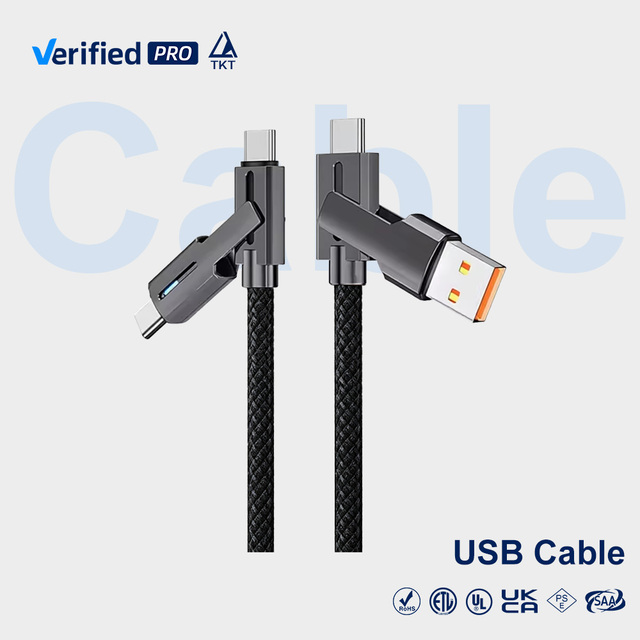
TKT Type-C Braid Jacket Cable USB-A Cable 4 in 1 Fast Charging & Data Transfer Aluminum Alloy Multi-function Charging Cable
 Shenzhen Tongketai Electronic Technology Co., Ltd.verified🇨🇳CN8 yrs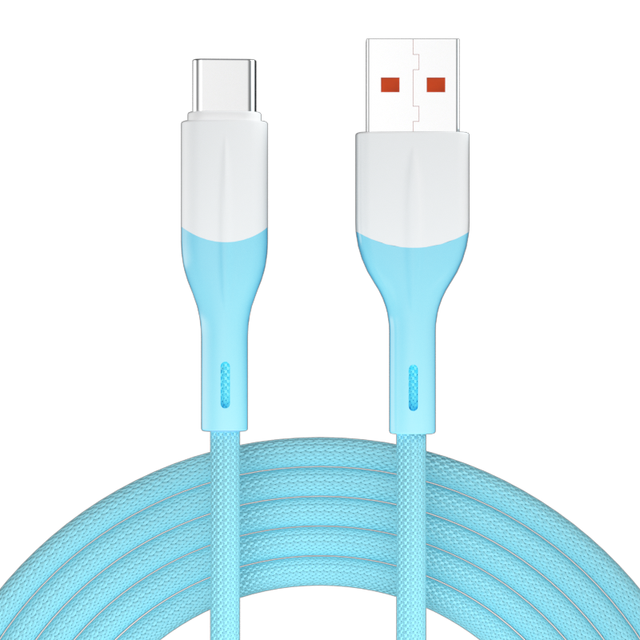
New 3FT Nylon Fishnet Braided USB Cable 60W 5A Fast Charging 8Pin Type C Data Kable for iPhone Android for Printer Use
 Shenzhen Oufei'er Technology Co.,ltdverified🇨🇳CN7 yrs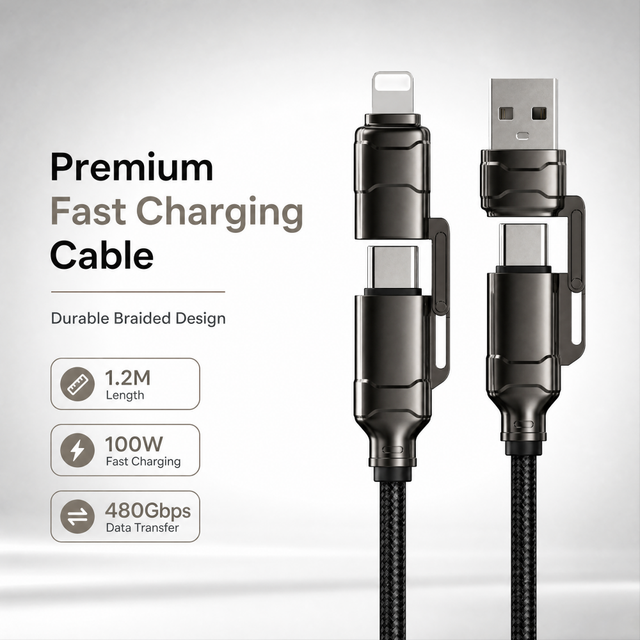
2026 NEW 41 100W Cable Universal Compatibility Nylon 48 Weave Braided Jacket Reusable Data Cable Usb c a lightning
 Shenzhen Huanxintong Technology Co., Ltd.verified🇨🇳CN3 yrs
Related Searches
Explore more sourcing topics & related categories
Sources & References
28 sources cited · Verified industry data & reports
Top Trends in iPhone Charging for Wholesalers USA
ritedistribution.com
Do you remember when the first iPhone came with those wide, chunky 30-pin connectors? Nowadays, it's already history. Now we have switched to sleek USB-C chargers that power up devices in no time. Well, Apple has been at the forefront of innovation with consistency, reshaping its technology landscape. The evolution of iPhone charging is an incredible tale to tell, and understanding this fascinating development is of utmost importance for wholesalers who want to maintain a competitive edge in the market. With innovation, iPhones became slimmer, and the 30-pin connector became outdated. Furthermore, its major drawback is that it wasn’t reversible. People kept fumbling to plug it the right way. This is when Apple decided to introduce something more compact and innovative, and that is the Lightning connector. As a store owner selling iPhone chargers, you already know how high the demand is for USB-C braided Lightning cables. And, honestly, that makes sense. Here’s why these cables are taking over the market: Wireless and MagSafe charging are taking over More and more customers are shifting toward cable-free convenience. They love the simplicity of simply snapping their phone onto a charger without the need to plug in.
The Complete History of Apple Charging Cables and Adapters: From ...
www.diyfixtool.com
Over the past two decades, Apple's charging technology has undergone significant changes, from the proprietary 30-pin connector to the smaller and more efficient Lightning connector, and now to the universal USB-C connector. Each update represents technological advancement and shifts in market demand. Phonefix will take you through the history of Apple charging cables and chargers, exploring their development in detail and delving into the technological advantages and disadvantages of each generation of connectors. Discover The Complete History of Apple Charging Cables and Adapters: From 30-Pin to Lightning and USB-C. Learn about their evolution, technological advances, and market shifts. It quickly became the standard connection method for Apple devices, used from the first-generation iPhone to the iPhone 4s. 2. Functionality of the 30-Pin Interface Besides charging devices, the 30-pin interface could also synchronize data with computers and transfer music and video content. While it met the needs at the time, its larger size and the need to be careful about the correct plug orientation gradually made it unable to meet the increasing demands for convenience. II. Lightning Interface: 2012-2023 1. Innovation of the Lightning Interface In 2012, Apple introduced a new generation charging interface—the Lightning interface, which first appeared on the iPhone 5. Compared to the 30-pin interface, the Lightning interface was smaller and supported reversible insertion, greatly improving the user experience.
Lightning (connector) - Wikipedia
en.wikipedia.org
It was introduced on September 12, 2012, in conjunction with the iPhone 5, to replace its predecessor, the 30-pin dock connector, and discontinued in 2025, with the discontinuation of the iPhone SE (3rd generation). The Lightning connector is used to connect legacy Apple mobile devices like iPhones, iPads, and iPods to host computers, external monitors, cameras, USB battery chargers, and other peripherals. Using 8 pins instead of 30, Lightning is much smaller than its predecessor. The Lightning connector is reversible. The plug is indented on each side to match up with corresponding points inside the receptacle to retain the connection. In 2018, Apple began transitioning to USB-C on iPad Pros and accessories. In response to European Union legislation to standardize charging ports passed in 2022, Apple said it would comply with regulations. The iPhone 15 and 15 Plus and the iPhone 15 Pro and Pro Max, announced on September 12, 2023, became the first iPhones to use USB-C, and the last few Lightning accessories made the transition in 2024 and 2025. On February 19, 2025, following the discontinuation of the iPhone 14, iPhone 14 Plus, and iPhone SE (3rd generation), all iPhone models sold use USB-C. Lightning is an eight-pin digital connector. Unlike the 30-pin dock connector it replaced (and USB Type-A and Type-B connectors), it is reversible. Initial opinions of the Lightning connector in media were mixed: publications appreciated the reversibility and increased durability of the connector but were critical of its proprietary nature, of the effects of its authentication protocol on third-party accessory availability, and of the lack of performance improvements over the 30-pin dock connector. Reviewers criticised Apple for continuing to include a Lightning port on its iPhones despite the widespread adoption of USB-C, especially as Apple had already pioneered adoption of USB-C as the primary connector for both data and power on the iPad Pro and MacBook lineups. The Lightning connector was introduced on September 12, 2012, with the iPhone 5, as a replacement for the 30-pin dock connector.
Different Types of Ports Explained | Computer Port Chart
www.cablewholesale.com
Below we have picked a handful of some of the most popular ports on the market to examine. Let's get started! Over the last fifteen years, Apple has created four charging cables for their iPods, iPhones and iPads . They first used a 6-Pin FireWire connector on the original iPod, then the 30-pin dock connector to FireWire, followed by the 30-pin dock connector to USB and finally the newest 8-pin Lightning connector. Lightning Connector: Apple introduced this brand-new connector back in 2012. It is over 80% smaller than the 30-pin connector and is reversible. This was big news for Apple users who knew too well the frustration of constantly flipping their iPhone plug to get their device to charge. Many Apple aficionados had purchased 3rd party accessories for their iPods and iPhones over the years, and suddenly those accessories were marked obsolete. As soon as Apple announced that they would be switching to the Lightning connector they introduced a quick fix: the 30-pin to Lightning adapter. For around $30 Apple consumers were able to connect their new iPhones to their 30-pin devices like speakers and dock connectors. The Lightning connector features 8 symmetrical pins on either side of the connector.
What are the Old iPhone Chargers Called? A Deep Dive into the ...
smallusefultips.com
A rectangular shape: This design, while distinct, was criticized for being bulky and prone to damage, particularly with the protruding pins. Proprietary connector: Apple’s decision to use a unique connector limited users to Apple-approved cables and accessories, restricting compatibility. Limited power output: The initial charger provided a modest 5W output, sufficient for charging the early iPhones but not optimal for power-hungry devices. In 2012, Apple introduced the Lightning Connector, a smaller, reversible connector that replaced the 30-pin interface. Increased power output: Apple increased the power output of the included charger, initially to 10W, and later to 18W and 20W with subsequent iPhone models. This allowed for faster charging times and better support for power-intensive tasks. Enhanced data transfer: The Lightning Connector enabled faster data transfer speeds, making it ideal for syncing content and transferring large files. While the 30-pin connector served its purpose well during its reign, its time eventually came to an end. This decision signals a potential end to the Lightning Connector era and a greater alignment with the industry’s universal standards. Although the 30-pin connector and its associated chargers are no longer the standard, they might still be useful for specific tasks. The evolution of iPhone chargers reflects the rapid advancement of technology and Apple’s constant pursuit of innovation. From the bulky 30-pin connector to the compact Lightning Connector and now the adoption of USB-C, each iteration has brought about significant improvements in speed, efficiency, and user experience.
What To Know About Apple’s New USB-C iPhone Chargers—And How ...
www.forbes.com
This is the second major change Apple has made to charging ports after it switched iPhones from the original 30-pin chargers to the Lightning cable in 2012—but the switch to USB-C cords was essentially forced on the company by a recent European Union law. The EU passed a measure requiring devices including smartphones, tablets, cameras and portable speakers to adopt the USB-C as a universal charging standard by December 2024. Murray is a Forbes news reporter covering entertainment trends. ... This article is more than 2 years old. Apple is ditching the Lightning chargers, which have powered every iPhone since 2012, with the upcoming iPhone 15 models and will instead adopt the more universal USB-C cables that can charge, transfer files and are compatible with many non-Apple devices. Buying the right USB-C charger can be a challenge, especially since Apple doesn’t regulate these cables the way they did Lightning cables. Depending on the particular cable, some are made to charge devices quickly, while others charge more slowly; similarly, some are designed to transfer files at high speeds, while others are slower. There are also reportedly knockoff products on the market that could be ineffective or unsafe for devices. To connect a Lightning charger or headphones that are compatible with the Lightning port, Apple sells an adapter that links Lightning cables to a USB-C port for $29.