Ospf Cisco Router

Overview
Product sourcing insights & recommendations
The market for Cisco routers supporting OSPF (Open Shortest Path First) is undergoing a significant shift in 2026 toward AI-native networking and high-performance edge computing. Cisco's portfolio has evolved to prioritize software-defined flexibility (SD-WAN) and integrated security, with a strong emphasis on the Catalyst 8000 and ASR 9000 series for modern enterprise and carrier-grade environments CiscoCoherentmarketinsightsCiscolive.
Product Insights: Cisco OSPF Router Series
Cisco's current lineup supports OSPFv2 (IPv4) and OSPFv3 (IPv6) across its core enterprise and aggregation platforms. The transition from the legacy ISR/ASR 1000 lines to the Catalyst 8000 series is a key highlight for 2026 CiscoOrmsystems.
* Cisco Catalyst 8000 Series (Edge Platforms):
* Catalyst 8300: Designed for large branch offices, supporting high-scale OSPF with integrated SD-WAN and SASE capabilities OrmsystemsLayer23-Switch.
* Catalyst 8500: Optimized for WAN edge and aggregation, offering throughput up to 100G+ and advanced OSPF/BGP scaling for multi-cloud networking OrmsystemsLayer23-Switch.
* Cisco ASR 9000 Series (Aggregation Services):
* Built for service provider edge and core networks, offering multi-terabit capacity. It supports carrier-grade OSPF, Segment Routing, and EVPN CiscoCoherentmarketinsights.
* Cisco ISR 1100 Series (Small/Medium Branch):
* Compact integrated services routers supporting OSPF for secure enterprise branch connectivity. Popular models include the C1111X and C1121X Cisco.
Market Trends & Insights (2026 Estimates)
The global router market is projected to reach USD 21.01 Billion in 2026, growing at a CAGR of 9.1% through 2033 Coherentmarketinsights.
* AI-Native Networking: Integration of AI for automated path selection (AIOps) and real-time OSPF convergence monitoring is a top priority for Cisco LinkedinCiscolive.
* Edge Dominance: Edge routers are estimated to hold 56.2% of the market share as businesses prioritize low-latency connectivity for IoT and 5G Coherentmarketinsights.
* Regional Growth: North America holds the largest share (38.2%), while the Asia-Pacific region is the fastest-growing due to aggressive 5G infrastructure rollouts Coherentmarketinsights.
Here are the OSPF Cisco router insights and sourcing options. You can continue with:
Cisco Isr 1100 Series Router Ospf Support
Products · 4 lists
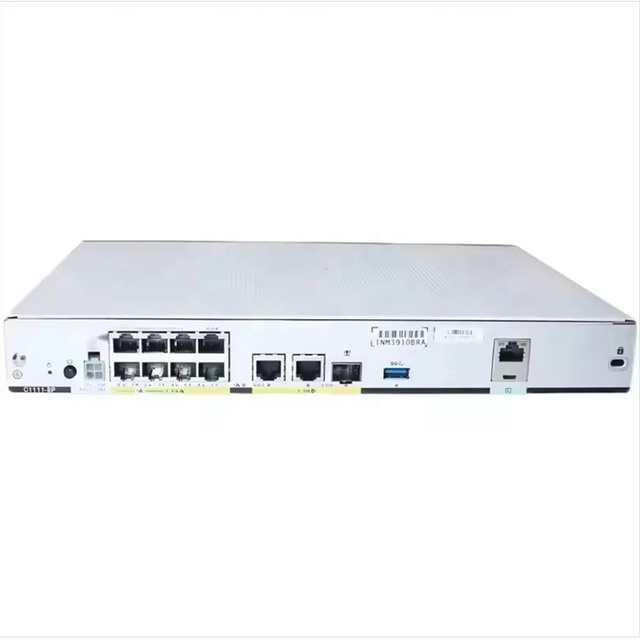
New In Box ISR 1100 Series 8P Dual GE SFP WAN 8GB Router C1121X-8P
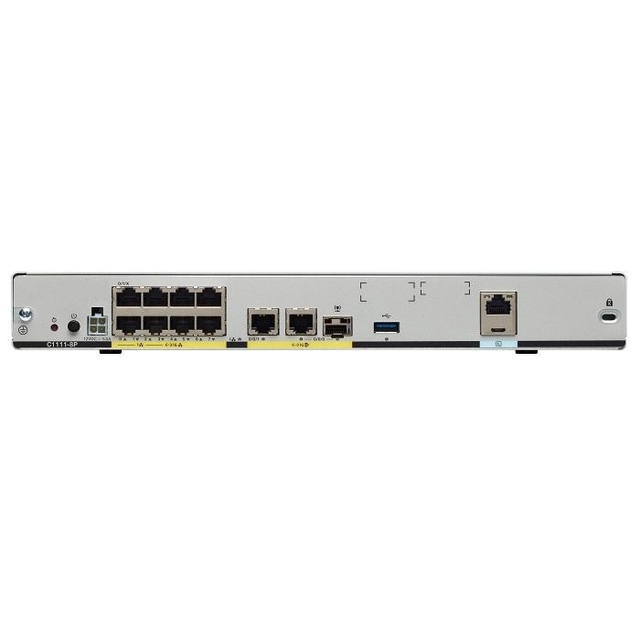
C1111X-8P ISR 1100 Series 8 Gigabit Ethernet LAN Ports 1 Gigabit Ethernet WAN/SFP Port Integrated Services Router C1111X-8P
 Beijing BRMC Technology Co., Ltd.verified🇨🇳CN4 yrs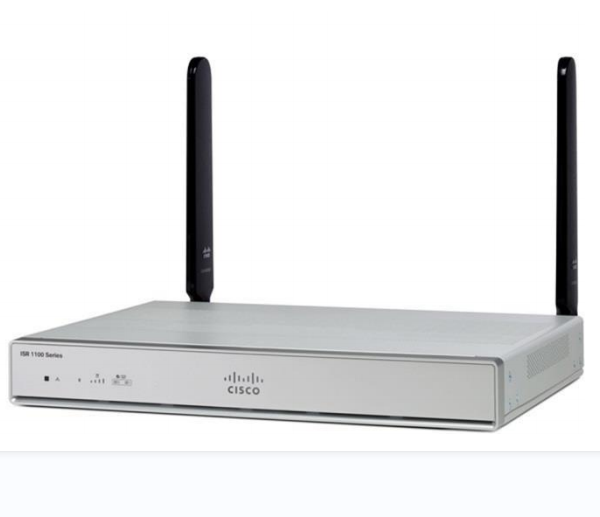
New Original Router ISR1100 Series 4P Dual GE SFP Route C1121-4P
 Zhengzhou Jinyukewei Network Technology Co., Ltd.🇨🇳CN4 yrs
A Brand New 1 Unit of C1111-4p Isr 1100 Series 4-port Dual Wan Ethernet Router Plc
New Original Router ISR1100 Series 4P Dual GE SFP Route C1121-4P
A Brand New 1 Unit of C1111-4p Isr 1100 Series 4-port Dual Wan Ethernet Router Plc
Related Searches
Explore more sourcing topics & related categories
Sources & References
27 sources cited · Verified industry data & reports
OSPF Configuration Guide - OSPF [Cisco IOS XE 17] - Cisco
www.cisco.com
Exceptions may be present in the documentation due to language that is hardcoded in the user interfaces of the product software, language used based on RFP documentation, or language that is used by a referenced third-party product. Learn more about how Cisco is using Inclusive Language. ... This table provides release and platform support information for the features explained in this module. These features are available in all the releases subsequent to the one they were introduced in, unless noted otherwise. Open Shortest Path First (OSPF) is a link-state routing protocol Before OSPF is configured, the switch must have IP routing enabled to allow it to forward traffic like a router. You can customize OSPF for IPv6 for your network. However, the current configuration defaults for OSPF in IPv6 are set to meet the requirements of most customers and features. These OSPF features and parameters allow for fine-tuning and optimization of an OSPF network.
OSPF and OSPFv3 protocol | Open Shortest Path First Routing Protocol ...
www.cisco.com
Verify the site type of a router using the CLI · Verify a transport gateway configuration using the CLI · Symmetric Routing · Feature history for symmetric routing · Symmetric routing mechanisms for Cisco SD-WAN · Translating OMP metrics for devices outside of the overlay network · Symmetric routing scenarios · Configure symmetric routing · Verify symmetric routing · Monitor RIB metric translation · Updated: April 24, 2026 · In VRF 0, you also configure the physical interface that connects the Cisco IOS XE Catalyst SD-WAN device to its neighbor—either the PE router in the MPLS case or the hub or next-hop router in the local site—but you do not establish a DTLS tunnel connection on that physical interface. OSPFv3 is an enhanced version of the OSPF routing protocol specifically designed for IPv6 networks. This approach helps prevent unauthorized devices from modifying or injecting routing information and protects against unauthorized packet capture and replay attacks, thereby enhancing the security of routing updates in enterprise or service provider IPv6 networks. To implement OSPFv3 IPSec authentication, you must configure IPSec security associations between participating routers, specifying appropriate authentication (such as HMAC with SHA or MD5). Since OSPFv3 does not provide built-in authentication or encryption, IPSec is employed to ensure the integrity and confidentiality of OSPFv3 routing messages exchanged between routers.
IP Routing: OSPF Configuration Guide - Configuring OSPF [Cisco ...
www.cisco.com
Cisco supports RFC 1253, OSPF Version 2 Management Information Base, August 1991. The OSPF MIB defines an IP routing protocol that provides management information related to OSPF and is supported by Cisco routers. For protocol-independent features that work with OSPF, see the "Configuring IP Routing Protocol-Independent Features" module. You have the choice of configuring your OSPF network type as either broadcast or NBMA, regardless of the default media type. Using this feature, you can configure broadcast networks as NBMA networks when, for example, you have routers in your network that do not support multicast addressing. This feature saves you from needing to configure neighbors, as described in the “Configuring OSPF for Nonbroadcast Networks”section later in this module. Configuring NBMA networks as either broadcast or nonbroadcast assumes that there are virtual circuits (VCs) from every router to every router, that is, a fully meshed network. In these cases, you can configure the OSPF network type as a point-to-multipoint network. Routing between two routers that are not directly connected will go through the router that has VCs to both routers. Note that you need not configure neighbors when using this feature.
Review OSPF Frequently Asked Questions - Cisco
www.cisco.com
Cisco IOS Software Release 10.0 includes a feature called subinterfaces. You can use subinterfaces with Frame Relay to tie together a set of virtual circuits (VCs) to form a virtual interface, which acts as a single IP subnet. All systems within the subnet must be fully meshed. With Cisco IOS Software Releases 10.3, 11.0 and later, theip ospf point-to-multipoint command is also available. A.When an unnumbered interface is configured, it references another interface on the router. A.Cisco 800 routers do not support OSPF. However, they do support Routing Information Protocol (RIP) and Enhanced Interior Gateway Routing Protocol (EIGRP). You can use theSoftware Advisor tool for more information on feature support. Q. Does the 3825 Series Router support the OSPF Stub feature? A.Yes, the 3800 Series Router that runs Advanced IPServices image supports the OSPF Stub feature.
Configuring OSPF • Information About OSPF, on page 1
www.cisco.com
For configuring OSPF for IPv6, see the Configuring OSPF for IPv6 section. For more information, see Cisco IOS IPv6 Configuration Library on Cisco.com. ... When the neighboring router is NSF-capable, the Layer 3 device continues to forward packets from the · neighboring router during the interval between the primary Route Processor (RP) in a router crashing and the · backup RP taking over, or while the primary RP is manually reloaded for a non-disruptive software upgrade. This feature cannot be disabled. • Log neighbor changes: You can configure the router to send a syslog message when an OSPF neighbor · state changes, providing a high-level view of changes in the router. ... check-summing, and aging functions for more efficient router use. This feature is enabled by default with a If an NSF-capable router discovers · non-NSF aware neighbors on a network segment, it disables NSF capabilities for that segment. Other network · segments where all devices are NSF-aware or NSF-capable continue to provide NSF capabilities. ... Use the nsf OSPF routing configuration command to enable OSPF NSF routing. Use the show ip ospf · privileged EXEC command to verify that it is enabled. ... You can optionally configure several OSPF area parameters. OSPF uses the highest IP address configured on the interfaces as its router ID.
Routing Configuration Guide for Cisco ASR 9000 Series Routers, ...
www.cisco.com
After the router boots up, it sends OSPFv2 traps only after two dead intervals have passed to prevent flooding caused by frequent state changes. The Cisco IOS XR Software implementation of OSPF conforms to the OSPF Version 2 and OSPF Version 3 specifications detailed in the Internet RFC 2328 and RFC 2740, respectively. The following key features are supported in the Cisco IOS XR Software implementation: The OSPF LSA throttling feature provides a dynamic mechanism to slow down LSA updates in OSPF during network instability. LSA throttling also allows faster OSPF convergence by providing LSA rate limiting in milliseconds. Route redistribution—Routes learned using any IP routing protocol can be redistributed into any other IP routing protocol. Authentication—Plain text and MD5 authentication among neighboring routers within an area is supported. An OSPF process is a logical routing entity running OSPF in a physical router. This logical routing entity should not be confused with the logical routing feature that allows a system administrator (known as the Cisco IOS XR Software Owner) to partition the physical box into separate routers. Separate OSPF processes could share the same router ID, in which case they cannot reside in the same OSPF routing domain. OSPF classifies different media into the following types of networks: ... You can configure your Cisco IOS XR network as either a broadcast or an NBMA network. Using this feature, you can configure broadcast networks as NBMA networks when, for example, you have routers in your network that do not support multicast addressing.