P2p Wireless Camera Glasses

Overview
Product sourcing insights & recommendations
The market for P2P wireless camera glasses has evolved into a high-growth sector in 2026, driven by multimodal AI and first-person-view (FPV) content creation. Shipments for display-less smart glasses surged by 167% year-over-year in early 2026, with the global market projected to hit $14.4 billion by 2033. Key trends include the transition toward optical-first designs that resemble regular eyewear and the integration of Snapdragon AR1 silicon for seamless real-time translation and object identification.
However, the industry faces significant hurdles, with 38% of users citing privacy concerns and short battery life (60–120 minutes) remaining a primary technical bottleneck. For B2B sourcing, the focus has shifted toward models offering 2.7K/4K resolution, WiFi P2P for remote viewing, and stabilized 8MP cameras. Detailed market projections, consumer pain points, and top-tier product specifications are available in the comprehensive report below.
Based on the 2026 market trends, I can help you with these next steps:
1080p Hidden Camera Glasses Wireless P2p
Products · 3 lists
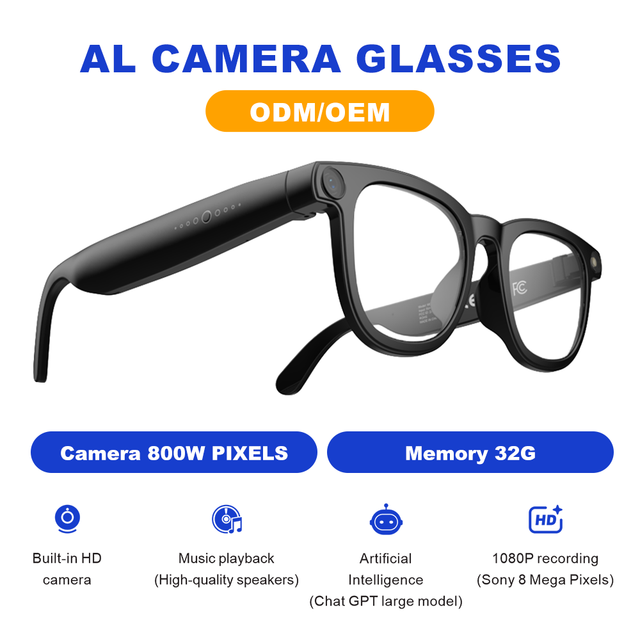
HD Smart Audio Sunglasses with for BT Headset Hidden Camera Video Recording for Outdoor Consumers Electronics Custom logo Option
 Huazhao High-Tech (dongguan) Co., Ltd.🇨🇳CN2 yrs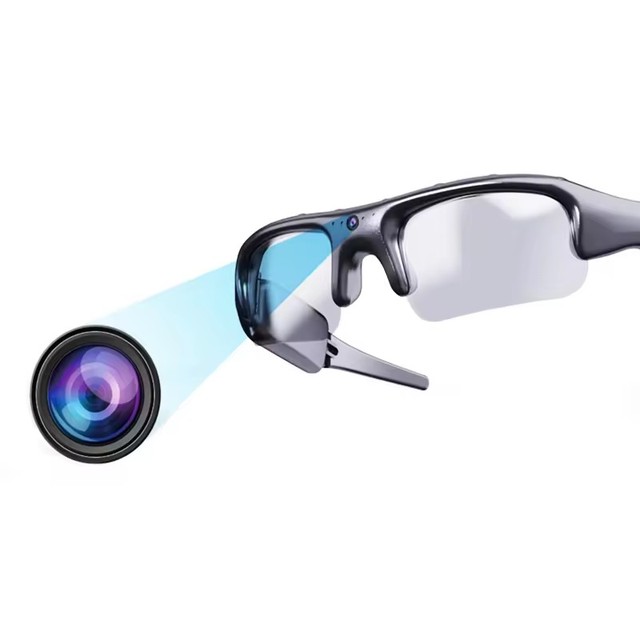
1080P Wifi Riding Smart Glasses Eyewear Outdoor Sports Driving Wireless Glasses Action Camera DVR Audio Video Recorder Camcorder
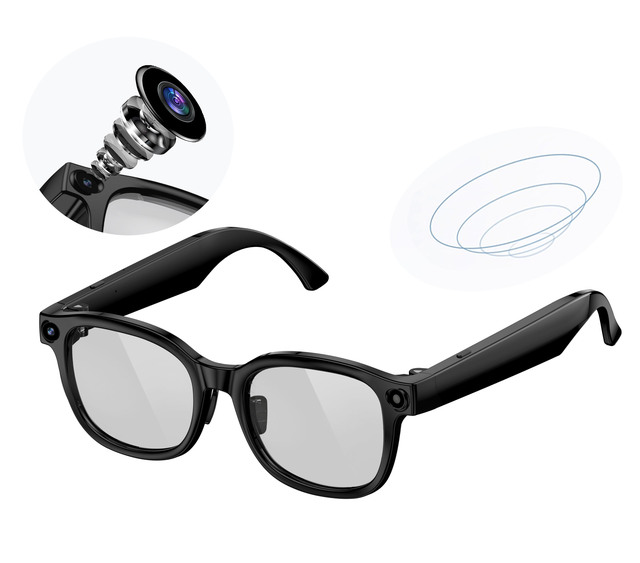
SG001 First Perspective HD Shooting Record Life Invisible Speaker Meeting Assistant Language Translation AI Glasses
 Shenzhen Yaoweisheng Technology Co., Ltd.🇨🇳CN3 yrs
Deep Dive · Full Report
Full Market Report
1 document · Live-fetched from source
Related Searches
Explore more sourcing topics & related categories
Sources & References
26 sources cited · Verified industry data & reports
Smart Glasses Market Size And Share Report, 2026-2033
www.grandviewresearch.com
Size, Share & Trends Analysis Report By Type (Monocular, Binocular, Audio, Immersive), By Operating System, By Glass Tinting Technology, By Application, By Connectivity, By Region, And Segment Forecasts ... The global smart glasses market size was valued at USD 2.5 billion in 2025 and is projected to grow from USD 3.2 billion in 2026 to USD 14.4 billion by 2033, at a CAGR of 24.2% from 2026 to 2033. Additionally, in February 2026, Samsung officially confirmed Android XR smart glasses (SM-O200P/J models) powered by Qualcomm Snapdragon AR1 silicon, featuring 12MP cameras, gesture controls, and Gemini AI integration, completing the triad of Meta AI OS, Google/Samsung Android XR, and Qualcomm silicon that transforms smart glasses from standalone hardware into interconnected platform ecosystems. Fastest-growing regional market: Asia Pacific (highest CAGR, 2026-2033) By country: The U.S. held the largest market share in 2025 ... Additionally, the rising demand for immersive experiences, real-time access to information, and seamless connectivity is pushing smart glasses from niche gadgets into mainstream wearable technology, thereby driving the industry's expansion. The continuous advancements in display technologies, miniaturized sensors, low-power processors, and wireless connectivity solutions such as Bluetooth and 5G are enhancing device performance, comfort, and functionality, thereby driving wider commercialization. The Bluetooth segment accounted for the largest market share in 2025, driven by the rising demand for wireless wearable connectivity solutions, owing to the increasing use of smartphones, wireless audio streaming, and IoT-enabled devices. Continuous advancements in Bluetooth Low Energy (BLE), faster pairing capabilities, and improved audio synchronization are further enhancing device efficiency and user convenience, thereby accelerating segment growth among consumers and enterprise users. The USB segment is expected to register the fastest CAGR from 2026 to 2033, driven by the growing need for reliable wired connectivity and fast data transfer capabilities, as well as the increasing use of smart glasses in industrial, healthcare, and enterprise environments.
Detailed Guide to Best Camera Glasses in 2026
cybernews.com
Google Glass and Snapchat Spectacles were the first smart glasses to hit the market and spark interest in augmented reality (AR) wearables. Since then, many other brands and models have flooded the market. Some can record hands-free videos from a first-person perspective and livestream. Others act as entertainment studios, with high-definition virtual displays to watch movies, play games, or interact with content. It’s a new and exciting tech niche in 2026, where new innovative features and use cases get introduced daily. I partnered with the Cybernews research team to create a list of the best camera glasses in 2026. I dug deep into their features, cybersecurity, privacy, and other factors to find the best options on the market now. Glasses have different camera resolutions, on-glass controls, potential wireless connectivity, and additional smart features like speakers. Camera glasses are a new technology that users are still exploring. Because they can look like regular glasses but have a camera and wireless connectivity, there are some privacy issues to tackle.
Smart Glasses Market Report 2024-2030 [261 Pages & 181 Tables]
www.marketsandmarkets.com
As compared to traditional glasses, smart glasses typically feature augmented reality or mixed reality capabilities, enhancing the user experience by overlaying the digital information in the real-world using camera, sensors, processors, and wireless technology. Secondary research has mainly been used to obtain key information about the value chain of the smart glasses market, key players, market classification, and segmentation according to the industry trends to the bottom-most level, geographic markets, and key developments from both market and technology-oriented perspectives. Data triangulation and market breakdown procedures have been employed, wherever applicable, to complete the overall market engineering process and arrive at the exact statistics for all segments and subsegments of the market. The data has been triangulated by studying various factors and trends from both the demand and supply sides. Industries such as manufacturing and warehousing use smart glasses with camera and audio capabilities for remote assistance. In such industries, smart glasses enable employees to access real-time information and instructions without using their hands. This hands-free capability allows employees to complete tasks more efficiently, as they have access to plans, checklists, and step-by-step instructions as they proceed with other tasks.
Smart Glasses Market Growth 2026: Why AI, AR and Display-Less Eyewear ...
www.openpr.com
Press release - DataM intelligence 4 Market Research LLP - Smart Glasses Market Growth 2026: Why AI, AR and Display-Less Eyewear Are Driving Surging Shipments and Creating New Growth Opportunities Through 2033 - published on openPR.com DataM Intelligence has released a new research report titled Smart Glasses Market Size 2026 The report delivers in-depth insights into key market dynamics, including regional growth trends, market segmentation, CAGR projections, and the revenue performance of leading industry players. The study evaluates a wide range of industry-influencing factors, including government regulations, evolving market dynamics, competitive intensity, and historical performance trends. It also analyzes technological advancements, emerging innovations, and developments across related industries. In addition, the report assesses market volatility, growth opportunities, potential barriers, and key challenges that could impact the future expansion of the Smart Glasses ecosystem. Smart Glasses Market: Key Industry Data and Growth Indicators 1. Display-Less Smart Glasses Shipments Reach 2.25 Million Units ✅ In Q1 2026, global display-less smart glasses shipments reached approximately 2.25 million units, representing 167% year-over-year growth. ✅ July 2025 - Meta Platforms acquired a minority stake of nearly 3% in EssilorLuxottica for approximately US$3.5 billion, strengthening their strategic partnership around Ray-Ban Meta smart glasses. Major Focused Key Segmentations 2026: By Type Standalone smart glasses hold 42% share, driven by their integrated processing capabilities, wireless connectivity, and growing use in consumer, industrial, and professional applications.
The Best Smart Glasses We've Tested for 2026 | PCMag
www.pcmag.com
With technology such as cameras, displays, and sensors built into their frames, smart glasses can provide augmented reality (AR) views, AI assistants, and Instagrammable snapshots directly on your face. I've been covering smart glasses since they first hit the market and have seen them evolve from basic phone-tethered wearable displays into wireless mixed-reality marvels. Get the Best Prices On Smart Glasses — Download Our Free Price Comparison Tool $0 *Deals are selected by our commerce team ... August 7, 2026: With this update, we added the Viture Pro 2 and removed the Viture Luma. The existing picks have been vetted for currency and availability. Oakley's take on smart glasses is a lot like Ray-Ban's, as both leverage Meta's technology. Like the Ray-Ban Meta (Gen 2) smart glasses, the Oakley Meta HSTN features a 12MP camera for capturing content from your point of view, as well as Meta AI to answer your questions. Like the Oakleys, these Ray-Ban smart glasses utilize Meta's technology to let you to take photos, shoot videos, listen to music, and make calls. They provide easy access to Meta AI, which can use visual data from the glasses' 12MP camera to help answer your questions.
Eyes on the future: Smart glasses
institute.bankofamerica.com
Read our full analysis for a more in-depth look at these trends. AI glasses, a type of smart eyeglasses that provide audio and visual capabilities to users, have gained traction since early 2024. With tech giants entering the space and shipments expected to exceed 10 million units in 2025, AI glasses are currently driving the smart glasses market — but consumer interest may fall as augmented reality (AR) glasses gain momentum.