Pager Korea

Overview
Product sourcing insights & recommendations
The phrase "pager korea" refers to both a significant cultural phenomenon from the 1990s and a specialized modern industrial market. Historically, pagers were known affectionately as "ppi-ppi" in South Korea, peaking in 1997 with 15 million subscribers before being replaced by mobile phones KoreatimesWiseguyreports.
Today, while the consumer fad has transitioned into a "newtro" (new-retro) aesthetic trend among Gen Z, the functional pager market remains a stable $1.48 billion global industry projected to grow to $2 billion by 2035 Wiseguyreports.
1. Historical & Cultural Context: The "Ppi-ppi" Era
The 1990s pager craze was defined by a unique numeric language and social coordination habits that pre-dated the smartphone era:
* Numeric Coding: A digital shorthand emerged, such as 8282 (meaning "hurry" or *ppalli-ppalli*) and 1004 (representing "angel" or *cheon-sa*) KoreatimesWiseguyreports.
* Social Infrastructure: The popularity of pagers led to ubiquitous pager shops and long lines at public phone booths, where a common courtesy was leaving "leftover" time for the next person Koreatimes.
* The "Newtro" Revival: In 2026, the aesthetic of the "ppi-ppi" has seen a resurgence in Korean pop culture, influenced by groups like NewJeans, who incorporate Y2K and 90s retro sensibilities into their fashion and merchandise SoompiWikipedia.
2. Modern Product & Market Trends
The current market for pagers is no longer driven by general consumer use but by high-reliability sectors where cellular signals are insufficient.
* Healthcare Dominance: The largest sector (valued at $500M in 2024), where pagers are preferred for their superior building penetration, lack of reliance on internet/cellular networks, and HIPAA compliance Wiseguyreports.
* Specialized Industrial Use: Critical for emergency services, disaster response, and mining/manufacturing environments where network congestion or power outages can disable modern smartphones Wiseguyreports.
* Innovative "Retro-Tech": Modern consumer products like the Trozk Beeper (a pager-styled power bank) capitalize on the "ppi-ppi" aesthetic while providing modern utility InstagramTrozk.
* B2B Solutions: South Korean manufacturers and suppliers continue to produce wireless calling systems for restaurants and hospital nurse call stations, though many high-volume suppliers are now concentrated in China .
3. Market Growth & Forecasting
* Valuation: The global pager market is growing at a CAGR of 2.7% Wiseguyreports.
* Regional Growth: While North America is the current market leader, the Asia-Pacific region is expected to reach $490M by 2035 due to rapid healthcare infrastructure expansion in India and China Wiseguyreports.
The following files contain detailed product listings and manufacturer data for medical and service-oriented pager systems:
Based on these insights, you may want to explore specific niche opportunities or technical details:
Medical Pager Korea Manufacturer
Products · 2 lists
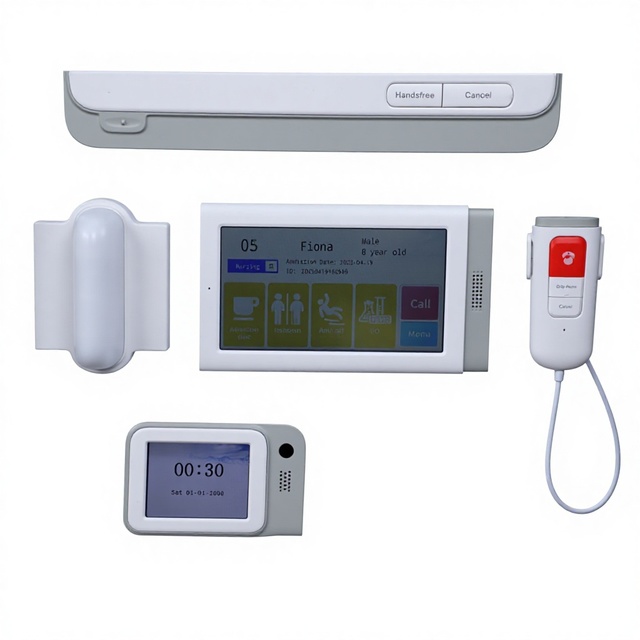
HQ Medical Hot Sell Hospital Nurse Pager ICU Bedhead Nurse Call System
 Hochey Medical Co., Ltd.verified🇨🇳CN6 yrs
Daytech Portable Wireless Calling System Pagers Caregiver Pager with LED Strobe Light Loud Vibrating Alarm for Nursing Home Use
 Quanzhou Daytech Electronics Co., Ltd.verified🇨🇳CN7 yrs
Related Searches
Explore more sourcing topics & related categories
Sources & References
75 sources cited · Verified industry data & reports
[MORNING CALM TALES] 'Ppi-ppi': Korea's brief pager fad in the ...
www.koreatimes.co.kr
Before phones lived in our pockets — before they glowed, chirped, hummed, vibrated, tracked us and reminded us of things we hadn’t yet forgotten — there was the pager. In Korea, it was commonly and affectionately called "ppi-ppi." That palm-sized device fit neatly into a brief moment in the technological scheme of things, nudging how we communicated — if only slightly — into the future. In Korea, ppi-ppi weren’t just devices. They let us be connected before we really understood what being connected would come to mean. Koreans have a knack for running with a trend — striking while the iron is hot, as the saying goes. Not long before the pager boom, tiny photo-sticker shops flourished: cramped booths where friends piled in shoulder to shoulder, pulled faces, laughed at the flash and emerged minutes later with glossy strips of themselves to plaster onto notebooks, diaries, mirrors and schoolbooks — anything willing to hold a memory. But once people clamored for ppi-ppi, many of those photo shops disappeared, gutted like fish one day, and in their place several days later came blocks of shiny new pager stores. Photo captioned "Electronics is the most promising industry of the future," published in The Korea Times, May 23, 1985. Korea Times Archive · At the height of the pager craze in 1997, according to an article published in this paper in 2010, there were 15 million subscribers.
Korean Slang Explained: 115 Popular Words (2026 Guide)
www.90daykorean.com
Very similar to 현웃 (hyeonut), 빵 터지다 (ppang teojida) is a slang verb that means "to laugh really loud" with the emphasis being on the LOUD part! 터지다 (teojida) usually means "to burst," and 빵 (ppang) is the sound a gun or bomb makes. So when you put them together, you get the picture of someone who is laughing explosively! Social media trends in Korea move at lightning speed. Use these terms to caption your Instagram posts or understand what's trending on Korean TikTok. ... This is a new internet slang word that simply means "photo," and you can use it in place of 사진 (sajin |picture or photo). From the word 설 (seol) meaning "theory," this Korean slang word has come to mean "story." You can also use it as a verb in the form 썰을 풀다 (sseoreul pulda | to tell a story). ... This word is Konglish for the word "celebrity." In Korean, they call celebrities or stars "연예인 (yeonyein)" but use this slang word to sound cool and trendy as you refer to your favorite star!. The following list covers everything from single-word reactions to full expressions used by native speakers every day. We’ve broken down the literal meanings and the "why" behind each phrase so you can confidently use them. Testing these out with your Korean friends is a great way to break the ice, so don’t be surprised if they ask, "Where did you learn that?!"
pager - Translation into Korean - examples English | Reverso Context
context.reverso.net
Definition Arabic Catalan Chinese Czech Danish Dutch English French German Greek Hebrew Hindi Hungarian Italian Japanese Korean Persian Polish Portuguese Romanian Russian Slovak Spanish Swedish Thai Turkish Ukrainian Vietnamese ... These examples may contain colloquial words based on your search. Before you can add pager recipients, you must configure communication ports. Lets you set advanced parameters for sending pager messages via modem. In the event of a system error, you'll receive immediate e-mail and pager alerts. Once you hear the beep, please state your pager number.
How to say pager in Korean
www.wordhippo.com
Korea in the Search Bar: What social trends reveal about the next ...
www.webintravel.com
Diving deeper into Korea’s social search trends, there is a massive preference for time-efficient, domestic travel among residents. The Romantic: Romance-coded content- “where to find a Korean boyfriend” or “K-drama love” spots- retains a significantly higher save rate (35%) compared to the average (1.57%). The Micro-Influencer: General short-trip ideas account for nearly 50% of video results, with travellers seeking “hidden gem” domestic spots that are quiet yet trending on social media. For a deeper dive into these social search trends, download the complete report from SocialSeal.
Localized Keyword Strategy for SEO in Korea | The Egg
www.theegg.com
This proves that in addition to targeting high-volume keywords, you must adapt your keyword strategy based on Korean language usage. For another example, the trendy search term “맛집” (“tasty place”) has emerged more popular than “식당” or “레스토랑” (both meaning “restaurant”) for restaurant-related searches. Koreans also celebrate Mother’s Day and Father’s Day together in the form of Parent’s Day, so be wary of which holidays are commonplace or foreign to Koreans. GET OUR NEWSLETTER! Although tools like Google Ads Keyword Planner and Google Search’s auto-complete function come in handy for finding related keywords, leveraging Naver-owned tools like Naver Keyword Planner, Naver Trends, and Data Lab localizes your strategy as much as possible. Korean users primarily search with short-tail keywords—a search behavior vastly different from how people search in English. This is because Korean language is more concise than English language. Only a few Korean characters or words are needed to convey the same meaning in English. Google Keyword Planner: Average MSV for short-tail Christmas-related keywords in South Korea · Meanwhile, shorter keywords like “Christmas tree” or “Christmas decorations” in Korean yield significantly higher search volumes.