Pga 478 Processor

Overview
Product sourcing insights & recommendations
In 2026, the Socket 478 (mPGA478) processor market has shifted from a mainstream consumer product to a critical niche for industrial maintenance and legacy hardware preservation. Alibaba
Market Trends & Insights (2026)
* Industrial Life Support: The primary market driver is the maintenance of aging factory automation equipment (CNCs, PLCs) that relies on the ISA bus, which Socket 478 motherboards still support. CpubenchmarkAlibaba
* Risk Mitigation Sourcing: Buyers are aggressively securing New Old Stock (NOS) or verified working units to prevent downtime as legacy motherboard supplies deplete. Alibaba
* Authenticity Over Power: Retro-computing enthusiasts prioritize "period-accurate" builds for Windows XP, driving demand for rare top-tier chips like the Pentium 4 Extreme Edition. Alibaba
Key Product Performance & Pricing
| Processor Tier | Model (Core) | 2026 Est. Price (Bulk) | Use Case |
|---|---|---|---|
| Collector / High-End | Pentium 4 Extreme Edition 3.4GHz (Gallatin) | $30 – $60 | Retro-gaming, Archival |
| Industrial Standard | Pentium 4 3.0GHz (Northwood) | $5 – $12 | CNC/PLC Controllers |
| Legacy / HMIs | Celeron D 3xx Series | $2 – $5 | Simple text terminals |
*Note: The Northwood core is preferred for industrial use over the Prescott core due to lower operating temperatures and higher reliability in enclosed environments.* CpubenchmarkAlibaba
Current Sourcing Options
Verified products currently available for sourcing include industrial motherboards with multiple ISA slots and stable Pentium 4 processors:
Socket 478 Cpu Pentium 4 Northwood 3.0ghz
Products · 2 lists
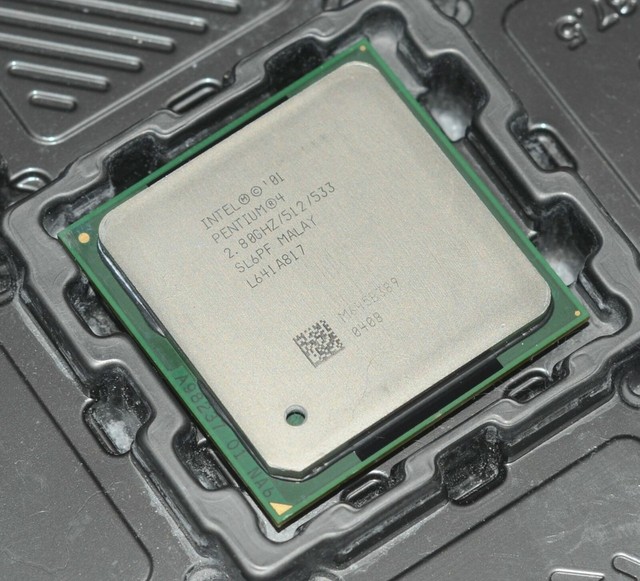
Pentium 4 2.8 Ghz 533 Mhz 512kb Socket 478 Sl6pf Free Shipping
 Xiamen Global Yipin Trading Co., Ltd.🇨🇳CN2 yrs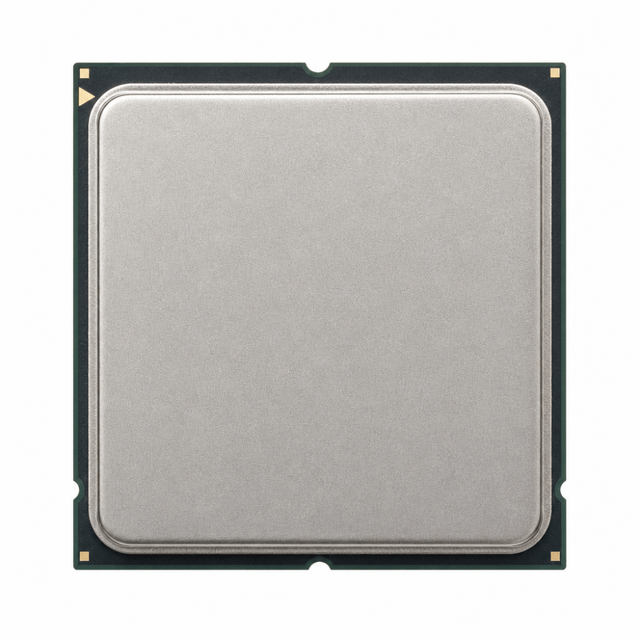
HH80552PG0802M Pentium 4 Processor HH80552PG0802M LGA-775(37.5x37.5)
 Shenzhen Chenghuang Technology Co., Ltd.🇨🇳CN1 yr
Related Searches
Explore more sourcing topics & related categories
Sources & References
27 sources cited · Verified industry data & reports
PassMark Software - CPU Benchmarks - CPU Performance by Socket ...
www.cpubenchmark.net
PassMark Software - CPU Benchmarks - Over 1 million CPUs and 5,000 models benchmarked and compared in graph form, updated daily! Socket PGA478 CPU Performance · Updated 4th of September 2026 · CPU · CPU Mark · Price (USD) Intel Core2 Extreme Q9300 @ 2.53GHz · (86%)1,974NA · Intel Core2 Quad Q9100 @ 2.26GHz · (79%)1,806$385.89* Intel Core2 Quad Q9000 @ 2.00GHz · (70%)1,597$120.79* Intel Core2 Duo T9900 @ 3.06GHz ·
CPU list for socket PGA 478
www.cpu-monkey.com
Here we have listed all processors for socket PGA 478. Only processors for an LGA socket can be exchanged independently as they are only plugged into the mainboard. In other sockets such as BGA sockets, processors are soldered directly to the mainboard and cannot be replaced independently later.
Socket 478 - Wikipedia
en.wikipedia.org
Socket 478 was launched in August 2001 in advance of the Northwood core to compete with AMD's 462-pin Socket A and their Athlon XP processors. Socket 478 was intended to be the replacement for Socket 423, a Willamette-based processor socket which was on the market for only a short time. This was the last Intel desktop socket to use a pin grid array (PGA) interface. Intel discontinued Socket 478 in favor of LGA 775 with the launch of the 64-bit version of its 90 nm "Prescott"-based Pentium 4 HT and Celeron D in 2004. Socket 478 was used for all Northwood Pentium 4 and Celeron processors. It supported the first Prescott Pentium 4 processors and all Willamette Celerons, along with several of the Willamette-series Pentium 4s. Socket 478 also supported the newer Prescott-based Celeron D processors (which were also one of the last CPUs made for the socket), and early Pentium 4 Extreme Edition processors with 2 MB of L3 CPU cache. While Intel's mobile CPUs are available in 478-pin packages, they in fact only operate in a range of slightly differing sockets such as Socket 479 (both mPGA478A and mPGA478C/mPGA479M/μFCPGA/μPGA479M), Socket M, and Socket P, all of which are electrically (and sometimes pin) incompatible with each other including Socket 478. Socket 478, also known as mPGA478 or mPGA478B, is a 478-contact CPU socket used for Intel's Pentium 4 and Celeron series CPUs. Socket 478 was launched in August 2001 in advance of the Northwood core to compete with AMD's 462-pin Socket A and their Athlon XP processors.
CPU Sockets Market Analysis: Growth Trajectory to 2035 Driven by ...
www.indexbox.io
This analysis provides a comprehensive outlook on the market's trajectory, examining the technological, economic, and supply chain factors that will shape demand for LGA, PGA, and BGA sockets across key end-use sectors and global regions through the next decade. The baseline scenario for the CPU sockets market from 2026 to 2035 projects a transition from broad-based growth to a more concentrated and technologically intensive expansion phase. In the baseline scenario, IndexBox estimates a 4.2% compound annual growth rate for the global cpu sockets market over 2026-2035, bringing the market index to roughly 150 by 2035 (2025=100). Note: indexed curves are used to compare medium-term scenario trajectories when full absolute volumes are not publicly disclosed. For full methodological details and benchmark tables, see the latest IndexBox CPU Sockets market report. This report provides an in-depth analysis of the CPU Sockets market in the World, including market size, structure, key trends, and forecast. Executive Summary & Market Overview Key findings, market size, trends, historical snapshot 2007–2025, forecast highlights 2026–2035, trade balance summary $149 Production Production volume & value 2007–2025, capacity & utilization, manufacturing trends, forecast 2026–2035 $199
Socket PGA478 CPU / Motherboard Processors
www.disctech.com
CPUs are Back: The Datacenter CPU Landscape in 2026
newsletter.semianalysis.com
In their latest Q4 earnings, Intel saw an unexpected uptick in datacenter CPU demand in late 2025 and are increasing 2026 capex guidance on foundry tools and prioritizing wafers to server from PC to alleviate supply constraints in serving this new demand. This marks an inflection point in the role of CPUs in the datacenter, with AI model training and inference using CPUs more intensively. Datacenter CPU Core Count Trend. For our subscribers, we provide our datacenter CPU roadmap to 2028 and detail the datacenter CPUs beyond 2026 from AMD, Intel, ARM and Qualcomm. We then look ahead to what the future looks like for datacenter CPUs, discuss the effects of the DRAM shortage, what NVIDIA’s Bluefield-4 Context Memory Storage platform means for the future of general purpose CPUs, and the key trends to look out for in the CPU market and CPU designs going forward. Below we present our CPU roadmap to 2028, and detail the key features and architectural changes of the datacenter CPUs beyond 2026, including AMD’s Verano and Florence, Intel’s Coral Rapids and cancelled CPU lines, ARM’s Venom specifications, Qualcomm’s return to the datacenter CPU market with SD2, and include NVIDIA’s Bluefield-4 as a sign of how CPU deployments are evolving going forward. We then discuss the impacts of the DRAM shortage on each datacenter CPU segment and look at future CPU trends, highlighting crucial design aspects that will shape CPUs in the next decade. As AMD already enjoys significantly higher performance per core than Intel (96c Turin matches 128c Granite Rapids), the performance gap between AMD Venice and Intel Diamond Rapids will widen even more in the 2026 to 2028 generation of datacenter CPUs. Core to core latency on Venice should improve over Turin thanks to the new die to die interconnect and larger core domains. AMD is also doubling down where Intel is pulling out. While Intel cancels its 8-channel processor, AMD will introduce a new 8-channel Venice SP8 platform as a successor to the EPYC 8004 Siena line of low power, smaller socket offerings, while still bringing up to 128 dense Zen 6c cores to the table.