Plane Speaker

Overview
Product sourcing insights & recommendations
I have completed the market trends and product insights report for 'plane speakers' (planar magnetic and flat panel technology).
The market is experiencing a significant shift as planar magnetic technology moves from high-end audiophile niches into the mainstream high-fidelity audio and gaming sectors. Key findings indicate that the global market is projected to reach approximately $864.88 million by 2035, with the Asia-Pacific region emerging as the fastest-growing hub. Technical innovations in neodymium magnets and hybrid driver systems are addressing traditional bass limitations, making these speakers more viable for home theaters and architectural integration.
The attached report provides a detailed breakdown of market forecasts, technical advantages over dynamic speakers, and current B2B sourcing opportunities for driver units and finished products.
The 'plane speaker' market is shifting towards hybrid and architectural designs. You can continue with:
Planar Magnetic Driver Unit Diy Speaker
Products · 3 lists
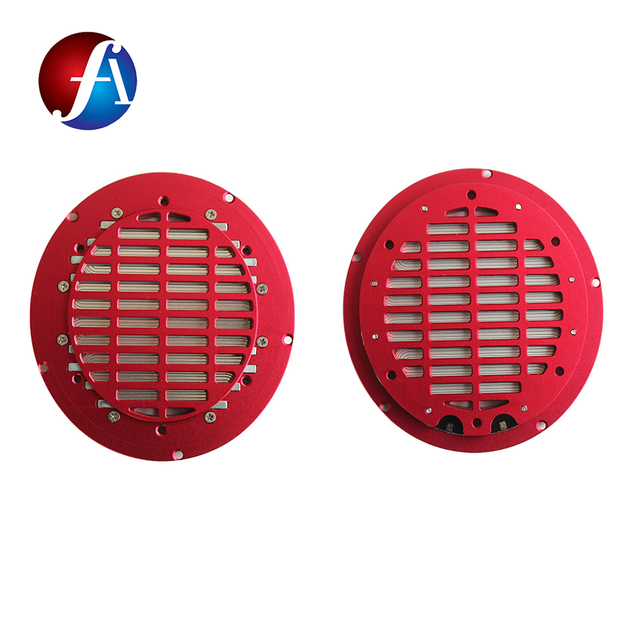
104x10mm Headphones DIY Planar Driver HiFi Audiophile DIY Large Planar Magnetic Transducer 50 Ohm
 Zhuhai Fine Acoustics Electronic Technology Co., Ltd.🇨🇳CN12 yrs
High-Power 101mm Planar Magnetic Diaphragm Speaker Aluminum Voice Coil with Actuated by Driver
 Dongguan Quan Yun Electronics Co., Ltd.🇨🇳CN8 yrs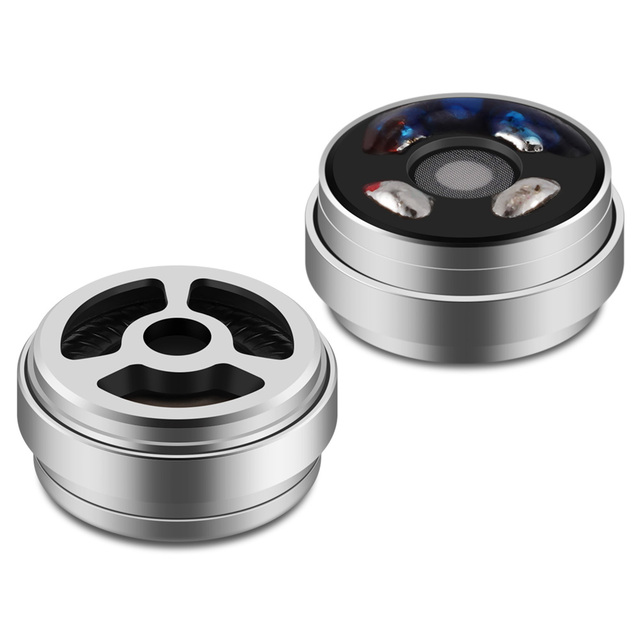
Customized Planar Magnetic Speaker Drivers 11.5mm 16ohm for Headphone Gaming In-ear Earphone Speaker
 Shenzhen Huayunxin Electronics Co., Ltd.🇨🇳CN5 yrs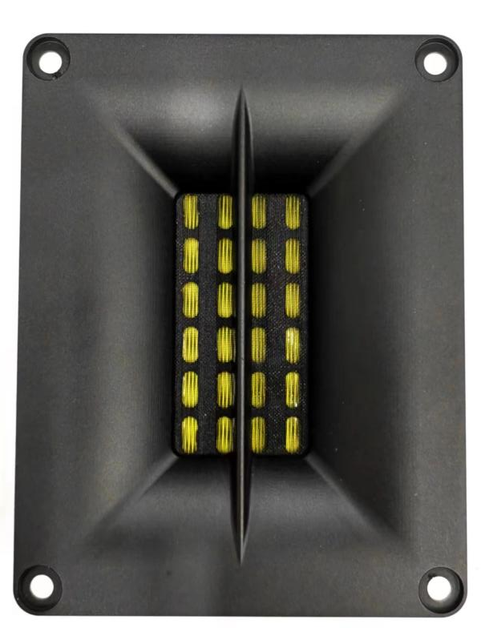
HiFi Flat Diaphragm Planar Tweeter Unit Full Range Flat Panel Speaker Audio Driver for Audio Equipment

Samtronic Ribbon Isodynamic Tweeter Professional Premium HiFi Speaker DIY Unit Home Theater Driver Neodymium AMT Planar Speaker
 Huasheng (shenzhen) Technology Limited🇨🇳CN8 yrs
Deep Dive · Full Report
Full Market Report
1 document · Live-fetched from source
Related Searches
Explore more sourcing topics & related categories
Sources & References
27 sources cited · Verified industry data & reports
Magnepan – magneplanar
magnepan.com
Planar Speakers Guide: How to Choose the Right One
electronics.alibaba.com
Trends · Products · Q&A · About Us · 30 April 2026 By Alex Morgan · Your browser does not support the video tag. Want to explore more about this article? Try the ask below · → · Over the past year, planar magnetic speakers have moved beyond niche audiophile circles into broader high-fidelity conversations—not because specs improved overnight, but because real-world listening habits shifted: more people now prioritize sonic transparency and spatial realism over compactness or bass-heavy tuning. Planar magnetic speakers (also called ribbon or flat-panel magnetic drivers) generate sound using an ultra-thin conductive diaphragm—typically Mylar or Kapton film—sandwiched between arrays of permanent magnets. Unlike cone-based dynamic speakers, they lack a traditional enclosure and radiate sound both forward and backward (dipolar radiation). Lately, interest in planar magnetic designs has grown—not from marketing hype, but from measurable shifts in listener priorities. Streaming services now deliver higher-resolution audio (Qobuz, Tidal Masters), and many users report fatigue from compressed, EQ-heavy dynamic speakers. If you need transparent midrange, expansive imaging, and a dipolar signature, and you can commit to adequate room depth, robust amplification, and subwoofer integration—then planar magnetic speakers deliver a distinct, rewarding experience.
PLANAR MAGNETICS - Wisdom Audio
www.wisdomaudio.com
Planar magnetics have a huge advantage over traditional dynamic drivers, in that the “voice coil” is spread out over a large area rather than squeezed into a narrow gap within a massive chunk of metal. As a result, planar magnetic drivers can dissipate heat effectively that would otherwise build up in a traditional voice coil. Planar magnetic speakers can handle a lot of power without undue stress or audible strain. Well-designed planar magnetic speakers present an almost perfectly resistive load to the power amplifier in the system since the voice coil is essentially a very long, thin wire. It acts like a simple resistor. This is the easiest possible load for the amplifier to drive, and comparable to the one electronics manufacturers use during measurements designed to show how terrific their products perform. The nature of planar magnetic designs makes it relatively easy to design them to either be dipole (radiating equally and in opposite phase in front of and behind the speaker, like ESLs) or monopole (radiating only in the forward direction, more like a traditional dynamic speaker). The difference is not subtle. Compare these speakers to any other high-performance design: dynamic, ESL, ribbon, or planar magnetic, and you will hear the music come alive in a way that speaks directly to your emotions. They are incredibly engaging.
Planar Magnetic Speakers: Revolutionizing High-Fidelity Audio – ...
www.hifireport.com
Planar magnetic speakers are a type of speaker that uses a different technology than traditional dynamic speakers. Instead of a conventional cone-shaped diaphragm, planar magnetic speakers use a thin, flat diaphragm covered with a pattern of conductors. In comparison to traditional dynamic speakers, planar magnetic speakers have several advantages: Because the diaphragm is flat and has a larger surface area than a cone-shaped diaphragm, it can move more air and produce a more detailed sound. Planar magnetic speaker technology has been around since the 1970s, but it was initially developed for use in headphones. Japanese audio company Fostex developed the first planar magnetic headphones in the early 1970s. These headphones used a thin, flat diaphragm and an array of magnets to produce sound. It was in the 1990s that planar magnetic technology began to be used in speakers. The first planar magnetic speakers were developed by the American audio company Magnepan. These speakers used a large, flat diaphragm and an array of magnets to produce sound.
Magnepan - Wikipedia
en.wikipedia.org
Magnepan's speaker design, sold under the brand name Magneplanar (often referred to as "Maggies"), differs from that of conventional speakers in relying not on cones mounted in an enclosure, but on a planar driver system mounted in a panel. A Magneplanar's sound reproducing mechanism (magnetostatic loudspeaker) comprises thin conductive wires and or foil strips attached to a thin sheet of Mylar residing in a magnetic field created by a vertical array of permanent strip magnets. The Magneplanar design, using a passive magnet array, is not a unique loudspeaker implementation, although it was the first of its type. Eminent Technology, Analysis Audio, Apogee and others also employ passive magnet designs. Broadly, these are classed as planar-magnetic speakers. ↑ Huxtible, Clifford. "About Us". magneplanar. Retrieved 2026-06-10. All Magnepan speakers are based on flexible ferrite magnet strips (like refrigerator magnets), 0.060" (1.5 mm) thick, typically cut to either 1/4" (6 mm) wide (mid-bass) or 1/8" (3 mm) wide (tweeters) and more or less the length of the speaker. The magnets are glued to a piece of custom perforated 20-gauge (1 mm) steel sheet. Magnepan is a private high-end audio loudspeaker manufacturer in White Bear Lake, Minnesota, United States. Their loudspeaker technology was conceived and implemented by engineer Jim Winey in 1969. Magnepan's speaker design, sold under the brand name Magneplanar (often referred to as "Maggies"), ...
Planar Magnetic Speakers Guide: How to Choose Wisely
electronics.alibaba.com
A planar magnetic speaker uses a thin, flat diaphragm—typically a polymer film—embedded with conductive traces, suspended between arrays of permanent magnets. When audio current flows through those traces, Lorentz forces move the entire diaphragm uniformly, producing sound. A planar magnetic speaker uses a thin, flat diaphragm with embedded conductive traces, suspended between magnets. Over the past year, planar magnetic speakers have shifted from niche audiophile curiosities to viable alternatives for serious listeners seeking transparent midrange, controlled bass, and wide dispersion—especially as newer models like the Dyptyque DP-140 MK II and Magnepan LRS have refined integration, sensitivity, and room-friendliness 12. If you’re a typical user, you don’t need to overthink this: choose planar magnetics only if you prioritize midrange realism and low-distortion bass extension—and can accommodate their directional dispersion and placement demands.