Polarizer Lnb

Overview
Product sourcing insights & recommendations
The "Polarizer LNB" market is currently undergoing a technical shift toward electronic dual-polarity solutions, driven by the expansion of satellite constellations and the need for simplified installations in tropical regions. Key findings indicate that the global polarizer equipment market is set to reach $14.7 billion by 2033, with a strong focus on miniaturization and 5G interference mitigation.
The accompanying report provides a deep dive into:
- Technical Working Principles: How dielectric plates and hybrid couplers achieve phase shifts for circular polarization.
- Market Trends (2025–2033): Regional dominance in the Asia-Pacific and the impact of 5G on C-band LNB demand.
- Sourcing Insights: A curated list of high-performance products including Ku-band and C-band polarizer bundles.
You can find the detailed analysis and product recommendations in the file below.
Based on the report, would you like to:
Polarizer Lnb Satellite Receiver
Products · 3 lists
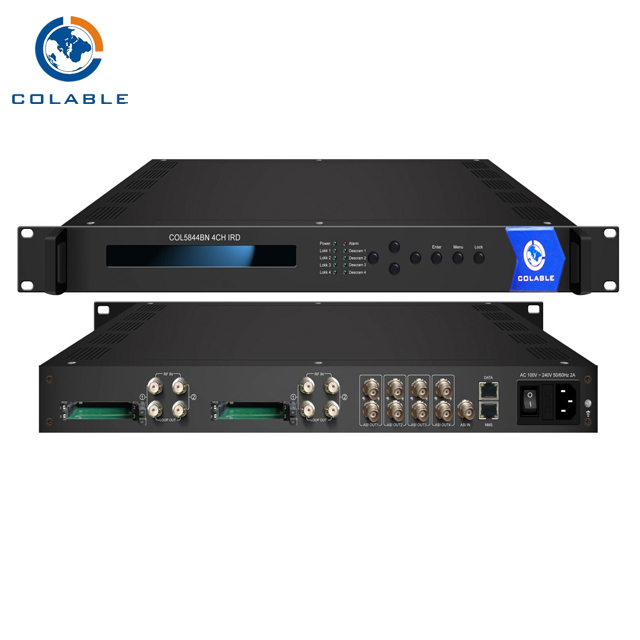
Satellite Receiver Decoder,digital Headend Scrambled Channels Satellite Receiver COL5844BN
 Colable Electronics Co., Ltd.🇨🇳CN17 yrs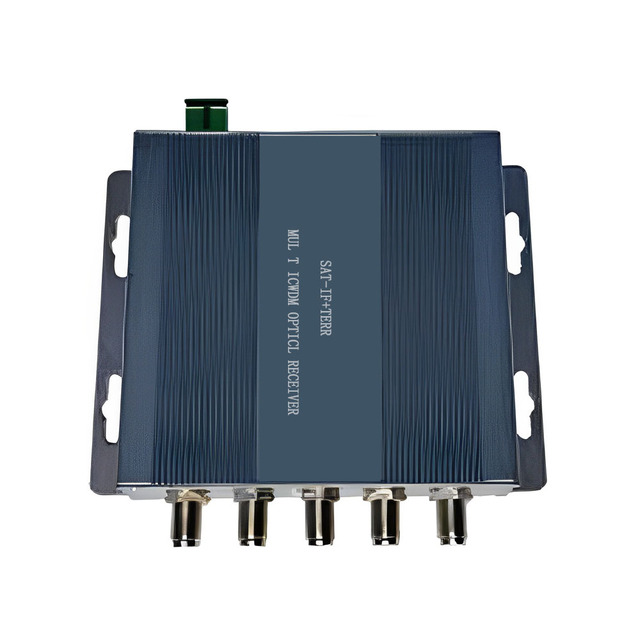
AGC Mini FTTB 4SAT-IF+1TERR Digital Fiber Optic Receiver with DVB-S2 and CATV Satellite Outputs
 Changsha Tuoying Technology Co., Ltd.🇨🇳CN3 yrs
Deep Dive · Full Report
Full Market Report
1 document · Live-fetched from source
Related Searches
Explore more sourcing topics & related categories
Sources & References
26 sources cited · Verified industry data & reports
Optical Fiber Polarizer Market Report 2026 - Research and Markets
www.researchandmarkets.com
40.1 Optical Fiber Polarizer Market in 2030 - Countries Offering Most New Opportunities 40.2 Optical Fiber Polarizer Market in 2030 - Segments Offering Most New Opportunities 40.3 Optical Fiber Polarizer Market in 2030 - Growth Strategies 40.3.1 Market Trend Based Strategies 40.3.2 Competitor Strategies ... 41.1. Abbreviations 41.2. Currencies 41.3. Historic and Forecast Inflation Rates 41.4. Research Inquiries 41.5. About the Analyst 41.6. Copyright and Disclaimer · Optical Fiber Polarizer Market Global Report 2026 provides strategists, marketers and senior management with the critical information they need to assess the market. Major trends in the forecast period include miniaturized polarization control, high-precision polarizers, fiber optic integration, low-loss polarization devices, advanced optical materials. The increasing demand for high-speed data transmission is expected to drive the growth of the optical fiber polarizer market in the coming years. The optical fiber polarizer market research report is one of a series of new reports that provides optical fiber polarizer market statistics, including optical fiber polarizer industry global market size, regional shares, competitors with a optical fiber polarizer market share, detailed optical fiber polarizer market segments, market trends and opportunities, and any further data you may need to thrive in the optical fiber polarizer industry. The optical fiber polarizer market global report answers all these questions and many more. The report covers market characteristics, size and growth, segmentation, regional and country breakdowns, total addressable market (TAM), market attractiveness score (MAS), competitive landscape, market shares, company scoring matrix, trends and strategies for this market.
Polarizer Film Market Size, Share & Trends Analysis, 2035
www.businessresearchinsights.com
Additionally, the report assesses technological advancements improving efficiency by 23% and durability by 26%, offering detailed insights into the Polarizer Film Market Insights and industry trends. What value is the Polarizer Film market expected to touch by 2035? + The global Polarizer Film market is expected to reach USD 35.64 Billion by 2035. What is CAGR of the Polarizer Film market expected to exhibit by 2035? + The Polarizer Film market is expected to exhibit a CAGR of 8.7% by 2035. What is the value of the Polarizer Film market in 2026? In 2026, the Polarizer Film market value stood at USD 16.80 Billion. Which are the top companies operating in the Polarizer Film market? Emerging Trends: 54% adoption of ultra-thin polarizer films, 47% increase in flexible display integration, 38% rise in eco-friendly film production, 42% demand for anti-reflective coatings, and 31% shift toward recyclable materials. The Polarizer Film Market Trends indicate a strong transition toward thinner and more efficient films, with average thickness reduced by 18% between 2022 and 2025. Flexible displays now account for 34% of total display production, increasing demand for bendable polarizer films.
Global Optical Fiber Polarizer Market Size, Share, Industry Trends ...
www.verifiedmarketreports.com
Global Optical Fiber Polarizer Market Size By Type of Optical Fiber Polarizer ( Static Polarizers, Dynamic Polarizers), By Application Areas ( Telecommunications, Data Communication), By Material Type (Polymer-based Polarizers, Glass-based Polarizers), By End-user Industry (Consumer Electronics, Automotive), By Performance Characteristics (Wavelength Range, Polarization Efficiency), By Geographic Scope And Forecast · Author By: Sarika Bade | Edition : 7th Edition 2026 | Editor : Emily Johnson Optical Fiber Polarizer Market Revenue was valued at USD 1.2 billion in 2024 and is estimated to reach USD 2.5 billion by 2033, growing at a CAGR of 9.5% from 2026 to 2033. The integrated photonic polarizer segment is experiencing rapid growth, driven by the miniaturization trend and the proliferation of photonic integrated circuits. These devices enable complex functionalitiessuch as polarization multiplexing and quantum state manipulationwithin compact footprints, reducing system complexity and cost. Regulatory support for 5G and fiber-to-the-home (FTTH) initiatives further bolster demand. The region’s focus on technological leadership and security applications positions it as a critical growth zone, with a trend toward integrating polarization solutions into cutting-edge systems.
Linear Polarizer Film Market Report: Size, Growth, Trends & Forecast ...
www.verifiedmarketresearch.com
Report ID: 302111 | Last Updated: Jan 2026 | No. of Pages: 150 | Base Year for Estimate: 2024 | Format: Download Sample Need customization Ask for a discount ... Linear Polarizer Film Market size was valued at USD 16.0 Billion in 2024 and is projected to reach USD 33.59 Billion by 2032, growing at a CAGR of 7.7% from 2026 to 2032. Linear Polarizer Film Market was valued at USD 16.0 Billion in 2024 and is projected to reach USD 33.59 Billion by 2032, growing at a CAGR of 7.7% from 2026 to 2032. Furthermore, the healthcare sector is a key segment, with high-quality polarizer films being necessary for medical imaging displays (such as diagnostic screens and surgical monitors) where accurate color, clarity, and detail are medically critical. Sustainability and Material Innovation : A growing focus on environmental responsibility is spurring innovation and acting as a notable driver within the market. There is a strong and increasing trend toward the development of “green” or eco-friendly polarizer films. The second most dominant subsegment is typically High Transmission polarizer film, which is critical for enhancing the overall brightness and energy efficiency of displays, a key industry trend driven by the push for energy-saving electronics and longer battery life in mobile devices.
Polarizer Market Report | Global Forecast From 2025 To 2033
dataintelo.com
Segments - by Product Type (Linear Polarizers, Circular Polarizers, Elliptical Polarizers), Application (Consumer Electronics, Automotive, Medical, Aerospace & Defense, Industrial, and Others), Technology (Film Polarizers, Wire Grid Polarizers, Crystal Polarizers, and Others), End-User (Manufacturing, Healthcare, Automotive, Aerospace & Defense, and Others), and Region (Asia Pacific, North America, Latin America, Europe, and Middle East & Africa) - Global Industry Analysis, Growth, Share, Size, Trends, and Forecast 2025-2033 + Read More With the proliferation of smartphones, tablets, laptops, and large-format displays, manufacturers are consistently seeking advanced polarizing films that can enhance display clarity, brightness, and energy efficiency. Furthermore, the trend toward higher resolution displays, including 4K and 8K, necessitates the use of sophisticated polarizer films to achieve optimal visual performance. Get demo access to market data Experience powerful insights firsthand. Get demo access to our dashboard and explore real-time market data, trends, and analysis designed to drive smarter decisions. ... Another critical growth factor is the increasing application of polarizers in the automotive industry. As OLED displays become more prevalent in consumer electronics, such as televisions and smartphones, the demand for OLED Circular Polarizers is expected to rise. Their ability to provide superior image quality and energy efficiency makes them a preferred choice for manufacturers aiming to deliver cutting-edge display solutions. This trend is further supported by the growing consumer preference for devices with vibrant and lifelike visuals, driving the adoption of OLED Circular Polarizers across various applications.
Global Plate Polarizer Market Size, Share & Trends Analysis 2026-2032 ...
pmarketresearch.com
Trade policies directly influence costs and market access for polarizers. In 2023, the US maintained a 25% tariff on Chinese polarizers (Section 301), prompting firms like LG Chem to shift production partly to Vietnam to reduce tariff exposure. Tariff-driven localization accelerates regional supply chains; the EU’s CBAM, effective 2026, will penalize carbon-intensive imports, pushing Merck KGaA and peers to adopt lower-carbon production to avoid penalties. Manufacturing advances are extending durability and reducing cost, as acrylic-based polarizers now offer around 10,000 hours of UV lifespan versus about 3,000 hours for traditional PVA films. The machine-vision segment, reliant on polarization imaging, grows at roughly 8.4% CAGR to 2027. Sustainability trends push bio-based polarizers and recyclable structures, reducing petroleum use and e-waste. The plate polarizer market is propelled by LCD adoption across consumer electronics and expanding display functionality in automotive, smart homes, and public signage. More than 75% of global LCD panels rely on plate polarizers to regulate light transmission and visibility. Beyond traditional displays, plate polarizers are advancing into AR/VR, quantum computing, LiDAR, and precision agriculture. The AR/VR optics market is expanding rapidly, with near-eye displays demanding ultra-high extinction ratios and wide viewing angles; compact polarizers with >10,000:1 ratios enable thinner stacks while preserving color accuracy, aligning with a projected 35.6% CAGR through 2030.