Price Casing 9 5

Overview
Product sourcing insights & recommendations
The phrase "price casing 9 5" likely refers to Psychological Pricing Strategies or a specific industrial product dimension (most notably 9 5/8 inch well casing or 9.5mm drive enclosures).
1. Market Insights: The "9-5" Pricing Trend
The "9" and "5" in your query represent the most dominant digits used in Charm Pricing, a psychological tactic where prices end in .99 or .95 to increase conversion rates.
* Sales Impact: Research indicates that prices ending in 9 or 95 can increase sales by 24% to 60% compared to whole numbers Business.
* Perception: Consumers perceive $9.95 or $9.99 as significantly cheaper than $10.00 due to the Left-Digit Effect, where the brain anchors on the leftmost number IncReadysetlifecoach.
* Market Share: Approximately 60% of retail prices end in 9, while 30% end in 5 Wikipedia. Ends in "5" are often classified as "round" odd numbers and are perceived as more precise or "honest" discounts compared to "9" Sciencedirect.
2. Product Matches: Industrial & Tech Casing
In a B2B sourcing context, the numbers "9" and "5" frequently appear in specific product dimensions:
#### Oil & Gas: 9 5/8 Inch Well Casing
The most common industrial association for this phrase is the 9 5/8 inch (244.5mm) API 5CT casing used in well construction.
* Standard Specs: Typically available in seamless or welded formats, such as the API 5CT 9-5/8 inch Seamless Casing Alibaba.
* Pricing: Prices generally range from $400–$650 per ton depending on the steel grade and quantity AlibabaAlibaba.
#### Electronics: 9.5mm Drive Enclosures
For consumer electronics, "9.5" refers to the thickness of standard 2.5-inch hard drive or SSD casings.
* Compatibility: Cases designed for 7mm/9.5mm SATA drives are standard for external storage solutions Alibaba.
* Affordability: These enclosures are highly accessible, with prices as low as $1.15–$7.60 per piece AlibabaAlibaba.
3. Future Market Outlook (2026)
* Industrial Growth: The global well casing market is projected to reach approximately $20.87 billion by 2026, growing at a CAGR of ~6% Fortunebusinessinsights.
* Innovation: Increasing demand for Metal Casings in tech and Advanced Materials in industrial sectors will drive steady growth through 2026-2033 MarketresearchfutureLinkedin.
Here are the insights on pricing trends and potential product matches. You can continue with:
Oil Well Casing 9 5 8 Inch
Products · 3 lists
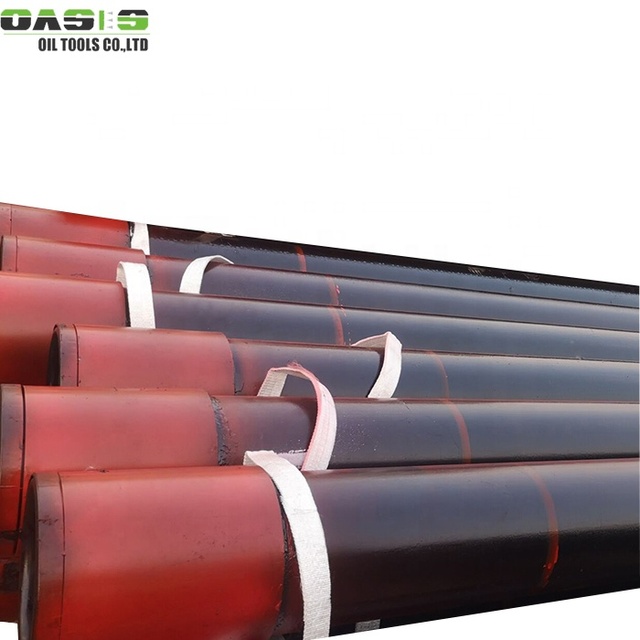
API 5CT 9-5/8inch Seamless Casing Pipes 53.5 PPF
 Xinxiang Oasis Oil Tools Co., Ltd.🇨🇳CN13 yrs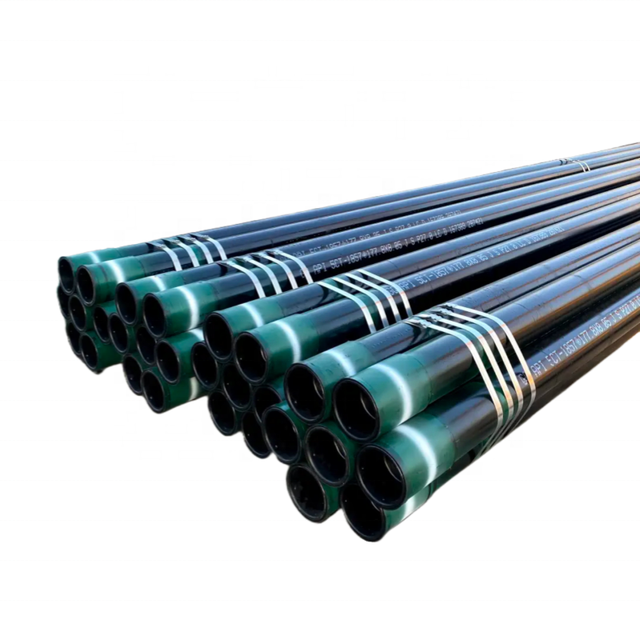
Oilfield Casing Tube API 5CT Standard 9 5/8 Inch 13 3/8 Inch Carbon Steel Pipe for Well Construction and Maintenance
 Shandong Chengxinying Commerce And Trade Co., Ltd.verified🇨🇳CN11 yrs
BKS Factory Price API 5CT 9 5/8 Inch Steel Water Well Casing Pipe N80 Casing Pipe
 Tianjin Boer King Steel Import And Export Co., Ltd.🇨🇳CN11 yrs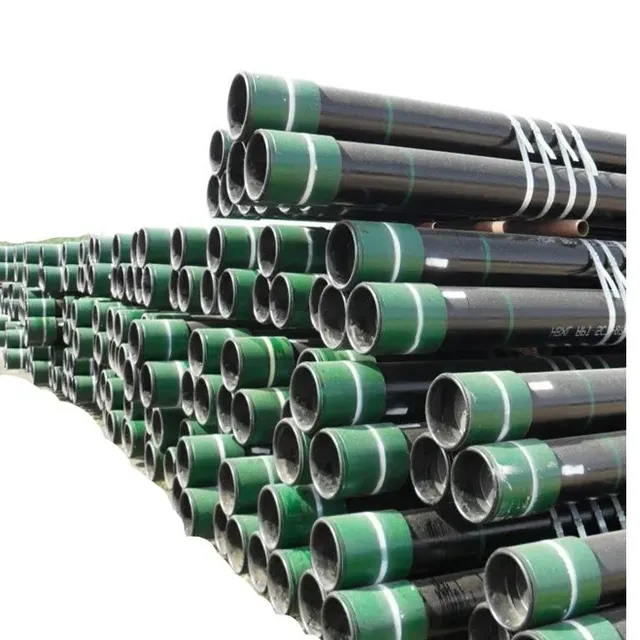
China Factory Supply Hight Quality OCTG 9 5/8 Inch 13 3/8 Inch API-5CT Standard Drilling Rig Well Casing Pipe Tube for Oil& Gas
 Shandong Runhai Stainless Steel Co., Ltd.verified🇨🇳CN5 yrs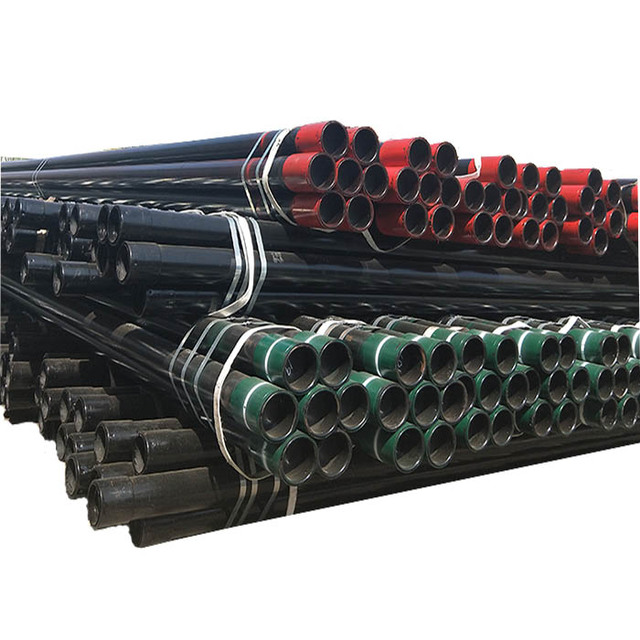
API Spec 5ct Seamless Oil Casing Pipe(all Sizes) for Oil Well
 Rigrs Oil Machinery Co., Limitedverified🇨🇳CN18 yrs
Related Searches
Explore more sourcing topics & related categories
Sources & References
20 sources cited · Verified industry data & reports
Charm Pricing: How the Number 9 Affects Purchase Behavior
www.business.com
According to Capital One Shopping Research, prices ending in 9, 99 or 95 can increase sales by at least 24 percent, and in some cases by as much as 60 percent. The report also found that 60.7 percent of retail prices end in 9, while only 7.5 percent end in a whole number like 0. People associate it with discounts and value,” said Raviraj Hegde, SVP of Growth and Marketing at Donorbox. “However, prestige pricing, which involves rounding up to clean, whole numbers like $50 or $100, works better in the case of luxury and premium products. Many consumers read odd-ending prices — like 7 or 5 — as signals of a deal, even when the difference is only a few cents. ... Prestige pricing takes the opposite approach. Instead of signaling a deal, it signals quality. Luxury brands typically avoid charm digits and present prices as clean, structured whole-dollar amounts. The goal isn’t to appear cheaper; it’s to reinforce exclusivity and confidence in product quality and value. “Charm pricing is less feasible in the sale of prestige goods or services where both trust and status play the major role,” said Hegde. “Other very realistic factors that play to your pricing strategy will have to include your audience, product positioning and prices from competition. Adjust prices to reflect market trend changes, increased costs or changing customer behavior.”
Why Do Most Prices End in 99?. The psychology of psychological ...
bettermarketing.pub
So if something has a price of $19.99, instead of $20, you might be influenced by the “1” at the beginning, and pay for it as it’s lesser than “2.” It is called the left-digit effect. Prices ending in 9 or 5 tend to attract more people towards a product than other numbers. The most recent example of a brand using this strategy is Apple pricing the new iPhones at $699, $799, $999, and $1,099 for the iPhone 12 mini, iPhone 12, iPhone 12 Pro, and iPhone 12 Pro Max respectively. All of these prices end in 9. You… ... A publication by and for marketers. We publish marketing inspiration, case studies, career advice, tutorials, industry news, and more. A publication by and for marketers. We publish marketing inspiration, case studies, career advice, tutorials, industry news, and more. ... We’ve all seen how most products have a price ending with a 99. It has been going for over a century now. This tactic is frequently used in advertisements everywhere around the world.
Using 5s, 7s, and 9s in product pricing is a psychological tactic ...
medium.com
We’ve decided to charge $100 per month for our next product. Could we generate more sales if we priced it at $95, $97, or $99? Probably… We were two designers, somewhat fresh out of college, trying to escape the 9-to-5 world and work for ourselves. The thought never occurred to us to do anything other than use round pricing numbers since we charged hourly rates ($100/hour, then $120/hour, and on and on). Then, in 2013, I dove into the online product space (courses, books, etc). This was the first time I’d ever heard/read people talking about using 5s, 7s, and 9s in their pricing. As I would learn, products with prices that ended with 5s, 7s, or 9s resulted in more sales. This makes sense for most service-based companies, and 5s, 7s, and 9s rarely come into the equation.
Psychological pricing - Wikipedia
en.wikipedia.org
The importance of this benchmark for detecting irregularities in prices was demonstrated and with it a clear trend towards psychological pricing after the nominal shock of the euro introduction. Another phenomenon noted by economists is that a price point for a product (such as $4.99) remains stable for a long period of time, with companies slowly reducing the quantity of product in the package until consumers begin to notice. At this time, the price will increase marginally (to $5.05) and then within an exceptionally short time will increase to the next price point ($5.99, for example). According to a 1997 study published in the Marketing Bulletin, approximately 60% of prices in advertising material ended in the digit 9, 30% ended in the digit 5, 7% ended in the digit 0 and the remaining seven digits combined accounted for only slightly over 3% of prices evaluated. Stiving and Winer (1997) examined the left-digit effect using scanner panel models. They proposed that 9-ending prices can influence consumer behavior through two distinct processes: image effects and level effects. Image effect suggests that 99-ending prices are associated with images of sales promotions. Level effect captures the magnitude underestimation caused by anchoring on the leftmost digits of prices. Their results suggest that both of these effects account for the influence of 9-ending prices in grocery stores. Choi, Lee, and Ji (2012) examined the interactive effects of 9-ending prices and message framing in advertisements. The researchers found that when pairing nine-ending prices with positive messages, advertisements were much more positively received by consumers.
Exploring the role of product attributes in 9-ending pricing ...
www.sciencedirect.com
The differential effect of local-global identity among males and females: The case of price sensitivity · Journal of Marketing Research, 57 (1) (2020), pp. 173-191, 10.1177/0022243719889028 ... P. Gendall, M.F. Fox, P. Wilton ... Journal of Product & Brand Management, 7 (5) (1998), pp. In some segments, 9-endings may undermine the exclusive appeal of a product by associating it with lower prices or discounting, while in other cases, particularly in more competitive markets, retailers might still employ 9-endings to enhance product appeal without diluting the exclusive image (Dertwinkel-Kalt and Köster, 2022, Wang et al., 2024). Retailers of premium products may avoid 9-endings to signal higher value and quality, aligning with consumer expectations in the high-end market segment, as stated by extant literature (Dogerlioglu-Demir et al., 2022, Liang and Kanetkar, 2006). Additionally, the present study provides positive evidence for H2, showing that 9-ending prices are more frequently used in shoes marketed to women (9c, 9-Zero Removal, x.9x, 95c, and 99c). This trend supports existing research indicating that female consumers are more sensitive to price endings, particularly to those ending in 9 (Lepeyko et al., 2019). In line with these contributions, 0-endings (also known as “even prices”) are sometimes used by high-end retailers as a way to reinforce the high quality of their products (Fraccaro et al., 2021, Parguel et al., 2021). In addition, 5-ending prices are easily processed by consumers, leading some authors to classify 5-endings as round numbers (Huck et al., 2021, Macé, 2012, Naipaul and Parsa, 2001).
The 99 Effect: Psychological Pricing Strategy to Boost Sales
www.mypminterview.com
This means that a price of $4.99 is perceived as significantly cheaper than a price of $5.00, even though the difference is only one cent. Research has shown that consumers tend to round down to the nearest dollar when making purchasing decisions, which means that a price that ends in 99 cents is more likely to be perceived as a bargain. ... The 99 effect is a specific type of "charm pricing," which is a pricing strategy that involves ending prices with an odd number (such as 9 or 5) instead of a round number. The 99 effect is just one of many psychological pricing strategies that retailers and marketers use to influence consumer behavior. Other strategies include "charm pricing," which involves using prices that end in 5 or 9, and "prestige pricing," which involves using higher prices to create the perception of higher quality. Case Studies of Businesses That Have Successfully Used the 99 Effect · There are numerous examples of businesses that have successfully used the 99 effect to boost sales. One example is The Sharper Image, a retailer of electronic gadgets and other products. The company found that pricing items at $0.99 led to a significant increase in sales. The 99 effect refers to the practice of pricing products or services at a level that ends in .99, rather than rounding up to the nearest dollar. This technique is based on the idea that consumers are more likely to perceive a price of $4.99 as being significantly less than $5.00, even though the actual difference is only one cent.