Programmable Wifi Chip

Overview
Product sourcing insights & recommendations


The market for programmable Wi-Fi chips is currently experiencing massive structural changes, shifting rapidly away from basic, passive connectivity modules toward intelligent, multi-protocol edge processing engines Iot-Analytics.
1. Market Size & Growth Trajectory
* Current & Future Valuation: The global Wi-Fi chipset market is valued at approximately $23.72 billion in 2026 and is projected to hit $36.04 billion by 2035, sustaining a steady Compound Annual Growth Rate (CAGR) of 4.77% Precedenceresearch.
* High-Velocity Segments: While the general market grows moderately, the Wi-Fi 6, 6E, and Wi-Fi 7 chipset segments are expanding aggressively at a 20.5% CAGR from 2025 through 2031, rapidly displacing older legacy architectures like Wi-Fi 4 (ESP8266 generation) in enterprise and next-generation consumer tech Globenewswire.
2. Core Market & Product Trends
* Edge AI Integration: A massive trend in 2026 is the integration of off-the-shelf AI IP subsystems, such as Neural Processing Units (NPUs), directly onto programmable microcontrollers Iot-Analytics. Chips are increasingly handling local voice processing, tinyML applications, and anomaly detection entirely on-device, minimizing data sent to cloud platforms Iot-Analytics.
* The "Ultra-Low Power" Revolution: Historically, Wi-Fi was considered too power-hungry for remote battery operations compared to BLE or Zigbee. However, breakthrough architectures featuring multi-year standby lifespans (e.g., Silicon Labs' SiWx917 or Renesas' VirtualZero™ DA16200 tech) are allowing programmable Wi-Fi chips to drive industrial IoT sensors and battery-powered asset trackers directly RedditSilabs.
* Architecture Pivot (RISC-V): To bypass steep ARM licensing fees, chip designers are significantly shifting toward custom, open-source RISC-V internal architectures for programmable microcontrollers, reducing overall wholesale unit costs Iot-Analytics.
* Regulation-Driven Security: Driven by the EU Cyber Resilience Act, programmable chips now mandate hardware-level security infrastructures, including Secure Boot, Hardware Root of Trust, and Physical Unclonable Function (PUF) identities.
3. Commercial Supply & Sourcing Insights
Wholesale inventory distribution highlights distinct entry tiers for development, sourcing, and mass manufacturing:
* The Low-Cost Base Tier ($0.40 – $3.00): Dominated by classical platforms like the Espressif ESP32 and ESP8266 series. These remain the volume champions of the market, combining Wi-Fi + Bluetooth dual modes with an unmatchable open-source community layout. Modern updates (like the ESP32-C6) have introduced native Wi-Fi 6 and Matter protocol alignment at sub-$3.00 wholesale pricing scales.
* The High-Performance Tier ($6.00+): Focuses heavily on high-reliability, long-range data transmission, or hardware protocols (like specialized CC3220 configurations or dedicated Wi-Fi 6 IoT modules) providing robust interference resistance for industrial automation.
4. Regional Demographics
* Asia-Pacific: Retains absolute dominance over production, commanding a 43% global share due to massive component clusters in Shenzhen and Shanghai alongside intensive manufacturing localization policies.
* North America & Europe: Act primarily as consumer demand centers, heavily requesting advanced high-bandwidth infrastructure (Wi-Fi 7) for modern corporate workspaces and complex regulatory-compliant Smart City systems.
Based on these insights, you can continue adjusting your business or development trajectory:
Ultra Low Power Programmable Wifi Module For Battery Powered Iot Sensors
Products · 3 lists
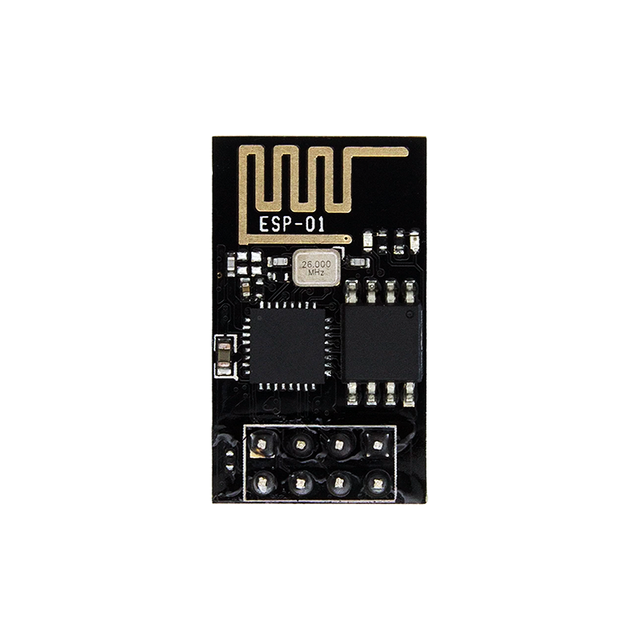
ESP-01 Serial to WiFi Module Industrial Grade Low Power Wireless Module For Arduinos
 Shenzhen Hengxinkang Technology Co., Ltd.🇨🇳CN5 yrs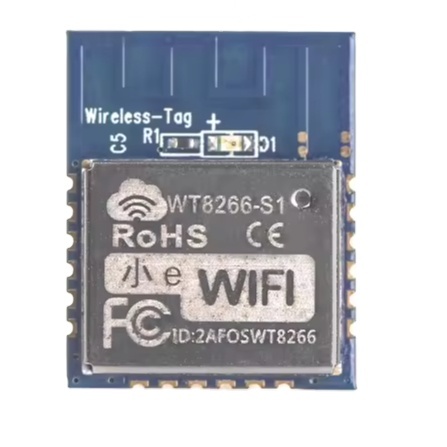
Wireless-tag Low Energy Consumption WT8266-S1 Esp8266 IoT Wifi Module Wifi ESP 8266 Module Home Module for Iot Device
 Wireless-Tag Technology Co., Limitedverified🇨🇳CN8 yrs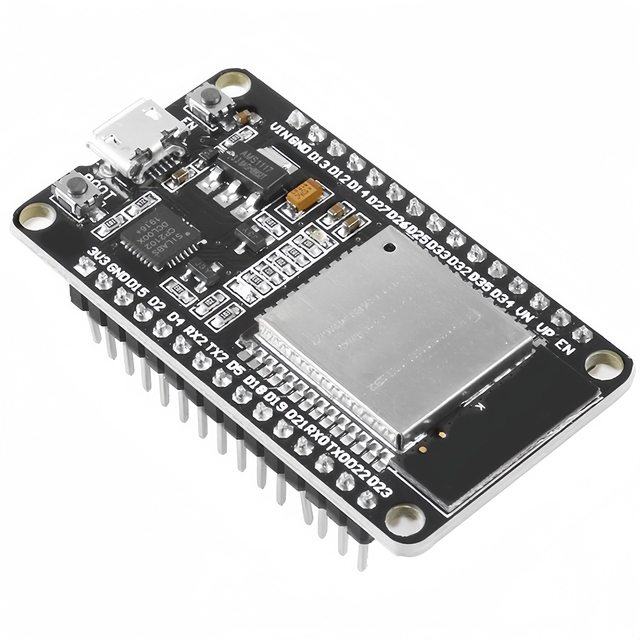
ZORPO ESP-32S ESP32 Module ESP8266 30-Pin Development Board WiFi + for Ultra-Low Power Dual-Core for IoT Smart Home
 Shenzhen Sanhuang Technology Co., Ltd.🇨🇳CN1 yr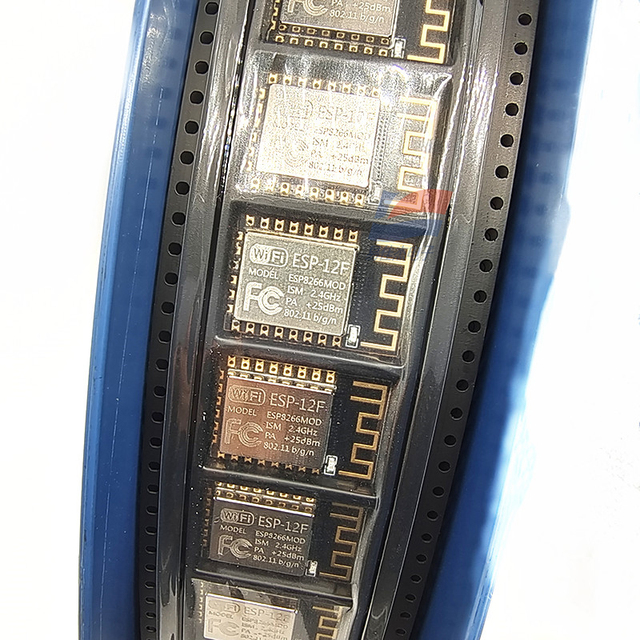
YJJ ESP-12F ESP8266 Serial WIFI Module Wireless Internet of Things Remote IoT Development Board
 Shenzhen Yijiajie Electronic Technology Co., Ltd.verified🇨🇳CN8 yrs
ESP-01 ESP-01S ESP-07 ESP-07S ESP-12E 12F 12SWiFi Module ESP8266
 Shenzhen Keyongbang Electronic Co., Ltd.🇨🇳CN4 yrs
ESP-01 ESP-01S ESP-07 ESP-07S ESP-12E 12F 12SWiFi Module ESP8266
Related Searches
Explore more sourcing topics & related categories
Sources & References
25 sources cited · Verified industry data & reports
Wi-Fi Chipset Market Size to Surpass USD 36.04 Bn By 2035
Precedence Research
The global Wi-Fi chipset market size was valued at USD 22.62 billion in 2025 and is projected to hit around USD 36.04 billion by 2035 with a CAGR of 4.77%.
Wi-Fi Chipset Market Report 2026
Research and Markets
The wi-fi chipset market size has grown. It will grow from $24.08 billion in 2025 to $25.71 billion in 2026 at a compound annual growth rate (CAGR) of 6.7%.

Future Trends in WIFI Chipset Market 2026-2033
Companies in the WiFi chipset market are innovating by developing 6E and Wi-Fi 7 technologies, enhancing speed and reducing latency. To harness ...

Wi-Fi Chipset Market Size, Industry Share | Forecast, 2026- ...
Fortune Business Insights
The market is projected to grow from USD 24.09 billion in 2026 to USD 38.05 billion by 2034, exhibiting a CAGR of 5.88% during the forecast ...

Wi-Fi Chipset Market - Share, Manufacturers & Analysis
Mordor Intelligence
The Wi-Fi Chipset Market worth USD 23.24 billion in 2026 is growing at a CAGR of 6.12% to reach USD 31.27 billion by 2031.

United States Wi-Fi Chipset Market Report 2026-2034
Yahoo Finance
The United States Wi-Fi Chipset Market is poised for significant growth, expanding from $5.90 billion in 2025 to $9.82 billion by 2034 at a 5. ...