Qam Cable

Overview
Product sourcing insights & recommendations
I have completed a comprehensive analysis of the "qam cable" market and product landscape for 2024–2026. The findings highlight a significant shift toward higher-order modulation like 1024-QAM and 4096-QAM, driven by the demand for gigabit-speed cable internet and DOCSIS 4.0 infrastructure.
The attached report provides detailed technical specifications, market growth projections (reaching $401B+ by 2026), and current B2B sourcing trends for headend modulators and set-top boxes. Notably, while the technology is pushing toward 10Gbps speeds, the physical limits of signal-to-noise ratio requirements are making advanced signal processing and error correction the next frontier for innovation.
Explore more about this topic by:
Digital Qam Tuner Tv Set Top Box
Products · 3 lists
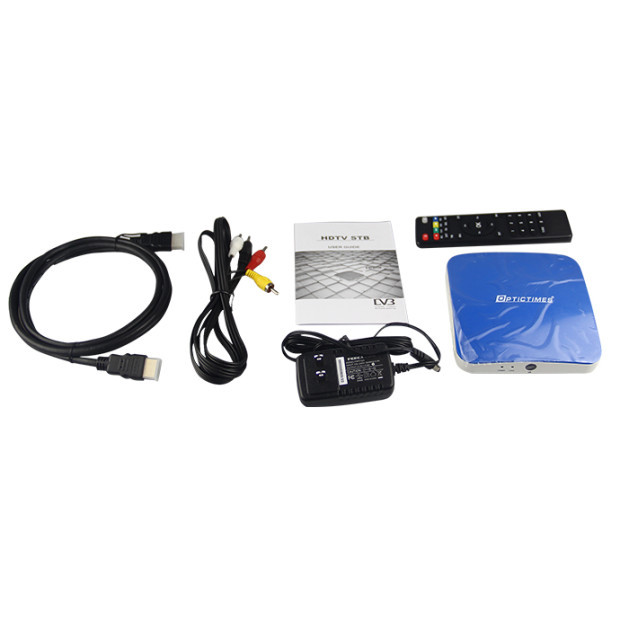
2022 Hot Sale HD FTA Dvb C HD Mpeg4 Mpeg2 Decoder Digital TV Cable TV Gospell Set Top Box With Price
 Hangzhou Runzhou Fiber Technologies Co., Ltd.🇨🇳CN16 yrs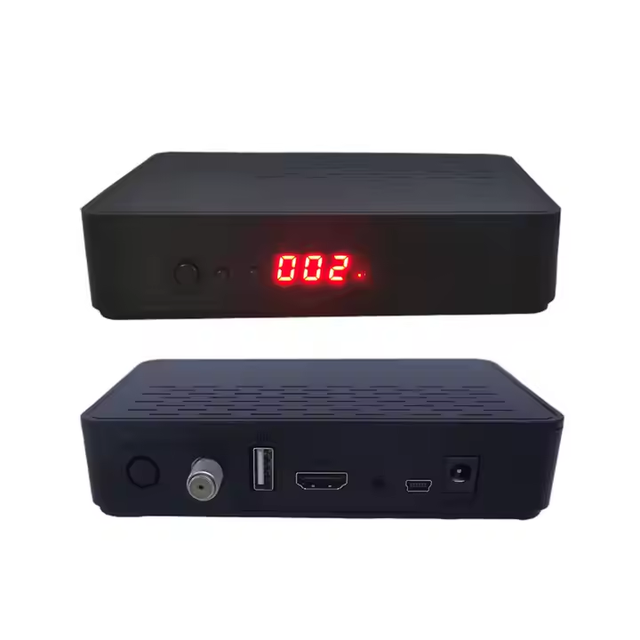
CAS Software Digital Terrestre Receptor Cable CATV Decoders QAM Modulation H.264 H.265 HD 1080P DVB-C Set Top Box TV Receiver
 Dongguan Quanwang Electronic Technology Co., Ltd.verified🇨🇳CN7 yrs
Deep Dive · Full Report
Full Market Report
1 document · Live-fetched from source
Related Searches
Explore more sourcing topics & related categories
Sources & References
27 sources cited · Verified industry data & reports
QAM Explained: Types, Applications, and Benefits in Communication ...
www.lenovo.com
It allows for the transmission of multiple bits per symbol, making it highly efficient for data communication. QAM is widely used in digital systems like cable modems, DSL (including ADSL and VDSL), digital television, WiFi, and cellular networks due to its high spectral efficiency and ability to support fast data rates. Yes. QAM is widely used in cable TV (64‑QAM and 256‑QAM) and DSL modems, including ADSL and VDSL. In cable systems, it fits compressed video streams into 6 MHz RF channels. DSL uses higher-order QAM to achieve fast data rates over phone lines. QAM achieves high spectral efficiency by transmitting multiple bits per symbol through combined phase and amplitude modulation. This method maximizes data transfer within limited bandwidth, making it essential in modern communication links—from cable networks to cellular systems. The trade-off is requiring better SNR and robust signal processing. This allows cable providers to deliver fast Internet via existing coax infrastructure by packing multiple bits per symbol efficiently. MER quantifies how far received symbols deviate from ideal positions in the QAM constellation. It’s measured as the vector difference (error vector magnitude) relative to ideal signal points. High MER indicates low distortion and cleaner modulation. Monitoring MER helps diagnose issues like phase noise, I/Q imbalance, or amplifier non-linearity.
QAM (television) - Wikipedia
en.wikipedia.org
In cable systems, a QAM tuner is linked to the cable in a manner that is equivalent to an ATSC tuner which is required to receive over-the-air (OTA) digital channels broadcast by local television stations when attached to an antenna. Most new HDTV digital televisions support both of these standards. QAM uses the same 6 MHz bandwidth as ATSC, using a standard known as ITU-T Recommendation J.83 Annex B ("J.83b"). QAM is a modulation format and does not specify the format of the digital data being carried. In a 6 MHz channel, the data rate is at most 36 Mbit/s (for 64-QAM or 8-VSB); the 8-VSB ATSC achieves a data rate of 19.392 Mbit/s while the 64-QAM J.83b achieves a data rate of 26.970 Mbit/s. While both systems use concatenated trellis/RS coding, the differences in symbol rate and FEC redundancy account for the differences in rate. In addition, J.83b defines a popular 256-QAM mode that achieves a data rate of 38.8 Mbit/s. Many cable providers offer few or no details about unencrypted QAM channels. It is also common for cable providers to falsely insist that a set-top box from the cable company is required to watch all digital cable channels, including unencrypted channels, even though some unencrypted QAM channels may be distributed via their system. An integrated QAM tuner allows the free reception of unscrambled digital programming sent "in the clear" by cable providers, usually local broadcast stations, cable radio channels, or in the case of providers which have transitioned to do so, Public-access television cable TV channels. Which channels are scrambled varies greatly from location to location and can change over time; the majority of digital channels are scrambled because the providers consider them to be extra-cost options and not part of the "basic cable" package. In North American digital video, a QAM tuner is a device present in some digital televisions and similar devices which enables direct reception of digital cable channels without the use of a set-top box.
Quadrature amplitude modulation - Wikipedia
en.wikipedia.org
If data rates beyond those offered by 8-PSK are required, it is more usual to move to QAM since it achieves a greater distance between adjacent points in the I-Q plane by distributing the points more evenly. The complicating factor is that the points are no longer all the same amplitude and so the demodulator must now correctly detect both phase and amplitude, rather than just phase. 64-QAM and 256-QAM are often used in digital cable television and cable modem applications. In moving to a higher order QAM constellation (higher data rate and mode) in hostile RF/microwave QAM application environments, such as in broadcasting or telecommunications, multipath interference typically increases. There is a spreading of the spots in the constellation, decreasing the separation between adjacent states, making it difficult for the receiver to decode the signal appropriately. ↑ "Ciena tests 200G via 16-QAM with Japan-U.S. Cable Network". lightwave. April 17, 2014. Archived from the original on 8 November 2016. Retrieved 7 November 2016. ↑ Kylia products Archived July 13, 2011, at the Wayback Machine, dwdm mux demux, 90 degree optical hybrid, d(q) psk demodulatorssingle polarization · ↑ "G.992.3 : Asymmetric digital subscriber line transceivers 2 (ADSL2)". www.itu.int. In the United States, 64-QAM and 256-QAM are the mandated modulation schemes for digital cable (see QAM tuner) as standardised by the SCTE in the standard ANSI/SCTE 07 2013. In the UK, 64-QAM is used for digital terrestrial television (Freeview) whilst 256-QAM is used for Freeview-HD. Communication systems designed to achieve very high levels of spectral efficiency usually employ very dense QAM constellations. For example is ADSL technology for copper twisted pairs, whose constellation size goes up to 32768-QAM (in ADSL terminology this is referred to as bit-loading, or bit per tone, 32768-QAM being equivalent to 15 bits per tone). Quadrature amplitude modulation (QAM) is the name of a family of signal modulation methods widely used in modern telecommunications to transmit information. At its core, it conveys two independent analog signals by changing (modulating) the amplitudes of two differently phased versions of a single carrier wave using amplitude modulation.
What Is QAM? A Beginner's Guide to Quadrature Amplitude Modulation
www.fs.com
It is used in high-speed cable modems and digital TV broadcasting, where both high data rates and reliable transmission are required. ... The main advantage of QAM is its ability to efficiently utilize bandwidth. By encoding multiple bits in a single symbol, QAM allows for higher data rates without requiring additional bandwidth. This makes it ideal for applications where bandwidth is limited but high data throughput is essential, such as in mobile networks, satellite communications, and digital television. The most common QAM types include: 4QAM: Also known as Quadrature Phase Shift Keying (QPSK), 4QAM has four points in the constellation diagram, allowing it to transmit 2 bits per symbol. It is often used in systems where reliability is more important than data throughput. 16QAM: 16QAM has 16 points in the constellation, allowing for the transmission of 4 bits per symbol. It is commonly used in digital TV and cable modems, as it strikes a balance between data throughput and signal quality. In the passage, you will learn the fundamentals of Quadrature Amplitude Modulation (QAM), its types, applications, and advantages in modern communication systems. Another advantage of QAM is its flexibility. Depending on the conditions of the transmission link, the order of QAM can be adjusted dynamically to optimize the data rate and minimize errors. For example, in systems with varying signal quality, such as wireless or satellite links, the modulation order can be reduced to a lower level, such as 16QAM, to ensure a more reliable connection. This dynamic adaptation of QAM is particularly important for applications like 5G networks and Wi-Fi, where link conditions can change frequently.
What is QAM?
www.qsfptek.com
The flexibility and efficiency of QAM make it a cornerstone of modern communication technologies, enabling high-speed data transmission and efficient spectrum usage. In today's connected world, the demand for faster data transmission and efficient use of bandwidth continues to grow exponentially. Technologies like 5G networks, cable broadband, and optical communication require modulation techniques that can transmit large volumes of data without consuming excessive bandwidth. This article covers the basics of Quadrature Amplitude Modulation (QAM), including its principles, modulation levels, and key applications. QAM is a versatile technology with applications across various industries: ... Cellular technologies such as LTE and 5G use QAM to deliver high-speed data and support massive connectivity. For instance, 256-QAM is commonly deployed in 4G and 5G networks to maximize spectrum efficiency. ... In cable broadband, QAM is integral to the DOCSIS standard, enabling the transmission of high-speed internet and digital television signals. For instance, compared to simpler modulation schemes, QAM can pack more data into the same frequency range, making it ideal for high-speed internet, video streaming, and advanced telecommunication systems. Furthermore, QAM is versatile and can adapt to varying channel conditions.
What Is QAM Modulation and How Does It Improve Data Transmission
resources.l-p.com
QAM helps send data faster without using more bandwidth. This makes it great for fast internet and cable TV. QAM is very important in today’s communication systems. It helps Wi-Fi work better and makes cable TV and broadband more efficient. 5G Networks: Relies on high-order QAM (e.g., 256-QAM) to achieve its massive capacity and multi-gigabit throughput. Digital Television (DVB-C): Cable TV uses QAM to transmit multiple HD channels over a single coaxial cable. ✅ It is essential for 5G, Wi-Fi 6/6E, and high-speed coherent optical modules. As we march towards 800G and 1.6T, even more advanced forms of QAM will continue to be at the heart of the innovation, ensuring our digital world keeps getting faster and more connected. QAM means Quadrature Amplitude Modulation. You see this word in Wi-Fi, cable TV, and other digital systems.