Rf Communication Equipment

Overview
Product sourcing insights & recommendations
The RF communication equipment market is undergoing a significant transformation driven by the rollout of 5G-Advanced, the rise of software-defined architectures, and the adoption of wide-bandgap semiconductors like Gallium Nitride (GaN). The global RF components market is projected to reach $49.93 billion by 2026 Mordorintelligence, with a double-digit CAGR of 12.61% through 2031 MarkwideresearchMordorintelligence.
Key Market Trends & Insights
* Technology Transition to GaN: Gallium Nitride is rapidly displacing traditional silicon and GaAs in power amplifiers due to its superior power density and thermal efficiency, especially for 5G base stations and satellite ground terminals IntelmarketresearchRfcomp.
* Software-Defined Flexibility: There is a strong shift toward Software-Defined Radios (SDRs), which allow equipment to be reconfigured via software to support multiple frequency bands and protocols without hardware changes LinkedinDatainsightsmarket.
* Automotive RF Surge: Driven by ADAS and V2X communication, the automotive segment is one of the fastest-growing areas, with modern vehicles now integrating between 48 and 128 RF channels Datainsightsmarket.
* Millimeter-Wave (mmWave) Expansion: Innovations are focusing on the 24-40 GHz range to enable ultra-high-speed data transmission, though this necessitates advanced beamforming and phased-array antenna systems RfcompEpt.
Product Highlights & Innovations
* Next-Gen Power Amplifiers: New GaN-on-SiC modules are achieving efficiency gains past 50%, enabling smaller and lighter infrastructure equipment Intelmarketresearch.
* Integrated RF Front-Ends (RFFEs): Highly integrated modules that combine amplifiers, filters, and switches into a single package are becoming standard in compact 5G smartphones and IoT devices to save board space IntelmarketresearchLinkedin.
* Satellite-to-Cellular Connectivity: A new class of RF hardware is emerging to support Non-Terrestrial Networks (NTN), adding terrestrial-satellite handover capabilities to consumer handsets Marketresearchfuture.
Rf Communication Equipment
Products · 3 lists
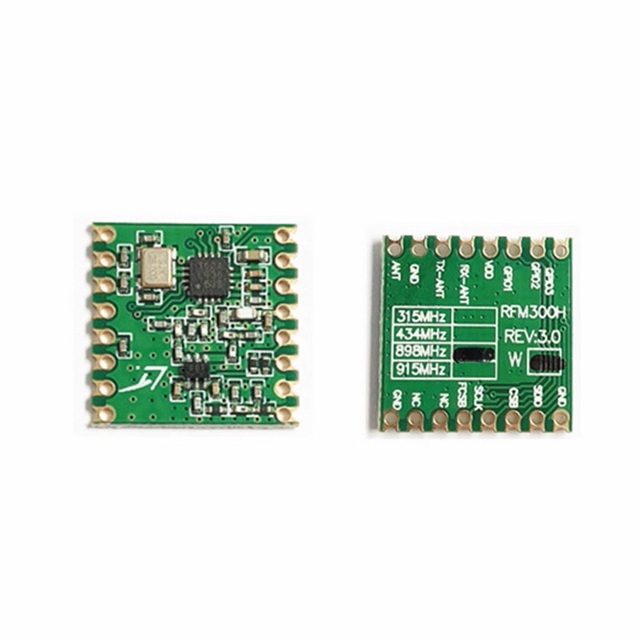
Programmable ultra-low-power high-performance RF transceiver module Wireless transceiver module RFM300H
 Shenzhen Foing Industrial Co., Ltd.🇨🇳CN7 yrs
Low Cost 433Mhz RF Wireless Transmitter Module and Superheterodyne Receiver Kit 433mhz Rf Module
 Shenzhen Champions Technology Co., Ltd.verified🇨🇳CN15 yrs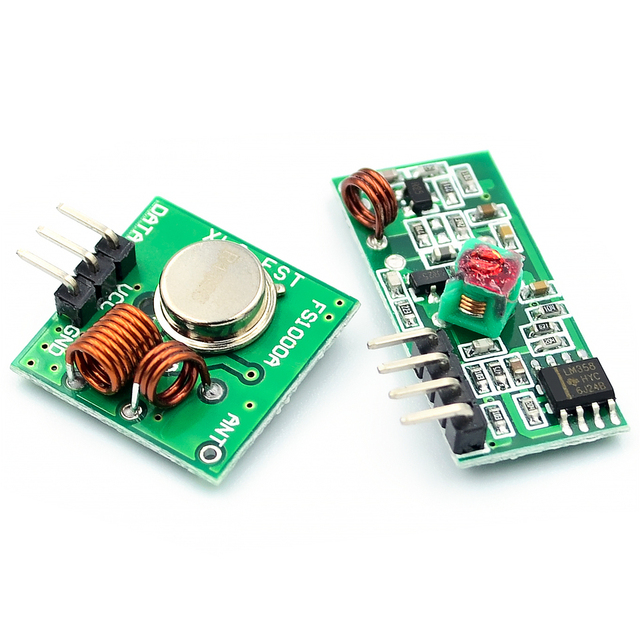
315 MHz 433 MHz RF Wireless Transmitter Module and Receiver Kit DC 5V
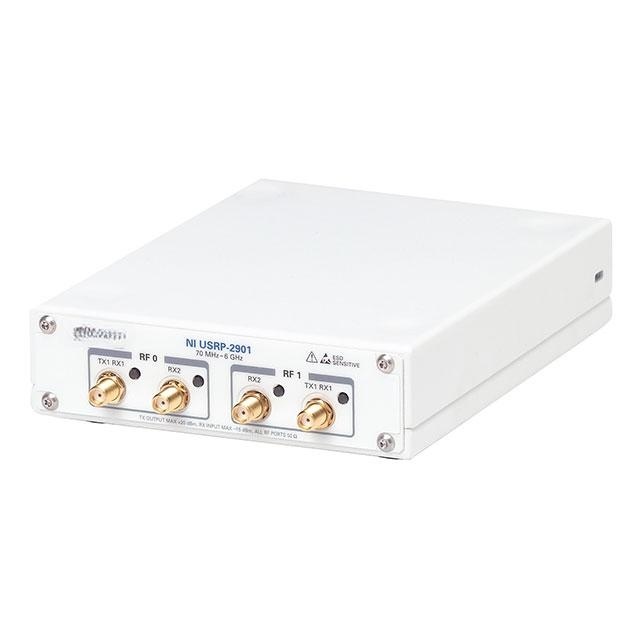
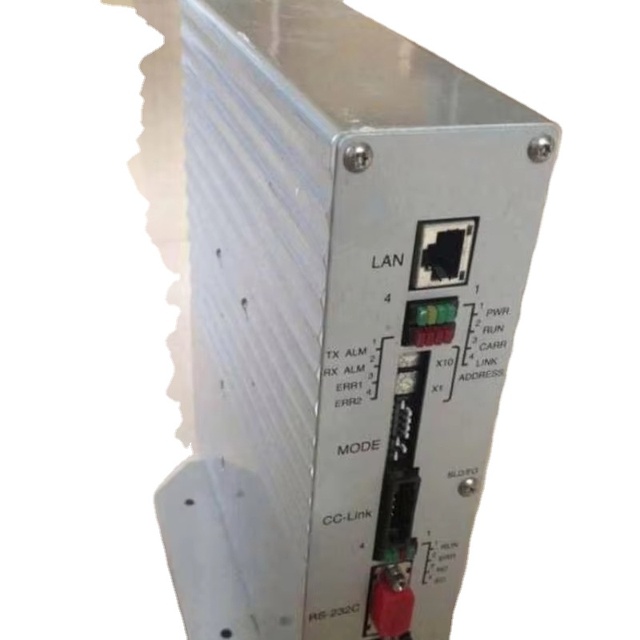
784040-01 Specialty Equipment RADIO DEVICE RF SIGNALS 784040-01
 Shenzhen Vkolink Tech Co., Ltd.🇨🇳CN1 yr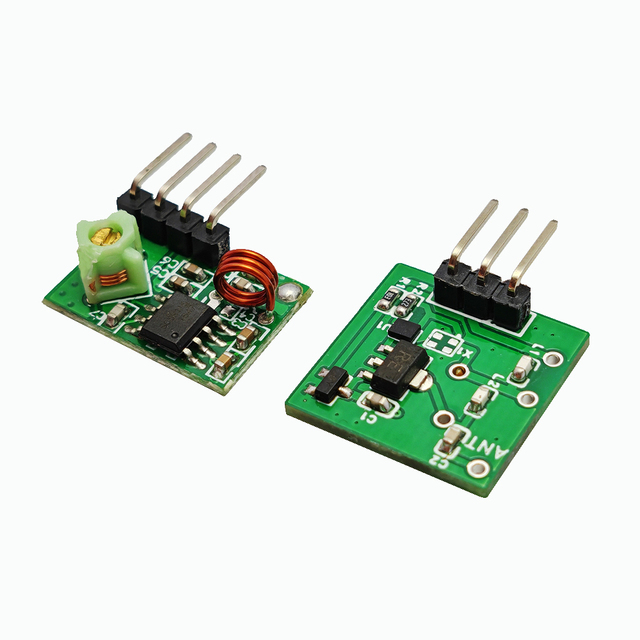
Long Range Rf Transmitter And Receiver Wireless Communication Kit Rf Receiver And Transmitter Rc Remote And Receiver
Wireless Communication Equipment RF-RW103
 Shenzhen Yuke Chip Electronics Co., Ltd.verified🇨🇳CN1 yr
Related Searches
Explore more sourcing topics & related categories
Sources & References
27 sources cited · Verified industry data & reports
RF Components Market - Radio Frequency - Companies & Forecast
www.mordorintelligence.com
The U.S. Space Force added another USD 1.3 billion by awarding contracts for resilient satellite-communication hardware that depends on gallium-nitride power amplifiers with effective isotropic radiated power above 60 dBm. Europe accounted for about 22% of global revenue in 2025, but spectrum fragmentation tempered uptake until the 26 GHz band was harmonized across member states in 2024. The RF components market size is projected to be USD 44.34 billion in 2025, USD 49.93 billion in 2026, and reach USD 90.42 billion by 2031, growing at a CAGR of 12.61% from 2026 to 2031. Strong momentum stems from escalating 5G infrastructure rollouts, higher RF content per smartphone, and the diffusion of gallium-nitride power devices into base stations and automotive radar. Note: Market size and forecast figures in this report are generated using Mordor Intelligence’s proprietary estimation framework, updated with the latest available data and insights as of January 2026. August 2025: Murata committed USD 300 million to expand bulk-acoustic-wave filter capacity in Japan, boosting output 20% by mid-2026.
RF Equipment Market Size, Share, and Industry Trends Forecast ...
markwideresearch.com
The RF Equipment Market, sized at $38.7 Billion in 2026, is forecast to scale to $79.98 Billion by 2035, progressing at a 8.40% CAGR throughout the forecast period. Defense procurement programs in NATO member states are expanding test and measurement budgets. RF equipment encompasses instruments and components that generate, measure, and analyze electromagnetic signals spanning 3 kHz to 300 GHz, with critical specifications including phase noise below -110 dBc/Hz and spurious-free dynamic range exceeding 100 dB. These systems enable wireless communication link validation, radar cross-section measurement, and spectral compliance verification across civilian and military domains. Domestic 5G base station deployment and satellite communication programs absorb high volumes of vector network analyzers and signal generators. MIIT spectrum allocation frameworks mandate equipment certification protocols that accelerate test bench refresh cycles. Communication:Wireless link validation spans sub-6 GHz cellular through millimeter-wave backhaul, with FCC Part 15 emissions compliance mandating updated test benches for unlicensed device certification.
RF Front End Module Market Outlook 2026-2034
www.intelmarketresearch.com
The RF Front End Module Market was valued at USD million in 2024 and is expected to reach USD million by 2032. Key players include Axalta Coating Systems, AkzoNobel, BASF SE, PPG, Sherwin-Williams, and 3M. Key growth drivers include railway infrastructure investments, urbanization, and demand for durable coatings. Asia-Pacific is the fastest-growing region, while Europe remains dominant. Emerging trends include bio-based coatings, smart coatings, and sustainable rail solutions. The market is projected to grow from USD 8.3 billion in 2026 to USD 15.2 billion by 2034, exhibiting a CAGR of 8.1% during the forecast period. RF front‑end modules integrate amplifiers, filters, switches and duplexers into a single compact package that conditions radio frequency signals for transmission and reception in wireless devices such as smartphones, IoT sensors, automotive radar and satellite communications. Advanced antenna integration and power‑efficient designs are essential to meet the performance targets of 5G base stations and user equipment. ... Consumer devices such as smartphones, wearables, and augmented‑reality headsets are becoming more compact, prompting a shift toward highly integrated RF Front End Module Market components. The trend toward system‑in‑package (SiP) architectures reduces board space while improving signal integrity, enabling manufacturers to deliver smaller, lighter, and more reliable products. Other Trends ... Silicon‑on‑insulator (SOI) and gallium‑nitride (GaN) processes are gaining traction in the RF Front End Module Market as they provide higher power efficiency and better thermal management compared to traditional bulk silicon. The industry reports a steady increase in design wins for GaN‑based power amplifiers in base‑station equipment, driven by the demand for higher output power and lower linearity distortion.
RF Receiving Equipment Market Size, Expansion, Consumer Insights ...
www.verifiedmarketreports.com
RF Receiving Equipment Market size stood at USD 2.5 Billion in 2024 and is forecast to achieve USD 4.5 Billion by 2033, registering a 7.5% CAGR from 2026 to 2033. The RF Receiving Equipment Market encompasses devices designed to capture radio frequency signals for various applications, including communications, broadcasting, and data transmission. In 2024, RF Receiving Equipment Market was valued at USD 2.5 billion and is anticipated to grow to USD 4.5 billion by 2033 at a CAGR of 7.5% from 2026 to 2033, driven by emerging trends. According to a report from the Federal Communications Commission (FCC), the increasing adoption of IoT devices and smart technologies is anticipated to fuel the RF equipment market's expansion, thereby fostering enhanced connectivity solutions across various sectors. The applications of RF receiving equipment span various industries, including telecommunications, aerospace, defense, and automotive. In telecommunications, RF receivers are essential for mobile communication systems and satellite transmissions. In aerospace and defense, these devices facilitate secure communications and data transmission in critical operations.
RF Components Market Size to Hit USD 140.54 Billion by 2035
www.precedenceresearch.com
RF Components Market (By Product: Filters, Power Amplifier, Modulators and Demodulators, Antenna Switches, Duplexer, Others; By Application: Automotive, Consumer Electronics, Wireless Communication, Military) - Global Industry Analysis, Size, Trends, Leading Companies, Regional Outlook, and Forecast 2026 to 2035 Answer : The driving factors of the RF components market are the demand for conventional wired communication technologies and upgrades in technology of high-power RF components. Answer : Asia Pacific region will lead the global RF components market during the forecast period 2026 to 2035. The Asia Pacific RF components market size is estimated at USD 14.80 billion in 2025 and is expected to be worth around USD 48.00 billion by 2035, rising at a CAGR of 12.49% from 2026 to 2035. On the basis of geography, The Asia Pacific leads the market and captured more than 33% of the revenue share in 2025. Due to improvements in consumer electronics and rising demand for defense equipment, Asia-Pacific is anticipated to experience the fastest growth during the global RF component market forecast period. The global RF components market size is valued at USD 44.84 billion in 2025 and is predicted to increase from USD 50.36 billion in 2026 to approximately USD 140.54 billion by 2035, expanding at a CAGR of 12.10% from 2026 to 2035.
Radio Frequency Components Market Size, Trends & Forecast
www.verifiedmarketresearch.com
Home Electronics & Semiconductor Research Communication & Connectivity Technology Research Radio Frequency Components Market · Report ID: 20368 | Published Date: Mar 2025 | No. of Pages: 202 | Base Year for Estimate: 2024 | Format: Download Sample Need customization Ask for a discount ... Radio Frequency Components Market size was valued at USD 26.52 Billion in 2024 and is projected to reach USD 90.55 Billion by 2032, growing at a CAGR of 18.30% from 2026 to 2032. Radio Frequency Components Market was valued at USD 26.52 Billion in 2024 and is projected to reach USD 90.55 Billion by 2032, growing at a CAGR of 18.30% from 2026 to 2032. Radio Frequency (RF) components are critical components in the design and operation of communication systems, functioning at frequencies that vary from 3 kHz to 300 GHz. These components include amplifiers, filters, oscillators, and mixers, which are required for modulating, demodulating, and transmitting radio signals. RF components are commonly utilized in a variety of applications, including telecommunications (for mobile phones and satellite communications), broadcasting (for radio and television), and radar systems (for navigation and weather monitoring).