Rf Receiver Board

Overview
Product sourcing insights & recommendations
The RF receiver board market is experiencing significant transformation, driven by 5G densification, IoT expansion, and automotive electrification. The global RF Front End (RFFE) module market, a key segment for these boards, is projected to grow from $29.25 billion in 2025 to $60.99 billion by 2031, maintaining a strong 13.02% CAGR MordorintelligenceGrandviewresearch.
Core Market Trends & Drivers
* 5G and Infrastructure Densification: The rollout of 5G Stand-Alone (SA) and mmWave networks is the primary growth engine. This requires advanced receiver boards capable of handling higher frequency bands and massive MIMO configurations (64–256 chains per base station) ReportprimeIndexbox.
* IoT & Miniaturization: With IoT devices expected to reach 29.4 billion units by 2026, there is a surging demand for ultra-low-power receiver modules consuming less than 50mW in active mode DatainteloIntelmarketresearch.
* Automotive Connectivity: The automotive segment is the fastest-growing vertical (14.21% CAGR), fueled by ADAS, V2X communication, and autonomous driving requirements GminsightsMordorintelligence.
Technological Innovations
* Advanced Materials: A major shift from traditional Silicon LDMOS to Gallium Nitride (GaN) is underway, particularly in base stations and defense, offering efficiencies exceeding 50% MordorintelligenceMordorintelligence.
* Integration (SoC & SiP): To save board space (up to 30% reduction in premium smartphones), manufacturers are adopting System-on-Chip (SoC) and System-in-Package (SiP) architectures that integrate LNAs, filters, and switches into single modules CognitivemarketresearchIntelmarketresearch.
* Adaptive Performance: AI-assisted RF tuning and software-defined radio (SDR) are becoming standard for managing fragmented spectrums and improving signal integrity in crowded environments CognitivemarketresearchIntelmarketresearch.
Product & Sourcing Landscape
Available products range from low-cost 433MHz/315MHz modules for consumer remote controls to high-performance LoRa transceivers for industrial networking. Prices for basic modules start as low as $0.10–$5.00, while advanced industrial gateways can exceed $100 depending on channel density and range Lumi-StarAccio.
Rf Receiver Board Module 433mhz 315mhz 2.4ghz 5.8ghz Lora 5g 4g Iot Industrial Automotive
Products · 2 lists
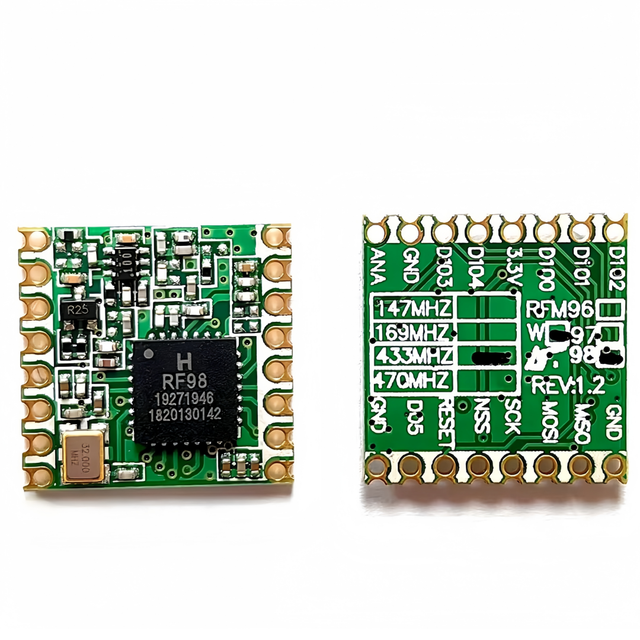
HopeRF Industrial Grade LoRa Long Distance RFM98W-433MHz 10km Wireless RF Transceiver Module Automotive Anti-interference CN/GUA
 Real Support Electronic Co., Ltd.🇨🇳CN7 yrs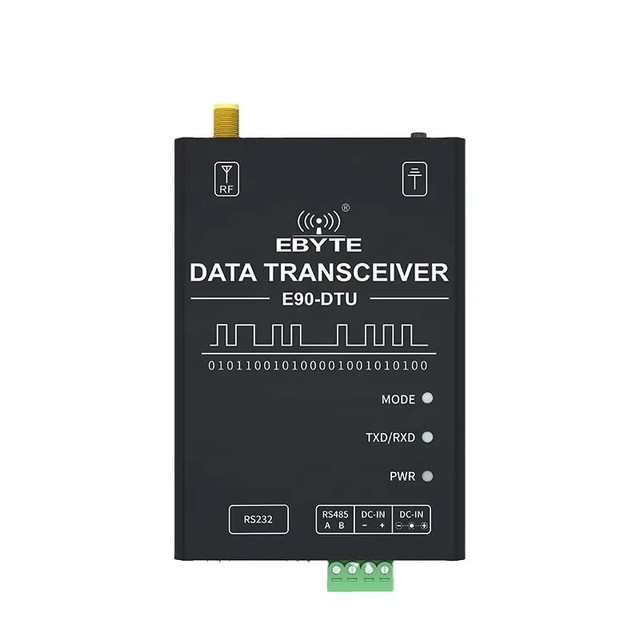
Ebyte ODM E90-DTU(400SL22P) RS232/RS485 RF Transceiver 5km LoRa Gateway 433MHz Industrial Data Transmission Module
 Chengdu Ebyte Electronic Technology Co., Ltd.🇨🇳CN11 yrs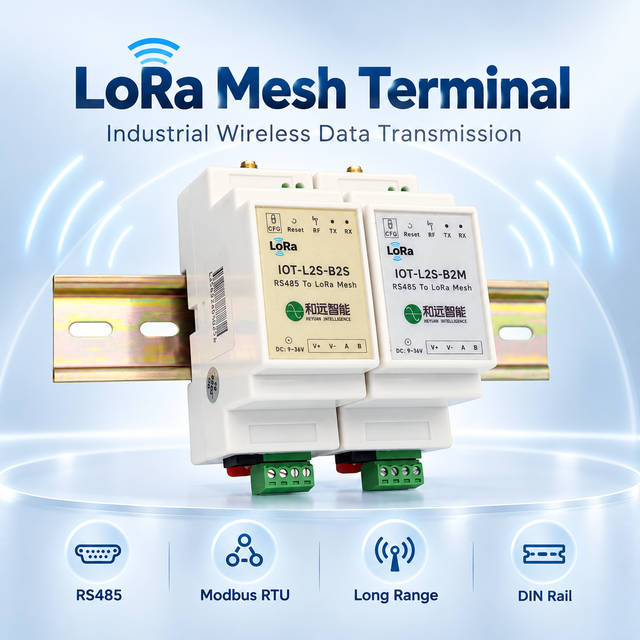
Heyuan RF 433Mhz Long Range Module Receiver Lora Transmitter Relay Module for High Receive Range Communication Networking
 Heyuan Intelligence Technology Co., Ltd.verified🇨🇳CN10 yrs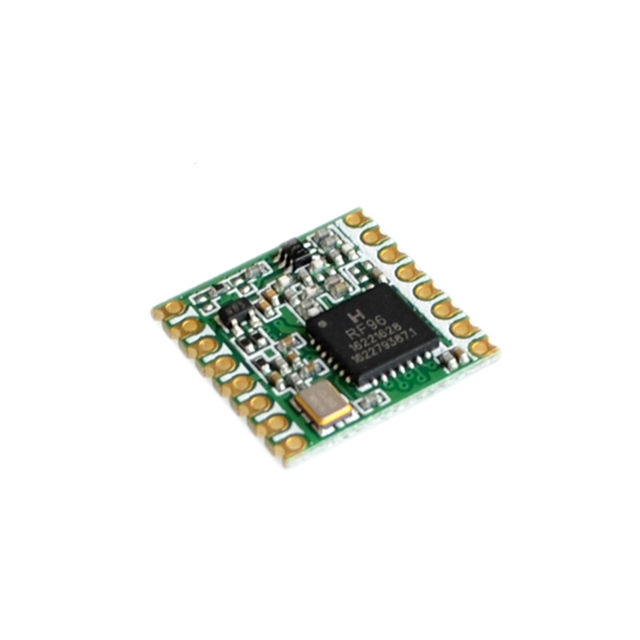
Smart Electronics Lora RFM95 RFM95W 433 868 915 RFM95-433MHz RFM95-868MHz RFM95-915MHz SX1276 Wireless Transceiver Module
 Shenzhen Dongxinda Technology Development Co., Ltd.🇨🇳CN7 yrs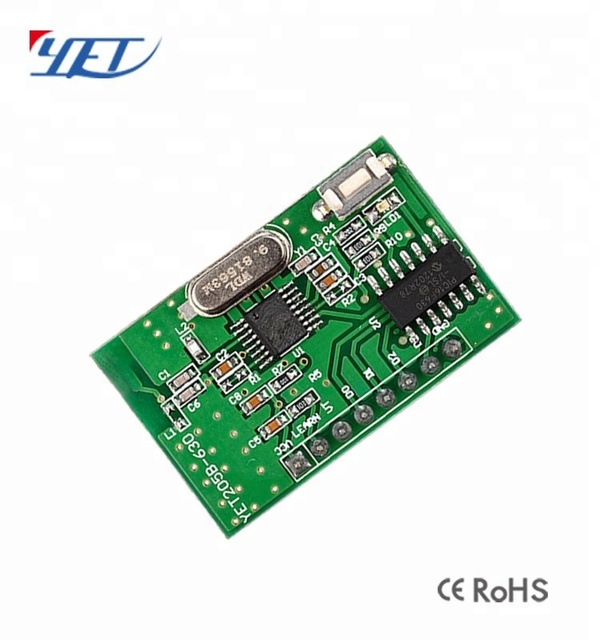
Wireless 433mhz Decode 1527 Receiver Module
 Shenzhen Yaoertai Technology Development Co., Ltd.verified🇨🇳CN18 yrs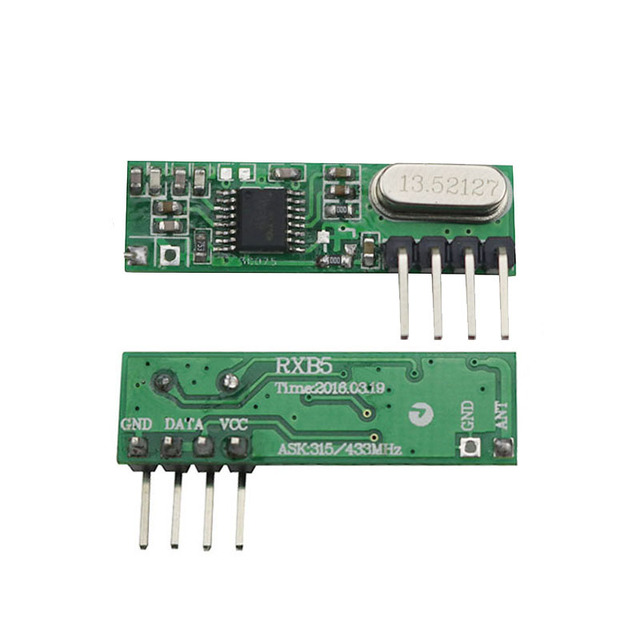
Universal RF Wireless Remote Control Receiver ,RF Module 433MHz, Low Power Consumption Superheterodyne/
 Shenzhen Century Aoke Electronics Co., Ltd.🇨🇳CN14 yrs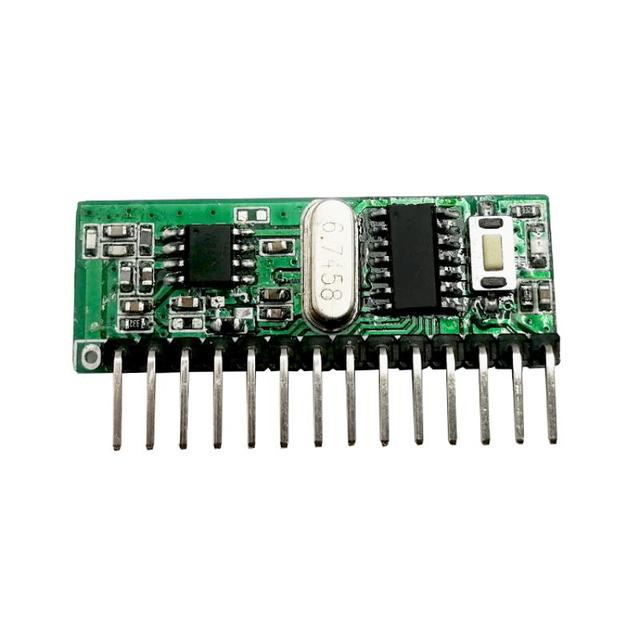
433/315MHz Wireless 8CH Receiver Module with Learning Code & Fixed Code Adjustable Momentary/Toggle/Latched Mode 150m Range
 Shenzhen I-Circuit Electronics Co., Ltd.🇨🇳CN3 yrs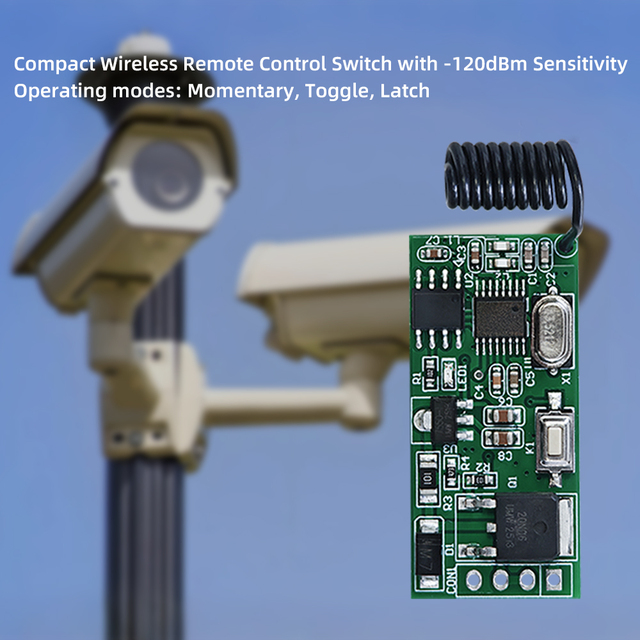
Universal Wireless RF 315 /433Mhz 1 Channel Receiver Switch DC 3.7-30V Mini Size for LED Remote Control Switch Module
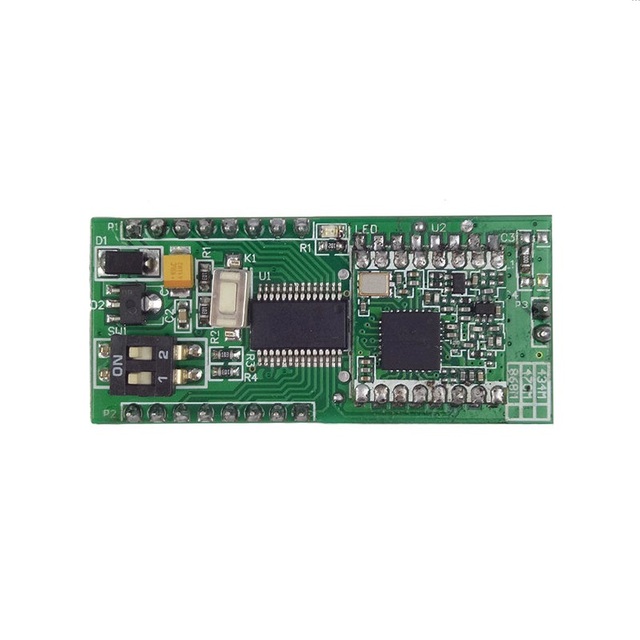
Mini RF Module Learning Code 433MHz 315MHz Wireless Remote Control Switch Low Power Wireless Receiver Module Two-way Rf Module
 Shenzhen Konst Electronic Technology Co., Ltd.🇨🇳CN4 yrs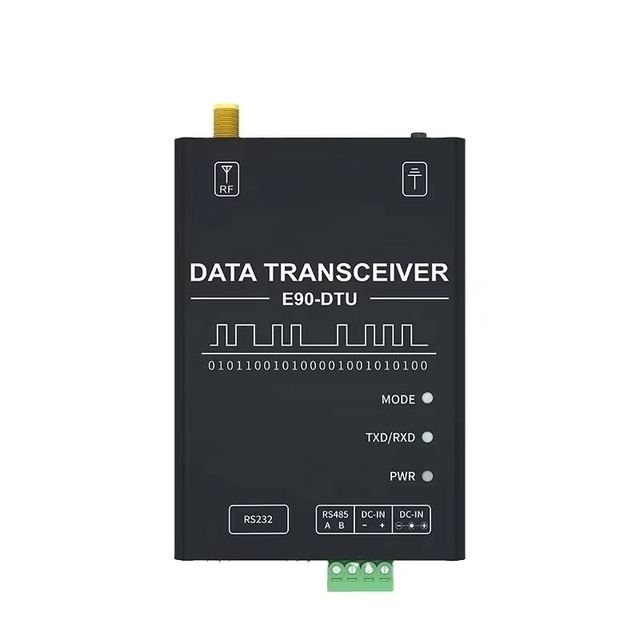
ODM E90-DTU(400SL22P) RS232/RS485 RF Transceiver 5km LoRa Gateway 433MHz Industrial Data Transmission Module
 Shenzhen Hangguo Technology Co., Ltd.🇨🇳CN5 yrs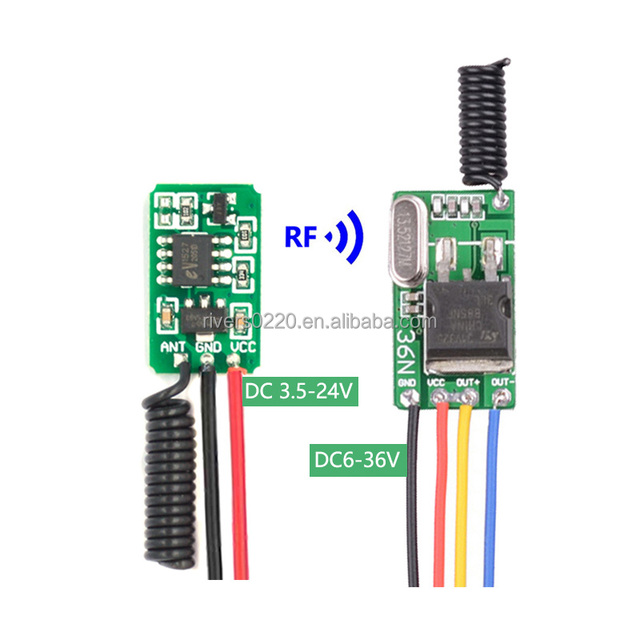
Rf Module Universal 1 Channel 433MHz Rf Transmitter DC 6V - 36V Wireless Receiver Module for Car, Bus, LED Lights, Truck
 Anqing Rivers Electronic Technology Co., Ltd.🇨🇳CN5 yrs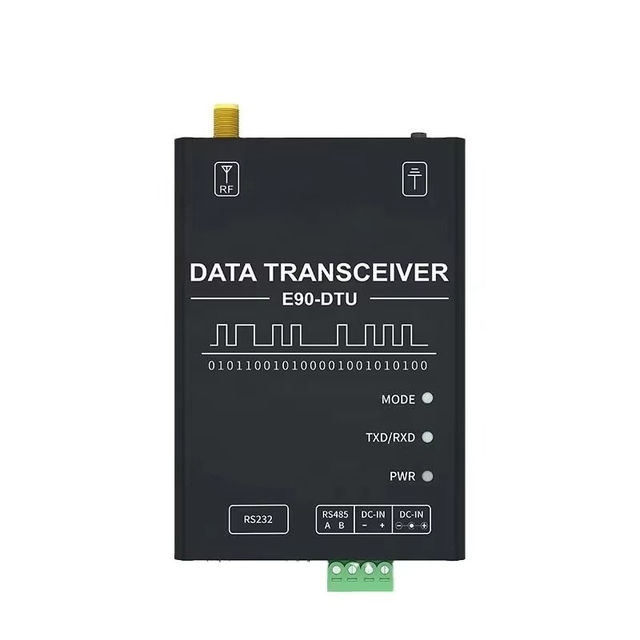
ODM E90-DTU(400SL22P) RS232/RS485 RF Transceiver 5km LoRa Gateway 433MHz Industrial Data Transmission Module
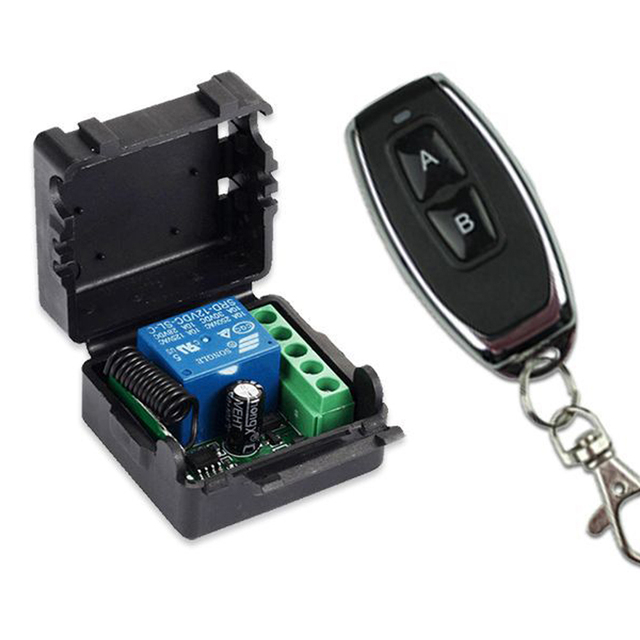
12V 24V 433mhz 315mhz 1527 Receiver RF Receiving Module Relay Garage Gate Remote Control Switch Garage Door Receiver
 Shenzhen Federemote Technology Co., Ltd.🇨🇳CN6 yrs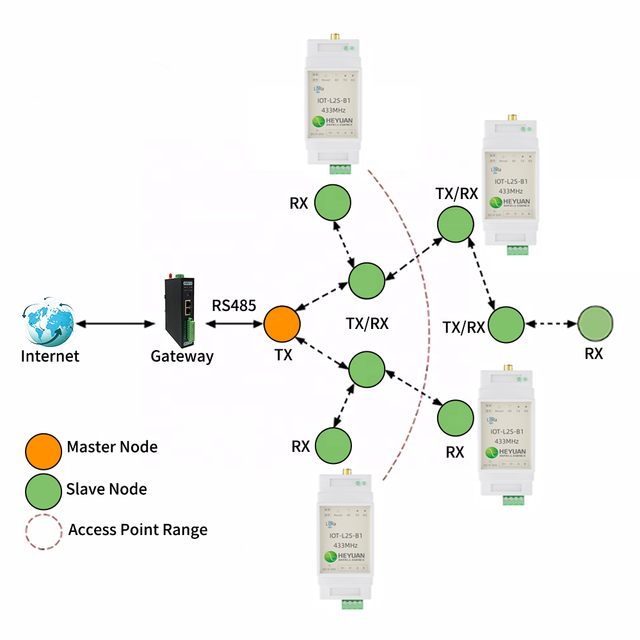
Heyuan Wireless & Rf Modules Lora Gateway Rf 433Mhz Transmitter Long Range Rf Receiver Lora Relay Module
Heyuan Intelligence Technology Co., Ltd.verified🇨🇳CN10 yrs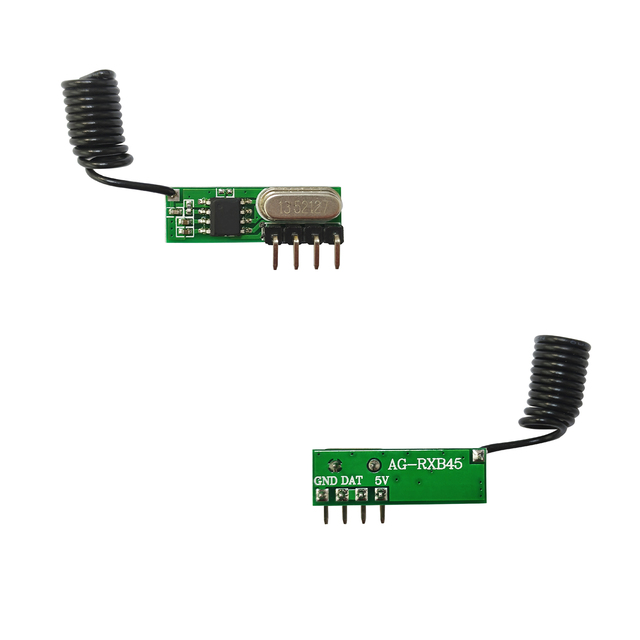
433MHz High Sensitivity Superheterodyne Wireless Receiver Module
 Shenzhen Aiba Technology Co., Ltd.verified🇨🇳CN8 yrs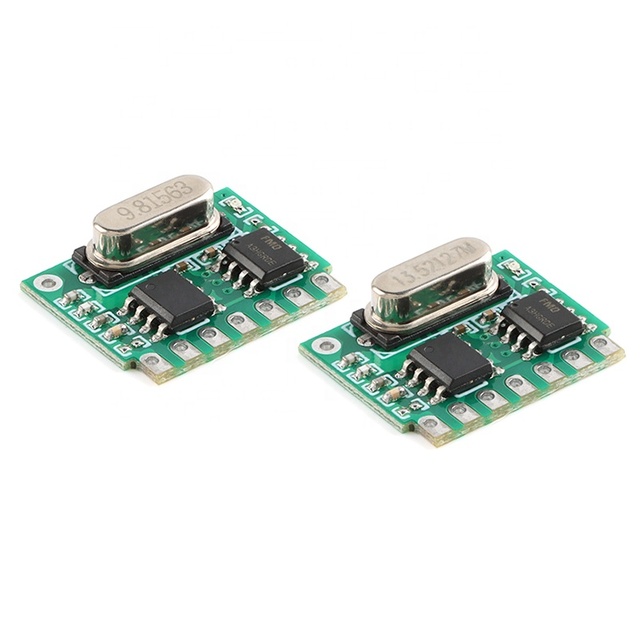
315MHz 433MHz Receiver Module Wireless Board PT2272 DIY Electronic Remote Control Receiving Decoding Module TYJM01A
 Shenzhen Youxin Electronic Technology Co., Ltd.🇨🇳CN4 yrs
CY07-V1.1 433.92/315mhz Receiver Module
 Shenzhen CY Wireless Technology Limited🇨🇳CN11 yrs
E32-433T20D-V2.0 LoRa 433MHz Wireless RF Module IoT Transceiver CDSENET UART Long Range RF Transmitter Receiver SX1278/SX1276
 Shenzhen Sinapus Technology Co., Ltd.🇨🇳CN3 yrs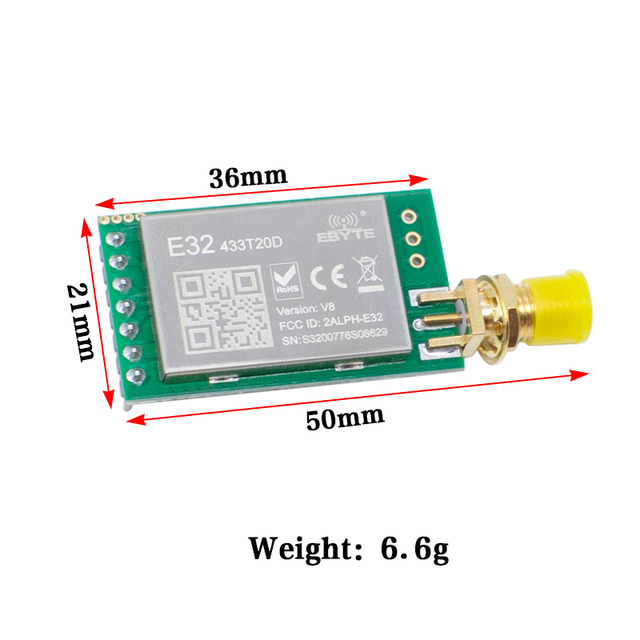
E32-433T20D-V2.0 LoRa 433MHz Wireless RF Module IoT Transceiver CDSENET UART Long Range RF Transmitter Receiver SX1278/SX1276
 Shenzhen Inventor Electronic Technology Co., Ltd.🇨🇳CN6 yrs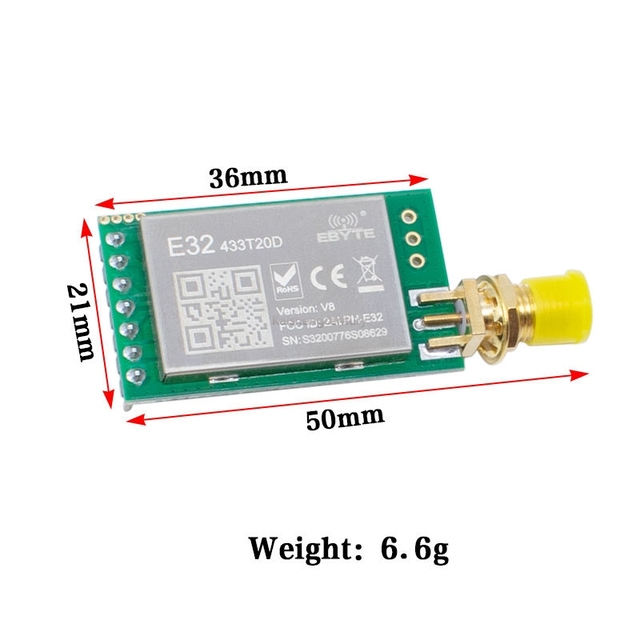
E32-433T20D-V2.0 LoRa 433MHz Wireless RF Module IoT Transceiver CDSENET UART Long Range RF Transmitter Receiver SX1278/SX1276
 Ali Kaisheng Century (shenzhen) Electronics Co., Ltd.🇨🇳CN1 yr
DC12V Long Distances 434MHz 5km Wireless Transmitter Wireless Rf Receiver Module
 Shenzhen Kelvin Electronics Co., Ltd.🇨🇳CN17 yrs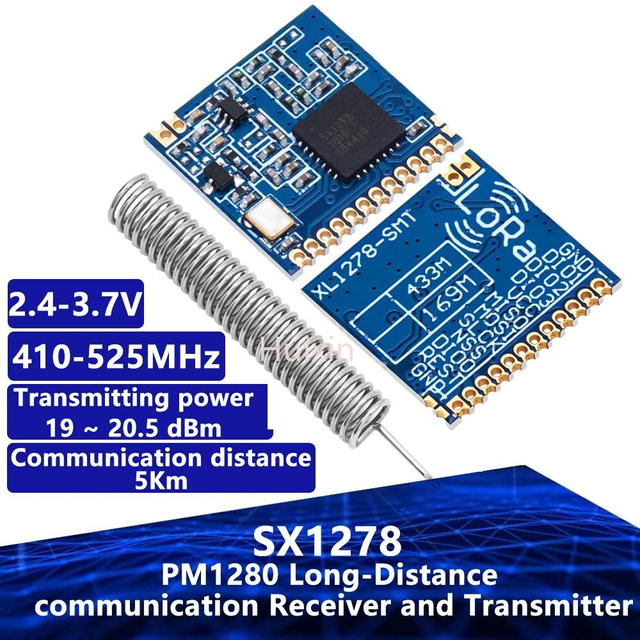
Hot 1PCS RF LoRa Module SX1278 Chip PM1280 Long-Distance Communication Receiver And Transmitter SPI LORA IOT+1pcs 433MHz Antenna
 Shenzhen Huixin Tengda Trading Co., Ltd.🇨🇳CN6 yrs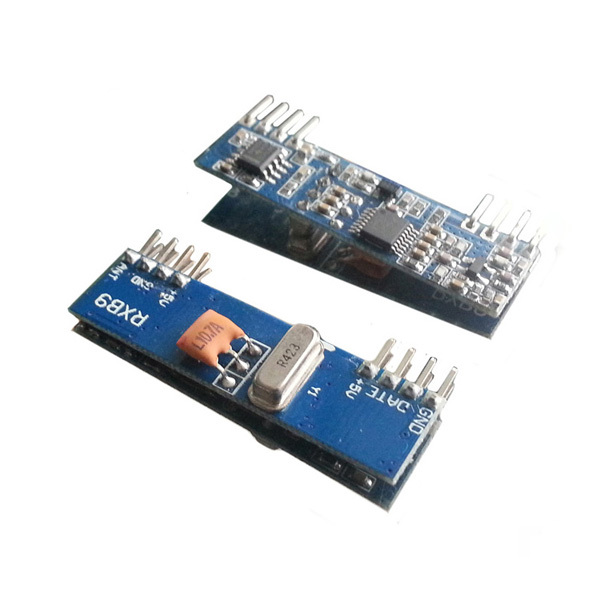
High Sensitive Long Range Superheterodyne AM Receiver Module 433/315Mhz RF Receiver Module AG-RXB9
 Shenzhen Co-Etech Limited🇨🇳CN9 yrs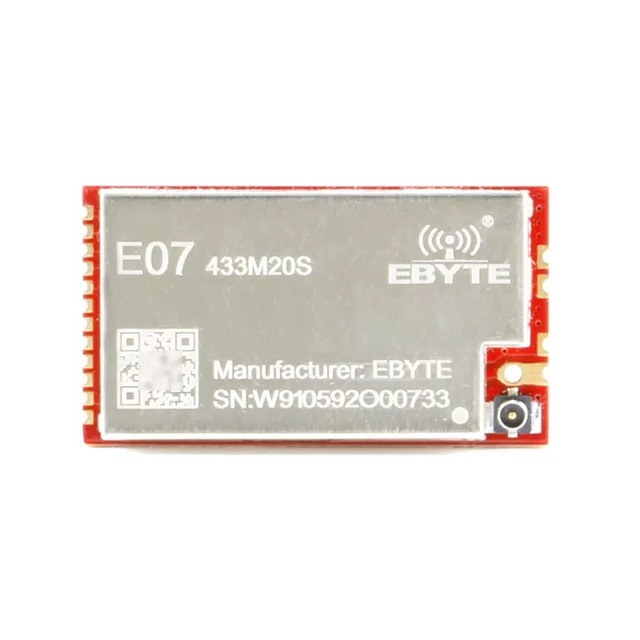
CC1101 Wireless Module for 433MHz Data Transmission and Reception, Industrial-grade RF Communication, E07-433M20S
 Shenzhen Tuorui Electronic Technology Co., Ltd.verified🇨🇳CN3 yrs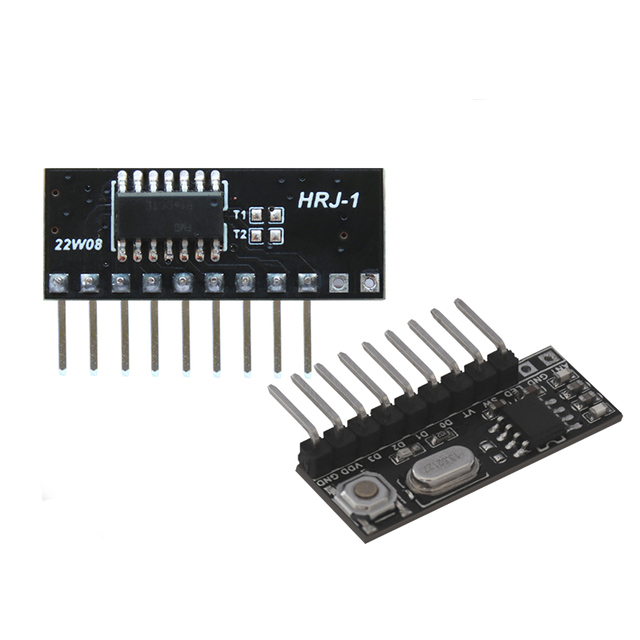
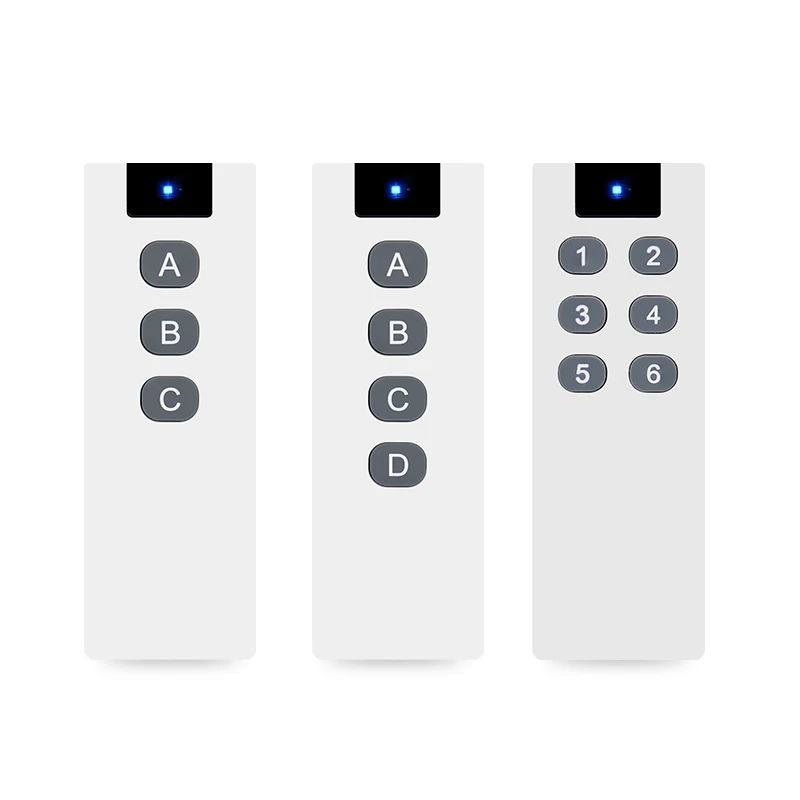
DC3.3- 5.5V 315MHZ/433MHZ ASK 4 Channel Decoding RF Wireless Receiver Module HRJ-1
 Huazhong IOT (Shenzhen) Group Co., Ltd.verified🇨🇳CN6 yrs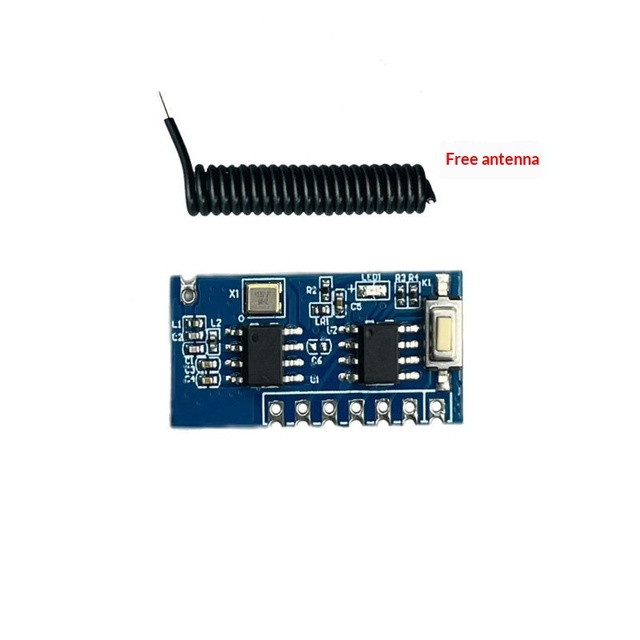
Custom 433 MHz 315 MHz RF Wireless Remote Control Receiver Module Four-channel Decoding Switch High-level Output Pin-type/SMD
 Changsha Yubo Zhixing Electronic Co., Ltd.🇨🇳CN1 yr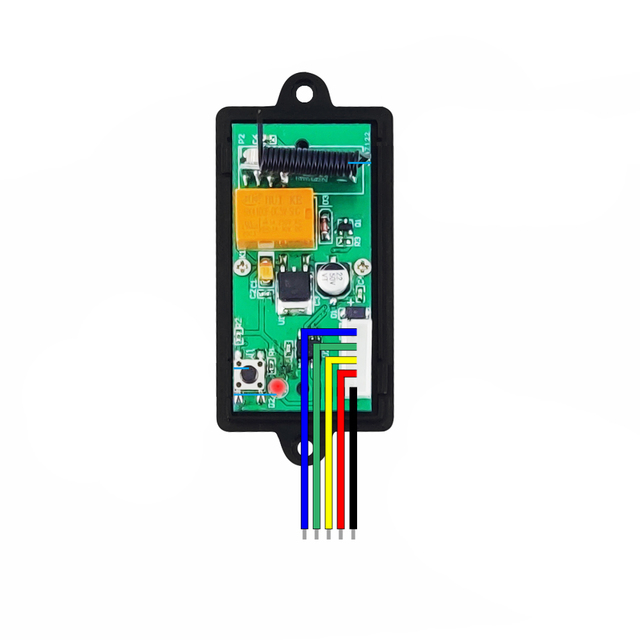
RF 433 315 Wireless receiver relay controller module to wired NO NC converter output EV1527 RX-710
 5C Electronics Co., Ltd.🇨🇳CN6 yrs
315MHz 433MHz Superheterodyne Wireless RF Receiver Module 3.3V 5.5V Remote Control Module With Antenna
 Shenzhen Guangfasheng Technology Co., Ltd.🇨🇳CN9 yrs
RF 433 315 Wireless receiver relay controller module to wired NO NC converter output EV1527 RX-710
315MHz 433MHz Superheterodyne Wireless RF Receiver Module 3.3V 5.5V Remote Control Module With Antenna
Related Searches
Explore more sourcing topics & related categories
Sources & References
16 sources cited · Verified industry data & reports
RF Receivers Market in the United States | Report - IndexBox - ...
www.indexbox.io
Executive Summary & Market Overview Key findings, market size, trends, historical snapshot 2007–2025, forecast highlights 2026–2035, trade balance summary $149 · Supply & Demand Domestic consumption volume & value, per capita consumption, apparent consumption, supply-demand balance, demand drivers, forecast $249 Prices Price trends overview 2007–2025, average market price, price index, price forecast 2026–2035 $199 · Production / Factory Gate Prices +$129 Wholesale / Distribution Prices +$129 Import Prices by Source Country +$129 Export Prices by Destination +$129 Retail / End-Consumer Prices +$129 By Product Segment +$99 By Grade / Quality Tier +$99 Monthly Price Data +$149 From a 2026 base, industry demand (measured in units of receiver channels or modules) is estimated to grow at a compound annual rate of 5–7% through 2035, with revenue growth likely tracking slightly higher owing to a mix shift toward premium‑specification devices. By 2035, the market could be 1.6–1.8 times larger than in 2026 in real terms (adjusted for inflation). The defense and aerospace segment will remain the largest absolute consumer, although its share may decline to approximately 35–40% by 2035 as commercial telecom and industrial IoT segments outpace it in growth rate.
RF Receivers Market Growth Forecast to 2035: 5G, Iot, and Defense ...
www.indexbox.io
Executive Summary & Market Overview Key findings, market size, trends, historical snapshot 2007–2025, forecast highlights 2026–2035, trade balance summary $149 · Supply & Demand Domestic consumption volume & value, per capita consumption, apparent consumption, supply-demand balance, demand drivers, forecast $249 Prices Price trends overview 2007–2025, average market price, price index, price forecast 2026–2035 $199 · Production / Factory Gate Prices +$129 Wholesale / Distribution Prices +$129 Import Prices by Source Country +$129 Export Prices by Destination +$129 Retail / End-Consumer Prices +$129 By Product Segment +$99 By Grade / Quality Tier +$99 Monthly Price Data +$149 According to the latest IndexBox report on the global RF Receivers market, the market enters 2026 with broader demand fundamentals, more disciplined procurement behavior, and a more regionally diversified supply architecture. The baseline scenario for the RF receivers market from 2026 to 2035 assumes steady global economic growth, continued investment in 5G/6G infrastructure, and increasing electronic content per vehicle and per industrial machine. Under this scenario, the market is projected to expand at a CAGR of 6.8%, reaching an index value of 190 by 2035 relative to 2025. The telecommunications segment remains the largest demand driver, accounting for over 35% of receiver volume, as mobile network operators deploy massive MIMO radios for mid-band and mmWave coverage.
RF Components Market - Radio Frequency - Companies & Forecast
www.mordorintelligence.com
Note: Market size and forecast figures in this report are generated using Mordor Intelligence’s proprietary estimation framework, updated with the latest available data and insights as of 2026. ... Operators activated 1.2 million new 5G macro and small cells in 2025, and China accounted for roughly 60% of those sites.[1]GSMA Intelligence, “Global 5G Base Station Deployments and Open RAN Adoption,” gsmaintelligence.com Each massive-MIMO radio now integrates 64-256 transmit-receive chains, multiplying the number of power amplifiers, low-noise amplifiers, and antenna switches eight- to sixteen-fold compared with 4G deployments. The RF components market size is projected to be USD 44.34 billion in 2025, USD 49.93 billion in 2026, and reach USD 90.42 billion by 2031, growing at a CAGR of 12.61% from 2026 to 2031. Strong momentum stems from escalating 5G infrastructure rollouts, higher RF content per smartphone, and the diffusion of gallium-nitride power devices into base stations and automotive radar. Component vendors are repositioning portfolios toward millimeter-wave bands, where wider bandwidths unlock new revenue but intensify thermal and packaging constraints. Demand is further catalyzed by low-earth-orbit (LEO) constellations, satellite-to-smartphone links, and factory automation that relies on edge-AI mmWave sensing. Power amplifiers represented roughly 28% of 2025 revenue and are migrating from gallium-arsenide to gallium-nitride die in base stations to push efficiencies past 50%, a switch that lifts average selling prices by 40%-60%. Antenna switches, about 18% of the total, are being absorbed into single-package front-end modules, compressing discrete volumes even as board density rises. Low-noise amplifiers held near 12% but are inching upward because 5G diversity chains demand extra receive paths. August 2025: Murata committed USD 300 million to expand bulk-acoustic-wave filter capacity in Japan, boosting output 20% by mid-2026.
RF Front End Module Market Size & Share 2026-2035
www.gminsights.com
The RF front end module market size exceeded USD 28.7 billion in 2025 and is expected to grow at a CAGR of 11.9% from 2026 to 2035, driven by growing demand for 5G and advanced wireless communication The automotive segment is expected to grow at a CAGR of 13.6% from 2026 to 2035. Increasing adoption of ADAS, autonomous driving systems, and V2X communication is boosting demand for advanced RF front end modules in vehicles. Which region leads the RF front end module market? North America led the market with USD 8.6 billion revenue in 2025. Strong IoT penetration, early 5G rollout, and rapid adoption of advanced consumer electronics contribute to the region’s leadership. What are the upcoming trends in the RF front end module industry? The market is expected to grow from USD 31.9 billion in 2026 to USD 49.6 billion in 2030 and USD 87.7 billion by 2035, at a value CAGR of 11.9% during the forecast period of 2026–2035. ... Growing Demand for 5G and Advanced Wireless Communication. Increasing Adoption of IoT and Connected Devices. Rising Smartphone and Consumer Electronics Penetration. The need for greater compactness, higher performance, and lower-cost RF front-end modules, as well as the need for maximum use of space and increased functionality, is driving the growth of the SMD/SMT market in the consumer electronics, automotive, and industrial sectors. Manufacturers must concentrate their efforts on the design and manufacture of SMD/SMT products that provide maximum integration and miniaturization along with the highest possible level of quality. The through-hole segment is anticipated to grow with a CAGR of 10.5 % during the forecast period of 2026 – 2035. The demand for through-hole technology is being driven by the ability of through-hole components to provide reliability in applications where maximum power handling capability and the ability to be easily serviced are required, including automotive, industrial, and aerospace industries.
Radio Frequency Receivers Market Size, Market Dynamics ...
www.verifiedmarketreports.com
This trend underscores a shift from traditional communication paradigms towards more resilient, high-capacity RF systems, which in turn drives innovation and investment in RF receiver technology. Deployment of 5G infrastructure requiring advanced RF front-end modules capable of supporting higher frequency bands and beamforming techniques. Expansion of IoT ecosystems demanding miniaturized, energy-efficient RF receivers for seamless device connectivity. The increasing investments by aerospace and defense sectors in secure, resilient RF communication systems further bolster this trend. As satellite constellations grow in scale and complexity, the need for advanced RF receiver architecturessuch as software-defined radio (SDR) and digital beamformingbecomes critical to meet evolving operational requirements and ensure interoperability across diverse satellite systems. Commercial satellite constellations demanding scalable, high-throughput RF receivers for ground stations and user terminals. This demand pushes manufacturers to incorporate hardware-based encryption modules, frequency hopping, and interference-resistant architectures into RF receivers. Furthermore, the integration of quantum-resistant cryptography and secure key exchange protocols into RF front-ends is emerging as a future trend. Continuous innovation in RF front-end componentssuch as low-noise amplifiers (LNAs), mixers, filters, and analog-to-digital converters (ADCs)is a primary driver shaping the RF receiver market. These advancements enable receivers to operate efficiently across broader frequency ranges, improve sensitivity, and reduce power consumption. The integration of these components into compact, multi-band modules supports the miniaturization trend critical for mobile devices, wearables, and embedded systems.
RF Receiver Market Research Report 2033
dataintelo.com
The Middle East and Africa region commands 5.8% of global market value, supported by telecommunications infrastructure development in Gulf Cooperation Council nations, satellite communication links serving remote regions, and growing consumer electronics adoption in South Africa and Nigeria, though growth remains constrained by infrastructure limitations and lower device penetration rates compared to developed markets. ... 5G network rollout across North America, Europe, and Asia Pacific represents the dominant growth driver for RF Receiver demand, with telecommunications carriers investing over $450 billion globally through 2026 in network densification and spectrum acquisition. Internet of Things devices reaching 29.4 billion connected units globally by 2026 require integrated RF Receiver solutions for wireless connectivity, with battery-powered applications demanding ultra-low power consumption receiver architectures consuming less than 50 milliwatts in active receive mode. Smart home devices, WiFi mesh networking systems, and connected home automation platforms expand consumer electronics receiver demand, with manufacturers including Amazon, Google, and Philips Hue deploying millions of receivers annually across smart speakers, lighting systems, and environmental monitoring devices. The segment's growth through 2026 reflects smartphone average selling price increases supporting premium receiver implementations, wearable device adoption reaching 523 million units annually, and smart home device penetration exceeding 45% in developed markets. Get demo access to market data Experience powerful insights firsthand. Get demo access to our dashboard and explore real-time market data, trends, and analysis designed to drive smarter decisions. ... This analysis is based on primary and secondary research conducted through Q4 2025, with data verified as of May 2026.