Rtx A6000 48gb Used

Overview
Product sourcing insights & recommendations
The market for the NVIDIA RTX A6000 48GB is currently defined by a high price-to-utility ratio, driven largely by the specialized AI and rendering communities. While its successor (RTX 6000 Ada) offers significantly higher performance, the A6000 remains a critical choice for users requiring NVLink memory pooling, a feature NVIDIA removed from newer generations.
Product & Pricing Insights
* Secondary Market Stability: Used units are currently transacting in the $990 – $1,850 range depending on condition and seller location .
* VRAM Dominance: The 48GB GDDR6 capacity remains the card's primary selling point, allowing for LLM fine-tuning and massive 3D scenes that 24GB consumer cards cannot handle ThundercomputeJarvislabs.
* NVLink Premium: The A6000 is the last workstation card to support NVLink for pooling memory (up to 96GB VRAM across two cards). This has created a unique "secondary value floor" as research teams often prefer two used A6000s over a single 6000 Ada RedditThundercompute.
2026 Market Trends
* Surging AI Demand: Interest in the A6000 has seen a massive uptick since 2024, peaking in June 2026 as smaller AI labs and independent researchers seek cost-effective hardware for quantized 70B parameter models Jarvislabs.
* Blackwell (RTX 50-Series) Impact: The introduction of the Blackwell architecture is starting to exert downward pressure on Ampere prices, making the A6000 an increasingly popular "entry-level" choice for enterprise-grade 48GB VRAM Thundercompute.
* Enterprise Reliability: The card continues to hold value over GeForce alternatives due to its ISV-certified drivers, which are mandatory for professional stability in mission-critical rendering and engineering environments ThundercomputePugetsystems.
Used Nvidia Rtx A6000 48gb Graphics Card
Products · Top picks & verified manufacturers
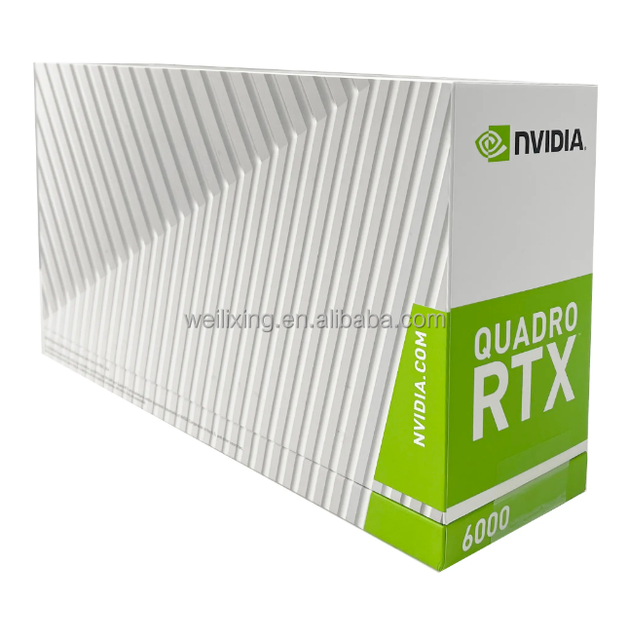
In Stock RTX A6000 48gb Professional Technical GPU Video Graphics Cards for Workstations
 Shenzhen Weilixing Technology Limited🇨🇳CN6 yrs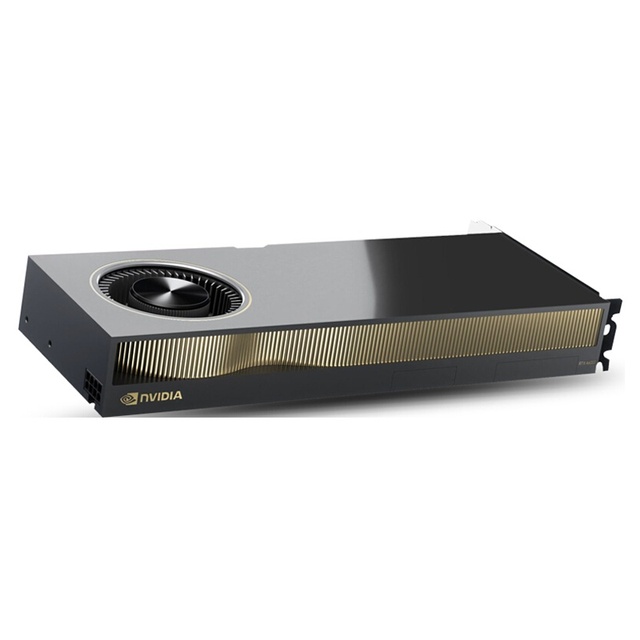
For NVIDIA RTX A4000/A5000/A6000 48GB Professional GDDR6 Computer Graphics Card for Workstation & Desktop New & in Stock Fan
 Ideal Future (beijing) Information Technology Co., Ltd.🇨🇳CN4 yrs
RTX A6000 48GB GDDR6 Graphic Card
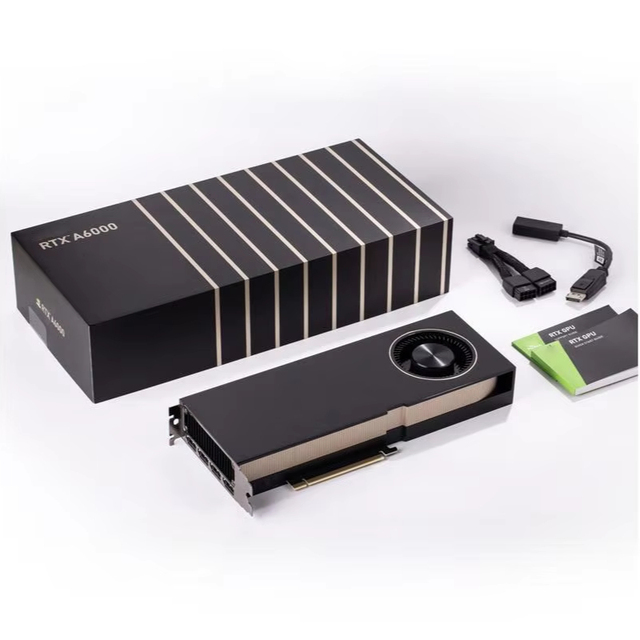
Brand New Professional Graphics Card Nvi-dia RTX A6000 48GB GDDR6 300 W PCI Express Gen 4 X 16
 J Arc International Trade (guangzhou) Co., Ltd.verified🇨🇳CN3 yrs
RTX A6000 48Gb GDDR6 Graphics Card Gpu A6000 Video Card
 Shenzhen Hailian Huhui Technology Co., Ltd.🇨🇳CN5 yrs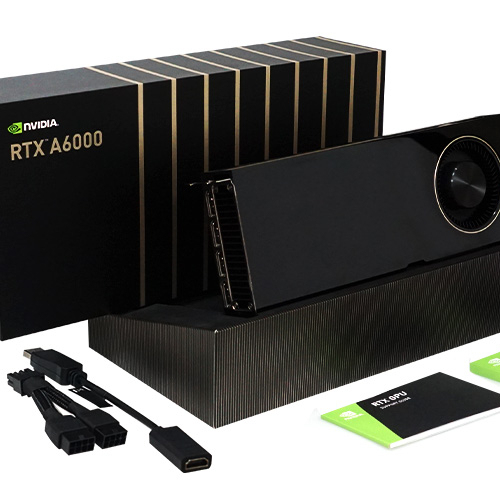
RTX A6000 48gb Professional Technical GPU Video Graphics Cards for Workstations
 L & L COMPUTERMY6 yrs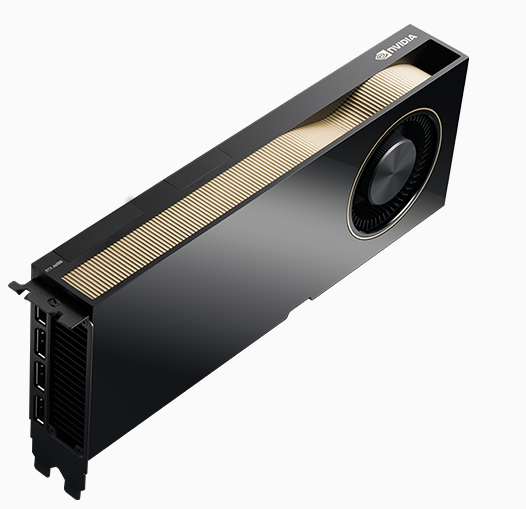
New Wholesale for NVIDIA RTX A6000 BULK PACK 48GB GPU 900-5G133-2200-000 Graphics Card for Server Workstation GPU RTX A6000
 3DSTOR ASIA LIMITED🇭🇰HK3 yrs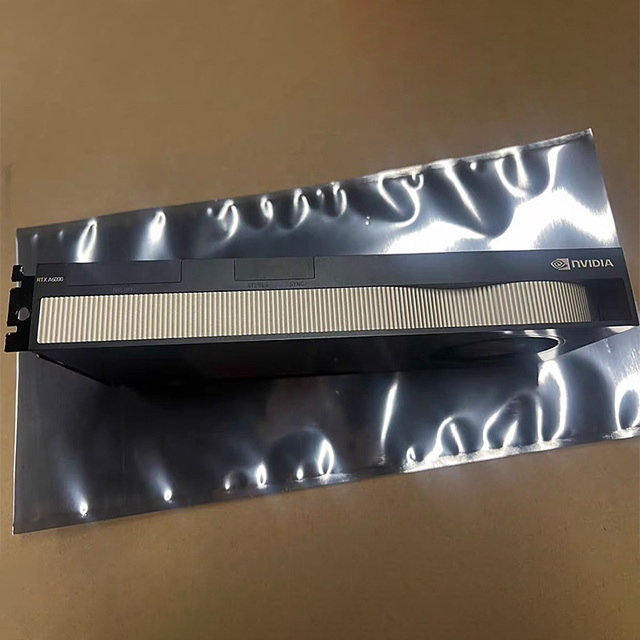
A6000 RTX 48GB GDDR6 NVLink 4.0 Professional Workstation GPU 3rd Gen RT Core 1792 Tensor Cores 8K HDR V-Ray Desktop Fan DP
 JLS Future Trading Limitedverified🇭🇰HK3 yrs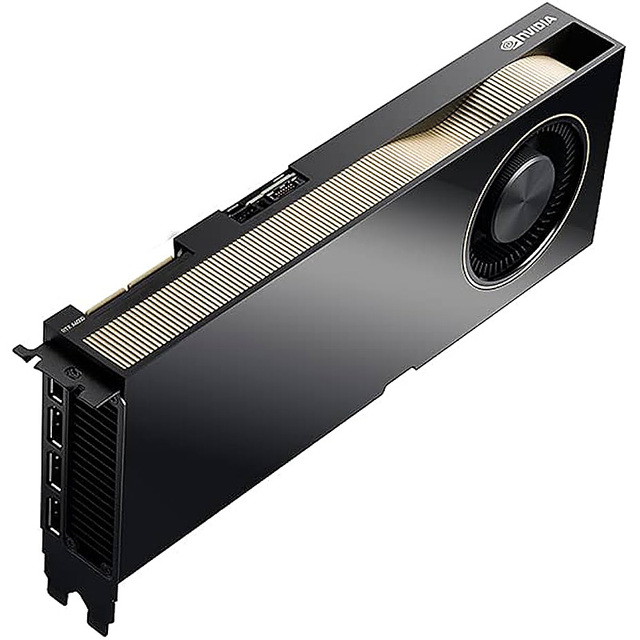
GPU RTX A6000 48GB GDDR6 PCI 4.0 X16 Full Height 4 DP Graphics Card a for
 Shenzhen Shengshengjie Technology Co., Ltd.🇨🇳CN3 yrs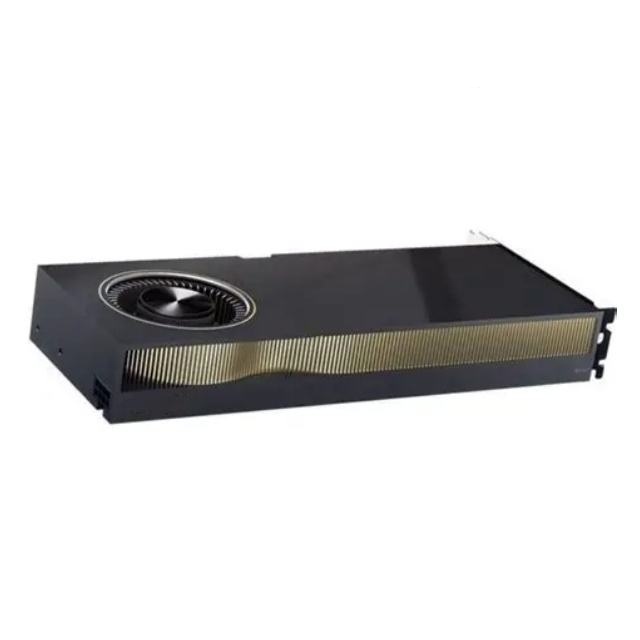
New Original RTX A6000 48GB GPU GDDR 6 Graphic Card for Design Gaming Video Cards New
 Shenzhen Grston Tehcnology Co., Ltd.🇨🇳CN8 yrs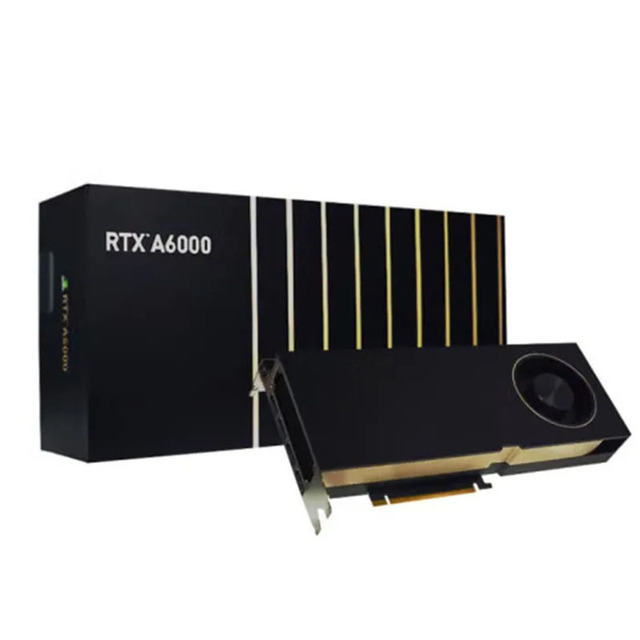
Hot-selling New GPU RTX A6000 48GB GDDR6 768GB/S 384bit 1860MHz Fan Graphics Card for AI Workstation
 HSMC Electronics Co., Limitedverified🇭🇰HK2 yrs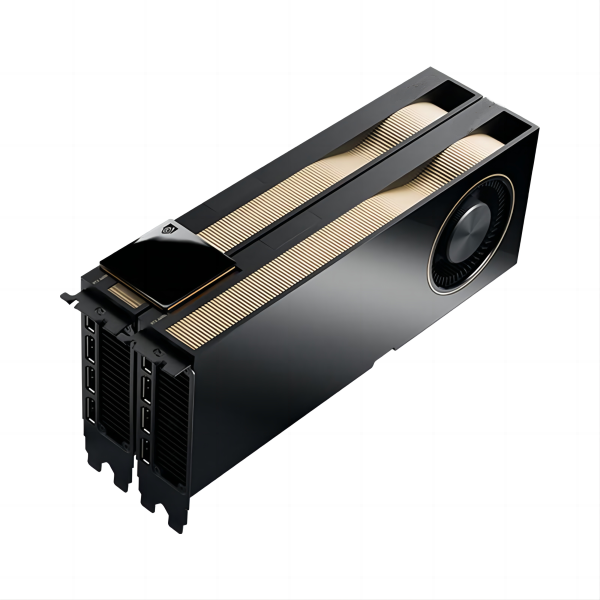
RTX A6000 48GB GDDR6 Graphic Card
 Shenzhen Hsda Technology Co., Ltd.🇨🇳CN10 yrs
Related Searches
Explore more sourcing topics & related categories
Sources & References
16 sources cited · Verified industry data & reports
NVIDIA RTX 6000 Ada vs RTX A6000 for Content Creation | Puget Systems
www.pugetsystems.com
With the RTX 6000 Ada, NVIDIA is releasing the first of their “Ada Lovelace” professional GPUs. This GPU is a powerhouse that should power through even the toughest workloads, featuring 48GB of VRAM and up to a staggering 91.1 TFLOPS of single-precision performance. For our first look at the NVIDIA RTX 6000 Ada 48GB, we will examine performance in DaVinci Resolve Studio. More so than any other NLE (Non-Linear Editor) currently on the market, Resolve can utilize high-end GPUs and even multi-GPU setups. With all that said, the new NVIDIA RTX 6000 Ada 48GB performs very well overall, although the highest cost relative to the previous generation NVIDIA RTX A6000 48GB is going to mean that it isn’t always the best pick. Overall, the new NVIDIA RTX 6000 Ada 48GB is incredibly fast in GPU-heavy workloads.
NVIDIA RTX 6000 Ada vs RTX A6000 Review - StorageReview.com
www.storagereview.com
At first glance, the RTX 6000 Ada and its predecessor, the RTX A6000, share similar specifications: 48GB of GDDR6 memory, 4x DisplayPort 1.4a outputs, 300W TDP, and identical form factors. However, diving deeper reveals a monumental shift.
RTX A6000 vs RTX 6000 Ada | Runpod GPU Benchmarks
www.runpod.io
Professional workstation GPU based on Ampere architecture with 48GB GDDR6 memory and 10,752 CUDA cores for 3D rendering, AI workloads, and professional visualization applications. Professional workstation GPU based on Ada Lovelace architecture with 48GB GDDR6 memory and 18,176 CUDA cores for advanced AI workloads.
PassMark - RTX A6000 - Price performance comparison
www.videocardbenchmark.net
From submitted results to PerformanceTest as of 26th of June 2026. From submitted results since PerformanceTest V10 as of 20th of May 2026. Submitted Baseline Distribution Graph as of 20th of May 2026
Should I run AI training on RTX 6000 Ada or NVIDIA A6000?
jarvislabs.ai
A hybrid approach often works best: use A6000s for initial exploration and longer, stability-critical runs, then leverage RTX 6000 Ada for intensive hyperparameter tuning phases where iteration speed translates directly to better models. What specific models and frameworks are you planning to work with? That could further tip the scales one way or the other. Get started with JarvisLabs today and experience the power of cloud GPU infrastructure designed specifically for AI development. ... Discover which AI models fit on an A6000's 48GB VRAM, from 13B parameter LLMs at full precision to 70B models with quantization, plus practical performance insights and cost comparisons. The RTX 6000 Ada offers up to 2-3x faster training speeds than the A6000 for most AI workloads, with identical 48GB VRAM but 4x more system RAM. GPU Architecture: The RTX 6000 Ada is built on NVIDIA's newer Ada Lovelace architecture, while the A6000 uses the Ampere architecture · Tensor Cores: Ada's 4th-gen Tensor Cores deliver significantly higher throughput for mixed precision operations compared to Ampere's 3rd-gen cores · CUDA Cores: The Ada variant packs more CUDA cores with higher clock speeds, translating to better raw compute performance · System Resources: The RTX 6000 Ada instances at JarvisLabs come with 32 vCPUs and 128GB RAM versus 7 vCPUs and 32GB RAM for the A6000 The RTX 6000 Ada is our go-to for rapid development cycles and most newer ML frameworks. But we've found the A6000 still shines in several scenarios—particularly for research teams with established pipelines and production systems where stability trumps raw speed.
NVIDIA RTX Ada Generation Content Creation Review | Puget Systems
www.pugetsystems.com
While the RTX 5000 Ada is about 25% slower than the RTX 6000 Ada, it performs about 10% faster than the NVIDIA RTX A6000 at a slightly lower price or 7% faster than the AMD Radeon PRO W7900 at the exact same price. It only has 32GB of VRAM compared to the 48GB on the A6000 and W7900, however, so for especially heavy GPU workflows in Resolve, that could be a consideration. The higher-end cards see more distinguishing them from past gen. The 5000 Ada has 50% more CUDA cores than the A5000 and 20% more than the A6000. It also features 8GB more VRAM, though it is still short of the 48GB of the A6000. The new RTX 5000 Ada also does great, scoring 20% higher than the more expensive RTX A6000 and 45% faster than the similarly priced AMD Radeon W7900 (or about half that if you look at the Overall Score). For Premiere Pro, the difference between 32GB and 48GB of VRAM is largely moot, so this is pretty much an overall win for NVIDIA. The RTX 5000 Ada, on the other hand, tends to be about 10-20% faster than the top GPU from the previous generation (the RTX A6000) but has a slightly lower MSRP. It also tends to beat the AMD Radeon PRO W7900 by anywhere from 10% to 50% depending on the workflow, although you do need to be aware that the RTX 5000 Ada only has 32GB of VRAM, while the RTX A6000 and Radeon PRO W7900 both have 48GB.