Screen Pack Breaker Plate

Overview
Product sourcing insights & recommendations

1. Product Fundamentals & Technical Functions
The Screen Pack and Breaker Plate are crucial mechanical assemblies positioned between the extruder screw and the die in plastic, rubber, and polymer extrusion systems PtonlineCablecore. They serve three distinct operational objectives:
* Melt Filtration: The screen pack (a layered sandwich of woven metallic wire meshes, typically ranging from coarse 20-mesh to fine 400+ mesh) strains out un-melts, degraded gels, and solid contaminants from the polymer stream BlogspotUnitedwire.
* Flow Realignment: The extruder screw delivers molten polymer in a turbulent, spiral flow pattern Blogspot. Passing through the concentric, straight-drilled channels of a heavy metallic breaker plate converts this into a linear, axial flow profile necessary for profile uniformity at the die entry Blogspot.
* Backpressure Generation: The assembly restricts the melt flow path, building a critical gradient of backpressure inside the extruder barrel BlogspotUnitedwire. This localized pressure enhances mechanical shear, stabilizes output, and improves the homogeneity of the polymer blend PtonlineBrainly.
#### Structural Mechanics
Screen packs are typically constructed symmetrically (e.g., 20/60/100/60/20 mesh) Ptonline. This prevents improper directional installation and ensures that fine, delicate filtration meshes are physically supported on both sides Ptonline. The upstream coarse layers arrest bulk particles, while the downstream coarse layer keeps the fine mesh from being forced or "blown through" the larger holes of the breaker plate under intense processing pressure (which can exceed several hundred bar) HaverboeckerPsi-Polymersystems.
---
2. Major Technical Innovations
Traditional stationary breaker plates cause operational bottlenecks because lines must be stopped entirely to replace clogged screen packs CofitParkinsontechnologies. Recent mechanical developments address this issue:
* Computational Fluid Dynamics (CFD) Design: Leading manufacturers utilize advanced numerical modeling and rheological simulation to profile breaker plates NordsonCablecore. By tapering or chamfering channel inlets, modern plates eliminate stagnating "dead zones" where polymers can thermally degrade and discolor ExtrusioncontrolSpider.
* Total-Area Exposing "Super Plates": Standard flat breaker plates block 40-50% of a screen pack's surface due to the solid metal segments between drill holes Psi-Polymersystems. Innovations like PSI’s *Super Plate* utilize a high-strength, cross-welded grid of triangular stainless-steel blades Psi-Polymersystems. The screen rests on the sharp edges of these blades, exposing up to 95%+ of the mesh surface, expanding the effective filtration area by up to 55%, and drastically reducing pressure drop across the screen changer Psi-Polymersystems.
* Area-Multiplying Media (FlexDiscs & Candles): For ultra-high-cleanliness applications (such as synthetic fiber spinning and virgin optical-grade films), flat discs are being replaced by elongated filter candles or multi-layered, corrugated *FlexDiscs* Nordson. These maximize the spatial filtration footprint inside compact housing Nordson.
* Automatic In-Situ Backflushing: Modern hydraulic piston screen changers allow a small, controlled fraction of the polymer melt stream to flow in reverse through a clogged screen segment, purging trapped debris directly out of the machine NordsonDataintelo. This self-cleaning technology extends the functional lifespan of an individual screen pack by 5x to 20x before a complete replacement is required Dataintelo.
---
3. Market Trends & Macro Dynamics
#### Growth Valuations
The global market for melt filtration systems and screen changers is expanding at a steady pace, valued at $1.2 billion in 2025 and projected to scale to $2.1 billion by 2034, advancing at a Compound Annual Growth Rate (CAGR) of 6.3% Dataintelo. Within this market, continuous-type screen changers hold a dominant 61.4% sector share due to industrial demands for non-stop, zero-downtime production architectures DatainteloParkinsontechnologies.
#### Primary Driving Factors
* The Post-Consumer Recycled (PCR) Surge: Global mandates for plastic circularity are forcing processors to handle highly contaminated recycled feedstocks (B2B bottle flakes, ocean plastics, post-consumer films) NordsonDataintelo. Recycled streams cause swift pressure spikes on static plates, forcing rapid adoption of automated continuous-belt and backflushing filtration units DatainteloParkinsontechnologies.
* EV Battery & Automotive Sub-sectors: The automotive sector represents the fastest-growing vertical (7.2% CAGR) Dataintelo. This is driven by high-specification requirements for battery pouch separator films and high-voltage vehicle insulation cables, both of which require defect-free, ultra-clean polymer streams filtered below 20 microns Dataintelo.
* Aftermarket Revenue Capture: Consumable components—principally spot-welded or rim-bound multilayered wire mesh screen packs—now comprise 28% to 32% of total industry revenue DatainteloExtruderscreens. Wire mesh manufacturing hubs (highly concentrated in regions like Anping, China) are standardizing laser-welded and aluminum/stainless-steel bordered screen discs to ensure stable geometric integrity under peak loads Extruderscreens.
#### Regional Breakdown
* Asia-Pacific (38.7% Market Share): Represents the largest regional consumer Dataintelo. Growth is driven by massive compounding infrastructure in China and high-growth extrusion processing lines scaling across India Dataintelo.
* North America (27.4% Market Share): Driven primarily by the deployment of complex multi-layer packaging films and strict domestic mandates for higher percentages of recycled content in commercial consumer products Dataintelo.
Here is a summary of technical configurations and global market dynamics. You can continue exploring with:
Continuous Screen Changer Breaker Plate
Products · 2 lists
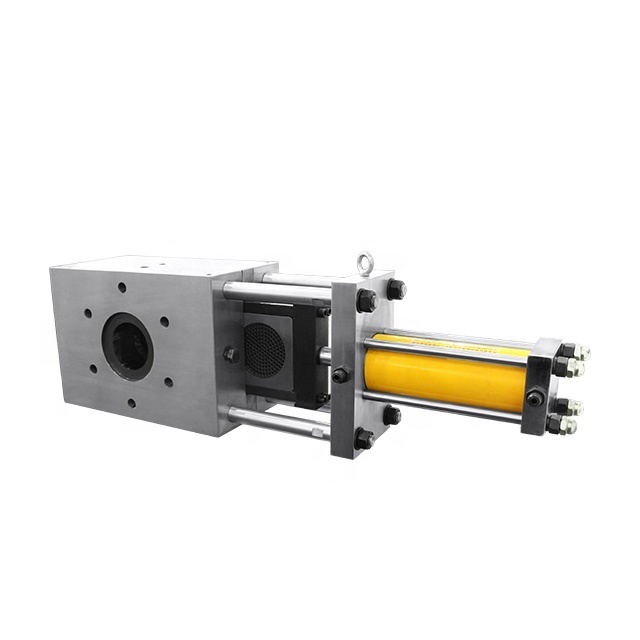
Factory Directly Supply Screen Changer for Breaker Plate Extrusion
 Zhengzhou Bate Melt Pumps Co., Ltd.🇨🇳CN16 yrs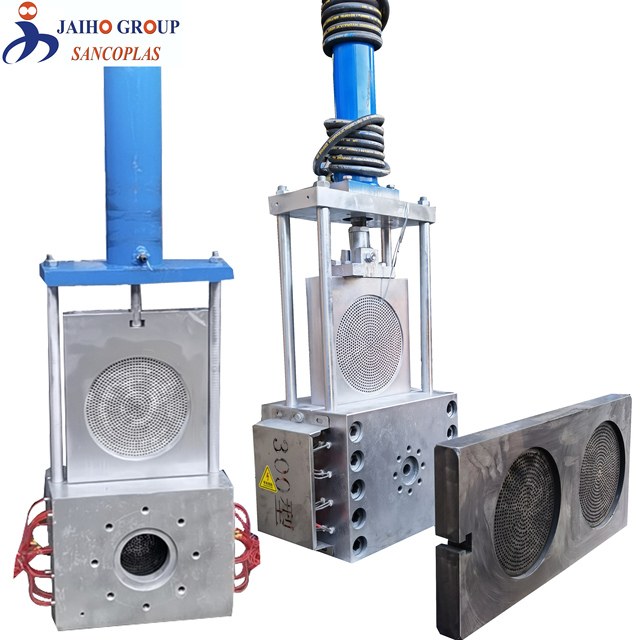
Up and Down High Pressure Hydraulic Screen Changer
 Zhoushan Sanco Plastic Machinery Co., Ltd.verified🇨🇳CN7 yrs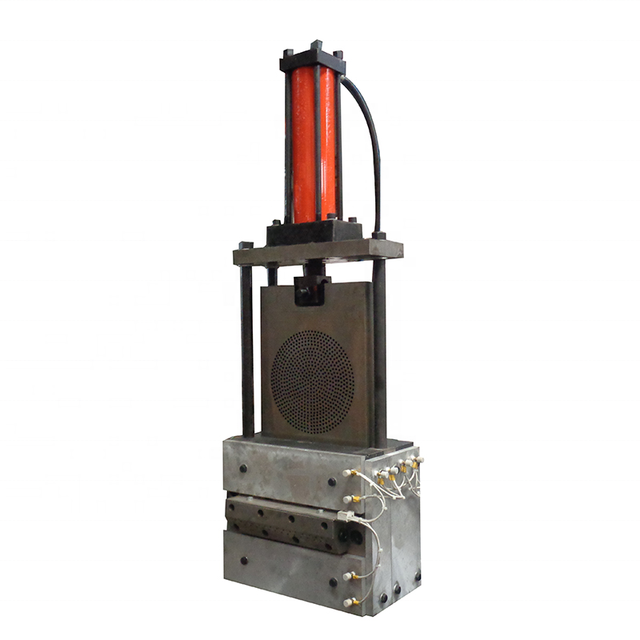
PYM Brand Hot Hydraulic Screen Changer with Single Plate Screw Spare Parts PP Material Model TJC Dia80-650mm High Safety Level
 Zhejiang Pinbo Plastic Machinery Co., Ltd.verified🇨🇳CN12 yrs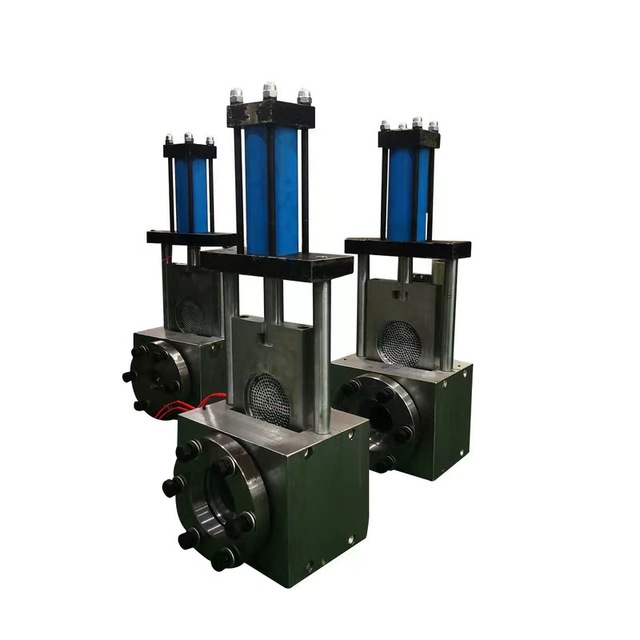
HYDRAULIC SCREEN CHANGER for FILM BLOWING MACHINE
 Wuhan Jiusheng Plastic Machinery Co., Ltd.🇨🇳CN4 yrs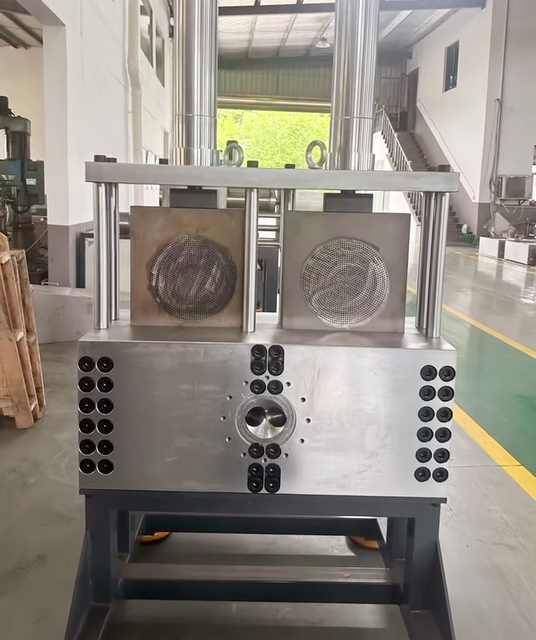
Hydraulic Double Plate Screen Changer for Plastic Extrusion Process
 Zhengzhou Gurnay Import And Export Co., Ltd.🇨🇳CN6 yrs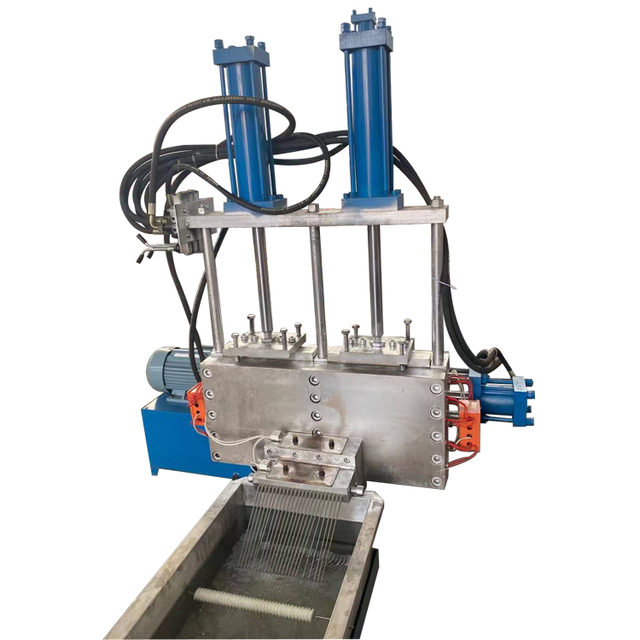
Double High Specification Non-Stop Hydraulic Screen Changer for Plastic Extrusion Steel Material Easy to Operate
 YANTAI XUSHI MACHINERY CO.,LTDverified🇨🇳CN6 yrs
Related Searches
Explore more sourcing topics & related categories
Sources & References
21 sources cited · Verified industry data & reports
Breaker Plate & Screen Pack :
plustio.blogspot.com
Screen Pack is usually a multilayered, nearly symmetrical sandwich of metallic wire screens. 2. It is placed between the screw and the breaker plate, using the latter for physical support. Example : • Eliminate gross solid particles from PP melt, 20/60/20 mesh screen pack may be sufficient, While to eliminate gel particles in film -grade EVAs , 60/180/400/180/60/20 has been used. *Breaker plate short notes - √ Perforated circular metallic disc of about 4-5 mm thick. 4. The breaker plate helps also to convert the spiral flow of the polymer melts leaving the screw into a linear, axial one. Screen Pack - 1. *Screen pack short notes - • Wire mesh 40,60,80 • Arrests the unmelted particles and contamination • Helps in developing back pressure ... √ Advantages - { injection Blow Moulding } 1. Accurate shaping of the neck. 2. A High level of dimensional accuracy. 3. Mini weight tolerance. 4. The highest quality surface finish. 5. Production absolutely free from waste. 6. Crystal clear containers for pharmaceutical application.
BP Class Screen Changer Breaker Plate - PSI-Polymer Systems
www.psi-polymersystems.com
Low Delta-P Breaker Plate Options Request for Quote Class 3 Breaker Plate Get More from Your ProcessBreaker plate design is a key factor for production Breaker plate design is a key factor for production run times between screen changes. Every process has a high pressure limit defined either by the extruder or the yield strength of the screen pack. Starting (clean screen) pressure drop defines the low end of the process pressure window. For most polymers and adhesives processed through screen changers, the industry standard (Class 2) breaker plate hole size works well. However, for high viscosity, fractional melt materials, the typical hole diameter generates a high pressure drop. This reduces the pressure window and corresponding run time available for a given screen pack and results in more frequent screen changes.
BKG® Filtration Accessories | Screen Changer Components
www.nordson.com
CFD analysis is used to design the plates to enhance the breaker plate's optimization further. Screen retainers secure the filter medium in the screen cavity during your backflush procedure. The Nordson Screen Pack combines high-quality weaves to ensure the highest filtration efficiency. We provide multiple filtration solutions for you to select the configuration that best suits your production process needs. ... From breaker plates and screen retainers supporting the filtration medium and keeping it in place to filter candles and the patented BKG® FlexDisc™ enlarging your filtration area significantly - we push your operation to a new level. Using a super plate in a screen changer allows the utilization of the total screen area, not just the open area of the breaker plate borings. Filter candles can be used with a piston-type screen changer to increase the available filtration area. They are available in different filtration finenesses and sizes. Filter candles are mainly used in fiber and virgin or high-end film applications. The FlexDisc is mainly used in fiber, bottle-2-bottle, and film applications. Learn more ... We provide sustainable solutions for your overall process, eliminating opportunities for disturbances at equipment interfaces. From melt pumps, polymer valves, and melt filtration systems to complete underwater pelletizing systems, pyrolysis cleaning ovens, extrusion, and fluid coating die systems, our products will help optimize your operation.
Get Smart About Screens | Plastics Technology
www.ptonline.com
Screens filter contamination and improve mixing, but may raise pressure and temperature, which can affect output and product dimensions. Pressure sensors show when a screen needs changing. As a safety precaution, an alarm should also warn when the screen plugs up. Previous Next · Almost all extrusion processes pass melt through wire-mesh screens on the way to the die to provide filtering and improved mixing. But screens also introduce process variables, raising backpressure and melt temperature and sometimes reducing output. Screens are held by a breaker plate with holes or slots, which forms the seal between the extruder and die. Traditionally, screen packs are inserted with the coarsest screen against the breaker plate and the finest screen facing the screw. For instance, the screen order from breaker plate to screw might go 20 mesh/40 mesh/60 mesh. This construction keeps screens from breaking and “blowing” contamination through the breaker-plate holes. If the finest screen is 80 mesh or more, a coarse screen may be placed over it to keep it from being twisted from the rotating motion of the melt or torn by large contaminants (e.g., 20/100/60/20 mesh). Since this type of pack looks the same from both sides, it is sometimes made symmetrical (20/60/100/60/20 mesh) to ensure that it can’t be inserted backwards. However, a few processors deliberately install screen packs “backwards.” Putting the coarser screen first catches the bigger particles on the upstream surface. Advocates of this approach claim that it allows more lateral melt circulation and less degradation on the upstream surface of the breaker plate.
What Is a Screen Pack? (Definition, Components, and Cost + Video)
blog-oh.haverboecker.com
This protects the finer filtration layer or layers from debris damage, pressure, or the swirling motion of the plastic melt. Another coarse layer faces the breaker plate to support and protect the finer mesh layer from being pushed into the breaker plate holes. At W.S. Tyler, we specialize in woven wire mesh. One of our focuses is on customized filtration products. The problem is that we have made filtration products for such a wide range of industries like oil and gas, food and beverage, pharmaceutical and medical and so many more. So, although a product group like this lets us use our engineering expertise and our wire mesh capabilities, even we struggle to imagine all the possibilities.
Super plate - PSI-Polymer Systems
www.psi-polymersystems.com
Super Plates to the rescue! Super plates maximize extrusion screen life and cut costs, and also reduce pressure drop in high pressure extrusion applications. This can be observed on spent screen packs as dense pockets of filtered contaminants over the breaker plate holes and lesser concentrations over the solid part of the breaker plate. The Super Plate is a finely machined grid of stainless-steel triangular blades, cross welded to provide superior strength and support. The screen pack rests on the edge of the blades. Spacing and support of the blades often allows the cost-saving elimination of a 20-mesh or higher support screen. The Super Plate also eliminates the risk of screen blow through and resulting contaminants in the end product that can occur if the delta-P exceeds the tensile strength of the wire cloth sitting directly above a breaker plate hole. Use of a Super Plate fully exposes up to 95%+ of the screen to through flow of the melt stream. This can yield a gain of up to 55% in effective filtration area over conventional design. The gain is achieved by lifting the screen pack away from the flat, solid surface of the breaker plate.