Screw Cpu

Overview
Product sourcing insights & recommendations
The market for "screw CPU" (referring to CPU mounting hardware and the broader processor market) is undergoing a significant shift in 2026, driven by a demand for DIY-friendly innovations and AI-fueled infrastructure growth.
1. Hardware Innovation: The Rise of Spring-Loaded Screws
Modern CPU mounting is moving away from traditional rigid screws toward spring-loaded systems Coolsolte. This innovation addresses critical thermal and safety concerns for both enthusiasts and data center technicians.
* Self-Regulating Pressure: Springs apply a consistent, pre-calibrated amount of pressure automatically, eliminating the risk of crushing the CPU or leaving it loose, which causes thermal throttling CoolsolteLinkedin.
* Predictive Maintenance: The latest 2026 "smart" coolers integrate AI to monitor mounting pressure and thermal contact in real-time, alerting users before hardware degradation occurs Coolsolte.
* Ease of Installation: Simplified mounting kits, such as those from Noctua and Arctic, significantly reduce assembly time and the technical barrier for new PC builders Imgur.
2. 2026 CPU Market Insights
The broader CPU market is rebounding from supply chain volatility, but high ecosystem costs remain a challenge for mainstream consumers Tomshardware.
* AI Data Center Boom: Server CPU demand is growing at nearly 20% year-over-year, driven by massive expansions in AI infrastructure Tomshardware. This has led to critical supply constraints in high-performance segments Fusionww.
* Desktop Shipment Crater: Mainstream desktop CPU shipments dropped by 20% in 2026 Tomshardware. Consumers are being deterred not by CPU prices alone, but by the "expensive ecosystem" of DDR5 RAM and premium motherboards.
* AMD's Record Gains: AMD has reached a record x86 market share of 30.7%, successfully challenging Intel's dominance in both the enthusiast and server (EPYC) sectors FacebookTomshardware.
* Supply Segment Divergence: While laptop CPUs are now in surplus after Intel flooded the mobile market, data center processors remain highly allocated, with distributors fulfilling only about 40% of orders in some regions Fusionww.
3. Sourcing & Product Trends
B2B sourcing for CPU hardware shows a trend toward complete, multi-socket compatibility kits rather than individual fasteners.
* Universal Compatibility: Modern kits now include hardware for Intel LGA 1700 and AMD AM5 sockets in a single package AlibabaAlibaba.
* Material Shift: Heavy-duty metal brackets are replacing plastic alternatives to prevent warping under the weight of oversized modern air and liquid coolers Walmart.
* Wholesale Pricing: High-precision spring-loaded screws are available at $0.03–$0.06 per unit for bulk orders, while comprehensive repair kits average $3.50 per unit AlibabaAlibaba.
Here are the trends and product insights for 'screw cpu' and market dynamics. You can continue with:
Cpu Mounting Screw Kit Spring Loaded
Products · 3 lists
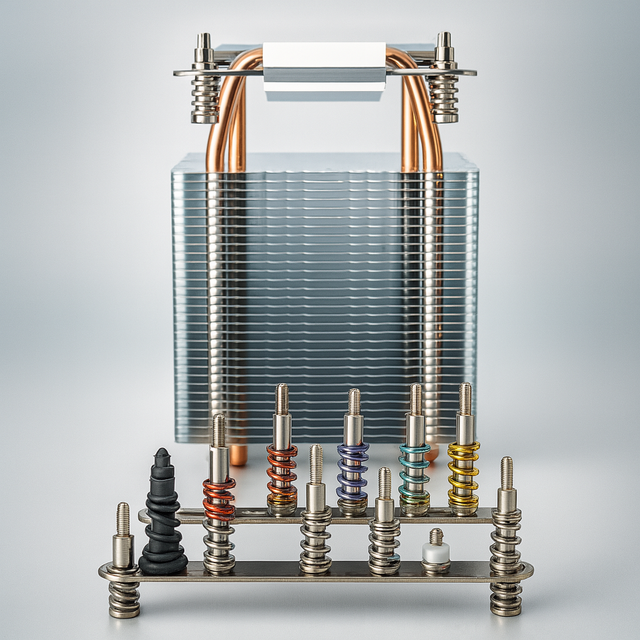
Pc Case Spring Loaded Fan Screw Anti Loose Thumb Screw Heat Sink Radiator Mount Graphics Card Motherboard Fastener Kit
 Dongguan City Hui Xuan Hardware Co., Ltd.verified🇨🇳CN4 yrs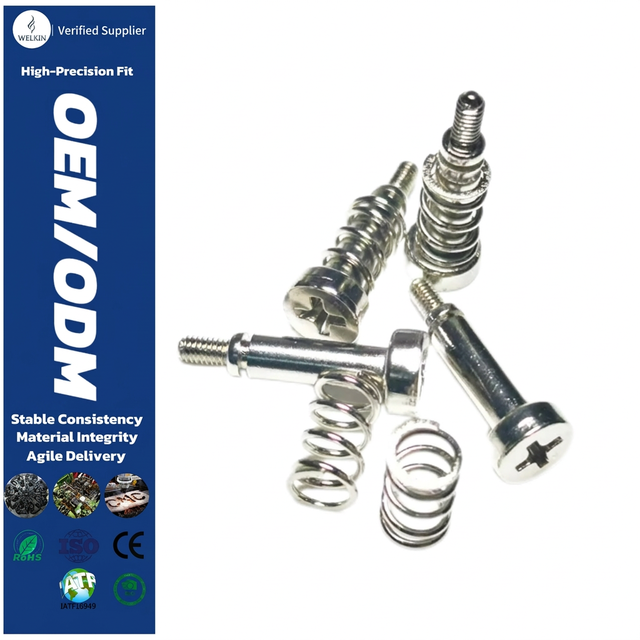
CPU Heatsink Spring Loaded Captive Screw Phillips Head Stainless Steel Step Shoulder Bolt PCB Mounting Hardware Kit
 WELKIN INDUSTRIAL GROUP LIMITED🇭🇰HK1 yr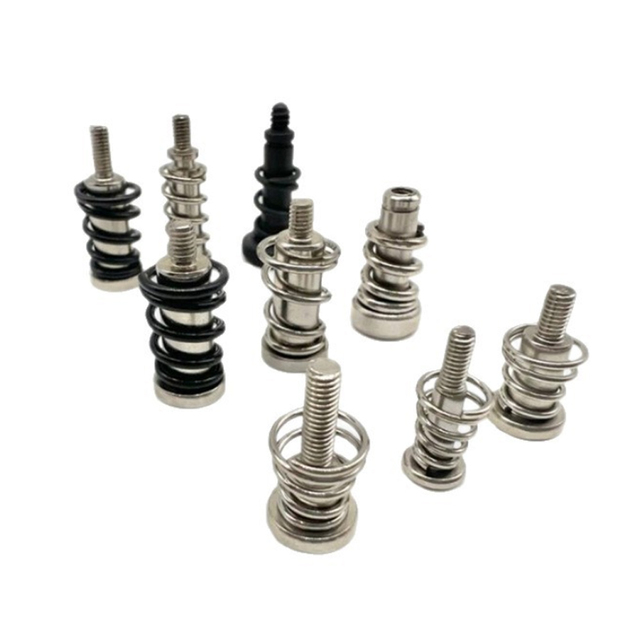
Radiator Spring Screws, Computer CPU Accessory Spring Screws, M3 Phillips Cross Flat Head Stepped Spring Screw Combo
 Shenzhen Lingxinhui Technology Co., Ltd.🇨🇳CN2 yrs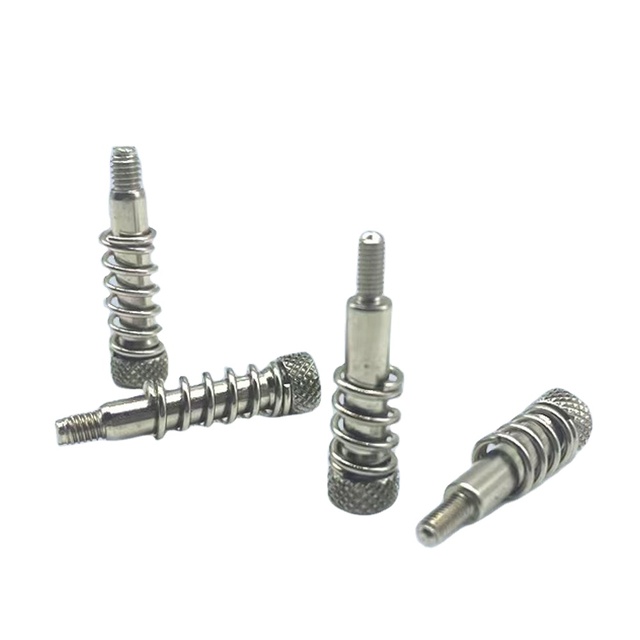
CPU Water Cooling Stepped Spring Screws, Radiator GPU Backplate Screw Spring Combination, Phillips Flat Head Screws
 Shenzhen Longgang District Xr Electronics Factory🇨🇳CN1 yr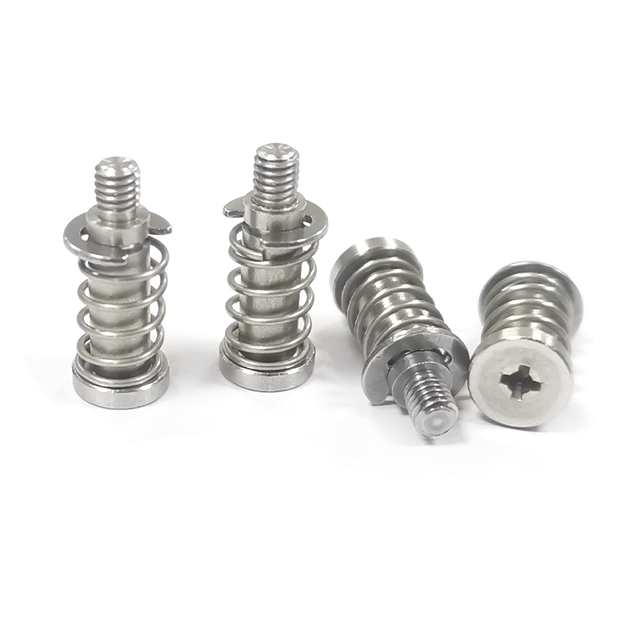
Computer Laptop PC Graphics Card Phillips CPU Mainboard Radiator Steel Fixing Bolts With Spring E Ring Step Combination Screws
 Shenzhen Honscn Precision Parts Co.,Ltdverified🇨🇳CN6 yrs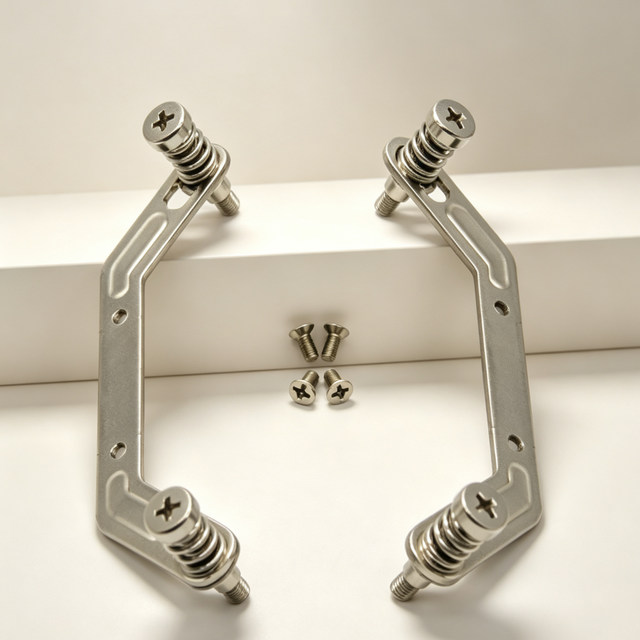
CPU Radiator Bracket Intel 1200 Socket LGA 775 1150 1151 1155 1156 1700 1366 Main Board Base Frame Screw Fastener
 Shenzhen Wanweisi Technology Co., Ltd.🇨🇳CN6 yrs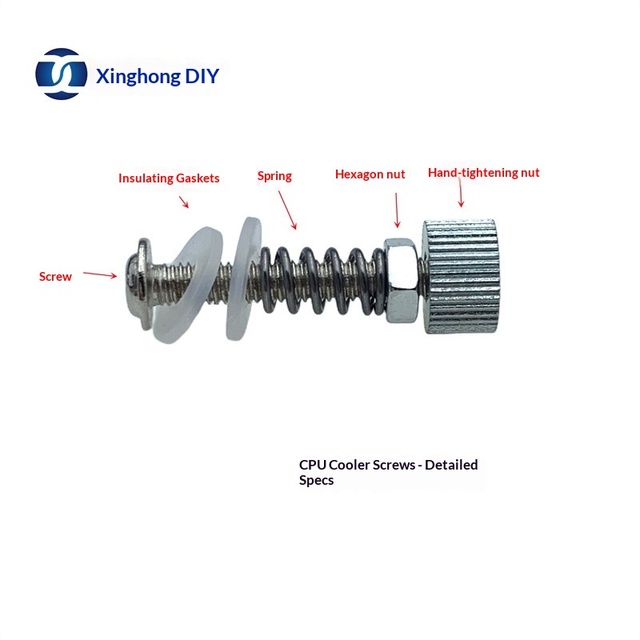
Computer Cold Head Iron Fixing Screws for CPU Graphics Card South/North Bridge M2.5/M3/M4 Coarse Thread Mounting Screws
 Maoming Xili Hardware Products Co., Ltd.🇨🇳CN1 yr
Related Searches
Explore more sourcing topics & related categories
Sources & References
26 sources cited · Verified industry data & reports
Computer case screws - Wikipedia
en.wikipedia.org
Less often, the standoff has a female thread in both ends and a second screw is used to attach it to the case. Some standoffs use the M3 female thread (which faces the motherboard) instead of #6-32 UNC, and on a rare occasion a mixture of types can be used in the same case. All-metric standoffs are stated as threading x hex length x threaded length. For example, M3 x 10 x 6 means a standoff with M3 male and female threading, 10 mm hex length, and 6 mm threaded length. Computer case screws are the hardware used to secure parts of a PC to the case. Although there are numerous manufacturers of computer cases, they have generally used three thread sizes. The Unified Thread Standard (UTS) originates from the United States, while the ISO metric screw thread is standardized worldwide. The #6-32 UNC screws are often found on 3.5" hard disk drives and the case's body to secure the covers. The M3 threaded holes are often found on 5.25" optical disc drives, 3.5" floppy drives, and 2.5" drives. Motherboards and other circuit boards often use a #6-32 UNC standoff. The #6-32 UNC is a UTS screw specifying a major thread diameter of #6 which is defined as 0.1380 inches (3.51 mm); and 32 tpi (threads per inch) which equates to a thread pitch of 0.031250 inches (0.7938 mm). The optional UNC specification indicates the standard coarse thread is used which is defined for #6 screws as 32 tpi rendering 'UNC' redundant, however it may be seen when other specifications such as plating or other treatments are also specified. It is by far the most common screw found inside computer cases.
What are these wee screws called for cpu cooler?
www.facebook.com
What is a CPU? Here's everything you need to know - Digital Trends
www.digitaltrends.com
For Intel CPUs, that means 13th, or 14th-generation chips. You can determine their generation by the product name. For instance, the Core i7-10700K is an older 10th-generation chip, while the Core i9-14900K is a newer 14th-generation chip. AMD does something similar with its Ryzen CPUs: The Ryzen 9 3950X is a 3rd-generation chip, while the Ryzen 7 5700X is the fourth-generation CPU based on the company’s Zen 3 architecture. This is the “gigahertz” (GHz) figure that effectively denotes how many instructions a CPU can handle per second, but that’s not the whole picture regarding performance. Clock speed mostly comes into play when comparing CPUs from the same product family or generation. When all else is the same, a faster clock speed means a faster processor. Mobile devices and some tablets instead utilize a system on a chip (SoC) which is a chip that packages the CPU alongside other components. Intel and AMD both offer CPUs with graphics chips and memory stored on them (you may have heard of AMD APUs), too, meaning they can do more than just standard CPU functions. Microsoft today published a draft "Humanist AI Code of Conduct," a rulebook meant to guide how its MAI models behave, and it opens with a blunt promise: People matter more than AI.
Different screw and their material purpose for computers - Electrical ...
electronics.stackexchange.com
At our computer store, I had a luck to get to screw sorting (uh, how I like that) and got to question: is there any guide/rules, where should each of them be used. There are different color/material, like: silver/light-blue, quicksilver, orange/gold, black (coated?), yellow/greenish, and maybe some more. What are material properties of each? Does black coating gives anything more than look? Does black coating with gray end mean something? The shape of the head is largely irrelevant, but can sometimes give a good indication of the rest of the screw style at quick glance. The case assembly / motherboard mounting are usually hexagonal in shape. These tend to have a longer shank. Maybe some serrated or split-ring ones in the construction of the case - these are used as non-slip washers that generally go in areas where there may be vibration. The paper washers are there more for mechanical protection that electrical. The sponginess prevents over-tightening of the screws and damaging of sensitive circuits. Most of the time the screws are interchangeable within the groupings. The only thing to watch is the length of the shank.
The death of CPU scaling: From one core to many -- and why we're ...
www.extremetech.com
It's been nearly eight years since Intel canceled Tejas and announced its plans for a new multi-core architecture. The press wasted little time in declaring conventional CPU scaling dead -- and while the media has a tendency to bury products, trends, and occasionally people well before their expiration date, this is one declaration that's stood the test of time. GPUs from AMD and Nvidia are both "many-core" products, as are chips from companies like Tilera. Intel's Knights Corner is a many-core chip. The death of conventional scaling has sparked a sharp increase in the number of companies researching various types of specialized CPU cores. Prior to that point, general-purpose CPU architectures, exemplified by Intel's x86, had eaten through the high-end domains of add-in boards and co-processors at a ferocious rate. Once that trend slammed into the brick wall of physics, more specialist architectures began to appear. Over the next few years scaling will continue to slowly improve. Intel will likely meander up to 6-8 cores for mainstream desktop users at some point, quad-cores will become standard at every product level, and we'll see much tighter integration of CPU and GPU. AMD's Bulldozer is a further example of how bolting more cores together can result in a slower end product. Bulldozer was designed to share logic and caches in order to reduce die size and allow for more cores per processor, but the chip's power consumption badly limits its clock speed while slow caches hamstring instructions per cycle (IPC). Even if Bulldozer had been a significantly better chip, it wouldn't change the long-term trend towards diminishing marginal returns.
Central processing unit - Wikipedia
en.wikipedia.org
The overall smaller CPU size, as a result of being implemented on a single die, means faster switching time because of physical factors like decreased gate parasitic capacitance. This has allowed synchronous microprocessors to have clock rates ranging from tens of megahertz to several gigahertz. Additionally, the ability to construct exceedingly small transistors on an IC has increased the complexity and number of transistors in a single CPU many fold. This widely observed trend is described by Moore's law, which had proven to be a fairly accurate predictor of the growth of CPU (and other IC) complexity until 2016. For several decades from the 1970s to early 2000s, the focus in designing high performance general purpose CPUs was largely on achieving high ILP through technologies such as pipelining, caches, superscalar execution, out-of-order execution, etc. This trend culminated in large, power-hungry CPUs such as the Intel Pentium 4. Most CPUs are synchronous circuits, which means they employ a clock signal to pace their sequential operations. The clock signal is produced by an external oscillator circuit that generates a consistent number of pulses each second in the form of a periodic square wave. The System/360 Model 65 had an 8-bit adder for decimal and fixed-point binary arithmetic and a 60-bit adder for floating-point arithmetic. Many later CPU designs use similar mixed bit width, especially when the processor is meant for general-purpose use where a reasonable balance of integer and floating-point capability is required. Increasing the number of cores in a processor (i.e. dual-core, quad-core, etc.) increases the workload that can be handled. This means that the processor can now handle numerous asynchronous events, interrupts, etc. which can take a toll on the CPU when overwhelmed.