Software Modem Huawei
Overview
Product sourcing insights & recommendations


The term "software modem" in the Huawei ecosystem represents a shift from static hardware components to Software-Defined Networking (SDN) and AI-native connectivity. Based on current product and market trends, this evolution is defined by two primary domains: Consumer/Broadband Devices (eAI modems) and Core Chipset Technology (Balong software-defined radio).
1. Product Trends: AI-Native & Green Connectivity
Huawei has pivoted its modem strategy from basic "data forwarding" to Intelligent Experience Management.
* eAI (Embedded AI) Integration: Current optical modems (OptiXstar series) use AI algorithms to identify over 1 million packets per second Huawei. This allows the "software" to prioritize high-value traffic like VR education and cloud gaming, reducing latency and packet loss at the edge.
* Green Software Logic: A major market trend is the "Green Home." These modems use software-driven three-level energy saving Huawei. They employ smart hibernation algorithms that enter "deep sleep" during off-peak hours, reducing energy consumption by up to 30% compared to traditional hardware-only modems.
2. Market Insights: Software-Defined Radio (SDR)
The core of Huawei’s modem dominance lies in its software-defined chipset architecture, specifically the Balong 5000.
* Multi-Mode Flexibility: The Balong 5000 is a single-chip solution that uses software to manage transitions between 2G, 3G, 4G, and 5G Huawei. This reconfigurable software stack allows the same hardware to support both Standalone (SA) and Non-Standalone (NSA) network architectures, a key requirement for global market compatibility.
* Carrier Synergy: Because Huawei develops both the network infrastructure and the modem software, their products are uniquely tuned for high-performance interaction with 5G RAN (Radio Access Network), giving them a competitive edge in throughput and latency optimization Huawei.
3. Future Market Forecast (2024–2026)
Market research indicates that the "modem" is evolving into a distributed intelligent node.
* Predictive Maintenance: Moving toward 2026, modems will transition from reactive to proactive maintenance, using AI to predict hardware lifespan and thermal runaway before failures occur Huawei.
* Air-Liquid Cooling Convergence: As rack power density for AI computing increases, the software managing these modems and data centers will adopt hybrid architectures to flexibly manage cooling resources Huawei.
* V2X Expansion: The software stack in Balong chipsets is being optimized for Vehicle-to-Everything (V2X) communication, prioritizing safety-critical data paths via software logic over standard telematics.
Technical Comparison: Huawei Software Modem Capabilities
| Capability | eAI Optical Modem | Balong 5000 (SDR) |
|---|---|---|
| Primary Goal | User Experience Optimization | Network Mode Compatibility |
| Software Role | Packet Identification & Acceleration | Radio Frequency Reconfiguration |
| Energy Efficiency | Smart Hibernation (Off-peak Sleep) | DVFS (Dynamic Voltage/Freq Scaling) |
| Connectivity | Wi-Fi 6 / FTTR | 5G (Sub-6 & mmWave) / V2X |
I have completed the market and technical analysis. You can continue with these specific steps:
Huawei Software Modem Usb Dongle
Products · Top picks & verified manufacturers
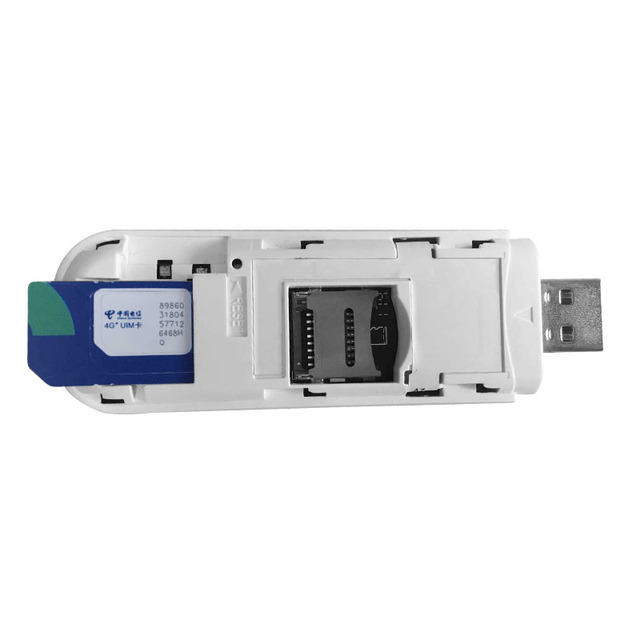
USB Port With Sim Card Slot 19216811 Software 3g Router 4g Usb Dongle
 Shenzhen Zhibotong Electronics Co., Ltd.verified🇨🇳CN9 yrs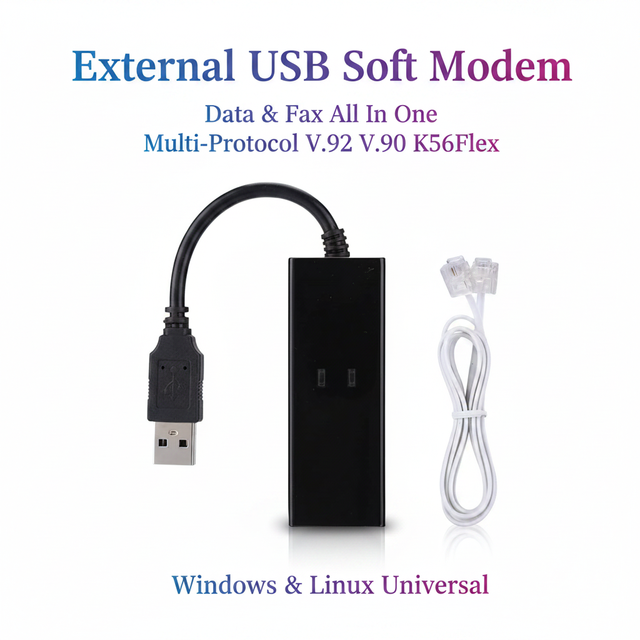
OEM Wired USB 56Kbps V.90 V.92 External Dial up Fax Data Modem for Win XP/Vista/Win7/8/10/Linux
Related Searches
Explore more sourcing topics & related categories
Sources & References
82 sources cited · Verified industry data & reports
Huawei Releases Top 10 Trends of Data Center Facility for ...
Huawei Digital Power Technologies
Today, Huawei held a conference on the Top 10 Trends of Data Center Facility in 2024 and released the corresponding White Paper.
Huawei Hosts the Fifth Digital Economy Development Forum
Huawei
At the forum, Huawei shared detailed insights into AI technologies and trends related to the "Intelligent World 2035", in the hope of ...
Huawei Releases Top 10 Trends of Smart PV & ESS 2026
Huawei
In residential PV+ESS scenarios, products are evolving from AI-enabled to AI-native. AI is fully embedded in the design, experience, and O&M ...

MWC Barcelona 2026 | New Product
Huawei Enterprise
MWC 2026 New Launches. Industrial Solutions; Flagship Products. High-Quality Secure Government Campus Network Solution.

Huawei releases reports on future tech trends and their ...
LinkedIn · Huawei
Megatrend 8: Agentic AI will drive paradigm shifts in data storage, as AI storage demand will increase by 500 times over what it is in 2025, and ...

Huawei Reviews, Ratings & Features 2026
Gartner
Read the latest, in-depth Huawei reviews from real users verified by Gartner Peer Insights, and choose your business software with confidence.