Sound Calibration Microphone

Overview
Product sourcing insights & recommendations


The sound calibration microphone market is evolving from simple frequency response measurement to spatial acoustic mapping, driven by the surge in immersive audio (Dolby Atmos) and the need for wireless flexibility. The market is projected to reach approximately $2.8 billion by 2026 Futuremarketinsights, with professional segments focusing on reducing calibration complexity and setup downtime Trinnov.
Key trends include:
- Spatial Triangulation: Advanced 3D microphones (like Trinnov's) now use tetrahedral capsules to map speaker distance, azimuth, and elevation, correcting for imperfect speaker placement Trinnov.
- "Plug-and-Play" Calibration: Innovations like GRAS's EQset technology provide fixed sensitivity out of the box, eliminating the need for individual compensation files—a major pain point for large-scale measurement arrays Grasacoustics.
- USB Dominance in Prosumer Space: Microphones like the miniDSP UMIK-2 have become the standard for home theater and studio tuning due to their integrated calibration and compatibility with Dirac Live software.
B2B pricing typically ranges from $15–$55 for entry-level XLR omnidirectional mics to $150–$360+ for precision USB or industrial-grade measurement tools . The detailed findings file below includes full technical drivers, consumer pain points, and current product benchmarks.
Based on these market trends, here are your next steps:
Xlr Measurement Microphone For Acoustic Measurement
Products · 3 lists

797AUDIO ECM8000 Professional Measurement Microphone Sound Level Monitoring Electronic Measuring Instrument
 Beijing 797 Audio Co., Ltd.verified🇨🇳CN4 yrs
Professional Omnidirectional Capacitance Test microphone for Room, High Definition Recording Studio And Field ECM8000
 Hunan Teng Xin Technology Co., Ltd.🇨🇳CN5 yrs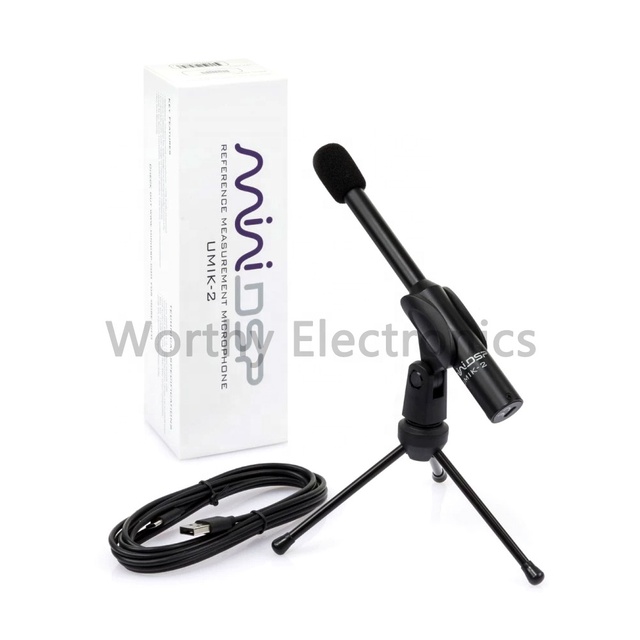
UMIK-2 miniDSP electroacoustic field measurement microphone test microphone curve tuning speaker
 Shenzhen Worthy Electronics corp🇨🇳CN5 yrs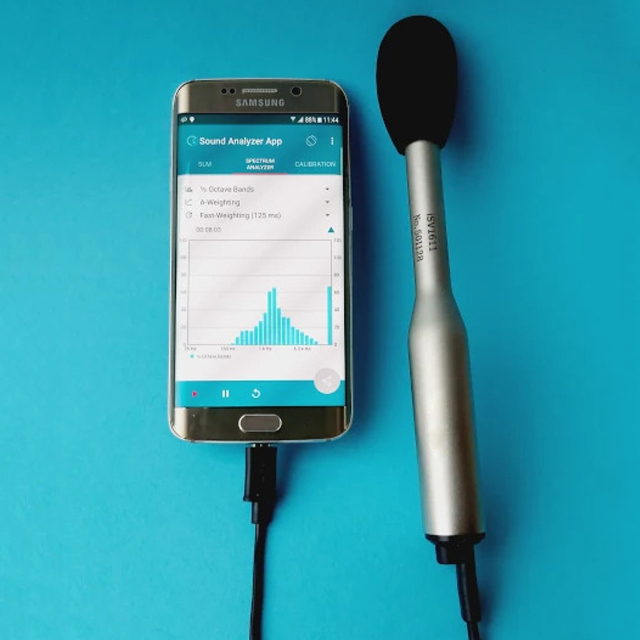
USB Measurement Microphone ISV1611
 Hangzhou Aihua Instruments Co., Ltd.verified🇨🇳CN18 yrs
Deep Dive · Full Report
Full Market Report
1 document · Live-fetched from source
Related Searches
Explore more sourcing topics & related categories
Sources & References
17 sources cited · Verified industry data & reports
Explore the Global Microphone Market
Future Market Insights
The Microphone Market worth USD 2.8 billion in 2026 is expected to reach USD 4.9 billion by 2036, growing at a CAGR of 5.7% during 2026–2036 ...
Wired Microphone Market Size, Trends, 2026-2033 Forecast & ...
The Wired Microphone Market was valued at USD 2.3 Billion in 2024 and is poised to grow from USD 2.4 Billion in 2025 to USD 3.1 Billion by 2033, ...

Wireless Microphone Market Size, Share & Trends | 2026- ...
SNS Insider
The Wireless Microphone Market was valued at USD 2.60 Billion in 2025 and is projected to reach USD 5.11 Billion by 2035, registering a CAGR of ...

Professional Microphones Market Growth Report 2031
Mordor Intelligence
The Professional Microphones Market is expected to reach USD 5.89 billion in 2026 and grow at a CAGR of 8.80% to reach USD 8.98 billion by ...

Wireless Microphone Market Size, Growth Report, 2026-2033
Grand View Research
Wireless microphone market size was at $2.6 billion in 2025 and to grow from $2.8 billion in 2026 to $4.8 billion by 2033, at a CAGR of 8.1%

Microphone Market Size & Share 2026-2032
360iResearch
The Microphone Market size was estimated at USD 2.65 billion in 2025 and expected to reach USD 2.82 billion in 2026, at a CAGR of 6.39% to reach USD 4.09 ...