Soundbar Amplifier

Overview
Product sourcing insights & recommendations


The soundbar amplifier market in 2026 is driven by the "mass-marketization" of spatial audio and a surge in wireless smart integration. The global market is projected to reach approximately $6 billion to $10.3 billion by late 2026, growing at a CAGR of ~7–12% GminsightsMordorintelligence.
Core Market Trends for 2026
* Spatial Audio Ubiquity: Dolby Atmos and DTS:X are no longer exclusive to premium tiers. Mid-range and even budget "all-in-one" systems are incorporating virtual Atmos or dedicated up-firing drivers to meet consumer demand for immersive home cinema AudioadviceRtings.
* Wireless Dominance: Wi-Fi-based multi-room audio and "wireless surrounds" are the fastest-growing segments. Consumers prioritize cable-free setups with wireless subwoofers and satellite speakers GminsightsImarcgroup.
* AI Sound Optimization: Modern amplifiers now feature AI-driven room calibration (e.g., Sony’s Voice Zoom 3, LG’s AI Calibration) and dedicated "AI Dialogue Modes" to improve speech clarity on thin-panel TVs WhathifiAv.
* Gaming Integration: There is high demand for soundbars featuring HDMI 2.1 passthrough supporting 4K/120Hz and VRR, catering specifically to the PlayStation and Xbox enthusiast markets WhathifiStereonet.
Product Insights & Sourcing Landscape
The market is shifting toward compact, high-efficiency Class D amplifier modules that deliver high power (up to 2,500W in flagship systems) with minimal heat dissipation StereonetYahoo.
* Integrated Solutions: Suppliers are offering 2.1.2 and 3.1.2 channel "All-in-One" boards that combine the amplifier, DSP, and wireless modules into a single PCBA for streamlined manufacturing.
* Component Pricing:
* Advanced PCBA Modules: Basic 2.1 channel Class D modules range from $7.00 to $10.00 at bulk MOQs (500+ units).
* Full Atmos Systems: Professional-grade Dolby Atmos soundbar units (2.1.2) for wholesale distribution are priced around $550–$620 per unit for low-volume orders.
2.1 Channel Soundbar Amplifier With Dolby Atmos
Products · 3 lists
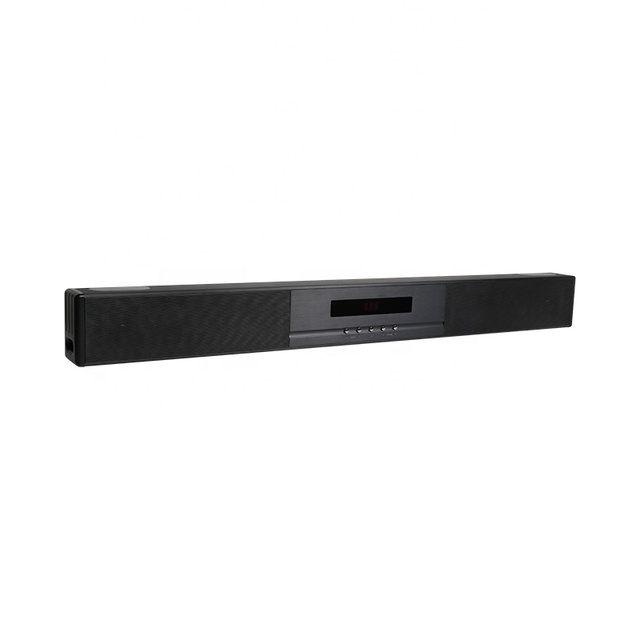
Tonewinner AT-02 for 2.1 Class D Amplifier with 250W Wireless Active TV Soundbar 4" Woofer Wood Material Home Theatre
 Guangzhou Tonewinner Electronics Co., Ltd.🇨🇳CN7 yrs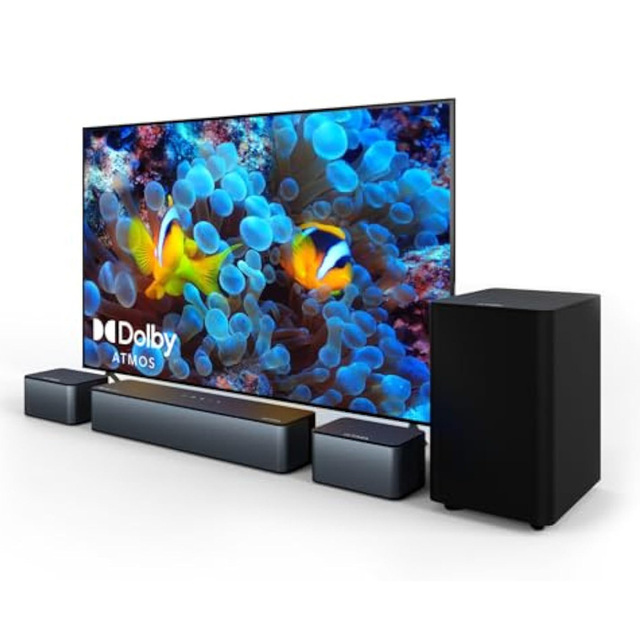
410 Factory Direct Supply 5.1 Channel Soundbar 410W Built-in Battery Wireless Subwoofer Model 5100 50Hz-20kHz Frequency Response
 Xiamen Dayin Multimedia Technology Co., Ltd.🇨🇳CN1 yr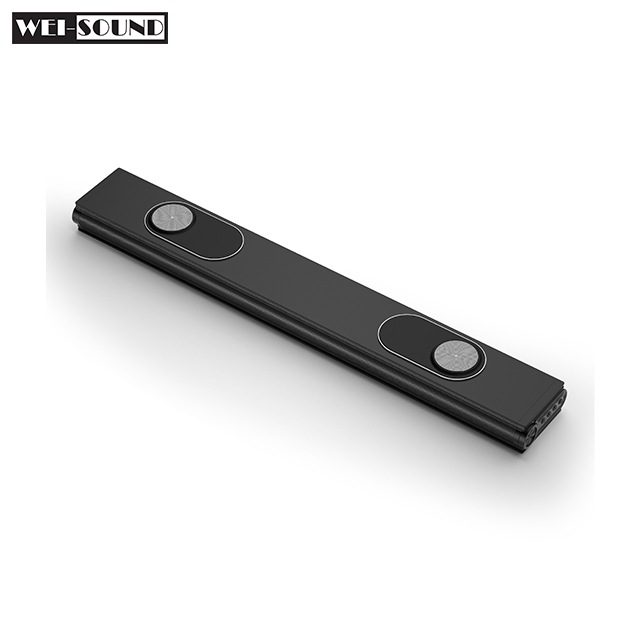
3.1.2CH Atmos All in One 160W High End Atmos Technology Built-in 3.5 Inch Subwoofer X 2 Amazing Bass Soundbar
 TAISUNCONN TECHNOLOGY CO., LTD🇹🇼TW4 yrs
Related Searches
Explore more sourcing topics & related categories
Sources & References
19 sources cited · Verified industry data & reports
Soundbar Market Size, Share and Trends,Report 2026-34
IMARC Group
The global soundbar market size reached USD 4.5 Billion in 2025. exhibiting a growth rate (CAGR) of 7.08% during 2026-2034. We expect the global soundbar ...
Audio Amplifier Market Report 2026: $5.99 Bn ...
Yahoo Finance
Emerging trends highlight a growing preference for high-efficiency audio amplifiers, compact integrated circuits, low-distortion, high-fidelity ...

Wireless Soundbar Market Size & Share 2026-2035
Global Market Insights Inc.
The wireless soundbar market was valued at USD 5.7 billion in 2025. The market is expected to grow from USD 6 billion in 2026 to USD 11.1 billion in 2035, at a ...

Loudspeakers and Sound Bars Market Report 2026
Research and Markets
The Loudspeakers and Sound Bars Market, valued at USD 30.72B in 2026, is projected to reach USD 35.52B by 2030, growing at a 3.7% CAGR.

Future Outlook for Sound Bar Speaker Market 2026–2033
LinkedIn · Gray Matter Analytics
The market is expected to grow at a CAGR of 13% during the forecasted period from 2026 to 2033, indicating robust expansion prospects.

Sound Bar Speaker Market Outlook 2026-2034
Intel Market Research
The global Sound Bar Speaker Market is experiencing growth driven by rising consumer demand for enhanced home theater experiences. With over 35% ...