Steadicam For Phone

Overview
Product sourcing insights & recommendations
The market for "steadicams for phone" (now primarily referred to as smartphone gimbals) is experiencing a high-growth phase in 2026, driven by the explosive demand for high-quality social media content and travel vlogging. The global market value is projected to reach $7.8 billion by 2034, with a compound annual growth rate (CAGR) of 10.4% starting from 2026 DatainteloVerifiedmarketreports.
Market Trends & Consumer Insights
* Trend Shift (2025–2026): Mechanical stabilization is now a baseline; the market has pivoted toward AI-integrated filmmaking assistants Dataintelo.
* Key Consumer Frustration: Users increasingly seek professional-grade cinematic motion that native smartphone stabilization (OIS/EIS) cannot replicate, particularly for micro-shakes and jerky panning during active movement Alibaba.
* The "TikTok/Reels Effect": Vertical video optimization and automated "gesture controls" (e.g., holding up a palm to start tracking) are mandatory features for 2026 models DatainteloAlibaba.
* Integration with High-End Phones: New models are specifically designed with higher payload capacities (up to 320g) to accommodate the weight of flagship smartphones like the iPhone 17 and Samsung S26 Ultra Pcmag.
2026 Product Feature Standard
Modern "steadicam" devices for phones must now offer these features to remain competitive:
* Native AI Tracking: High-end models like the Insta360 Flow 2 Pro and DJI Osmo Mobile 8 utilize onboard vision sensors, allowing for subject tracking even when using third-party apps like Instagram or TikTok Alibaba.
* Ultra-Portability: Foldable, "pocket-sized" designs are dominating the consumer market, with a shift toward magnetic mounting systems for faster deployment HtfmarketinsightsDataintelo.
* Extended Ecosystems: Devices are increasingly bundled with integrated fill lights, external wireless microphone support, and USB-C power-bank functionality to charge the phone while filming Alibaba.
Competitive Landscape
The market is currently dominated by DJI (~31% share), followed by Zhiyun (~18%) and Insta360. While DJI leads in software polish, Zhiyun is favored by mobile cinematographers for advanced physical controls, and Hohem is gaining significant market share as the "value leader" offering high-end AI features at budget price points DatainteloAlibaba.
I have identified several high-potential products matching these 2026 trends, including 3-axis foldable gimbals with AI tracking and integrated lighting, available for sourcing directly.
Based on the 2026 market trends, would you like to:
Handheld Smartphone Steadicam Stabilizer For Vlogging
Products · 2 lists
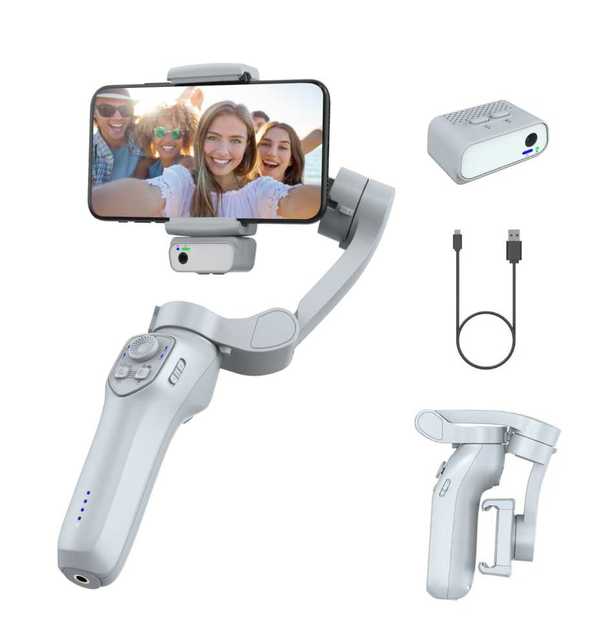
L7Cpro Foldable 3 Mobile Phones Gimbal Stabilizer with AI Face Tracking Anti-shaking for VLOG Selfie Live Streaming Android IOS
 Shenzhen JX ROBOT Technology Co., Ltd.verified🇨🇳CN9 yrs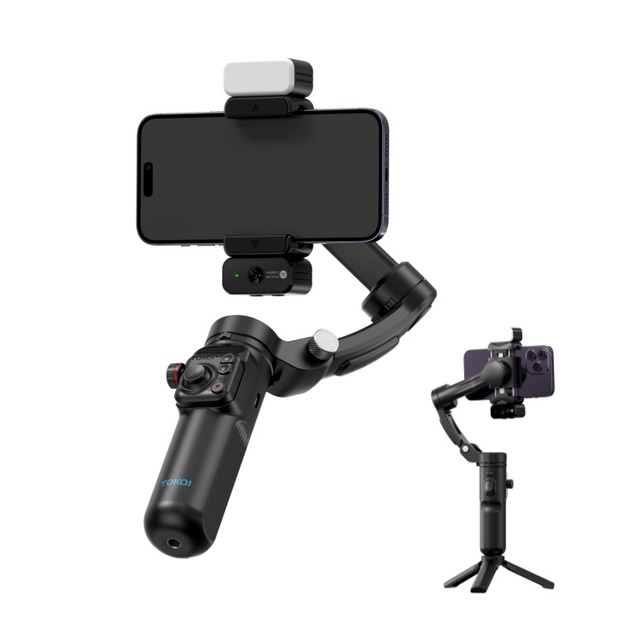
Professional m03 vlog video handheld stabilizer 3-axis ai tracking gimbal with smartphone auto face object tracking
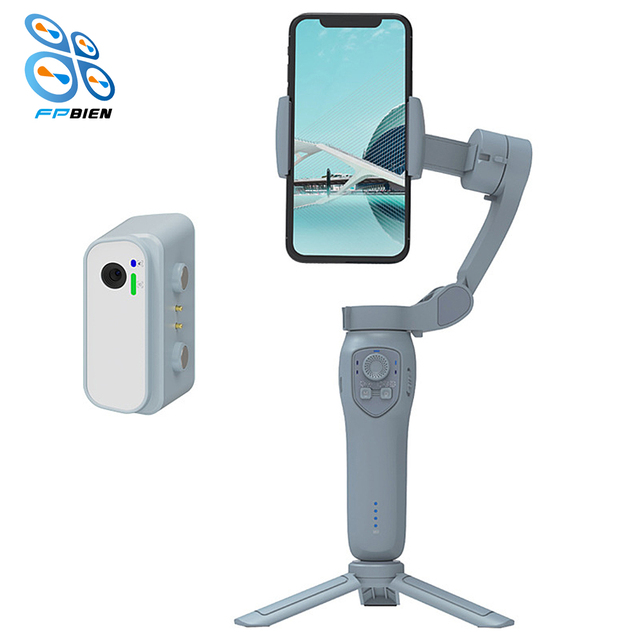
L7Cpro Plus 3 Axis AI Auto Face Tracking Gimbal Stabilizer with LED Fill Light for Vlog Selfie and Tiktok/YouTube Shooting
 Foshan City Gaoming District Mibohe Trade Co., Ltd.🇨🇳CN10 yrs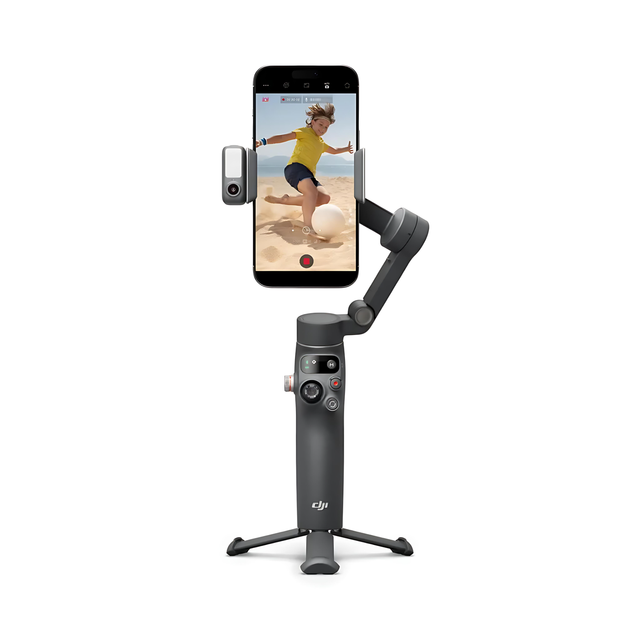
Osmo Mobile 7P Scene Follow-Shoot Smartphone Stabilizer OM Intelligent Follow-Shoot Vlog Anti-Shake Handheld Gimbal
 Shenzhen Bridge Technology Co., Ltd.🇨🇳CN2 yrs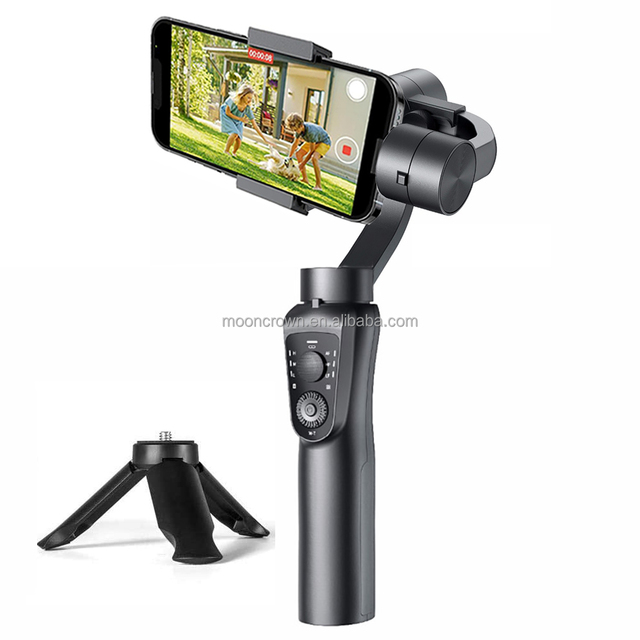
3 Axis AI Handheld Gimbal Camera Smartphone Stabilization Selfie Stick Gimbal Stabilizer With Tripod for Film Maker Video Vlog
 Shenzhen Quanhuazhi Electronics Co., Ltd.🇨🇳CN6 yrs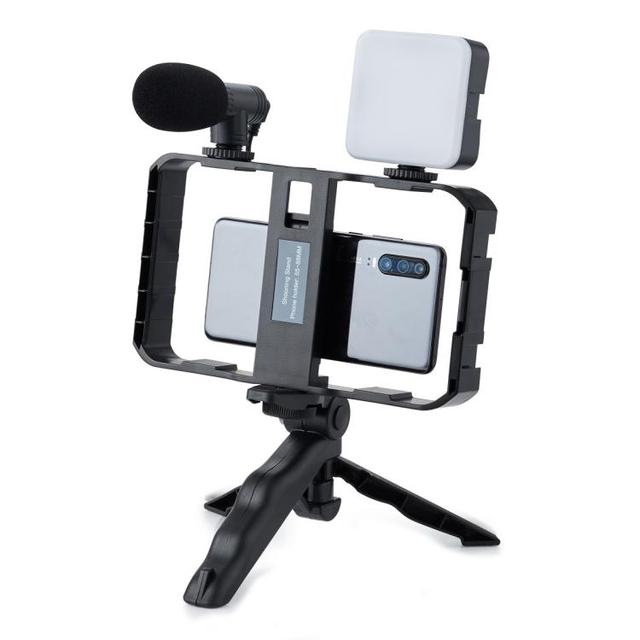
Portable Smartphone Cage Stabilizer with Microphone and LED Fill Light Anti-Shake Handheld Gimbal for Vlogging
 Shenzhen Wbtd Technology Co., Ltd.🇨🇳CN6 yrs
Related Searches
Explore more sourcing topics & related categories
Sources & References
28 sources cited · Verified industry data & reports
Mobile Gimbal Market Share , Size - Forecasts Analysis to 2026
www.alliedmarketresearch.com
The report includes the mobile gimbal market analysis of the regional as well as global mobile gimbal market trends, key players, market segments, application areas, and market growth strategies. ... According to the CXO, the factors such as the rise in the global entertainment and media industry coupled with the surge in the number of vloggers are expected to drive the growth of the mobile gimbal market. However, integrated camera stabilization being offered by smartphone manufacturers can hamper the market growth during the forecast period. Rise in expenditure on mobile phone accessories by the global population is expected to create a growth opportunity for the Mobile Gimbal Market This growing investment has driven the sales of mobile and mobile accessories and has indirectly influenced the growth of mobile gimbals in the global market. The integrated camera stabilization being offered by smartphone manufacturers can hamper the growth of the mobile gimbal market since many smartphones are having inbuilt motion stabilization options. (EIS) Electronic image stabilization is another technique used to compensate for hand jitters that manifest themselves in distracting video shakes during playback. Many smartphone apps have also been developed to overcome blurriness in images. Given the variety of cheaper options available over gimbals, the growth of the gimbal market can hamper.
The 3 Best Android and iPhone Gimbals of 2026 | Reviews by Wirecutter
www.nytimes.com
Today’s smartphone cameras can capture gorgeous 4K video, but even with the advent of more-effective in-camera stabilization, they’re still not capable of perfectly smooth footage. A gimbal — a pivoting suspension device that mechanically stabilizes a camera — can replace an expensive tripod or dolly and make cinematic video effects accessible to anyone. A gimbal can help you record less shaky, smoother, more professional-looking videos. It does this by mechanically stabilizing your phone to counter the jerky movements that commonly accompany walking, running, hiking, or other adventurous activities. This remote remains a part of the gimbal until you need it, popping out when you want to control things from a distance. On the downside, it doesn’t have the 360-degree rotation of the Flow 2 Pro, nor does its Hohem Joy app (iOS, Android) have as many features. But its stabilization is effective, and its range of motion should be sufficient for most people. Here are some of the basic features that we think are important in a gimbal: Three-axis stabilization: A gimbal with this feature stabilizes the tilt (up and down), roll (spin or twirl while facing in one direction), and pan (left and right axes).
Handheld Gimbal Market Size & Share Report, 2035
www.globalgrowthinsights.com
This expansion highlights a robust CAGR of 5.31% during the 2026–2035 period, driven by over 61% demand from smartphone-based gimbals, nearly 29% contribution from mirrorless and action camera stabilization devices, and more than 47% usage linked to social media content creation and professional video production applications worldwide. Handheld Gimbal Market Growth Outlook 2026-2035: USD 227.1 Million in 2026 Rising to USD 361.7 Million by 2035, CAGR Of 5.31% Meanwhile, the Asia-Pacific region is witnessing rapid growth, contributing 30% to the global market, largely due to the rise of social media influencers and increasing adoption of digital platforms. Industry reports indicate that over 60% of handheld gimbals are purchased for smartphone stabilization, highlighting the growing trend of mobile videography. Additionally, the rising trend of travel vlogging and adventure filming creates a demand for durable and portable gimbals. ... Keeping pace with rapid technological advancements is a significant challenge for manufacturers in the handheld gimbal market. With the continuous introduction of smartphones featuring built-in stabilization features, the demand for external stabilizers could decline.
What Is the Best Gimbal Stabilizer for Smartphone in 2026?
electronics.alibaba.com
A gimbal is only as capable as its software. DJI and Insta360 push quarterly firmware updates adding features like horizon lock or gesture controls. Brands with infrequent updates (e.g., older Feiyu or Benro models) risk app incompatibility with iOS 18 or Android 15. Check the manufacturer’s update log — if no patch released in last 9 months, proceed with caution. Based on 2026 market analysis across 17 models, here’s what each bracket delivers — and where compromises hide: ✅ Bottom line first: For most users in 2026, a 3-axis smartphone gimbal stabilizer delivers measurable improvement in video smoothness, framing control, and creative flexibility — especially for vlogging, travel documentation, and family content — but only if matched to your phone’s dimensions, weight (up to 320g), battery life needs (≥12 hrs real-world use), and core use case (e.g., solo tracking vs. Over 5.2 million monthly Google searches for gimbal stabilizer for smartphone reflect a growing frustration: modern smartphone cameras capture stunning stills, yet video remains vulnerable to micro-shakes, jerky pans, and inconsistent framing — especially when walking, filming kids, or recording hands-free. Unlike optical image stabilization (OIS) built into phones (which corrects only 1–2 axes), a true 3-axis motorized gimbal actively compensates for pitch, yaw, and roll in real time — delivering cinematic motion impossible with software alone 3. But not all gimbals deliver equal value.
Handheld Gimbal Market Size, Share & Trends 2035
www.marketresearchfuture.com
Enhanced algorithms and sensor technologies are enabling gimbals to provide superior stabilization, catering to the needs of professional videographers and casual users alike. With the proliferation of smartphones equipped with advanced cameras, there is a growing trend towards mobile content creation. Manufacturers are focusing on creating products that are easy to operate, appealing to a broader audience, including those who may not have prior experience with stabilization equipment. The Handheld Gimbal Market is significantly influenced by the rise of mobile content creation. With the proliferation of smartphones equipped with high-resolution cameras, more individuals are engaging in video production for social media platforms. This trend has led to an increased demand for handheld gimbals, which provide the necessary stabilization for professional-looking videos. The Professional segment in the handheld gimbal market embodies a sophisticated user base that requires reliable, high-performance equipment to achieve impeccable video stabilization in professional projects. These users often include filmmakers, videographers, and content creators who prioritize quality and durability in their gear. Meanwhile, the Amateur segment has emerged as a significant force, comprising users who are increasingly engaging in video filming via smartphones and consumer cameras. As consumers and professionals alike seek to enhance their visual storytelling capabilities, the integration of sophisticated stabilization features in gimbals has become paramount. This trend is particularly evident among content creators, filmmakers, and vloggers who require equipment that can deliver smooth, professional-grade footage.
Smartphone Stabilizer Market Research Report 2034
dataintelo.com
Get demo access to our dashboard and explore real-time market data, trends, and analysis designed to drive smarter decisions. ... Innovation velocity remains a critical competitive lever in the smartphone stabilizer market. In 2025 and 2026, the most commercially significant product features have been AI-based face and body tracking, which allows the gimbal to autonomously follow a moving subject without manual pan input; extended battery life exceeding 20 hours on a single charge; and foldable, ultra-compact form factors that fit into jacket pockets. The smartphone stabilizer market was valued at $3.2 billion in 2025 and is projected to reach $7.8 billion by 2034, growing at a CAGR of 10.4%. The global smartphone stabilizer market was valued at $3.2 billion in 2025 and is projected to reach $7.8 billion by 2034, expanding at a compound annual growth rate (CAGR) of 10.4% over the forecast period from 2026 to 2034. Smartphone stabilizers, primarily in the form of three-axis handheld gimbals, have transitioned from niche professional tools to mainstream consumer accessories as mobile videography, content creation, and live streaming have exploded in popularity worldwide. Companies such as Neewer, Rollei, Joby, and Benro serve specialized niches within the broader ecosystem, with Joby's GorillaPod Vlog kit, which integrates a flexible tripod mount with a basic one-axis stabilizer, appealing to entry-level users as a first stabilization solution before they migrate to dedicated three-axis gimbals. Competitive dynamics in 2025 and 2026 have been shaped by a dramatic acceleration of product launch cadence, with leading brands releasing new stabilizer generations annually or biannually rather than the traditional two-to-three-year cycle.