Super Computer Cost

Overview
Product sourcing insights & recommendations
The supercomputer market is currently defined by a massive surge in AI infrastructure investment, with hardware costs for leading systems now doubling every year. As of late 2025, private industry has overtaken the public sector, owning 80% of global AI compute power, with flagship projects like xAI's Colossus reaching $7 billion in hardware costs alone. The global market is projected to reach $13.29 billion by 2026, driven by a performance growth rate that doubles every 9 months.
The accompanying report provides a detailed breakdown of hardware pricing (e.g., NVIDIA H100 vs. AMD MI300 clusters), regional growth projections (with APAC leading at a 10.97% CAGR), and the emerging shift toward HPC-as-a-Service (HPCaaS) models. You will also find a curated list of high-performance server nodes and liquid cooling solutions suitable for commercial data center deployment.
I have synthesized the latest data on supercomputer cost and market trends. You can continue with:
High Performance Liquid Cooling Server For Data Center
Products · 3 lists
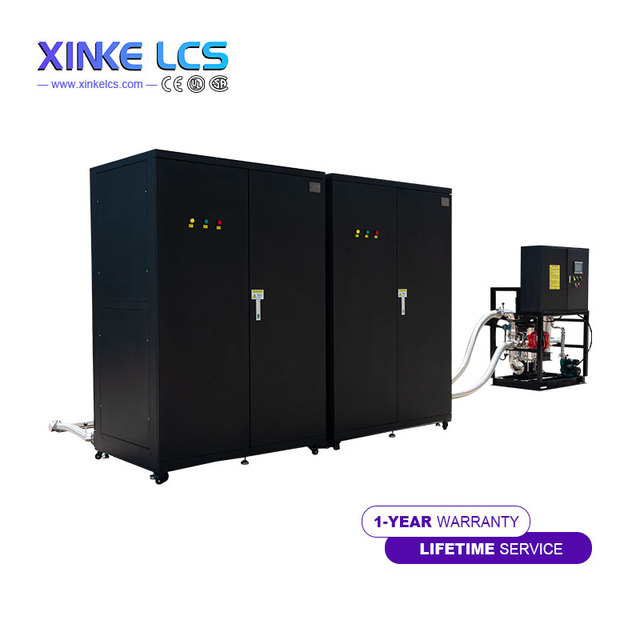
Xinke Intelligent 1 2 60 Positions Liquid Cooling Container High Power Heat Dissipation High Load Server /CE/CCS Certified 1
 Tangshan Xinke Electronics Co., Ltd.🇨🇳CN1 yr
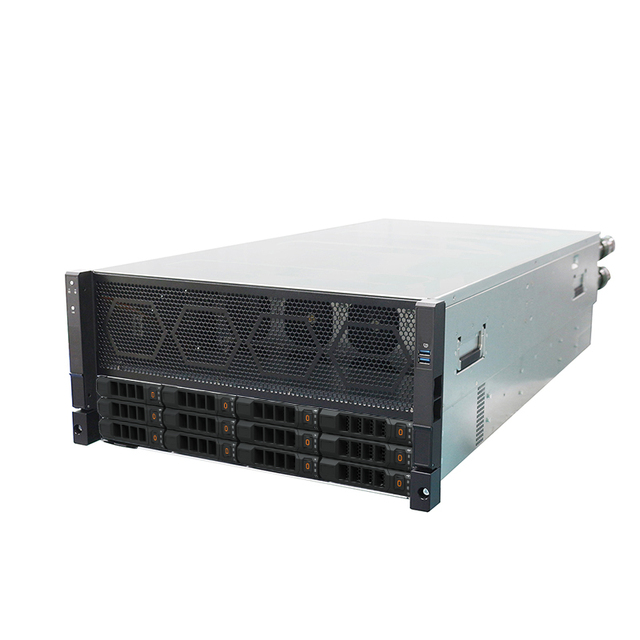
TOPLOONG OEM Liquid-Cooled GPU Server Platform Support 8xRTX4090/5090 for AI Inference Data Center Liquid Cooling Solution
 Shenzhen Toploong Technology Co., Ltd.🇨🇳CN14 yrs
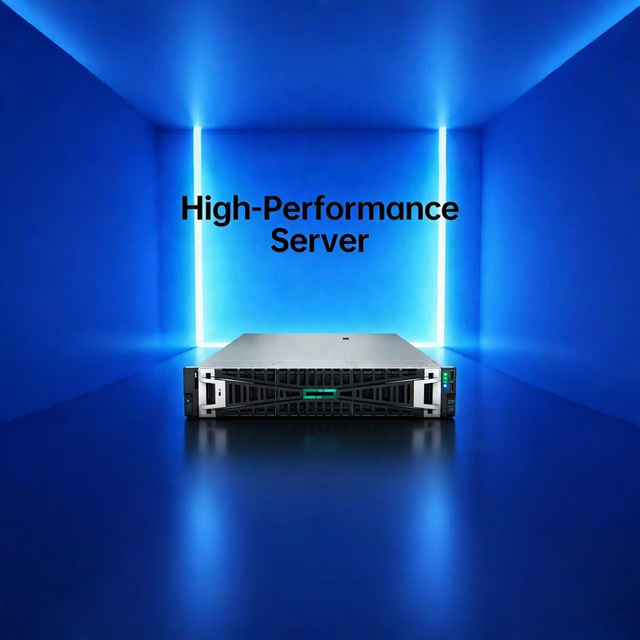
HPE ProLiant DL560 Gen11 2U Rack Server with Intel Xeon Processors Virtualization Optimized Liquid Cooling CTO Server P55182-B21
 Beijing Huayue Beishang Technology Co., Ltd.verified🇨🇳CN5 yrs
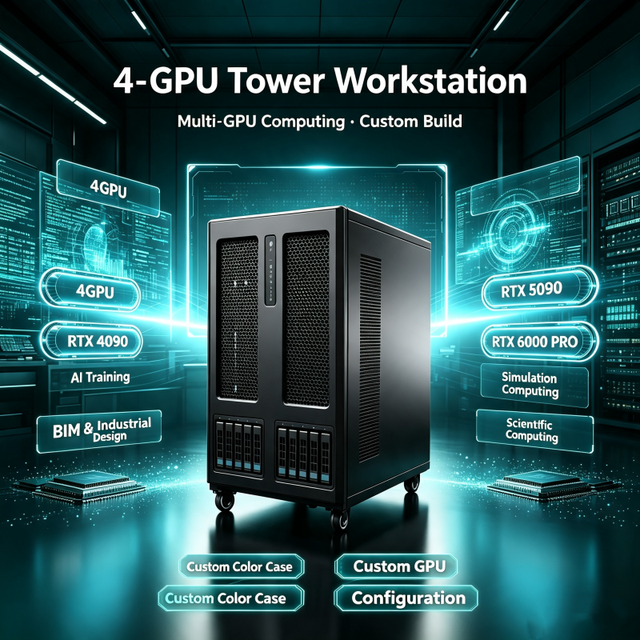
4GPU Liquid-Cooled Customizable Dual-Socket Workstation, Server Barebone
 Xinwangronghe (Shenzhen) Technology Co., Limited🇨🇳CN1 yr
Deep Dive · Full Report
Full Market Report
1 document · Live-fetched from source
Related Searches
Explore more sourcing topics & related categories
Sources & References
19 sources cited · Verified industry data & reports
Acquisition costs of leading AI supercomputers have doubled every ...
epoch.ai
AI supercomputers have become increasingly expensive. Since 2019, the cost of the computing hardware for leading supercomputers has increased at a rate of 1.9x per year. In June 2022, the most expensive cluster was Oak Ridge National Laboratory Frontier, with a reported cost of $200M. Three years later, as of June 2025, the most expensive supercomputer is xAI’s Colossus, estimated to use over $7B of hardware.
Supercomputer Market Companies, Size & Trends 2026-2035
www.precedenceresearch.com
Supercomputer Market (By Operating System: Unix, Linux; By Type: Vector Processing Machines, Tightly Connected Cluster Computer, Commodity Cluster; By End User: Commercial Industries, Government Entities, Research Institutions; By Application: Cloud Infrastructure, Commercial, Space & Research Centers, Hospitals & Laboratories, Government Entities, Defense, BFSI) - Global Industry Analysis, Size, Trends, Leading Companies, Regional Outlook, and Forecast 2026 to 2035 · Last Updated : 17 Sep 2026 | Report Code : 2052 | Format : PDF / PPT / Excel | Author : Gautam Mahajan | Reviewed By : Aditi Shivarkar | ✓ Fact Checked | ❝ Cite Supercomputer Market Companies, Size & Trends 2026-2035 Source: https://www.precedenceresearch.com/supercomputer-market The global supercomputer market size is calculated at USD 11.98 billion in 2025 and is predicted to increase from USD 13.29 billion in 2026 to approximately USD 33.48 billion by 2035, expanding at a CAGR of 10.82% from 2026 to 2035. By type, the vector processing machines segment accounted for the highest revenue share 43.4% in 2025. The government entities segment is growing at a CAGR of 9.6% over the forecast period. Supercomputers, in contrast to conventional computers, employ many central processing units (CPU). The Asia Pacific supercomputer market size is evaluated at USD 6.11 billion in 2026 and is predicted to be worth around USD 15.61 billion by 2035, rising at a CAGR of 10.97% from 2026 to 2035. Answer : The global supercomputer market size is accounted at USD 13.29 billion in 2026 and it is expected to reach around USD 33.48 billion by 2035.
Trends in AI supercomputers | Epoch AI
epoch.ai
Aug. 20, 2024 ... Epoch AI’s work is free to use, distribute, and reproduce provided the source and authors are credited under the Creative Commons Attribution license. Konstantin F. Pilz, James Sanders, Robi Rahman, and Lennart Heim. ‘Trends in AI Supercomputers’. _ArXiv [cs.CY]_, 2025. The computational performance of leading AI supercomputers has doubled every 9 months, driven by deploying more and better AI chips (Figure 1). Two key factors drove this growth: a yearly 1.6x increase in chip quantity and a yearly 1.6x improvement in performance per chip. While systems with more than 10,000 chips were rare in 2019, several companies deployed AI supercomputers more than ten times that size in 2024, such as xAI’s Colossus with 200,000 AI chips. Computational performance grew 2.5x/year, driven by using more and better chips in the leading AI supercomputers. Power requirements and hardware costs doubled every year. If current trends continue, the largest AI supercomputer in 2030 would cost hundreds of billions of dollars and require 9 GW of power. Figure 2: Cost of AI supercomputers over time, in 2025 USD. If the observed trends continue, the leading AI supercomputer in June 2030 will need 2 million AI chips, cost $200 billion, and require 9 GW of power. Historical AI chip production growth and major capital commitments like the $500 billion Project Stargate suggest the first two requirements can likely be met.
Supercomputer Statistics By Trends, Market Size, Region, End User, ...
electroiq.com
Furthermore, in the coming years, the market size is estimated to reach USD 12.9 billion by 2026, USD 14.3 billion by 2027, USD 15.9 billion by 2028, USD 17.6 billion by 2029, USD 19.5 billion by 2030, USD 21.6 billion by 2031, and USD 23.9 billion by 2032. Mordor Intelligence report states that in 2024, processors made up 39.12% of the supercomputer market. The Asia Pacific supercomputer market size accounted for USD 4.96 billion in 2024 and is predicted to reach around USD 5.51 billion by 2025. Furthermore, estimated market size in the coming years are followed by USD 6.11 billion (2026), USD 6.79 billion (2027), USD 7.53 billion (2028), USD 8.36 billion (2029), USD 9.28 billion (2030), USD 10.30 billion (2031), USD 11.44 billion (2032), USD 12.70 billion (2033), and USD 14.25 billion (2034). Supercomputer Statistics 2025: market $11.7B (→ $26.5B by 2033); TOP500-US 175, EU 137, China 47; El Capitan 1.742 exaflops; APAC share 46.82% Meanwhile, commercial industries are expected to lead the global supercomputers market with a 40.03% share. As of 2024, the industry holds the largest share of supercomputers at 48.6%, followed by research with 36.5%.
Trends in AI Supercomputers
arxiv.org
Most of this increase in compute has been driven by larger, higher-performance AI supercomputers (Hobbhahn et al., 2023; Frymire, 2024). Given their importance for AI development, systematically collecting data on AI supercomputers allows us to better understand trends such as their hardware costs, power requirements, and global distribution. Resources like the Top500 list or the ML-Perf benchmark rely on voluntary submissions and thus lack sufficient data to reliably analyze trends (Top500, ).111For a review of existing data sources, see Appendix A. Meanwhile, databases used for business intelligence, such as SemiAnalysis’s data center model, are not available for public analysis and focus on present-day systems rather than historical trends (SemiAnalysis, 2024). We attempt to close this gap by collecting data from various public sources and establishing a dataset of 500 AI supercomputers between 2019 and 2025. In 2023, NVIDIA’s H100 became more widespread, exceeding 50% of total performance in our dataset by July 2024. ... × (90% CI: 1.5–1.7) improvement in computational performance per chip of leading AI supercomputers is slightly faster than the general trend of AI chip performance improving 1.28 In Figure 8, we show the required computational performance for the largest AI training runs, and the performance of leading AI supercomputers in our dataset.151515Epoch’s notable AI model database reports training compute (in FLOP) independent of the precision. We thus assess the performance trend considering the highest performance across 32, 16, and 8-bit, which were the most commonly used precisions for AI training between 2019 and 2025. We consider only industry systems, which ran the vast majority of AI training runs (Besiroglu et al., 2024).
The Unprecedented Rise of AI Supercomputers: Powering the Future, ...
medium.com
The exponential growth, burgeoning costs, and shifting global landscape of AI supercomputers, and what it means for the future of AI. At the heart of this revolution lies a critical, yet often overlooked, component: the AI supercomputer. These behemoths of computation are the engines driving the development of frontier AI models, pushing the boundaries of what’s possible. But as their power grows exponentially, so do their resource demands and the questions surrounding their accessibility and control. A groundbreaking research paper, “Trends in AI Supercomputers,” has meticulously compiled and analyzed data on 500 AI supercomputers from 2019 to 2025, shedding light on the dramatic shifts in this high-stakes domain.