Swiftlet Farming

Overview
Product sourcing insights & recommendations
The swiftlet farming and edible bird's nest (EBN) market is undergoing a major technological shift, projected to reach up to $19 billion by 2035. Over 67% of consumers now buy bird's nest for anti-aging and health benefits, driving a move toward ready-to-eat (RTE) bottled drinks and nutraceutical powders. Modern farming has adopted IoT technology to remotely manage bird house environments, while blockchain traceability is becoming a standard to ensure product authenticity and combat counterfeiting.
I have compiled a detailed report covering market trends, product innovation, and high-tech farming solutions. The report includes pricing data for key equipment and processed products, along with strategic recommendations for entering this evolving market.
Here are the market trends and product insights for swiftlet farming. You can continue with:
Swiftlet Farming Equipment Iot Monitoring System Humidifier Sound System
Products · 6 lists

Centrifugal Humidifier Tai Wan Technology 5500 Swiftlet Humidifier
 Ningbo Boilingsound Electronics Co., Ltd.🇨🇳CN10 yrs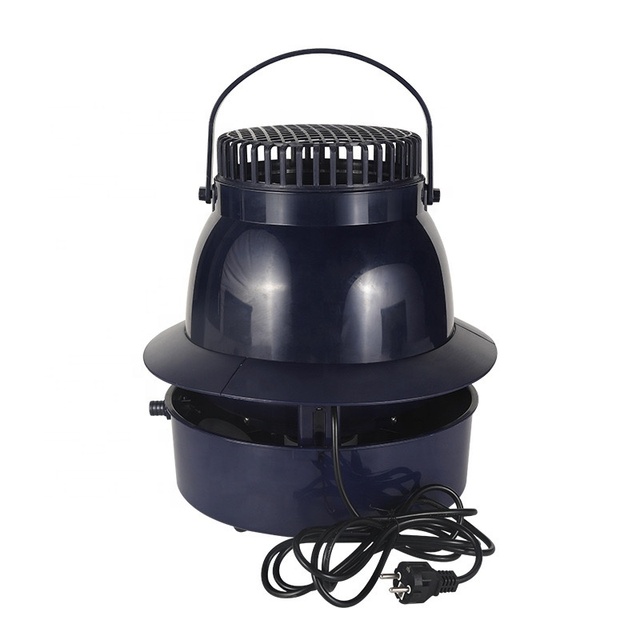
TL-5500 Centrifugal Humidifier Taiwan Technology Swiftlet Humidifier for Bird Nest Farm
 Ningbo Yichao Muffler Science And Technology Co., Ltd.🇨🇳CN12 yrs
Spraying Cooling Equipment Farm Garden Swiftlet Breeding Industrial Hanging Atomizing Disc Centrifugal Humidifier
 Shenzhen Keda Technology Co., Ltd.🇨🇳CN9 yrs
Swiftlet Mushroom Growing Farm Dry Fog Humidifier Fogger Centrifugal Horticulture Industrial Ultrasonic Humidifier Machine
 Hangzhou Dongma Electrical Appliance Co., Ltd.🇨🇳CN2 yrs
Low Noise Air Humidifier for Swiftlet Farm
 Jiashan Horn Electronics Co., Ltd.🇨🇳CN11 yrs
Swiftlet Sound/SUARA Waterproof Sensor Temperature Humidity Monitoring Home Remote Control
 Guangzhou Laixi Electronics Co., Ltd.🇨🇳CN8 yrs
Deep Dive · Full Report
Full Market Report
1 document · Live-fetched from source
Related Searches
Explore more sourcing topics & related categories
Sources & References
26 sources cited · Verified industry data & reports
Is Swiftlet Farming Difficult? Everything You Need to Know
en.nestgia.com
Value-added processing: The trend of deep processing (e.g., ready-to-eat bird’s nest) increases product value and profitability. Rising domestic demand: In Vietnam, demand for bird’s nests is increasing, especially in the high-end market, where they are popular as luxury gifts or nutritional products for children and the elderly. Although swiftlet farming offers high profit potential, not everyone finds success immediately. Provinces such as Khanh Hoa, Binh Dinh, Phu Yen, Kien Giang, and Ca Mau are prime locations for swiftlet farming. The demand for Vietnamese bird’s nests extends beyond the domestic market, with substantial exports to China, Hong Kong, and Singapore, where they are highly valued. On average, it takes 2–3 years for a swiftlet house to reach stable production levels and generate sustainable profits. The Vietnamese bird’s nest market offers high profit margins, especially for pure and processed bird’s nests. Guaranteed market access through the brand’s distribution network. Lower initial investment compared to building a swiftlet house from scratch.
(PDF) Digital technologies evolution in swiftlet farming: a ...
www.researchgate.net
This systematic literature review emphasizes the multidisciplinary nature of swiftlet farming's technological evolution, technology developers, challenges and recommendations that farmers and the industry face in their pursuit of sustainable growth. ... Content may be subject to copyright. International Journal of Electrical and Computer Engineering (IJECE) Vol. 14, No. 4, August 2024, pp. Figure 1. Elements of swiftlet habitat (a) farmhouse, (b) swiftlet, and (c) nest at Sabah, Menumbok ... Int J Elec & Comp Eng, Vol. 14, No. 4, August 2024: 4456-4470 swiftlet farming practices, considering regional variations, environmental conditions, and technological ... Int J Elec & Comp Eng, Vol. 14, No. 4, August 2024: 4456-4470 range wide area network (LoRaWAN). The swiftlet bird nest industry in Malaysia is currently undergoing ... Int J Elec & Comp Eng, Vol. 14, No. 4, August 2024: 4456-4470
Swiftlet Nest Farming Proves Good for Business... Maybe Too Good
www.smithsonianmag.com
It would be weird enough just to eat your standard twiggy-grassy robin's nest, but this predominantly Chinese delicacy is made almost entirely from the goopy spit of a southeast Asian bird called a swiftlet (check out a couple of close-up nest photos over at EatingAsia). Unfortunately, swiftlets are not an invasive species we can proudly devour. To the contrary, growing demand from a prosperous China is compromising the birds' ability to continue, uh, spitting out the nests. It doesn't help that the sticky nests are the devil to clean, so collectors take the nests before they've been used to raise any young swiftlets. A low-tech alternative—constructing artificial caves to farm the nests—has proved both successful and popular in Indonesia, where multistory buildings are erected in the middle of towns (sometimes even with a shop or apartment on the ground floor). The upper stories feature generous entrance holes, swiftlet songs play at the entrance to set a welcoming mood, and owners can add insect attractants and a swiftlet-pleasing scent, as chronicled in the World of Swiftlet Farming blog. The set-up appeals to enough swiftlets that Indonesian production of the nests is booming (up to 280 tons, valued at more than $800 million, according to a 2004 source). Unfortunately, the high prices encourage wild-nest collectors to redouble their efforts. The toll is felt most keenly on islands, where nest farming is limited and so is the ability of swiftlets to recover from raids.
Attracting Swiftlets to Edible Bird's Nest Farms - Masafante Indowalet
masindowalet.com
Opting for PT Masafante Indowalet not only assures you of superior swiftlet nests but also instils confidence, as our rigorous pest management practices contribute to an exceptionally remarkable offering. For inquiries, please don’t hesitate to contact our dedicated call centre at +62 813 8035 6909 or via email at marketing@masindowalet.com. The swiftlet edible bird nest, a revered delicacy in traditional Asian cuisine, has enjoyed a long-standing reputation for its purported health benefits and unique flavour profile. In 2023, the price of this sought-after delicacy experienced notable fluctuations, reflecting a complex interplay of factors ranging from environmental conditions to market demand. The success of edible bird’s nest farms in Indonesia hinges on the ability to attract swiftlets to specially designed bird houses. Various techniques are employed to lure these birds into their designated nests, with myths and methods circulating within the community. One common technique is the use of dried grains such as rice, corn, soybeans, mung beans, and cassava. By stockpiling these materials within the bird house over a period of about two months, flying insects are attracted. These insects, in turn, provide a crucial food source for the swiftlets.
Stages of making the swiftlet nests and swiftlet breeding until the...
www.researchgate.net
Download scientific diagram | Stages of making the swiftlet nests and swiftlet breeding until the swiftlet nests are ready to be harvested. A. Flap where smear the swiftlet nest; B. Swiftlet eggs; C. Newly hatched swiftlet chicks; D. 10-day-old swiftlet chicks; E. 17-day-old swiftlet chicks; F. 21 to 30-day old swiftlet chicks; G and H. The swiftlet chicks are ready to fly; I. The swiftlet nests are ready to be harvested from publication: The ecology, productivity and economic of swiftlet (Aerodramus fuciphagus) farming in Kota Bangun, East Kalimantan, Indonesia | Mursidah, Lahjie AM, Masjaya, Rayadin Y, Ruslim Y. 2020. Mursidah, Lahjie AM, Masjaya, Rayadin Y, Ruslim Y. 2020. The ecology, productivity and economic of swiftlet (Aerodramus fuciphagus) farming in Kota Bangun, East Kalimantan, Indonesia. Biodiversitas 21: 3117-3126. Swiftlet nest is a high-value non-timber forest product produced from the saliva of swiftlet birds. This research integrates the extended Technology Acceptance Model, Diffusion of Innovations Theory, and Cost-Benefit Theory. For this present study, the focus is on deep-interviewing 18 swiftlet-house farmers to find identification for their perception and acceptance of the Bio-QR Code technology. The value coming out of this technology can further be enhanced if the relative advantages are demonstrated to farmers. This study is helpful in that it gives recommendations to stakeholders on how to improve technology adoption. This research brings added value in portraying the unique dynamics of technology acceptance within a given industry, EBN, and the framework in which an emerging technology is managed within a niche sector. ... ... Swiftlet-farming in buildings with loudspeakers was very evident in Kratie town and in the two Wildlife Sanctuaries.
Bird’s Nest Soup Is More Popular Than Ever, Thanks to Swiftlet ...
www.audubon.org
In a country where the minimum annual wage doesn’t quite reach $800, harboring swiftlets can amount to a hefty chunk of income: about $6,000 in Sofia and Ba Ka’s case. “We started farming bird’s nests because we knew it could help us live worry-free in retirement,” Sofia says. The arrangement has its perks for the swiftlets as well: The house represents a safe and predictable place to rear chicks, far out of reach from rats, snakes, and other hungry animals. Still, as more families across Southeast Asia take up swiftlet farming, it's unclear if this new industry is helping or hurting birds in the wild. At the same time, vast numbers of swiftlets in Myanmar, Indonesia, Vietnam, and other parts of the region are moving in with their vendors. In Malaysia alone, the number of swiftlet houses increased from 900 in 1998 to about 60,000 in 2013. The rapid transition over the past two decades has been a boon to farmers, restaurants, and foodies. Today, the evening skies of cities like Myeik are filled with swarms of Edible-nest Swiftlets and their staccato mating calls. Much of the frenzied noise comes from loudspeakers hung in the windows of house farms—a luring tactic that was developed in the latter parts of the 20th century.