Temperature Watch

Overview
Product sourcing insights & recommendations
The "temperature watch" market is undergoing a significant transformation, evolving from a simple wellness tracker into a clinical-grade medical and industrial safety tool. By 2026, the global smartwatch market is expected to reach $75.55–$95.81 billion, with temperature sensing becoming a cornerstone for illness prediction and heatstroke prevention.
Key shifts include the move from skin-surface tracking to core body temperature estimation and the integration of predictive AI that can detect infections 24–48 hours before symptoms appear. The market is also seeing strong B2B demand for industrial heat-stress monitoring in high-heat sectors like construction.
Detailed insights on market size, technological breakthroughs, and specific B2B sourcing recommendations are provided in the comprehensive report below.
I have analyzed the 2026 market for temperature watches. Would you like to:
Industrial Heat Stress Monitoring Smartwatch For Construction Workers
Products · 3 lists
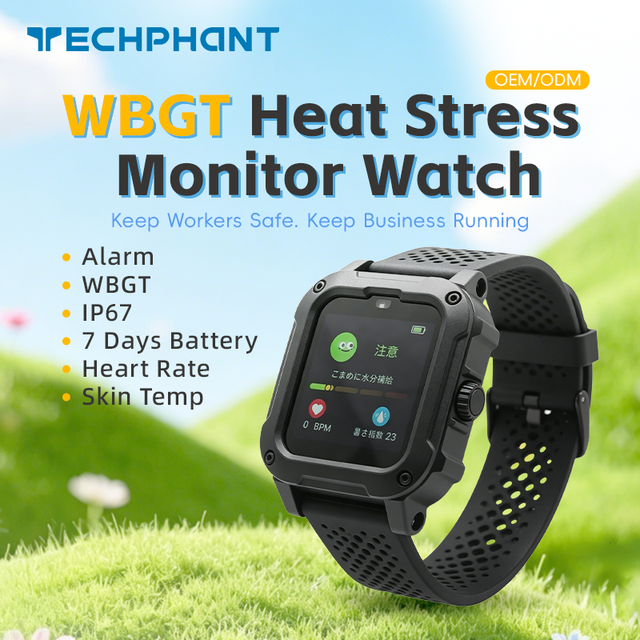
Heatstroke Alert Watch, Heat Stroke Prevention, Heat Index, WBGT Approximate Value, Alert, 4 Levels of Alert, IP67, Waterproof
 Guangzhou Techphant Technology Co., Ltd.🇨🇳CN1 yr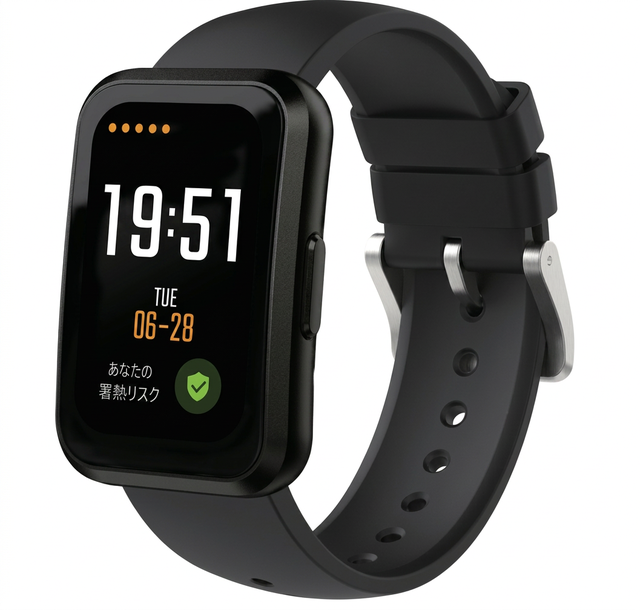
TRUSCO Heat Hazard Watch HWL-26 Heatstroke Prevention Smartwatch
 SATOH INDUSTRIES CO.,LTD.🇯🇵JP15 yrs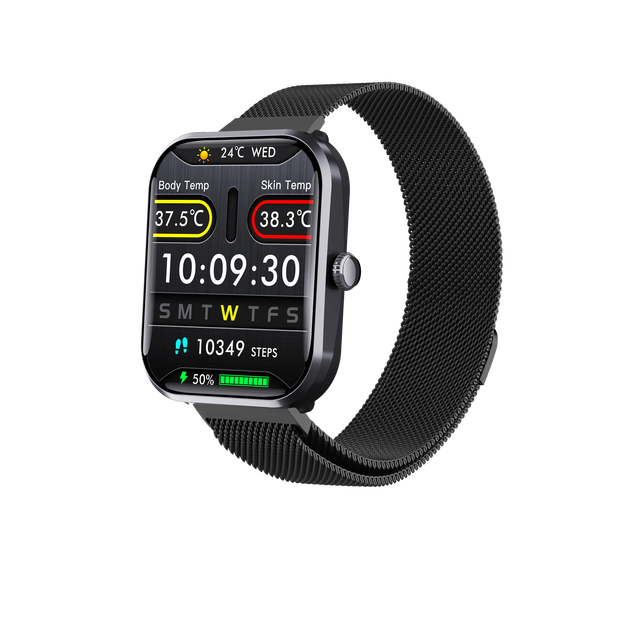
F96T High-Temperature Alarm Smartwatch
 Shanghai Xin Yi Xiang Industrial Co., Ltd.🇨🇳CN6 yrs
Heatstroke Prevention Temperature Smart Watch IP67 Waterproof Body Temperature Monitoring Vibration Reminder Wristwatch
Deep Dive · Full Report
Full Market Report
1 document · Live-fetched from source
Related Searches
Explore more sourcing topics & related categories
Sources & References
27 sources cited · Verified industry data & reports
Smartwatch Market Size, Growth & Analysis, 2034
www.marketdataforecast.com
Global Smartwatch Market Size, Share, Trends & Growth Forecast Report By Product Type (Extension, Standalone, Classic), Therapeutic Application (Sports and Fitness, Personal Assistance, Sports, Medical, Others), and Region (North America, Europe, Asia Pacific, Latin America, Middle East and Africa) – Industry Analysis, 2026 to 2034 Market Valuation: Valued at USD 64.46 billion in 2025, estimated at USD 75.55 billion in 2026, and projected to reach USD 268.93 billion by 2034, registering a CAGR of 17.2% from 2026 to 2034. Primary Growth Drivers: Rising prevalence of chronic diseases and preventive healthcare adoption, advancements in sensor technology and battery efficiency, increasing demand for health monitoring, fitness tracking, and AI-powered wearable devices, alongside growing integration with smartphones and connected digital ecosystems. Market Structure: Highly competitive global smartwatch and wearable technology landscape characterized by AI-enabled health analytics, continuous sensor and battery innovations, smart ecosystem expansions, and strategic shifts toward medical-grade health monitoring. The global market is anticipated to grow at a CAGR of 17.2% from 2026 to 2034 and be worth USD 268.93 billion by 2034, from USD 75.55 billion in 2026. The smartwatch is a wearable computing devices that integrate timekeeping with advanced digital functionalities such as health monitoring, connectivity, notifications, and application support. These devices have evolved from simple notification hubs into sophisticated health and fitness companions, incorporating sensors for electrocardiograms (ECG), blood oxygen saturation (SpO2), heart rate variability, and sleep tracking. Modern smartwatches now incorporate photoplethysmography (PPG) sensors, accelerometers, gyroscopes, and temperature monitors, enabling precise measurement of physiological parameters. For instance, the latest generation of PPG sensors can detect blood pressure trends with 90% correlation to clinical sphygmomanometers, as validated by research from the University of California, San Francisco.
Smartwatches - Worldwide | Statista Market Forecast
www.statista.com
In global comparison, most revenue will be generated United States (US$11.52bn in 2026). ... Definition:Smartwatches are wearable devices equipped with advanced functionalities beyond timekeeping. They integrate various sensors and technologies to provide features such as fitness tracking, notifications, app integration, and communication capabilities. Customer preferences: Customers are increasingly looking for devices that can provide them with multiple functionalities, such as fitness tracking, notifications, and the ability to make phone calls. Smartwatches can offer these features in a compact and stylish design, making them a popular choice among consumers. Trends in the market: One of the key trends in the Smartwatches market is the integration of advanced health and fitness tracking features. Many smartwatches now come equipped with heart rate monitors, sleep trackers, and activity trackers, allowing users to monitor their health and fitness levels in real-time. This trend is driven by the growing interest in personal health and wellness. Another trend in the market is the increasing popularity of smartwatches with cellular connectivity. In conclusion, the Smartwatches market is experiencing growth due to customer preferences for wearable technology that offers multiple functionalities. The integration of advanced health and fitness tracking features and cellular connectivity are key trends in the market.
Smartwatch Market Size, Share, Growth, Analysis, Report, 2034
straitsresearch.com
The global smartwatch market size was valued at USD 76.17 billion in 2025 and is projected to grow from USD 95.81 billion in 2026 to USD 600.19 billion by 2034, registering a CAGR of 25.78% during the forecast period from 2026 to 2034. Africa market is witnessing gradual market growth, supported by increasing smartphone adoption, expanding internet connectivity, rising consumer awareness of wearable technologies, and growing demand for affordable smartwatches. Countries such as South Africa, Kenya, and Nigeria are creating long-term growth opportunities for market participants. ... Garmin Ltd. Fitbit Inc. ... Samsung Electronics Co. Ltd. ... ASUSTeK Computer Inc. ... Alphabet Inc. March 2026: Apple expanded its Apple Watch ecosystem with new health-monitoring and AI-powered wellness features, strengthening its position in connected health and wearable technology applications. January 2026: Samsung Electronics expanded its Galaxy Watch portfolio with enhanced AI-driven health insights, fitness tracking, and connected ecosystem features to improve personalized wellness monitoring. November 2025: Garmin expanded its smartwatch portfolio with new fitness and outdoor-focused wearable devices featuring improved health tracking, navigation, and performance monitoring capabilities. North America is the leading region in this market in 2026. Who are the leading companies operating in the smartwatch market?
Wearable Temperature Sensor Market - Size, Share & Trends Analysis
www.mordorintelligence.com
The Wearable Temperature Sensors Market worth USD 68.09 billion in 2026 is growing at a CAGR of 12.34% to reach USD 121.72 billion by 2031. Silicon Laboratories Inc., Maxim Integrated Products Inc., STMicroelectronics NV, Texas Instruments Inc. and AMS-OSRAM AG are the major companies operating in this market. The wearable temperature sensors market size was valued at USD 60.61 billion in 2025 and estimated to grow from USD 68.09 billion in 2026 to reach USD 121.72 billion by 2031, at a CAGR of 12.34% during the forecast period (2026-2031). The growth trajectory reflects healthcare systems’ permanent shift toward continuous patient monitoring, semiconductor miniaturization that embeds digital temperature ICs into smartwatches, and stricter industrial safety mandates that require real-time worker heat-stress tracking. By geography, North America led with 38.20% revenue share in 2025 in the wearable temperature sensors market and Asia-Pacific records the fastest 13.18% CAGR forward. Note: Market size and forecast figures in this report are generated using Mordor Intelligence's proprietary estimation framework, updated with the latest available data and insights as of 2026. Semiconductor miniaturization allowed high-precision temperature sensing to fit existing smartwatch footprints without battery penalties, catalyzed by Apple’s Series 9 debut in 2024.[2]Apple Inc., “Health Technologies Overview,” apple.com System-on-chip integration cuts component counts and reduces bill-of-materials, letting consumer devices inherit capabilities once reserved for clinical instruments.
Smartwatch Market Size & Share, Growth Forecasts 2026-2035
www.gminsights.com
In the Middle East and Africa smartwatch industry, Saudi Arabia held 44.5% market share in 2025 promising growth from 2026 to 2035. Developed markets like the UAE, Saudi Arabia, Qatar, and Kuwait dominate the Gulf region, boasting high disposable incomes, preference for premium products, and swift tech adoption. These markets exhibit robust growth rates but also showcase trends that diverge markedly from regional norms. The smartwatch market was estimated at USD 48.4 billion in 2025. The market is expected to grow from USD 51.8 billion in 2026 to USD 95.2 billion in 2035, at a CAGR of 7% according to latest report published by Global Market Insights Inc. ... Rising health consciousness and preventive healthcare adoption. Technological advancements in sensor miniaturization and processing power. The premium segment held 45.6% of the total market share in 2025 and is anticipated to grow at a CAGR of 7.3% from 2026 to 2035. Premium smartwatches integrate state-of-the-art technologies, including advanced health sensors, larger high-resolution displays, high-performance processors, enhanced memory and storage capacities, and exclusive features not available in other segments. Enhanced sensor capabilities now enable continuous tracking of critical health metrics such as blood oxygen levels, ECG, blood pressure, and sleep quality. These developments are repositioning smartwatches from fitness-oriented devices to essential tools for preventive healthcare. Features like FDA-approved health monitoring, fall detection, irregular heartbeat notifications, and temperature sensing further solidify their value proposition in the healthcare domain.
Wearable Temperature Sensors Market Size, Top Share, Demand | ...
straitsresearch.com
The global wearable temperature sensors market size is estimated at USD 58.16 billion in 2026. What are the growth trends for market in the coming years? Increasing Adoption of Smartwatches and Integration of Advanced Functions in Smart Gadgets Drives Market. The US wearable temperature sensors market size was valued at USD 18.14 billion in 2025 and is projected to reach USD 20.63 billion in 2026. Download Free Sample Report to Get Detailed Insights. Expansion of patch-based continuous monitoring systems is emerging as a key trend in the wearable temperature sensors market. In March 2026, Whoop collaborated with Samuel Ross to launch sensor-integrated apparel using embedded wearable sensors, expanding temperature sensing beyond wrist-based devices. In February 2026, Ultrahuman filed a patent for integrating wearable temperature sensing with HVAC systems, enabling real-time environmental adjustment based on body temperature data.