Three Tier Server

Overview
Product sourcing insights & recommendations


The "three-tier server" architecture remains the bedrock of enterprise application design, organizing systems into three logical layers: the Presentation Tier (User Interface), the Application Tier (Business Logic), and the Data Tier (Database Management). IbmTechtarget
Market Trends & Insights (2024-2026)
The server market is entering a high-growth phase, with total market value projected to rise from $390.7 billion in 2026 to over $1 trillion by 2033. Grandviewresearch Key insights include:
* AI-Ignited Hardware Growth: Enterprise spending on AI infrastructure is surging, with worldwide spending expected to reach $2.59 trillion in 2026 (a 47% YoY increase). Servermonkey This is driving massive demand for GPU-accelerated servers at the application tier to handle complex inferencing. Mordorintelligence
* Supply Chain Volatility: Critical shortages in High Bandwidth Memory (HBM) and DRAM are expected to persist through 2026. HostkeyServermonkey Prices for server DRAM are forecasted to increase by up to 60-70% in early 2026, forcing many enterprises to sign long-term allocation contracts to stabilize costs. Hostkey
* Shift to Hyper-Converged Infrastructure (HCI): While tiers remain logically separate, physical hardware is consolidating. Modern designs favor HCI nodes that collapse compute, storage, and networking into a single modular tier, allowing for more flexible horizontal scaling of the three-tier stack. Techtarget
* Edge & Sovereign Cloud: There is a notable "return of latency-sensitive applications" from public clouds to on-premise or edge-based three-tier setups, driven by performance needs and regional data sovereignty mandates. Mordorintelligence
Product Insights for Three-Tier Sourcing
Sourcing for three-tier architectures now focuses on specialized hardware for each layer:
| Tier | Primary Hardware Requirement | Example Product Solutions |
|---|---|---|
| Presentation | High-density 1U servers or CDN nodes | ThinkSystem SR630 V2 Alibaba, RS500A-E12-RS4u Alibaba |
| Application | GPU-accelerated nodes for logic & AI | Twin SuperServer SYS-220TP Alibaba, PowerEdge R740xd Alibaba |
| Data | High IOPS, NVMe-rich storage servers | NF5280M6 Database Server Alibaba, SR650 V3 Dual Xeon Alibaba |
For more detailed technical data and trending volumes, please refer to the attached search and market trend files.
Based on these trends, would you like to:
Hyper Converged Infrastructure Server Nodes For Modular Architecture
Products · 3 lists
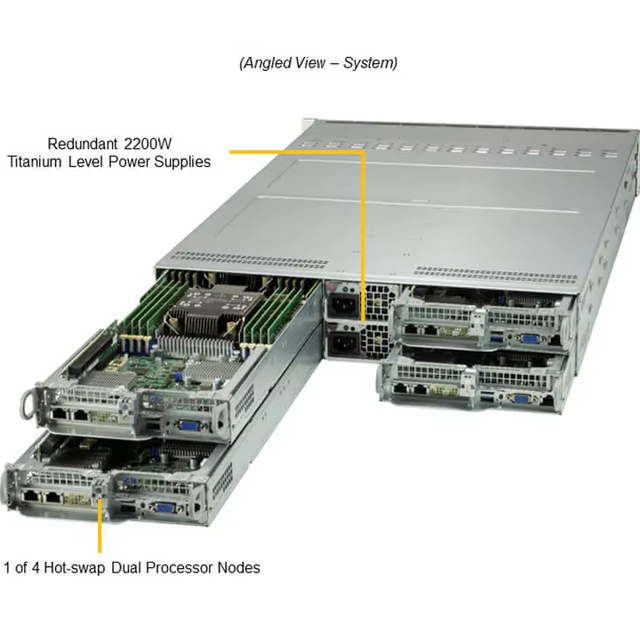
Supermicro Twin SuperServer SYS-220TP-HTTR High Speed Processor Run the Server Stably for a Long Time
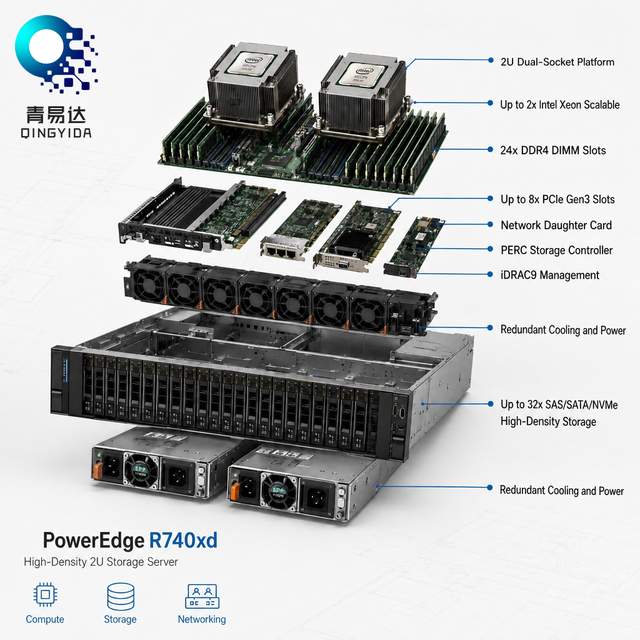
PowerEdge R740xd 2U Rack Server Dual Xeon DDR4 NVMe SAS Hyper Converged Virtualization Custom Config
 Beijing Qingyida Technology Co., Ltd.verified🇨🇳CN1 yr
H FusionCube 1000 Hyper-Converged Infrastructure High-Performance Integrated Compute, Storage, and Virtualization
 Shenzhen Huatenmax Technology Co., Ltd.🇨🇳CN3 yrs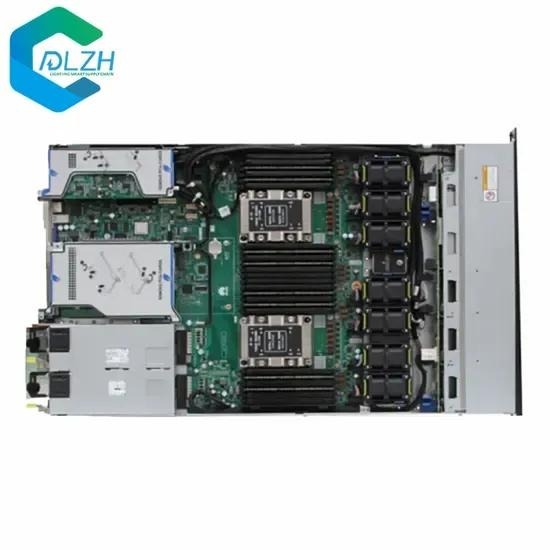
Dual High Density Computing Platform AI/Cloud Computing Supported Modular Design Servers High Energy Efficiency Ratio 1288HV5
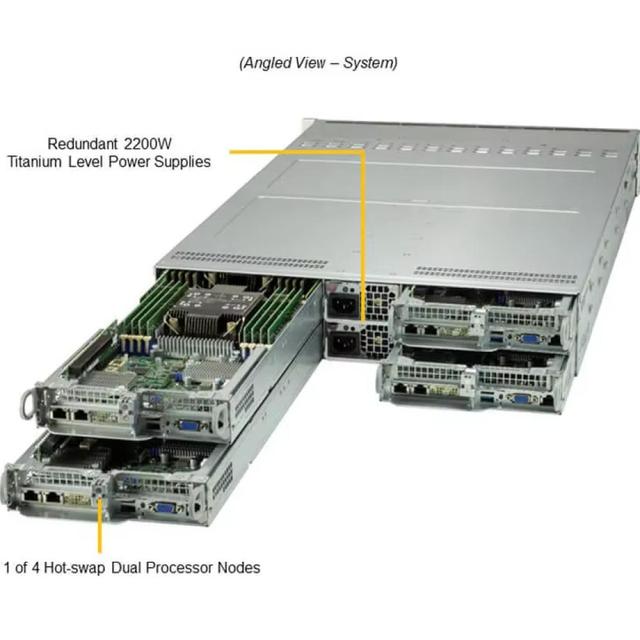
Supermicro Twin SuperServer SYS-220TP-HTTR High Speed Processor Run the Server Stably for a Long Time
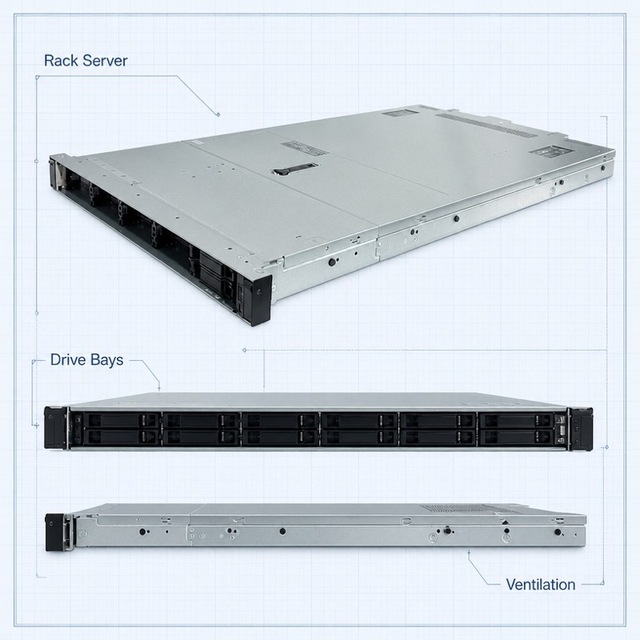
1U Rack Hyper-Converged Compute Node Integrating Compute and Storage Resources for Distributed HCI System Server
 Beijing Beichuang Shengda Network Technology Co., Ltd.verified🇨🇳CN2 yrs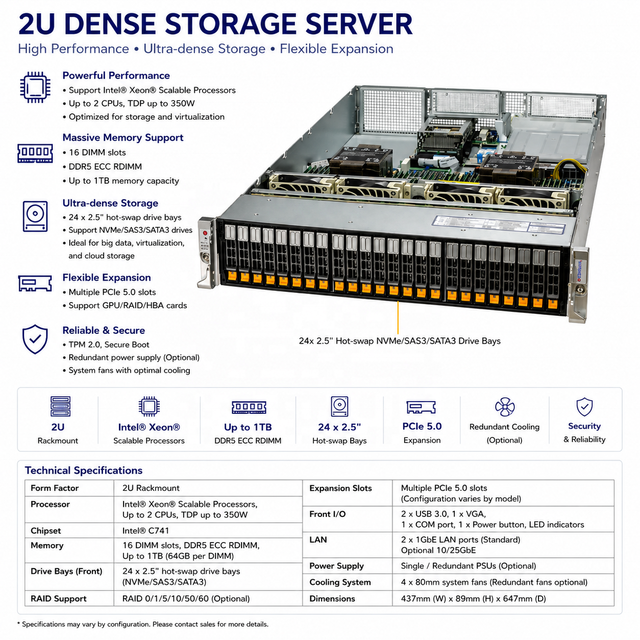
Supermicro SYS-220H-TN24R 2U Hyper Server Dual Xeon Scalable 24 Bay NVMe SAS SATA DDR4 PCIe 4.0 Enterprise Rack Server
 Beijing Fengyuan Tengda Technology Co., Ltd.🇨🇳CN10 yrs
Deep Dive · Full Report
Full Market Report
1 document · Live-fetched from source
Related Searches
Explore more sourcing topics & related categories
Sources & References
48 sources cited · Verified industry data & reports
What Is Three-Tier Architecture?
IBM
Three-tier architecture separates applications into a presentation tier, an application tier and a data tier.
Three-Tier Client Server Architecture in Distributed System
GeeksforGeeks
The Three-Tier Client-Server Architecture divides systems into presentation, application, and data layers, increasing scalability, ...

Understanding the architecture of a 3-tier application
vFunction
3-tier architecture: Separates the application into presentation, application (business logic), and data tiers. Provides the greatest level of ...

Multitier architecture
Wikipedia
The most common use of multitier architecture is the three-tier architecture, which separates presentation, application processing and data management functions ...

Overview of 3-tier Client Server Architecture | PPTX
Slideshare
Benefits include improved scalability, data integrity, security, availability, and reduced distribution of changes, while drawbacks include increased complexity

5 Tops Benefits of Using a 3-Tier Architecture
insightsoftware
Discover the benefits of 3-tier architecture for software development. Shorten time to market, reduce costs, and maximize user adoption.