Translator Machine Price

Overview
Product sourcing insights & recommendations
I have completed a comprehensive analysis of the translator machine market and pricing trends for 2026.
The report provides a detailed breakdown of the current pricing landscape, ranging from budget handheld devices ($30–$60) to premium simultaneous translation earbuds ($150+). Key market insights highlight a massive shift toward Human-AI Symbiosis, where Transformer-based Neural Machine Translation (NMT) and LLM integrations (like Google Gemini) are dramatically improving accuracy and reducing latency.
The analysis also covers the rising demand for Edge AI (offline) translation and identifies leading B2B suppliers for various form factors, including handhelds, scanning pens, and wearable earbuds. You can find the full market synthesis and product recommendations in the report below.
Here is your comprehensive translator machine report. You can continue with:
Scanning Translator Pen For Students
Products · 3 lists

Reader Pen Translation Scanner Dictionary OCR Digital Voice Wireless Language Translator For Students Dyslexia
 Shenzhen Jiuzhen Trading Co., Ltd.🇨🇳CN4 yrs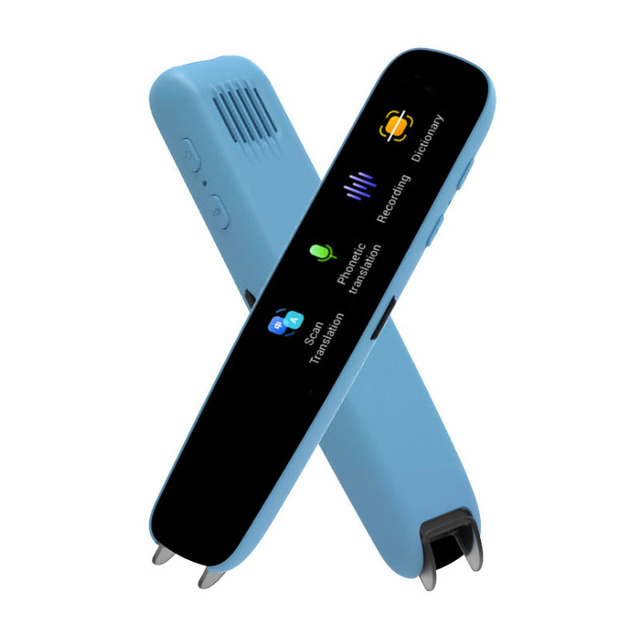
Translation Pen for Teacher Student Dictionary English Intelligent Scanning Point Reading 112 Languages Translator Pen
 Shenzhen Greatbuy Technology Co., Ltd.🇨🇳CN9 yrs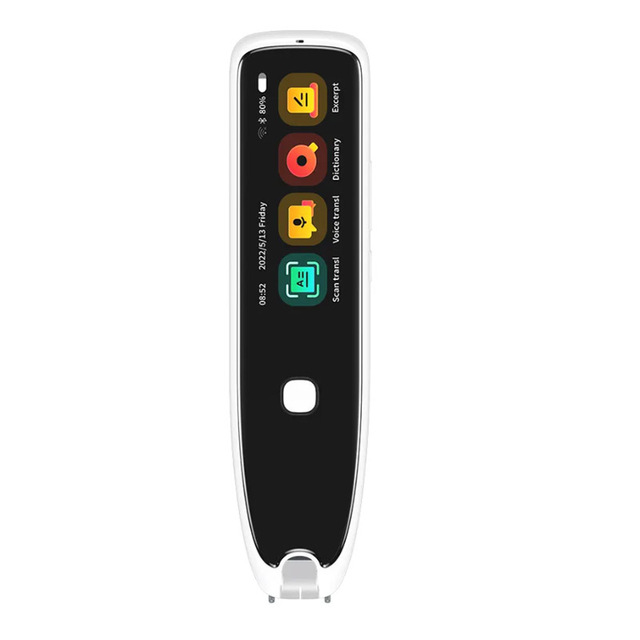
Scan Dictionary Translation Pen for Students Learning Languages Machine
 Shenzhen Yaxiong Yibang Electronics Co., Ltd.🇨🇳CN9 yrs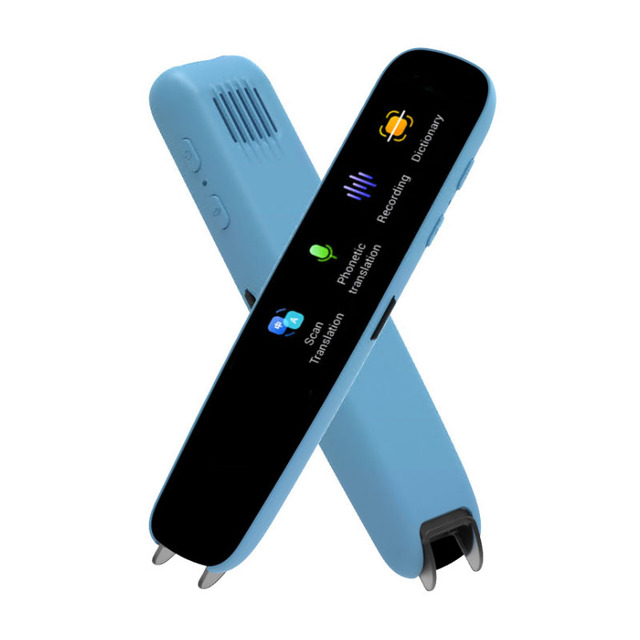
Translation Pen for Teacher Student Dictionary English Intelligent Scanning Point Reading 112 Languages Translator Pen
 Shenzhen Hobbywin Technology Co., Ltd.🇨🇳CN10 yrs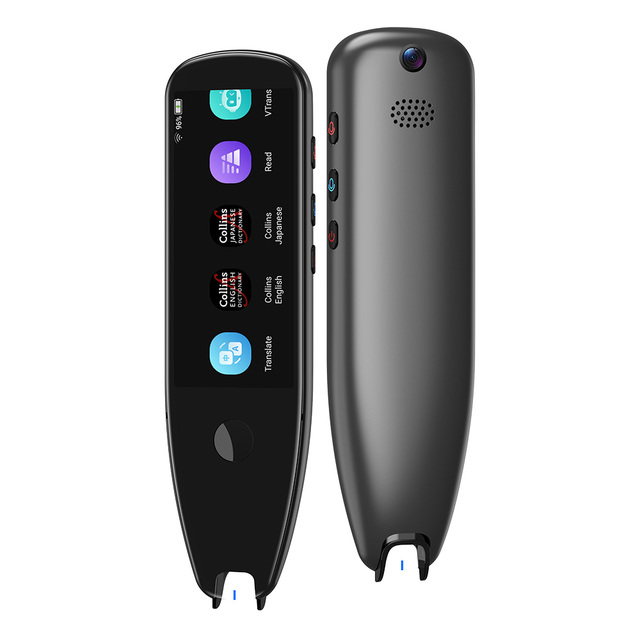
VORMOR X5Pro Kids Learning Mini Computer Translation Scanning Pen Camera Exam Reading Scanner Translator Best for Dyslexia
 Shenzhen Beibo Intelligent Technology Co., Ltd.🇨🇳CN8 yrs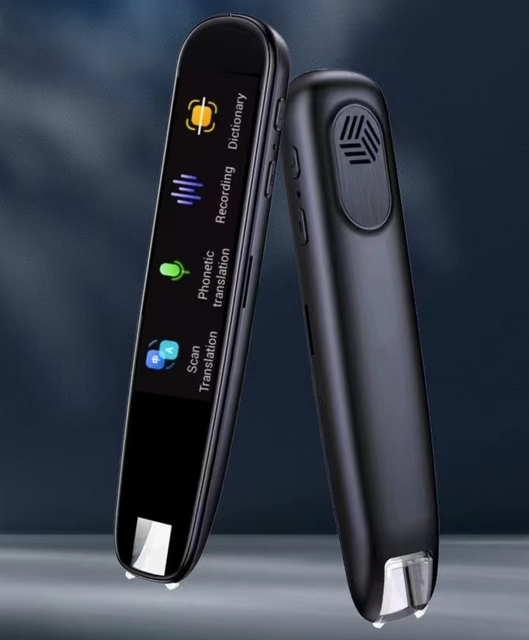
Translator Pen Text to Speech Device Scan Reader OCR Digital Pen Reader Wireless Translation Pen Scanner
 Sichuan Shenmai Technology Co., Ltd.🇨🇳CN5 yrs
Deep Dive · Full Report
Full Market Report
1 document · Live-fetched from source
Related Searches
Explore more sourcing topics & related categories
Sources & References
23 sources cited · Verified industry data & reports
Translation Pricing Trends for 2026: Rates by Language, Content ...
translated.com
Not all AI is created equal. The quality of the initial machine translation has the biggest impact on final cost. Poor MT output requires extensive edits, driving post-editing time and price up. This is why Time to Edit (TTE) is our standard for measuring translation efficiency. This guide breaks down the key drivers of translation pricing for 2026: language pair, content type, turnaround time, and the growing role of Language AI. AI-powered solutions make translation more accessible, but the discipline lies in balancing cost, speed, and quality. The most common application is Machine Translation Post-Editing (MTPE), a hybrid workflow in which a professional linguist reviews and refines an AI-generated translation to bring it to human quality. MTPE is faster and more cost-effective than fully human workflows, and it embodies what we call Human-AI Symbiosis: the operating principle behind modern, scalable translation. AI handles the heavy lifting of processing volume at speed; human experts provide the context, cultural nuance, and stylistic polish that machines alone cannot yet deliver.
Language Translation Device Market Size & Forecast 2026 ...
www.gminsights.com
The global language translation device market was valued at USD 1.9 billion in 2025. The market is expected to grow from USD 2.1 billion in 2026 to USD 3.8 billion in 2031 & USD 6.5 billion in 2035, at a CAGR of 13.5% during the forecast period according to the latest report published by Global Market Insights Inc. The growing presence of wearable and handheld translators in business, education, and public services highlights this trend. Government, Universities, and other private companies in the region are developing advanced natural language processing and neural machine translation technologies, which enhance accuracy and, therefore, device performance. The growing shift toward on-device and offline translation is reducing dependence on cloud connectivity and improving reliability. This trend gained momentum around 2021 as users demanded consistent performance in low-connectivity and secure environments. Adoption will speed up through 2030 as AI chips become more efficient. Wearable translation devices are becoming popular for hands-free professional use. Early adoption started around 2021 in hospitality, logistics, and healthcare settings that require continuous interaction. Usage is expected to rise through 2030 as devices become lighter and more accurate. This trend improves worker productivity and enables smooth multilingual engagement in fast-paced environments.
Translate Machine Trends in 2026
www.accio.com
Trend Status: Mature/Growing. While smartphone apps exist, dedicated hardware is growing due to superior microphone arrays, battery life, and offline chips Grandviewresearch. ... Market expected to reach $2.7 billion by 2030 Grandviewresearch. TikTok sales for budget AI translators have surpassed 20,000 units/month. Significant shift toward NMT (Neural Machine Translation) improving accuracy by 44% in recent models Grandviewresearch. The machine translation hardware market is currently bifurcated between established handheld solutions and innovative wearable technology. Red Ocean: Handheld Voice Translators. This segment features high demand and high competition. With over 20,000 monthly units sold for budget models, price wars are inevitable. Verdict: Go (with technical caveats) Market expansion is robust, with a projected CAGR of over 16% for AI-enabled services Technavio. The shift from "translation as a tool" to "translation as a seamless experience" is the key driver for 2026. Snapshot: Pen-shaped scanners that digitize and translate printed text instantly. Primarily for students learning languages or professionals processing foreign documents Tiktok. Trend Status: Emerging/Growing.
10 Language Translation Industry Trends and Statistics for 2026 ...
www.kent.edu
Here’s a closer look at the translation industry trends shaping 2026 and how translation professionals collaborate and communicate with the rest of the world, connecting people from different cultures. MT engines (machine translation systems) and AI-powered translation tools are used to achieve quick translations, which is causing many companies to adopt them for their language needs. Despite advancements in artificial intelligence and machine translation, human review by professional translators remains essential to ensure quality and accuracy. As you navigate translation industry trends for 2026, keep in mind that this industry serves as the foundation for global connectivity through language. With new resources and technology available, the language industry is entering a new phase. Here are some of the translation industry trends for 2026. One concern recently has been the rise of AI, but translators remain essential because machine translation systems and AI-generated content are unable to capture cultural nuances. According to Mordor Intelligence, North America has the largest market for translation services, with continued growth driven by international business expansion and increasing linguistic diversity. As the population shifts, the need for effective language services increases, therefore increasing the need for qualified translators. In 2026, the language services market size is expected to reach $65.5 billion.
Machine Translation Market - Size, Companies & Share
www.mordorintelligence.com
The machine translation market size is projected to expand from USD 1.13 billion in 2025 and USD 1.26 billion in 2026 to USD 2.19 billion by 2031, registering a CAGR of 11.69% between 2026 and 2031. Demand is accelerating as enterprises embed real-time translation in customer support, video conferencing, and e-commerce storefronts. These strategic moves signal an arms race in quality, coverage, and deployment flexibility as competitors vie for a share in the expanding machine translation market. ... Amazon Web Services Inc. ... Image © Mordor Intelligence. Reuse requires attribution under CC BY 4.0. January 2026: Google integrated the Gemini large language model into Google Translate for context-aware translation across 133 languages. Total outlays are projected to reach USD 2.19 billion by 2031, rising at an 11.69% CAGR from the 2026 baseline. Which technology is expanding fastest for automated translation? Transformer-based neural machine translation is forecast to post a 12.71% CAGR through 2031, outpacing all other approaches. By deployment mode, cloud solutions captured 71.24% of the machine translation market size in 2025, but edge and on-device implementations are projected to expand at a 12.36% CAGR between 2026 and 2031.
Language Translation Device Market Size to Hit USD 4.02 Bn by 2034
www.precedenceresearch.com
Language Translation Device Market (By Product: Handheld Device, Wearable Device; By Type: Online Translation, Offline Translation; By Application: Consumer, Commercial; By Geography: North America, Asia Pacific, Europe, Latin America, Middle East & Africa ) - Global Industry Analysis, Size, Trends, Leading Companies, Regional Outlook, and Forecast 2025 to 2034 · Last Updated : 25 Nov 2025 | Report Code : 4999 | Category : ICT | Format : PDF / PPT / Excel ... The global language translation devicemarket size is calculated at USD 1.65 billion in 2025 and is predicted to increase from USD 1.82 billion in 2026 to approximately USD 4.02 billion by 2034, expanding at a CAGR of 10.43% from 2025 to 2034. The European Union significantly encourages digital translation through programs like the Connecting Europe Facility (CEF) and its own translation solution, which supports interoperable digital solutions and helps overcome language barriers, contributing to market growth. ... In the UK, a growing trend is the shift to more portable and integrated services, such as devices that work with mobile applications and cloud platforms, enhancing accessibility for consumers. The essential technologies behind these tools, such as machine translation (MT) and neural machine translation (NMT), are advancing rapidly in the UK, driving market growth. The language translation device market has been witnessing significant growth in recent years, but there are still some concerns that tend to hamper the market growth. The advanced cost of these AI-integrated devices leads to a higher rate of the devices due to their complexity in production. These advanced features also require timely updates, which makes them expensive. This makes it less affordable in low-income countries. ... The rising trend of education across borders leads to investment in developing language translation tools. The global U.S. language translation device market size is exhibited at USD 470 million in 2025 and is projected to cross around USD 1170 million by 2034, poised to grow at a CAGR of 10.79% over the forecast period 2025 to 2034. The U.S. has been at the predominant of machine translation (MT) advancement.