Tv Backlight Led Strip

Overview
Product sourcing insights & recommendations
The market for TV backlight LED strips in 2026 is experiencing a significant shift toward active, immersive systems that sync with on-screen content. Camera-sync systems have emerged as the dominant "sweet spot," offering full compatibility with native smart TV apps like Netflix and YouTube, while HDMI-sync boxes remain a premium niche for purists. The industry is also transitioning to RGBICW technology for superior color accuracy and white balance.
Key sourcing recommendations include prioritizing Smart/App-integrated models and addressing consumer pain points like adhesion failure with upgraded 3M materials. The comprehensive report below detail market segments, top-performing products, and strategic sourcing guidelines.
I have provided a comprehensive market report and buying guide for TV backlight LED strips. You can further explore this category by:
Hdmi Sync Box Tv Backlight System 4k 60hz 120hz
Products · 3 lists

LED Backlight Sync Box Light HDMI Switch Sync Box 4x1
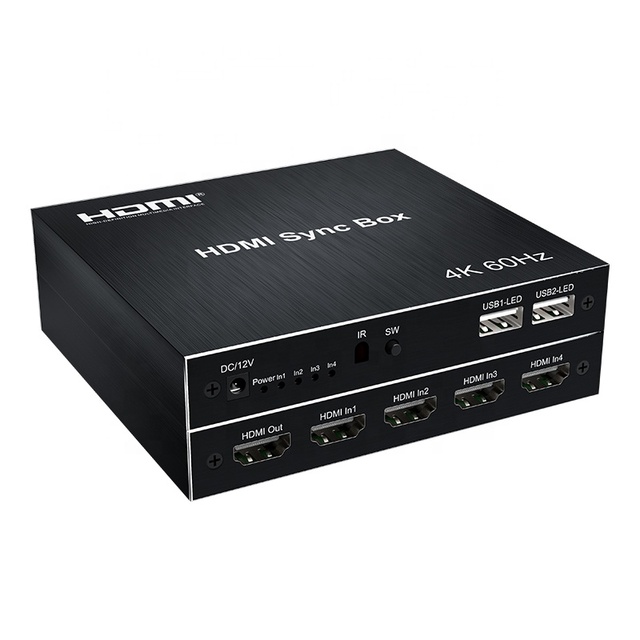
HDMI Sync Box 4x1 USB 2.0 Led Light Adapter 4K 60Hz 3D 1080P HDMI Sync Box 4x1 HDMI Switch Switcher Black
 Shenzhen Stone Cable Sales Depatrtmentverified🇨🇳CN16 yrs
MOES WiFi Smart Tuya Lighting TV Backlight HDMI 2.0 Sync Box LED Strip Lights Kit Alexa Voice Google Assistant Control
 Shenzhen Westway Technology Co., Ltd.🇨🇳CN10 yrs
Stock Wifi Smart Ambient TV Led Backlight For 4K HDMI 2.0 Sync Box 60leds/m Led Strip Lights Kit for Alexa Voice Google Assistant
 Shenzhen Lengtion Electronics Co., Ltd.🇨🇳CN13 yrs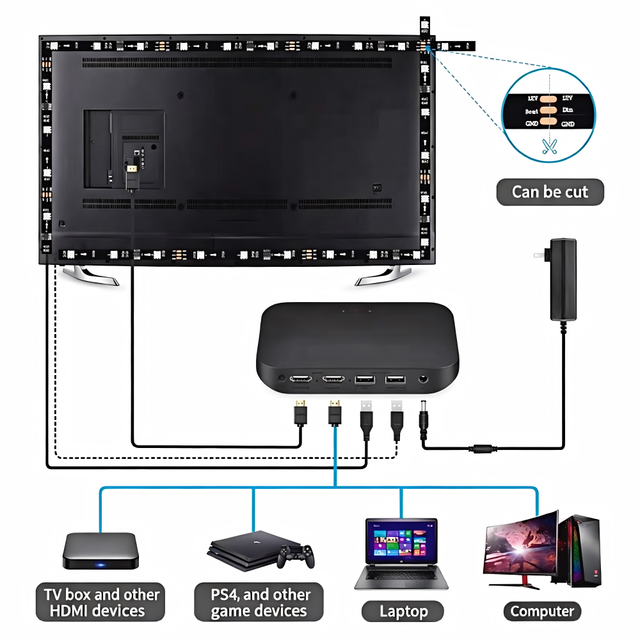
Fancy H*MI Sync Box TV Backlight Kit Smart RGBIC Ambient Light Music Sync WiFi Epistar PC LED Strip Home Theater
 Shenzhen Witop Technology Co., Ltd.verified🇨🇳CN11 yrs
Deep Dive · Full Report
Full Market Report
1 document · Live-fetched from source
Related Searches
Explore more sourcing topics & related categories
Sources & References
27 sources cited · Verified industry data & reports
Best LED TV Backlight Sellers for 2026
www.accio.com
Channels: Data is synthesized from major consumer platforms (Amazon, TikTok Shop) and wholesale sourcing (Alibaba). Timeframe: Performance data reflects trends leading into 2026, focusing on momentum in smart home integration. Category Segmentation: The market is divided into three primary segments based on technology: Camera-based Sync systems, HDMI Sync Boxes, and Basic USB-powered/Music-sync strips. Govee has emerged as the clear market leader in the consumer segment, while high-volume "repair kits" for specific TV models (like Samsung) represent a massive secondary market on platforms like TikTok and Alibaba. Snapshot: Systems using an external camera to sample screen colors and sync RGBIC LED strips. Target: General consumers wanting a "theatrical" feel without rewiring HDMI. Trend Status: Growing. Camera-based systems are the "sweet spot" for 2025/2026 because they work with built-in TV apps (Netflix/YouTube) which HDMI sync boxes cannot do. RGBIC Bluetooth TV Backlight Strip with Camera 12V Smart TV Ambient Light Control Synchronization Light Strip ... Min. order: 5 pieces ... Shenzhen CXWON Technology Co., Ltd. ... Snapshot: Devices that intercept HDMI signals for perfect, lag-free color synchronization. Target: Hardcore gamers and home theater purists. Trend Status: Mature/Niche. While high-performance (0.1s lag), the high entry cost ($300+) and inability to sync with native smart TV apps limit the mass market. Snapshot: Simple USB-powered LED strips, often with music-sync or remote control but no screen-color-matching. Target: Bedroom TVs, dorm rooms, and secondary displays. Trend Status: Mature/Commoditized. Heavy price competition. Trends are shifting toward "RGBICW" (adding pure white) to improve utility. Propelrc · Evidence: QTU and Daymeet brands show huge volume at sub-$15 and sub-$45 price points with "0.05s sync" marketing.
Best Selling TV LED Backlight Trends 2026
www.accio.com
The analysis is based on current market performance data, emerging technological trends through 2026, and consumer sentiment across major e-commerce and social platforms. Market Scope: The report encompasses the global TV LED backlight market, subdivided into two primary segments: Consumer Ambient Lighting (USB strips/Sync kits for home theater) and Internal Display Components (Mini-LED modules and repair parts). Timeframe: Analysis focuses on current 2025 momentum with projections extending into 2026-2033 Accio. Decision Logic: Segments are evaluated based on sales volume (TikTok/Amazon), technological shift (Mini-LED adoption), and revenue potential in the high-end display market. The market is currently bifurcated between low-cost DIY ambient strips and high-tech internal backlighting systems. While consumer interest is high for RGB synchronization, the internal component market is shifting rapidly toward Mini-LED technology to compete with OLED performance Consumerreports. For those in the supply chain, the shift to Mini-LED is inevitable as it narrows the performance gap with OLED while maintaining better brightness and longevity Consumerreports. ... For Retailers: Source ambient lighting kits that feature camera-based or HDMI-sync technology to move away from the saturated low-end strip market. Trust and Compliance: Must meet EU ErP 2026 standby power and luminance reporting standards Alibaba. Verdict: Go (for B2B sourcing or premium TV retail). Snapshot: Individual LED lamp beads and brand-specific aluminum strips used for refurbishing or repairing failed backlights in existing LCD/LED TVs.
LED Backlight Source Market Disruption: Competitor Insights and ...
www.datainsightsmarket.com
The LED Backlight Source market is booming, projected to reach $28 billion by 2033 with a 7% CAGR. Discover key trends, regional analysis, and leading companies shaping this dynamic industry, driven by smartphone, TV, and computer display demand. Explore market segmentation by LED type (Red, White, RGB) and application. LED Backlight Source by Application (Phone, TV, Computer, Instruments, Other), by Types (Red LED, White LED, RGB LED), by North America (United States, Canada, Mexico), by South America (Brazil, Argentina, Rest of South America), by Europe (United Kingdom, Germany, France, Italy, Spain, Russia, Benelux, Nordics, Rest of Europe), by Middle East & Africa (Turkey, Israel, GCC, North Africa, South Africa, Rest of Middle East & Africa), by Asia Pacific (China, India, Japan, South Korea, ASEAN, Oceania, Rest of Asia Pacific) Forecast 2026-2034 ... We provide information on industries, companies, consumers, trends, countries, and politics, covering the latest and most important issues in a condensed format. These trends are collectively shaping a dynamic and competitive market, where innovation is crucial for survival and success. The increasing adoption of Internet of Things (IoT) devices that are integrated into various consumer electronic products that employ LED backlights is driving demand. Emerging trends in the LED backlight source market include: Mini-LED and MicroLED backlighting: These technologies are becoming increasingly popular due to their superior performance and energy efficiency. Integration of AI and machine learning: AI-powered backlight control algorithms are improving image quality and energy consumption.
LED Strip Market Research Report 2034
dataintelo.com
Get demo access to market data Experience powerful insights firsthand. Get demo access to our dashboard and explore real-time market data, trends, and analysis designed to drive smarter decisions. ... This analysis is based on primary and secondary research conducted through Q4 2025, with data verified as of March 2026. The competitive dynamics of specification-led markets explored in the anti-reflective glass market offer parallel insights into how premium product differentiation sustains margin structures even in broadly commoditizing categories. The global LED strip market was valued at approximately $5.8 billion in 2025 and is projected to reach $13.2 billion by 2034, growing at a CAGR of 9.6% over the 2026 to 2034 forecast period. The retail sub-segment within commercial applications is particularly active, with major global chains including Zara, H&M, Apple Stores, and Whole Foods deploying premium high-CRI LED strips in shelf backlighting, display case illumination, and perimeter cove lighting to enhance merchandise presentation and create distinctive brand environments. Commercial LED strips typically carry mean time between failure (MTBF) ratings of 50,000 to 80,000 hours, aligning with facility managers' requirements for minimal maintenance interventions and low total cost of ownership. The commercial segment is projected to grow at a CAGR of 9.2% from 2026 to 2034, sustained by ongoing construction and renovation activity across key global markets and the growing integration of LED strips into smart building management platforms. The global LED strip market was valued at $5.8 billion in 2025 and is projected to reach $13.2 billion by 2034, expanding at a compound annual growth rate (CAGR) of 9.6% during the forecast period 2026 to 2034. LED strip lights, also widely referred to as LED tape lights or LED ribbon lights, have emerged as one of the most versatile, cost-effective, and energy-efficient lighting solutions available across residential, commercial, industrial, and automotive settings. The rapid proliferation of smart home ecosystems, growing consumer preference for customizable ambient lighting, and the surging adoption of LED technology as a replacement for conventional fluorescent and incandescent light sources are collectively driving double-digit expansion across multiple regional markets.
TV Backlight Trends: Smart Features, Mini-LED Growth & Market Insights
www.accio.com
The TV backlight market is experiencing dynamic shifts driven by consumer demand for enhanced visual experiences, energy efficiency, and smart integration. Key trends include rising interest in smart and customizable backlight solutions, growth in LED and OLED technologies, and competitive pricing strategies. Market projections indicate steady expansion, with the backlight partition TV market expected to grow at an 8.5% CAGR (2026–2033) and the LED backlight driver market reaching $16.1 billion by 2037 91011. Consumer Pain Points: Poor adhesion (17.6%) and unclear instructions (12.5%) dominated negative feedback. Consumer Pain Points: Setup difficulties (15.4%) and connectivity issues (13.5%) were critical concerns. Mini-LED will dominate TV and automotive markets through 2030, while OLED remains niche in high-end consumer electronics.
2026 TV Tech Trends: RGB, AI & 8K
www.accio.com
Our 2026 trend report covers AI, 8K, Micro-LED, and how next-generation TVs will become the hub of your ... The television industry is undergoing a significant transformation, moving beyond incremental updates to embrace smarter technology, immersive formats, and increased consumer discernment 1. The market is characterized by rapid advancements in display technology, the pervasive integration of AI, and a growing emphasis on sustainability and smart home integration 14. The chart illustrates that both "OLED TV" and "QLED TV" experienced significant peaks in search interest in April and May 2026, indicating heightened consumer curiosity or purchasing intent during this period. "Mini-LED TV" shows a marginal increase during the same timeframe but remains significantly lower in search volume. This suggests that while Mini-LED technology is advancing, it has not yet captured the same level of public attention as OLED and QLED 2. Marketing Focus: Given the high search interest in OLED and QLED, manufacturers should prioritize marketing efforts that highlight the advancements and unique selling points of these technologies. RGB TVs Debut: A major innovation for 2026 is the launch of RGB Mini LED TVs from brands like Hisense, LG, Samsung, and TCL 36. These sets use red, green, and blue LEDs in the backlight to create color directly, promising higher brightness (up to 10,000 nits) and wider color ranges 36. The Smart TV Market, valued at USD 244.41B in 2026, is projected to reach USD 322.18B by 2030, growing at a 7.2% CAGR. ... 2026 will see the widespread adoption of the Smart TV Home Screen as a premium advertising surface. Streaming platforms and TV operating systems ...Read more ... Expect to see more TVs with AI, ever-larger screens, and new RGB Mini LED TVs from brands such as Hisense, LG, Samsung, and TCL.