Two Channel Headset

Overview
Product sourcing insights & recommendations

I have completed a comprehensive market and product insight report regarding "two-channel headsets." The report clarifies that this term refers to three distinct technologies: dual-channel IR for in-car entertainment, two-channel stereo for high-fidelity audio, and dual-wireless connectivity for hybrid gaming.
Key findings include:
- The global headset market is projected to reach $189.49 billion by 2026, driven by AI integration and spatial audio adoption. Precedenceresearch
- Simultaneous dual-audio mixing (Game + Mobile) has transitioned from a premium feature to a standard consumer expectation. Tomshardware
- Specialized two-channel applications remain critical in niche markets like aviation (stereo/mono switching) and car entertainment (A/B frequency toggling). Onfair
The detailed report below includes market trends, technological comparisons, and representative products from leading B2B suppliers.
Here is your market insights report. You can proceed with:
Two Channel Ir Headphones For Car Entertainment
Products · 3 lists

Car Use IR Wireless Over-ear Headphone Dual Channel IR900D with 20+ Hours Battery Life and Button Control
 Shenzhen Changyin Electronic Co., Ltd.🇨🇳CN19 yrs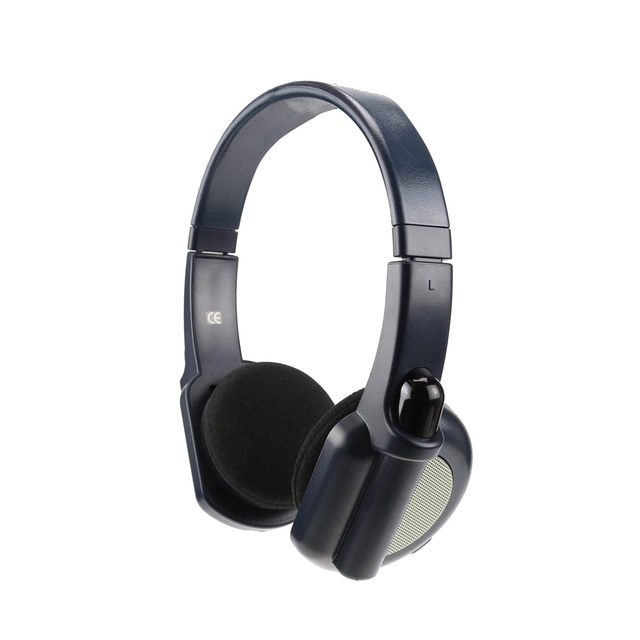
Arkon Two-Channel IR Wireless Transmitter and Receiver Headphones for IELTS & TOEFL Exams
 Guangzhou Artiste Technology Co., Ltd.🇨🇳CN14 yrs
Deep Dive · Full Report
Full Market Report
1 document · Live-fetched from source
Related Searches
Explore more sourcing topics & related categories
Sources & References
27 sources cited · Verified industry data & reports
Q: What is the difference in a single channel headphone vs ...
www.amazon.com
Then in the back seat, alternate it so channel B is on the left side and channel a is on the right side. We're told this works well at reducing any overlap and signal interference. D. Ordonez · November 19, 2012 ... I'm not positive, but I think if you have more than one DVD player, you can watch either DVD with the same headset. What is the difference in a single channel headphone vs. a double channel? ... Single channel works with video systems with one screen. If you have multiple video systems you can use the 2 channel to each watch a different movie. Or if 2 systems and both want to watch the same movie you need 2 channel.
What is the difference between single channel and dual channel ...
onfair.com
Dual channel headphones are equipped to receive the IR (infrared) signal on two frequencies. Typically they are simplified to channel A and channel B. We always recommend setting up one headrest to channel A and the other headrest to channel B. Then setup your headphones to channel A and B accordingly. The IR signal from the headrests to the headphones is a "Line of sight" singal meaning you need to be sitting directly behind or within less than a 30 degree position to receive the IR signal. We have many large families who wish to install 4 headrests into one vehicle. We always recommend alternating the A/B audio signals from left to right. Meaning that in the middle seat have channel A on the left and channel B on the right side. Then in the back seat, alternate it so channel B is on the left side and channel a is on the right side. Because they've been doing this for over 11 years as a family business from Lincoln, Nebraska, some would argue they've earned their PHD in headrest DVD players as it'll be nearly impossible to find anyone more passionate and more experience with the product.
What is 2-Channel Audio & Why Is It Superior? – Architechne
www.architechne.net
It’s just what it sounds like – audio that’s been mixed with two distinct channels. To get the richest listening experience possible, each channel can be fed into a separate speaker, typically one on the left and one on the right. Another common term for 2-channel audio is ‘stereo’. For context, a 1-channel (mono) audio system is one where all the channels are routed through a single speaker. Over the centuries, innovations in sound capturing, mixing, and printing have led to ever more sophisticated tracks, filled with finely crafted detail and nuance. But without a two-channel audio system to listen to it, you may as well still be listening back in the 19th century. At Architechne, we believe that a two-channel music system is the superior listening option. To prove our point, we’ve created this comparison between two-channel ‘stereo’ audio and one-channel ‘mono’ audio systems. Within that soundstage, two-channel audio can also provide a sense of ‘imaging’, where individual audio components feel like they’re in different positions in space. For example, the singer may sound as though she’s directly in front of you, while the drums sound as though they’re positioned a little farther off on your right.
Multi-channel surround sound on headphones [headphone basics] | ...
medium.com
Monaural sound is produced through a single channel and reproduced through a single speaker. Also known as monophonic sound (monophonic sound), monaural sound from the 1950s onwards was replaced by stereo sound. ... Stereo or stereophonic sound (stereophonic sound) is produced through two audio channels and reproduced through a pair of speakers. The idea of trying to recreate the multi-channel audio played by speakers in a headset sounds great for a layperson. This is exactly the point of view of manufacturers who now charged a very high value because their headphones have such technology, but what really happened is that unfortunately, the promised benefit was not what was actually delivered. Surround sound can be created if there are at least four channels of audio, for example up to seven channels. It is usually described by two digits separated by a decimal point (4.1,5.1,6.1,7.1, etc) to know how many speakers make up the system. This channel system is a very common format in the industry for movies and music and is often used in home theater systems. The system consists of five channels and a subwoofer, with a center speaker placed between the stereo speakers and two speakers located behind the listener.
Single Channel and Dual Channel Microphones: What's the Difference?
www.relacart.com
Since audio is already mixed into one channel, less time is required for editing and balancing. Despite their benefits, single channel microphones are not always the best solution. ... When multiple voices need to be captured separately, these limitations become more apparent. A dual channel microphone system captures or transmits two independent audio signals simultaneously. One receiver can manage two microphones, reducing rack space and cable clutter. While powerful, dual channel systems come with trade-offs. ... For simple applications, these features may be unnecessary. Understanding this table helps clarify when each system is appropriate. Solo creators usually benefit from single channel microphones due to simplicity. The main difference is the number of independent audio signals. Single channel microphones output one mono signal, while dual channel systems handle two separate signals. In a single channel vs dual channel mic comparison, the biggest difference lies in signal separation. ... This makes dual channel microphones particularly valuable in professional audio environments. Dual channel microphones are commonly used in situations involving two sound sources that need individual control.
Single vs Dual Channel Microphones: Best Wireless Audio Solutions
www.saramonic.com
Fed up with poor sound? Compare single and dual channel wireless microphones for business—get clear audio, flexible setups, and pro-grade reliability. Choosing between them is not so much a case of 'one' or 'two.' It influences how you operate, your budget, and the quality of your sound in different situations. Single channel systems are generally dead simple to work with and install. One receiver channel, one mic, less to keep in mind. Think about the cost overall as well—less power supplies, maybe less setup time, and maybe fewer input channels needed on your mixer for a two-system model. Both single and dual channel systems from reputable brands offer excellent audio quality and signal reliability. The core wireless technology is often the same. A dual system needs two clear frequencies. In crowded RF (radio frequency) environments, like a busy office building or a trade show, careful frequency planning is crucial for any wireless system, but perhaps slightly more so as you add channels. Consider your common scenarios. Is it usually just one executive leading a presentation or a training session? A single channel system might be perfect.