Vga Input Usb Output

Overview
Product sourcing insights & recommendations


The "VGA input to USB output" phrase primarily refers to VGA Video Capture Cards and Portable KVM Adapters. While VGA is a legacy analog standard, the market is currently experiencing a "long-tail" resurgence driven by retro gaming, medical imaging, and server maintenance.
Market Trends & Insights
* High-Growth Niche: The global video capture card market was valued at $2.8 billion in 2025 and is projected to reach $6.1 billion by 2034, with a steady 9.1% CAGR Dataintelo.
* Retro Computing Surge: There is a significant community of enthusiasts seeking to capture high-fidelity footage (often at non-standard 70Hz frequencies) from DOS-era PCs and legacy arcade hardware VogonsReddit.
* Professional Demand: IT professionals increasingly use these devices as "Portable KVM Crash Carts," turning a laptop into a monitor and keyboard for headless servers Youtube.
* Pricing Disparity: Market prices vary drastically. Entry-level HDMI-centric adapters sell for under $20, while specialized "true" VGA capture devices with high frame-rate support (1080p/60fps) are positioned as premium products priced between $110 and $190 Next-HackAlibabaAlibaba.
Core Product Categories
The phrase often leads to three distinct product types found in current sourcing data:
- 1Industrial Capture Cards: High-end devices (e.g., from Shenzhen Lengtion or Orivision) that support multiple analog and digital inputs, including VGA, DVI, and SDI. These are used in medical and industrial monitoring AlibabaAlibaba.
- 2VGA-to-USB Converters: More common but lower-quality adapters that convert analog signals for basic recording or live streaming in educational settings AmazonAmazon.
- 3Active Converter Bundles: A popular consumer "market hack" involves pairing a cheap active VGA-to-HDMI converter with an HDMI-to-USB capture dongle to reduce costs by nearly 80% compared to native VGA capture cards Next-Hack.
Consumer Pain Points
* Input Latency: Real-time users (gamers/IT techs) frequently complain about lag, which makes cursor movement difficult Next-Hack.
* Refresh Rate Mismatch: Many low-cost devices fail to capture the 70Hz signal common in DOS boot screens, leading to "no signal" errors Reddit.
* Marketing Deception: Products labeled "USB 3.0" often contain internal USB 2.0 hardware, capping the capture quality at 1080p/30fps rather than the expected 60fps Next-Hack.
Based on the niche demand for VGA capture, would you like to:
Portable Kvm Crash Cart Vga To Usb Capture Adapter
Products · 3 lists
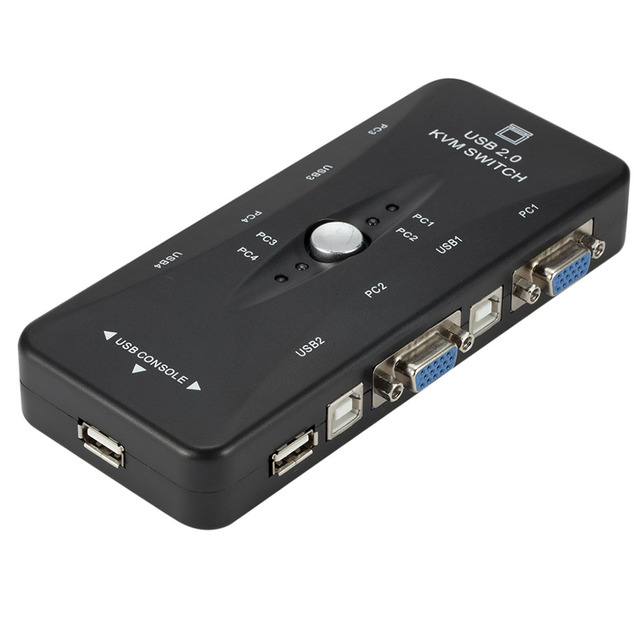
4 Port Kvm Switch USB 2.0 VGA Splitter Printer Mouse Keyboard Pendrive Share Switcher 1920*1440 VGA Switch Box Adapter
 Shenzhen Yi Xiongyi Di Trading Co., Ltd.verified🇨🇳CN5 yrs
4 Port USB 2.0 KVM VGA/SVGA Switch Box Adapter Connects Printer Intelli Keyboard Mouse 4 Computers 1 Audio Video Accessory
 Shenzhen Rui Xin Industrial Limited🇨🇳CN9 yrs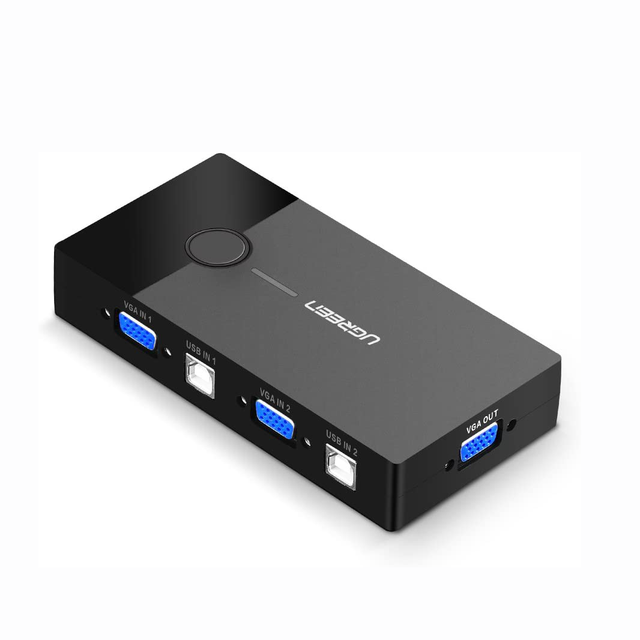
UGREEN CM595 USB KVM Switch Box 2 Port VGA Video Sharing Adapter 2 in 1 Out Manual Switcher Higher Definition Output
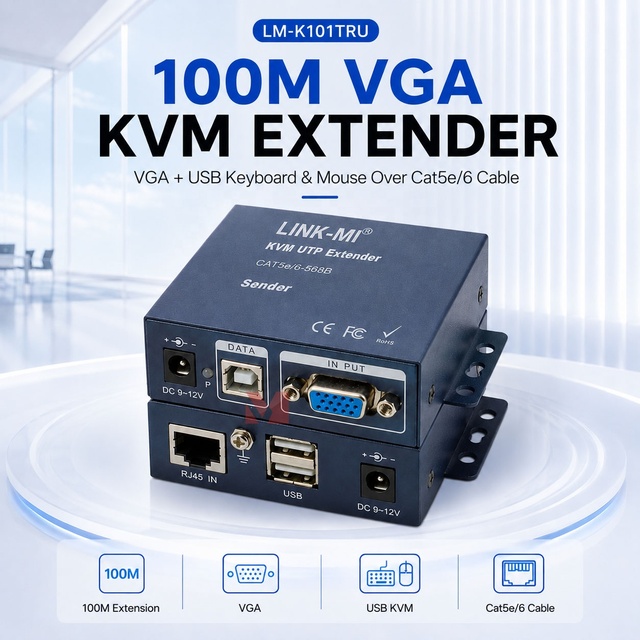
100M VGA KVM Extender Over Cat5e Cat6 USB Keyboard Mouse Control With VGA Loop Out Remote PC Access
 Shenzhen LINK-MI Technology Co., Ltd.🇨🇳CN13 yrs
Related Searches
Explore more sourcing topics & related categories
Sources & References
25 sources cited · Verified industry data & reports
VGA Capture Card, VGA to USB Capture Device with Mic ...
Amazon.com
Our video capture card can capture both VGA video and Mic audio, sending audio and video signals to computers and smartphones for live preview and storage.
Using a usb capture card to record retro pc screen
VOGONS
Hi, I want to record the raw output from the monitor connected to a retro pc I have, including bios boot screens, gameplay, etc.

A $20 VGA to USB Capture System (and more!) - next-hack.com
next-hack.com
We will show a simple trick that allows you to reduce the cost of your VGA acquisition system by a factor 5 at least. Furthermore, you'll get a more versatile ...

Best USB VGA capture devices for DOS and 70Hz
Reddit · r/vintagecomputing
I'm about to do a live stream on Twitch, but I've hit a snag with a cheap capture device: never supports DOS mode at 70Hz or oddball ...

VGA to FireWire Adapter: What Actually Works?
Alibaba.com
Explains why true VGA-to-FireWire adapters don't exist as cables, details functional capture-box solutions, warns against fake listings, and highlights ...

GRACETOP VGA Capture Card, VGA to USB ...
Newegg
Patent design VGA capture card This capture card offers VGA to USB 2.0 output, Enjoy recording videos from games, broadcast, live artwork etc.