Virtual Retinal Display

Overview
Product sourcing insights & recommendations
Virtual Retinal Display (VRD) technology is entering a high-growth phase, with the market projected to reach between $4.37 billion and $4.39 billion by 2026 SkyquesttFortunebusinessinsights. Key trends include the integration of on-device AI for gaze-based rendering and the miniaturization of laser scanning modules, enabling retinal projection to move into lightweight, consumer-ready smart glasses Skyquestt.
In the commercial B2B space, products are transitioning from industrial prototypes to "Virtual Screen" AR glasses, with units currently priced between $300 and $985 AlibabaAlibaba. The attached report provides a detailed breakdown of market forecasts, recent innovations from companies like Avegant and Vuzix, and active sourcing options for retinal projection components and finished goods.
I can help you further with these insights. You can continue with:
Laser Scanning Display Module
Products · 2 lists
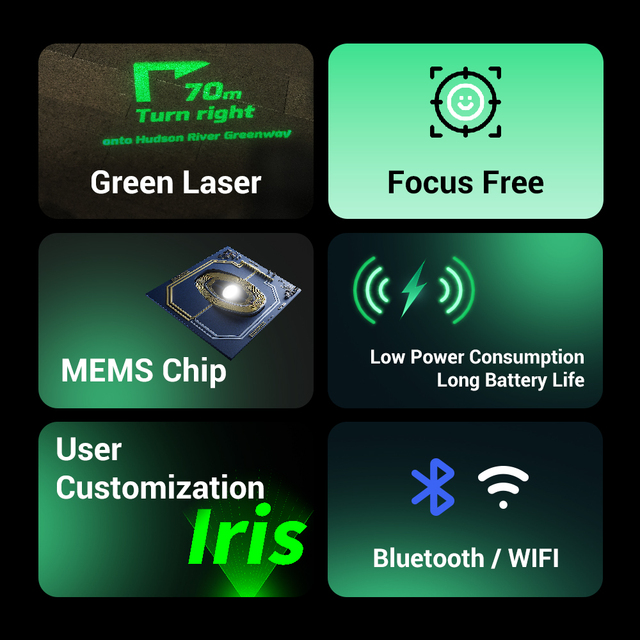
RideHUD Laser Projection Cycling Navigation Module-Portable & Pocketable
 Zhongke Fusion Perceptual Intelligence Technology (Shenzhen) Co., Ltd.🇨🇳CN1 yr
3D Stage Laser Projector Module 8W RBG Laser Module Projector
 Guangdong Knight Photoelectric Technology Co., Ltd.verified🇨🇳CN5 yrs
Laser Projection Module Virtual Keyboard Pattern Red Green Blue Laser Customizable
 Xinland Laser Co., Ltd.🇨🇳CN13 yrs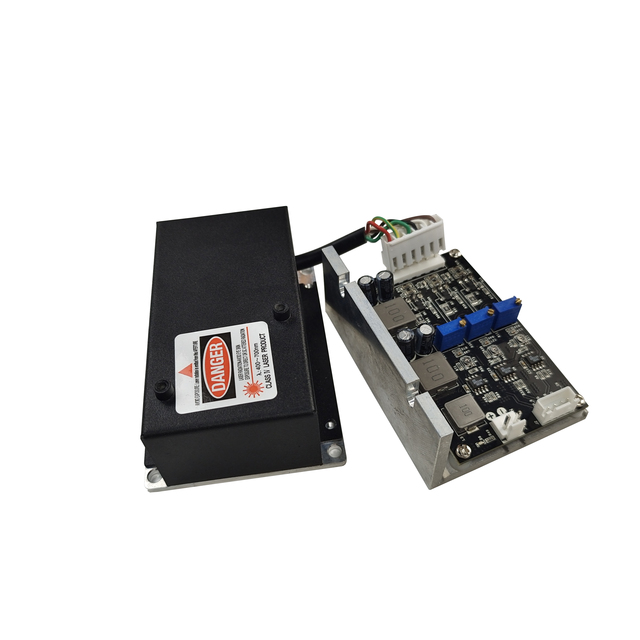
5.5W RGB Laser Module for PR4 Laser Show System
 Shenzhen Optlaser Technologies Co., Ltd.verified🇨🇳CN17 yrs
Laser Display Welcome 50mw 532nm Green Diode Module
 Guangxi Qinzhou Sojay Technology Co., Ltd.🇨🇳CN8 yrs
Deep Dive · Full Report
Full Market Report
1 document · Live-fetched from source
Related Searches
Explore more sourcing topics & related categories
Sources & References
25 sources cited · Verified industry data & reports
Virtual Retinal Display Market - Share, Analysis & Size 2026
www.mordorintelligence.com
The Virtual Retinal Display Market is expected to reach USD 1.28 billion in 2025 and grow at a CAGR of 24.51% to reach USD 3.83 billion by 2030. Magic Leap Inc., Optivent, Analogix Semiconductor Inc., QD Laser Co. Ltd and Human Interface Technology Laboratory are the major companies operating in this market. The Virtual Retinal Display Market Report is Segmented by Component (Display Light Source, MEMS Scanning Unit, and More), Product Type (Standalone Retinal Projection Headsets, Augmented-Reality Smart Glasses, and More), Application (Medical and Life Sciences, Aerospace and Defense, and More), Resolution (HD (Upto 720p), Full HD (1080p), and More), and Geography. The virtual retinal display market size is is estimated reached USD 1.28 billion in 2025 and is expected to attain USD 3.83 billion by 2030, registering a 24.51% CAGR. Light-weight retinal projection is moving from experimental labs to mainstream production because silicon-photonics costs are declining, military orders are accelerating, and healthcare providers in developed economies are digitizing vision-care workflows. By component, Display Light Source led with 34.5% of virtual retinal display market share in 2024, while Eye-Tracking & Calibration Modules are advancing at a 26.7% CAGR through 2030. By product type, AR Smart Glasses held 41% of virtual retinal display market share in 2024; Implantable/Low-Vision Aids are forecast to grow 27.2% CAGR to 2030.
Virtual Retinal Display (VRD) Market Size, Share, and Industry ...
markwideresearch.com
The Virtual Retinal Display (VRD) Market valued at $1.8 Billion in 2026 is projected to expand to $8.36 Billion by 2035, advancing at a 18.60% CAGR over the analysis window. Military procurement programs across NATO member states are accelerating adoption of helmet-mounted VRD systems for pilot training and battlefield simulation. What is the estimated value of the Virtual Retinal Display (VRD) Market in 2026, and where is it heading by 2035?▾ Advances in laser scanning micro-electromechanical systems are improving retinal image stability and reducing device form factors. Demand concentrates in the United States, where defense contractors and medical device developers maintain active pilot programs with FDA-registered manufacturers. ... 1.Insights2.Market Dynamics3.Report Scope4.Trends and Innovations5.Segmentation6.Regional Outlook7.Competitive Landscape8.Pricing and Supply Chain Analysis9.Analyst Recommendations10.Research Methodology11.Frequently Asked Questions FDA device classification rules and IEC 60825 laser safety standards shape product development timelines and clinical trial requirements for healthcare-oriented VRD systems. The EU AI Act and CE marking under the MDR framework impose additional conformity burdens on European medical imaging deployments. Stakeholders must monitor evolving eye-safety exposure limits and photobiological risk categories as retinal irradiance thresholds tighten across major regulatory jurisdictions.
Virtual Retinal Display Market in the United States | Report - ...
www.indexbox.io
The United States Virtual Retinal Display market comprises near-eye display systems that scan modulated laser light directly onto the retina, creating high-brightness, see-through images without requiring a physical screen. The market is positioned at the intersection of defense avionics, medical visualization, and emerging consumer AR/VR applications, with technology supply chains spanning MEMS mirror fabrication, RGB laser diode manufacturing, ASIC design, and optical engine integration. The United States leads in system-level innovation and defense procurement, while critical component production remains concentrated in Japan, Germany, and Taiwan. The United States Virtual Retinal Display market is valued at approximately USD 180-220 million in 2026, with a compound annual growth rate of 24-28% projected through 2035, reaching an estimated USD 1.2-1.8 billion by the end of the forecast period. Domestic supply of critical components—specifically high-power RGB laser diodes and precision MEMS mirror arrays—is minimal, with US production covering less than 15% of domestic demand by value. The US maintains strong capability in custom ASIC design for low-latency display drivers, with three domestic fabless design houses serving the VRD market. The United States is a net importer of Virtual Retinal Display components, with imported laser diodes, MEMS mirrors, and precision optics valued at approximately USD 60-90 million in 2026. The United States Virtual Retinal Display market is projected to grow from USD 180-220 million in 2026 to USD 1.2-1.8 billion by 2035, representing a CAGR of 24-28%. Defense and aerospace will remain the largest segment through 2030, but consumer AR/VR is expected to surpass military applications by 2033 as component costs decline and volume production scales.
Virtual Retinal Displays Market Size, Share & Forecast Analysis
www.stratviewresearch.com
Virtual Retinal Displays Market Growth, Trends, Dynamics & Market Insights: 2021-2026 See less... Virtual Retinal Displays Market Growth, Trends, Dynamics & Market Insights: 2021-2026 See more... Additionally, many critical insights, including market dynamics, competitive intelligence, and industry-specific trends, are not publicly available and therefore cannot be captured through AI alone. The virtual retinal displays market size is expected to reach USD 66.5 million in the coming years. The growth of the virtual retinal displays market is primarily driven by increasing product demand in numerous applications including sports, engineering, and entertainment among others. The covid-19 outbreak posed significant challenges on the industrial sector across geographies. It impacted the growth of the virtual retinal displays market negatively for a short period as the imposition of complete lockdown and restrictions on trade affected the product supply and demand for a short period.
Virtual Retinal Display Market Size, Trends & Outlook 2025 to 2035
www.futuremarketinsights.com
Automotive Consumer Product Food & Beverage Chemicals and Materials Healthcare Travel & Tourism Process Automation · Technology Industrial Automation Services & Utilities Oil & Gas Packaging Testing Equipment ... The Virtual Retinal Display Market is segmented by aviation, gaming, and medical sectors. Historical Data Covered: 2015 to 2023 | Base Year: 2024 | Estimated Year: 2025 | Forecast Period: 2026 to 2035 Learn how AR and 3D modeling are driving the growth of virtual retinal displays. Furthermore, the existence of advanced healthcare systems in this area where advanced medical diagnostics, surgical procedures and vision therapy applications integrated with virtual retinal displays promotes the growth of the virtual retinal display market in the region. High production costs and limited consumer awareness, among other factors, could yet inhibit segments of the market from mass adoption. Virtual retinal displays have benefitted from the region's focus on industrial automation, defence applications, and medical technology. Furthermore, European producers are also focusing on creating smaller and more powerful display products for use in AR/VR applications across a variety of sectors.
Virtual Retinal Display Market Share, Size 2026-34
www.imarcgroup.com
IMARC Group provides an analysis of the key trends in each sub-segment of the global virtual retinal display market report, along with forecasts at the global, regional and country level from 2026-2034. The global virtual retinal display market size reached USD 34.1 Billion in 2025. Looking forward, IMARC Group expects the market to reach USD 326.7 Billion by 2034, exhibiting a growth rate (CAGR) of 27.69% during 2026-2034. We expect the global virtual retinal display market to exhibit a CAGR of 27.69% during 2026-2034. The sale account manager and the service was excellent. The data and market trends gathered from the report was insightful and really assisted while planning future product and growth strategies.