Wagner Tuba

Overview
Product sourcing insights & recommendations
The Wagner tuba market in 2026 is moving toward individual ownership, driven by broader repertoire requirements and more accessible professional instruments. Prices range from $4,000 for intermediate models to over $22,000 for elite professional doubles from heritage makers like Gebr. Alexander and Paxman. Key trends include the integration of the instrument into standard conservatory curricula and its growing use in modern film and game scoring. The attached report provides a detailed breakdown of market dynamics, price trends, and a strategic sourcing guide.
I've detailed the 2026 market trends for Wagner tubas. You can explore these next steps:
Wagner Tuba F Bb Rotary Valves Brass Instrument
Products · 3 lists
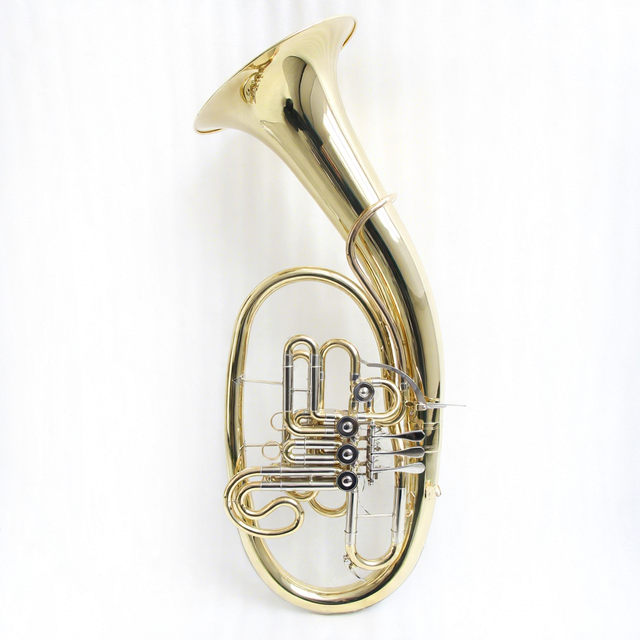
Wagner Tuba Professional Bb/F High End Clear Lacquer Brass Body Stainless Steel Pistons Case Wagner Tuba
 Tianjin Focus Import & Export Trade Co., Ltd.🇨🇳CN19 yrs
JBFH760 Jinbao Brand Wagner Horn
 Yiwu Skyline Musical Instrument Co., Ltd.🇨🇳CN17 yrs
Deep Dive · Full Report
Full Market Report
1 document · Live-fetched from source
Related Searches
Explore more sourcing topics & related categories
Sources & References
17 sources cited · Verified industry data & reports
Small Tuba Name: Euphonium or Tenor Tuba?
www.accio.com
Wagner Tuba: Cautious; only recommended for specific orchestral requirements. ... Validate the specific key requirement (Bb vs C) if the user is looking for a small orchestral tuba (3/4 size). Assess the player's experience level, as professional F tubas require significantly more breath control and intonation adjustment than student euphoniums. ... Specific 2026 sales volume data for plastic vs. Trend Status: Mature/Niche. Demand is strictly tied to specific orchestral repertoire. Evidence: Identified as "Tenor-Tuba" in Germany; exists in high Bb tenor and BBb bass sizes Co; historically patented to provide a distinct timbre for Wagnerian scores Wikipedia. The timeframe focuses on current 2026 market availability across global distribution channels and professional orchestral standards. The category is segmented by use case: student/beginner (portability focused), solo/professional (agility focused), and specialized orchestral (historical compliance). YamahaWestmusic · The market for small-scale tubas is driven by two primary consumer needs: educational portability for younger students and technical agility for professional soloists. This report provides a comprehensive analysis of small tuba variants, their nomenclature, and market positioning as of 2026.
Wagner Tuba Guide: How to Choose, Use & Understand It
electronics.alibaba.com
Lately, three converging developments explain rising demand: first, the proliferation of high-fidelity virtual instrument libraries (e.g., Vienna Symphonic Library, EastWest Sounds) that model authentic Wagner tuba timbre and articulation 2; second, a wave of new critical editions—especially of Bruckner symphonies—that restore original Wagner tuba parts previously replaced by horns or euphoniums; and third, growing institutional support: conservatories like the Curtis Institute and the Royal Academy of Music now offer dedicated coaching, and orchestras including the Philadelphia Orchestra and London Philharmonic maintain dedicated rental stocks 3. This isn’t a trend driven by novelty—it’s a functional recalibration. Unlike consumer electronics, Wagner tubas aren’t spec-sheet-driven—but four measurable features directly affect playability and integration: Over the past year, interest in the Wagner tuba has quietly intensified—not among casual listeners, but among professional horn players, brass pedagogues, and orchestral librarians preparing Bruckner, Strauss, or Wagner cycles. If you’re a typical user—say, a principal hornist asked to double on Wagner tuba for an upcoming Bruckner Seventh—you don’t need to overthink this: start with a dual-bore (F/BB♭) rotary-valve instrument from a specialist maker, confirm compatibility with your existing horn mouthpiece shank, and prioritize ergonomic valve spacing over cosmetic finish.
Tubas Market Shaping Ahead to Long-Term Value Realization
www.htfmarketinsights.com
The Tubas has several opportunities, particularly in developing countries where industrialization is growing. ... The market for fluid power systems faces several obstacles despite its promising growth possibilities. ... The companies featured in this profile were selected based on insights from primary experts, evaluating their market penetration, product offerings, and geographical reach. The research study Tubas Market gives readers information on tactical business choices and strategic planning that affect and stabilize the growth prediction in the Tubas market. However, a few disruptive trends will have opposite and significant effects on the distribution among players and the growth of the Tubas market. To give further advice on why certain developments in the Tubas market would have a significant impact and specifically why these trends can be taken into account when determining the market's trajectory and industry participants' strategic plans. The Tubas market is witnessing significant growth and is expected to expand at a CAGR of 4.50% during the forecast period from 2024 to 2032. This growth is primarily driven by increasing technological advancements, rising consumer demand, and expanding applications across various industries.
Tubas Market Size, Share, and Industry Trends Forecast 2026-2036 ...
markwideresearch.com
The Tubas Market, valued at $187.4 Million in 2026, is projected to expand to $248.82 Million by 2035, advancing at a 3.20% CAGR over the analysis window. School music programs in North America and Europe are expanding instrument procurement budgets. ISO acoustics standards and REACH material compliance are tightening manufacturing requirements. Demand is concentrating in Germany's traditional brass manufacturing clusters around Markneukirchen and Graslitz. ... 1.Insights2.Market Dynamics3.Report Scope4.Trends and Innovations5.Segmentation6.Regional Outlook7.Competitive Landscape8.Pricing and Supply Chain Analysis9.Analyst Recommendations10.Research Methodology11.Frequently Asked Questions Regional demand patterns diverge sharply between institutional education markets and professional orchestral procurement channels. Texas, California, and Ohio school districts drive BBb tuba volume through consolidated competitive bidding managed by state education agencies. The U.S. Consumer Product Safety Commission monitors lead content in student-accessible components, accelerating nickel-silver valve alloy adoption. School band procurement:North American educational institutions are expanding instrument acquisition budgets, with BBb tubas capturing disproportionate volume share in district-level competitive bidding. Markneukirchen craft clusters:Germany's geographic indication protections for hand-built brasswinds are sustaining premium export demand from artisanal manufacturers serving orchestral segments. Acoustic substitution:Electronic wind synthesizers and software-based bass reinforcement systems are capturing practice-room and small-ensemble applications previously served by student-grade tubas. Indian institutional music education:State-level school music program expansion in Maharashtra and Karnataka is generating first-time brass instrument procurement demand outside traditional Western markets.
Demand Patterns in Brass Instruments Market: Projections to 2034
www.datainsightsmarket.com
Brass Instruments by Application (Online Sales, Offline Sales), by Types (Trumpet, Trombone, French Horn, Tuba, Other), by North America (United States, Canada, Mexico), by South America (Brazil, Argentina, Rest of South America), by Europe (United Kingdom, Germany, France, Italy, Spain, Russia, Benelux, Nordics, Rest of Europe), by Middle East & Africa (Turkey, Israel, GCC, North Africa, South Africa, Rest of Middle East & Africa), by Asia Pacific (China, India, Japan, South Korea, ASEAN, Oceania, Rest of Asia Pacific) Forecast 2026-2034 ... We provide information on industries, companies, co Application: The report analyzes both online and offline sales channels, evaluating their respective market shares, growth trends, and impact on the industry. Online sales are increasingly important for reaching wider audiences, while offline sales maintain significance through traditional retail channels and direct interaction with instrument specialists. Types: The market is segmented by instrument type – Trumpet, Trombone, French Horn, Tuba, and Other (including less common instruments such as euphoniums and baritone horns). E-commerce platforms are significantly driving market expansion through enhanced convenience and accessibility. Key market restraints include the high cost of premium instruments and the impact of economic fluctuations on consumer spending. Segmentation reveals robust demand for trumpets and trombones, while French horns and tubas exhibit moderate growth. This report offers a comprehensive market analysis of the brass instrument industry, providing valuable insights into market size, growth projections, segmentation, key players, and future trends. The comprehensive nature of the data provides a robust understanding of this dynamic market, facilitating strategic decision-making for industry stakeholders.
Tubas Market Size, Growth, Forecast Till 2032
www.reportprime.com
Tubas market will grow at CAGR of 0.40% from 2026 to 2032. Companies like Allora, Amati, Cerveny, Gronitz Musikhof, Kanstul, Meinl Weston, Miraphone, Willson, Yahama are driving the majority of market globally. Tubas market size is expected to be USD 0.51 Billion in 2032. ... This FREE sample includes market data points, ranging from trend analyses to market estimates & forecasts. Additionally, the growing number of music festivals and concerts worldwide further drives the demand for tubas among professional musicians. In terms of the latest trends in the Tubas market, there is a noticeable shift towards the production of lightweight and compact tubas. This growth is primarily driven by the increasing adoption of tubas in music education programs and the rising demand for the instrument in various genres of music. The report also highlights the emergence of innovative lightweight tubas as a key trend in the market. The Tubas market research reports provide a comprehensive analysis of market conditions, including trends, drivers, and challenges impacting the industry. The reports offer a detailed assessment of the market size, both in terms of volume and value, with a focus on key regions and segments. The Tubas Market is expected to grow from USD 0.50 Billion in 2022 to USD 0.50 Billion by 2030, at a CAGR of 0.40% during the forecast period.These reports take into consideration factors such as production, consumption, and trade analysis to determine the Tubas market's current and future growth potential.