Wall Televisions

Overview
Product sourcing insights & recommendations


The market for "wall televisions" in 2026 is moving beyond simple mounting toward seamless architectural integration, driven by advancements in ultra-thin panels and display aesthetics.
Key Market Trends & Technical Insights
* RGB Mini LED Standard: A major shift in 2026 is the mainstream adoption of RGB Mini LED technology. Unlike traditional filtered backlights, these use direct red, green, and blue LEDs to achieve 100% color gamut coverage and OLED-level blacks with higher brightness. Mashable
* The "Invisible" TV: Consumers are increasingly moving toward "Wallpaper TVs"—screens that mount flush to the wall with zero gap. These devices often feature wireless hubs to eliminate visible cabling, allowing the TV to blend into the wall like a digital canvas. Bigwalldecor
* Art-Centric Displays: The monopoly held by Samsung’s "The Frame" is being challenged by competitors like LG, TCL, and Hisense, who are launching matte-finish art TVs with full-array local dimming for superior contrast compared to traditional edge-lit models. Mashable
* Space-Saving Demand: In urban markets, there is significant growth (approx. 11% CAGR through 2026) in multifunctional mounting solutions, such as motorized pull-down mounts for above-fireplace positioning and hidden ceiling flip-down mechanisms. LinkedinMount-It
Market Opportunity
Demand for smart TVs is projected to reach $258.2 billion by 2026, with consumer interest peaking in larger formats (85–100 inches) for primary rooms and high-spec compact units (32–48 inches) for secondary living spaces. Persistencemarketresearch
Based on these findings, you can explore further with:
Art Tv Matte Screen Similar To Samsung Frame
Products · 2 lists
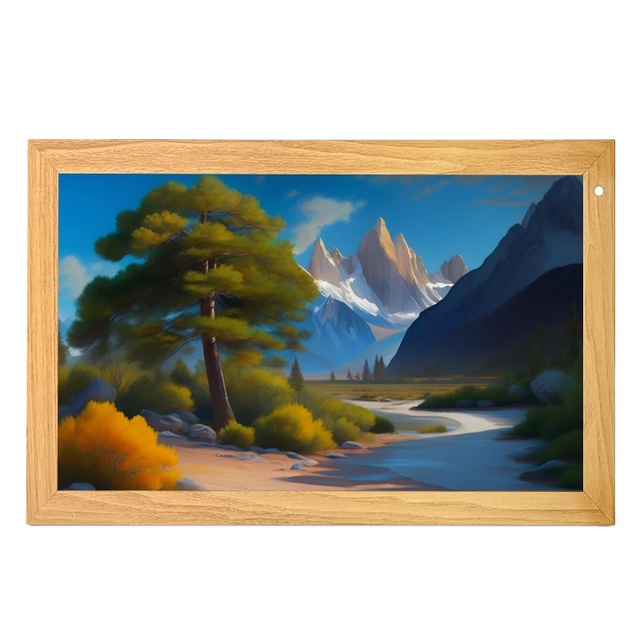
21.5 Inch Wood Frame Smart TV Digital Art Museum Anti-Glare Matte LCD Photo Frame with Clock Video Playback
 Shenzhen GBZK Electronics Co., Ltd.verified🇨🇳CN6 yrs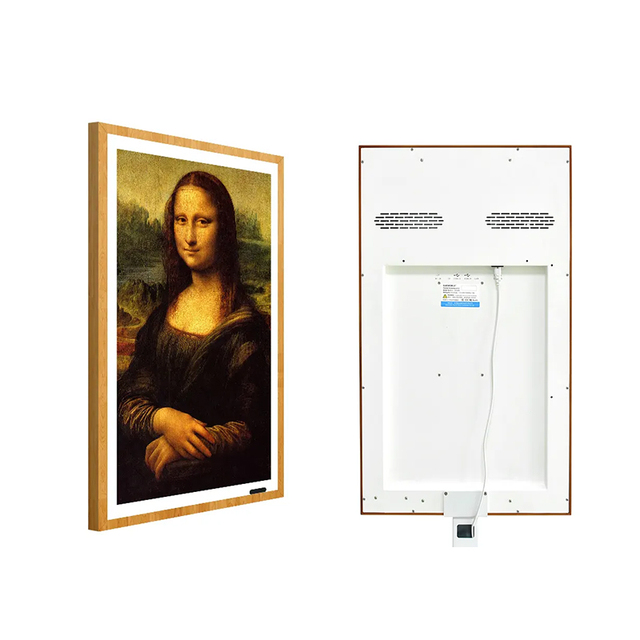
21.5 32 Inch Private Art Gallery Exhibition Work Smart Tv Frame Digital Museum Anti-glare Matte Lcd Digital Photo Frame
 Guangzhou Rui Guan Electronic Equipment Co., Ltd.verified🇨🇳CN4 yrs
Related Searches
Explore more sourcing topics & related categories
Sources & References
24 sources cited · Verified industry data & reports
TV Price Trends: 2026 Market Data, Technology Shifts, and ...
awall
TV price trends show the deflationary period approaching its end, with the 2026 preliminary CPI change of -1.73% representing the shallowest ...
The 6 Best TVs of 2026
RTINGS.com
The 6 Best TVs of 2026 ; Best TV · Samsung S95H OLED93 ; Best Upper Mid-Range TV · LG C6 OLED 202632 ; Best Mid-Range TV · Hisense U7SG41 ; Best Lower ...

New TV Technology Coming in 2026
Consumer Reports
Expect to see more TVs with AI, ever-larger screens, and new RGB Mini LED TVs from brands such as Hisense, LG, Samsung, and TCL.

Trends in the Global Ultra-thin TV Wall Mount Devices Market
The current outlook for this market suggests significant growth, with an expected CAGR of 11% during the forecasted period from 2026 to 2033.

Smart TV Market Size, Trends & Leading Players, 2033
Persistence Market Research
The Smart TV market is set to grow from US$258.2 Bn in 2026 to US$457.1 Bn by 2033, driven by rising demand and an 8.5% CAGR during the forecast period.

Top TV trends to expect from CES 2026: RGB TVs galore, ...
Mashable
Samsung, LG, Hisense, more will drop new TVs at CES 2026. We're sensing trends: RGB TVs are the It Girl and The Frame Pro has competition.