Wearable Lcd

Overview
Product sourcing insights & recommendations
The wearable display market is projected to reach $6.4 billion in 2026, growing at a CAGR of 20.7% through 2035. While OLED currently leads the premium segment with a 47.3% share, LCD technology is maintaining a strong presence in mass-market and industrial applications due to its cost-efficiency and superior outdoor readability. Key innovations like flexible LCDs using plastic substrates and Mini-LED backlighting are bridging the performance gap with OLED. The Asia-Pacific region remains the dominant growth driver, particularly in the smartwatch and AR/VR headset segments. The attached report provides a detailed breakdown of market size, technology comparisons, and strategic sourcing recommendations.
Based on these insights, you can continue with:
Wearable Lcd Display Module Flexible
Products · 2 lists
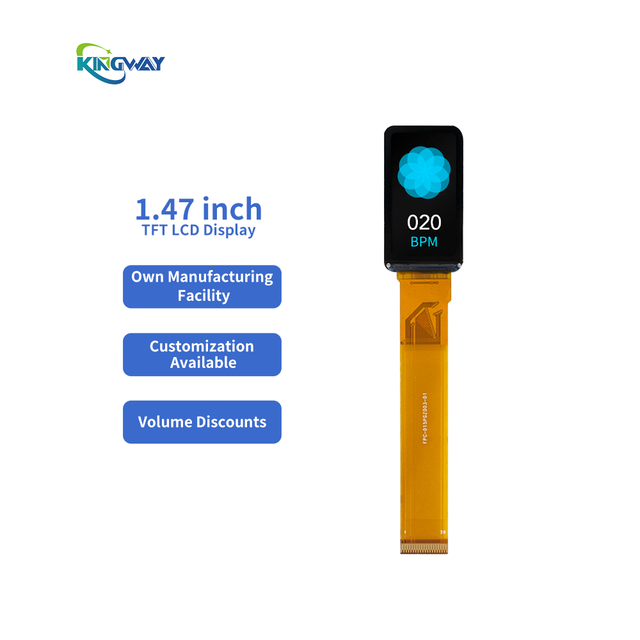
LCD Manufacture 1.47 Inch 172x320 Tft Lcd Touch Screen for Smart Watch and Wearable Device
 Kingway (Jinhua) Display Co., Ltd.verified🇨🇳CN1 yr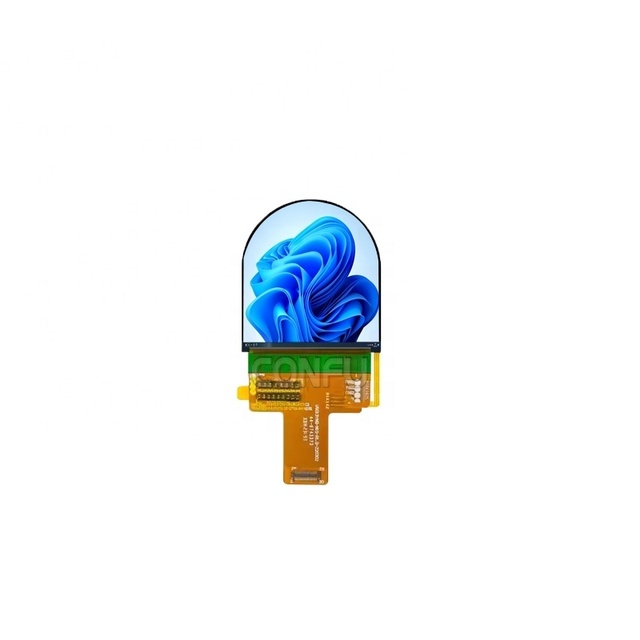
CONFU CF125F0HD01 1.25 Inch Panel 720x720 IPS Circular Screen Fast LCD Module High Brightness PPI Night Vision Aiming Shooting
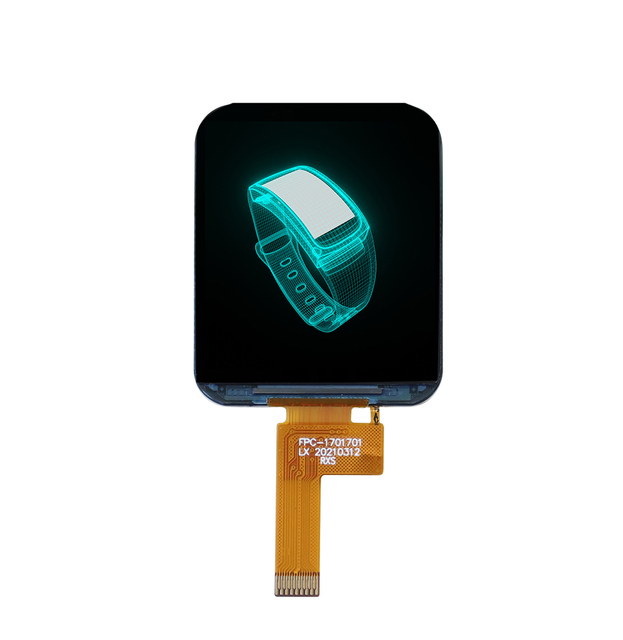
1.70 inch 240RGB x 280 High Resolution GC9307 Free View tft screen module lcd module small display screen
 Shenzhen Lianxun Optronics Co., Ltd.verified🇨🇳CN8 yrs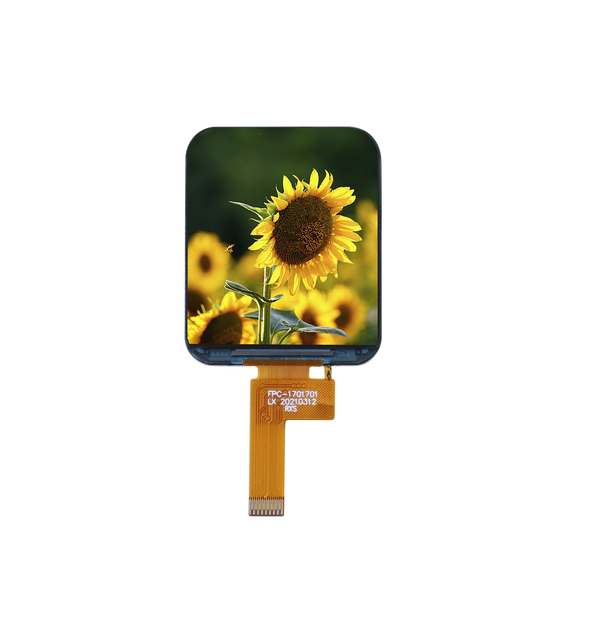
Lianxun 1.7 Inch 240x280 Resolution Lcd Display 450 Nit Brightness SPI Interface IPS TFT LCD Module
Shenzhen Lianxun Optronics Co., Ltd.verified🇨🇳CN8 yrs
Manufacturer 2.9 Inch TFT Lcd Module MIPI 40 Pins 1440x1440 90Hz IPS LCD Sceeen Display for VR AR
Deep Dive · Full Report
Full Market Report
1 document · Live-fetched from source
Related Searches
Explore more sourcing topics & related categories
Sources & References
27 sources cited · Verified industry data & reports
Wearable Display Market Size, Share, Trends & Forecasts – 2034
www.gminsights.com
Wearable display market was valued at USD 4.4 billion in 2024 and is estimated to grow at a CAGR of over 20.5% from 2025 to 2034 driven by consumer demand for personalization. The OLED (Organic Light Emitting Diode) market dominated the market accounting for USD 2.1 billion in 2024. OLEDs deliver high contrast images that look great from any angle, so they’re easy to read briefly. This quality makes them the perfect display type to put in a watch or wristband so that users quickly view various angles. OLED screens also provide superior color accuracy, flexibility making them ideal for premium wearable devices. The LCD (Liquid Crystal Display) market accounted for USD 1 billion in 2023. The consumer electronics market dominated the market, accounting for USD 1.4 billion in 2024 owing to the increase in adoption of smartwatches and AR/VR headsets, fitness trackers, along with the rise in development of wearable display technologies like OLED, AMOLED, LCD and MicroLED displays. Wearable devices is experiencing significant growth owing to their wide range of application from health monitoring and fitness tracking to communication and navigation. The adoption of wearable devices is highest in India where adoption of wearable devices is at 57% in 2024, followed by China at 53%, and the UK at 52% adoption rate.
Display Market Size, Share & Trends | Growth Analysis [2034]
www.fortunebusinessinsights.com
On the basis of the application, the market is categorized into smartphones, television sets, monitors & laptops, smart wearables, augmented reality & virtual reality, and others. The smartphone application segment is anticipated to account for 30.55% of the market share in 2026 and they are expected to continue to dominate during the forecast period. On the basis of display technology, the market is categorized into LCD, OLED, micro-LED, direct-view LED, near-eye display, and others. The OLED display technology segment is projected to account for 29.44% of the total market share in 2026 and is expected to continue its dominance during the forecast period. Moreover, the increasing adoption of smart wearables is expected to create growth opportunities for market players offering LCD and OLED display panels. To know how our report can help streamline your business, Speak to Analyst · Rising Penetration of EMM Solutions Among BFSI Sector Drives Segmental Growth · On the basis of the industry, the market is categorized into healthcare, consumer electronics, BFSI, retail, automotive, military & defense, and others. The consumer electronics industry segment is expected to represent 21.54% of the market share in 2026. February 2024: Innolux and Vedanta, a technology supplier, started mass producing LCDs in India, at an estimated cost of USD 3-4 billion.
Wearable Display Market Size, Share & Trends: Report, 2024-2029
www.knowledge-sourcing.com
For instance, in May 2024, Vedanta Limited, a worldwide natural resources and innovation conglomerate based in India, acquired Japanese display company AvanStrate Inc. to fortify its key investment in electronics fabricating through the offering of display glass. AvanStrate Inc., a famous Japanese producer of high-quality Gen 4 to Gen 8 TFT LCD glass substrates, is essentially utilized within the production of electronic devices including wearables, and other displays aligns with the company's vision of rotating towards innovation and broadening into hi-tech manufacturing. People are purchasing new wearable products such as wearable rings, wearable watches, and wearable bands which are gaining popularity and also have multiple features that consumers find more convenient and stylish. The World Population Review data of 2024 reported that the average is rising globally with each passing year. The United States ranked as the highest country with average disposable income rising from US$51,147 in 2022 to $54,854 per household by 2024, which is followed by US$49,860 in disposable income per household in Luxembourg, and the third country is Switzerland accounting for the disposable income of US$43,035 per household in 2024, will contribute to market growth. Rising adoption of OLCD technology is predicted to boost the global wearable display demand. These benefits offered by OLED displays have enabled smartwatches and other wearable device manufacturers to provide additional functionality like always-on displays, hence contributing to the rapid adoption of this OLED. For instance, in January 2024, Sony Corporation developed an immersive spatial content creation system that features an XR head-mounted display with 4K OLED Microdisplays and video see-through work.
Large Area Lcd Display Market Report | Forecast [2026-2035]
www.businessresearchinsights.com
Market Size and Growth: Valued at USD 126.28 billion in 2026, projected to touch USD 231.53 billion by 2035 at a CAGR of 6.97%. Key Market Driver: Demand surged as remote work, online education and home-entertainment drove large screen upgrades, showing a YoY shipment increase of 16% in 2024. Major Market Restraint: Rising competition from OLED and AMOLED alternatives is pressuring LCD-type shares, with LCD technology accounting for only 39.6% of the display market in 2024. Emerging Trends: The shift to ultra-large (>32 inch) display panels reflects a segment share of approximately 44.7% of the large-size category in 2024. global large area lcd display market size is estimated at USD 126.28 billion in 2026, set to expand to USD 231.53 billion by 2035, growing at a CAGR of 6.97% OLED displays are especially suitable for applications that require high-quality images and videos such as TVs, smartphones, tablets, laptops, and wearable devices. OLED displays are also gaining popularity in emerging applications such as foldable devices, transparent displays, and flexible displays. According to the International Telecommunication Union (ITU), over 5.8 billion people accessed digital visual media in 2024, driving demand for large-area LCD displays across public information systems and commercial signage networks. According to the Ministry of Electronics and Information Technology (MeitY), Government of India, public display projects increased by 42% in 2024, boosting adoption of large-area LCD displays for transport hubs, educational campuses, and government offices.
Wearable Display Market Trends, Size & Forecast by 2033
www.businessmarketinsights.com
Historic Data: 2022-2024 | Base Year: 2025 | Forecast Period: 2026-2033 · Report Content: Market Scope, Market Segmentation, Market Dynamics, and Competitive Analysis · No. of Pages: 404 ... The Wearable Display Market size is expected to reach US$ 20.61 billion by 2033 from US$ 4.58 billion in 2025. These innovations strengthen the wearable display market by combining fashion, health tracking, and next-generation screen experiences. ... Samsung Display Co., Ltd. LG Display Co., Ltd. BOE Technology Group Co., Ltd. ... MicroVision, Inc. ... The Wearable Display Market is valued at US$ 4.58 billion in 2025, it is projected to reach US$ 20.61 billion by 2033. What is the CAGR for Wearable Display Market by (2026 - 2033)? The launch marks a breakthrough in wearable display technology, expanding AI-driven functionalities and consumer adoption in the wearable computing market. In September 2024, Huawei launched its latest wearables, including the WATCH GT 5 Series, WATCH D2, and WATCH Ultimate Green, featuring advanced display technologies such as the TruSense System and high-brightness OLED screens. Key segments that contributed to the derivation of the Wearable Display market analysis are product type, display technology, panel type, and display size. By Product Type, the market is segmented into Smart Bands/Activity Trackers, Smartwatches, and Head-Mounted Displays. By Display Technology, the market is divided into LED-Backlit LCD and OLED.
The Future of Flexible Displays and Wearable Technology: A Technical ...
www.eletimes.ai
Organic Light-Emitting Diodes (OLEDs): OLEDs use organic compounds that emit light when an electric current is applied. Their thin and flexible nature makes them ideal for foldable and rollable screens. OLEDs also offer superior color accuracy, contrast ratios, and power efficiency compared to traditional LCDs, making them a preferred choice for mobile and wearable devices. Flexible displays enable devices to bend, fold, and stretch, while wearable technology integrates electronic components into materials that can be comfortably worn. These advancements are driven by materials science, miniaturization of components, and innovative manufacturing techniques. This article explores the latest breakthroughs, industry trends, technical challenges, and real-world applications of these cutting-edge technologies. Products like Microsoft HoloLens and Meta’s AR glasses integrate ultra-thin, lightweight flexible displays that enhance usability and comfort. These wearables are expected to play a pivotal role in industries such as healthcare, education, and remote collaboration, where real-time data visualization and hands-free interaction are essential. E-Paper Displays: Although traditionally rigid, e-paper technology is evolving to include flexible variants that allow for bendable e-readers and dynamic signage. E-paper displays consume significantly less power than OLEDs and microLEDs, making them ideal for applications where energy efficiency is paramount, such as electronic shelf labels and wearable medical devices.